
This post contains affiliate links. If you book through them, I may earn a small commission at no extra cost to you.
Kengo Kuma loves wood. In Part 1 of this series we went inside his Kabuki-za in Ginza, and in Part 2 we visited Sakai, a small river town full of his buildings. For Part 3, we return to central Tokyo for a half-day walk from the streets of Aoyama to the forest of Meiji Jingu.
We visit three of his buildings, the Nezu Museum, the SunnyHills cake shop and the Meiji Jingu Museum, and stop to look up at a fourth, One Omotesando. Each uses wood in a different way. As a geography teacher, what I love about this route is where it ends: in a forest that looks wild, but was planted by people about a hundred years ago.
Quick facts
| Route | Omotesando Station → Nezu Museum → SunnyHills → One Omotesando → Omotesando avenue → Meiji Jingu → Meiji Jingu Museum |
| Distance | About 3 km, mostly flat |
| Time | Half a day (3 to 4 hours with the two museums and a tea break) |
| Cost | Nezu Museum from ¥1,600 (online, changes by exhibition). Meiji Jingu Museum ¥1,000, cash only. SunnyHills: free tea with any purchase |
| Avoid | Mondays (Nezu Museum closed) and Thursdays (Meiji Jingu Museum closed) |
| Nearest stations | Start: Omotesando (Tokyo Metro Ginza, Chiyoda and Hanzomon lines). Finish: Harajuku (JR) or Meiji-jingumae |
Start: Omotesando Station
Leave Omotesando Station by Exit A5 and walk straight on, away from the big crossing. The Nezu Museum is about 8 minutes ahead. Exit A5 has a long, steep staircase. If you use a wheelchair, push a stroller or prefer to avoid stairs, use Exit B3 instead: the subway elevator is in the Aoyama Rise Square building beside it.

This short street already feels like Milan: elegant buildings, fashion boutiques and pastry shops under the trees.

Nezu Museum: a bamboo path and a deep roof
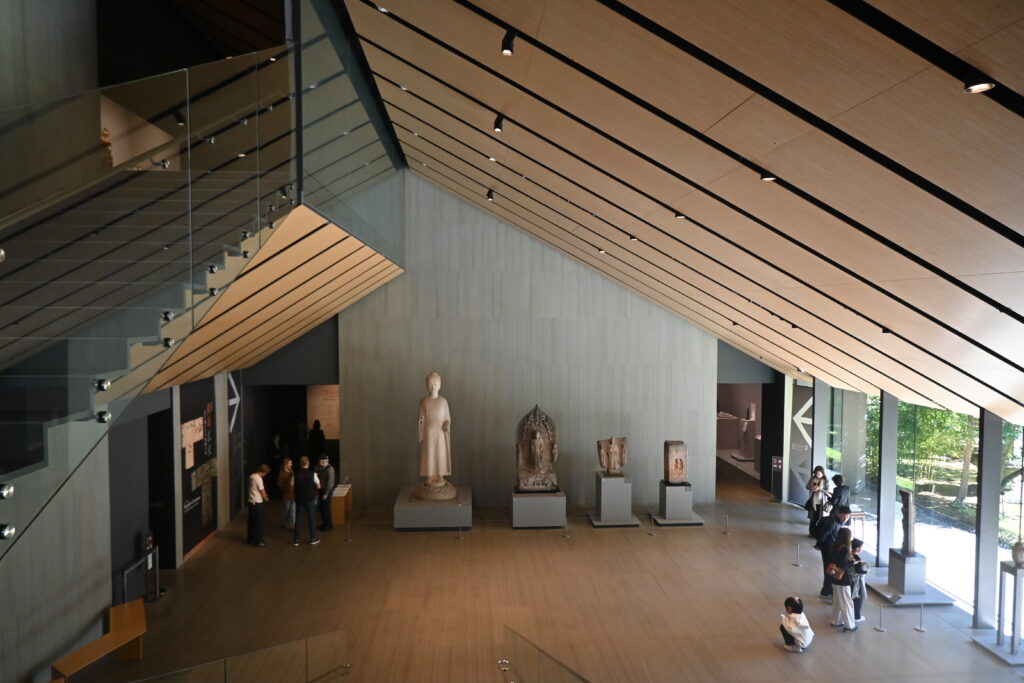
The Nezu Museum opened in 1941 to show the collection of Nezu Kaichiro, a railway businessman who collected Japanese and East Asian art: tea ceremony objects, Buddhist art, paintings and calligraphy, about 7,400 works including several National Treasures. In 2009 the museum reopened in a new building by Kengo Kuma.
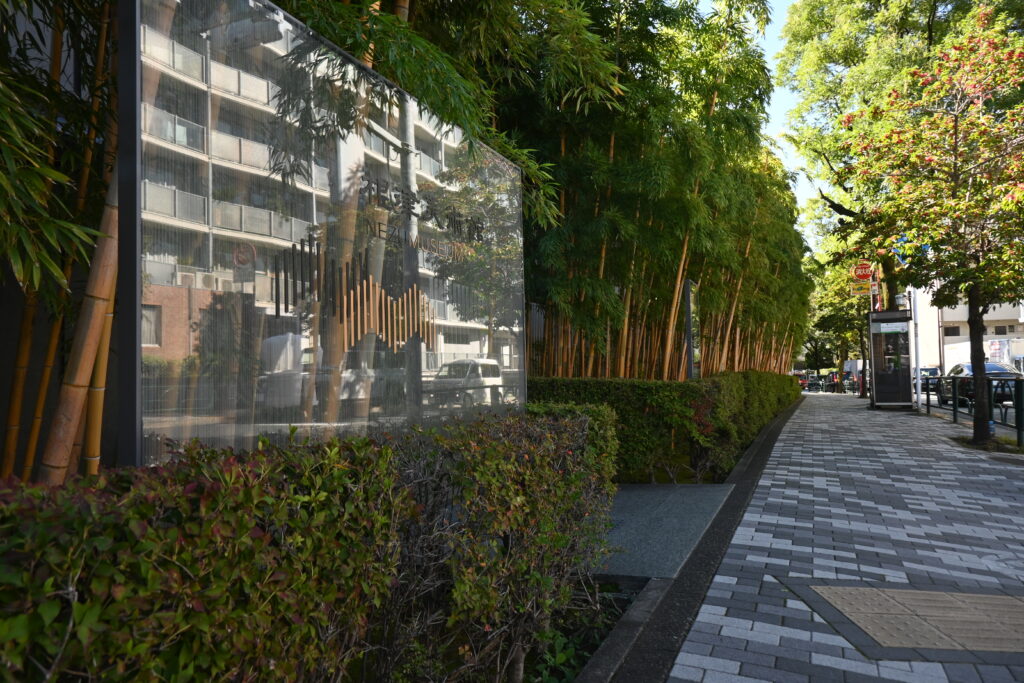
Kuma begins before you even reach the door. From the street, you walk along a long, quiet path between a wall of bamboo and a screen of thin bamboo poles, under a low, deep roof. The noise of the city fades with every step.
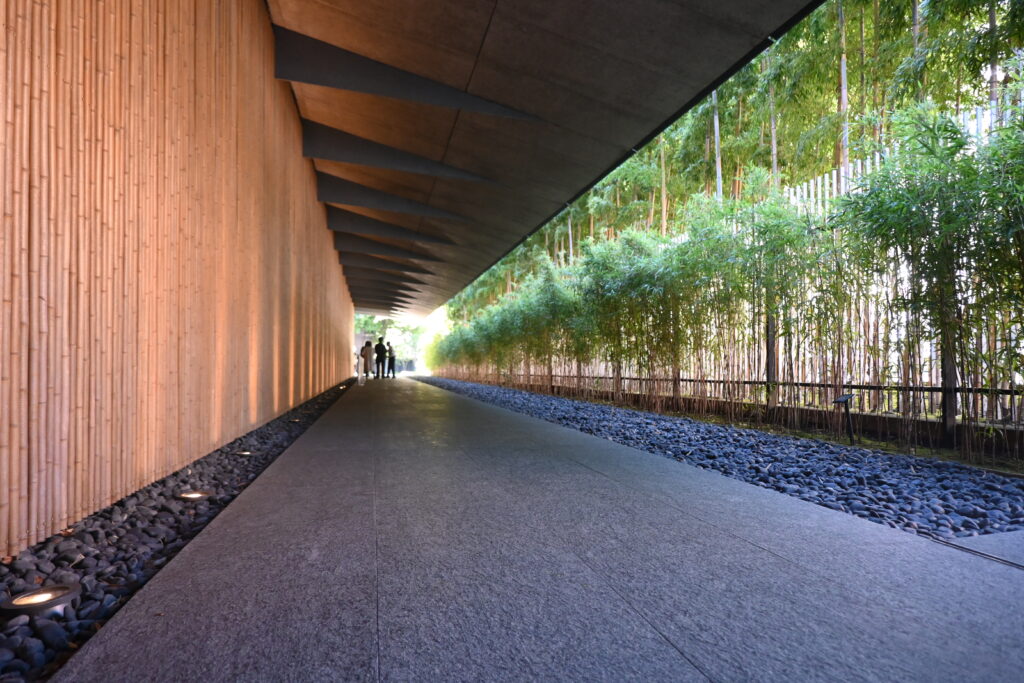
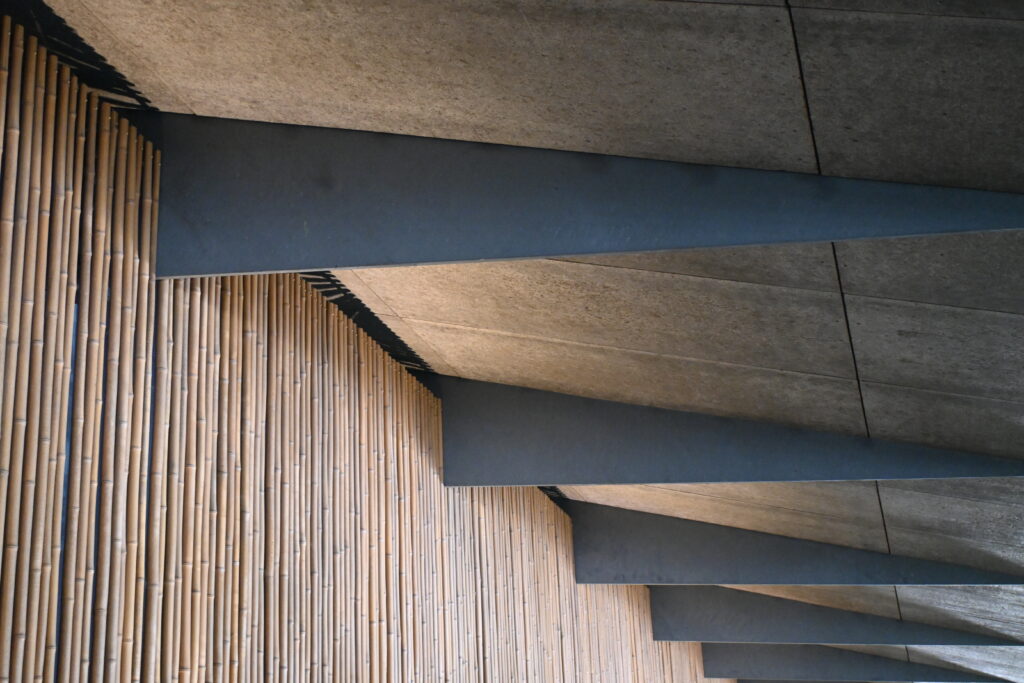
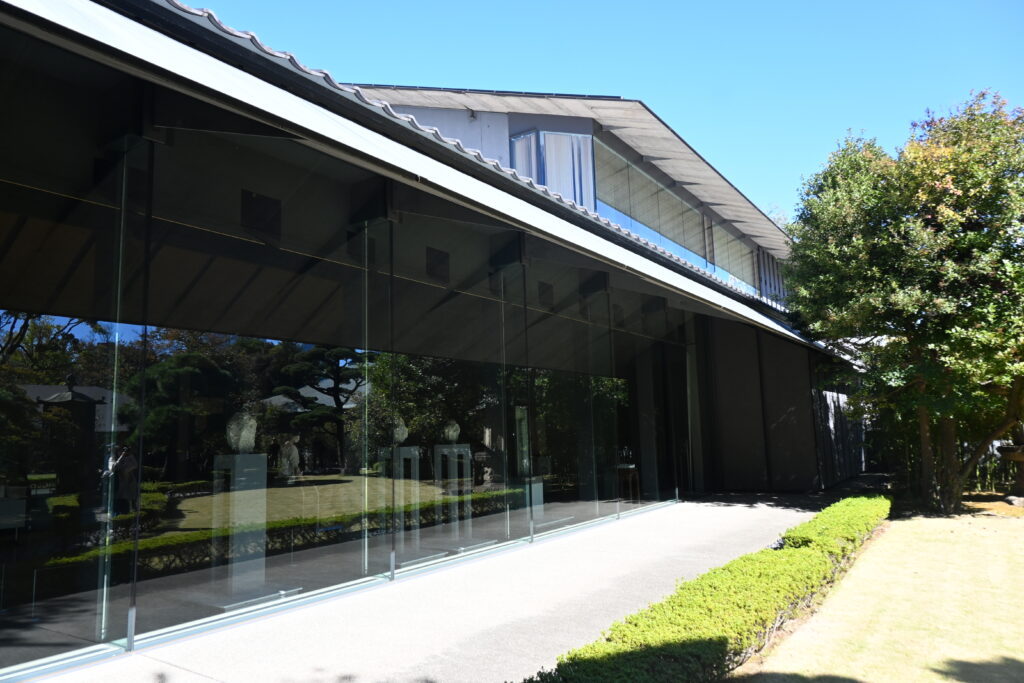
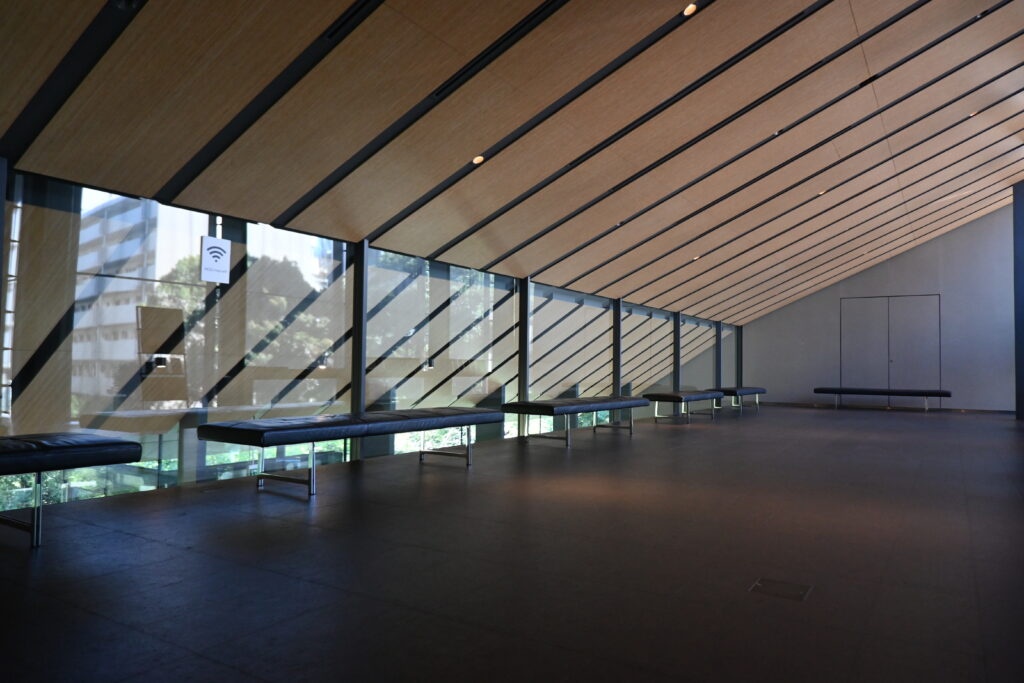
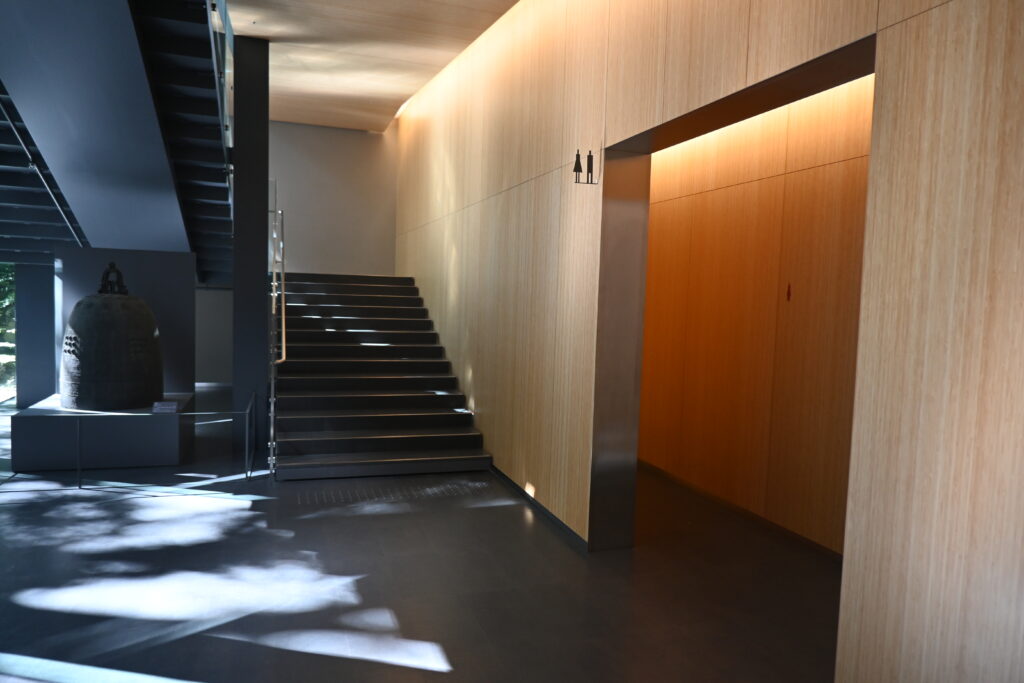
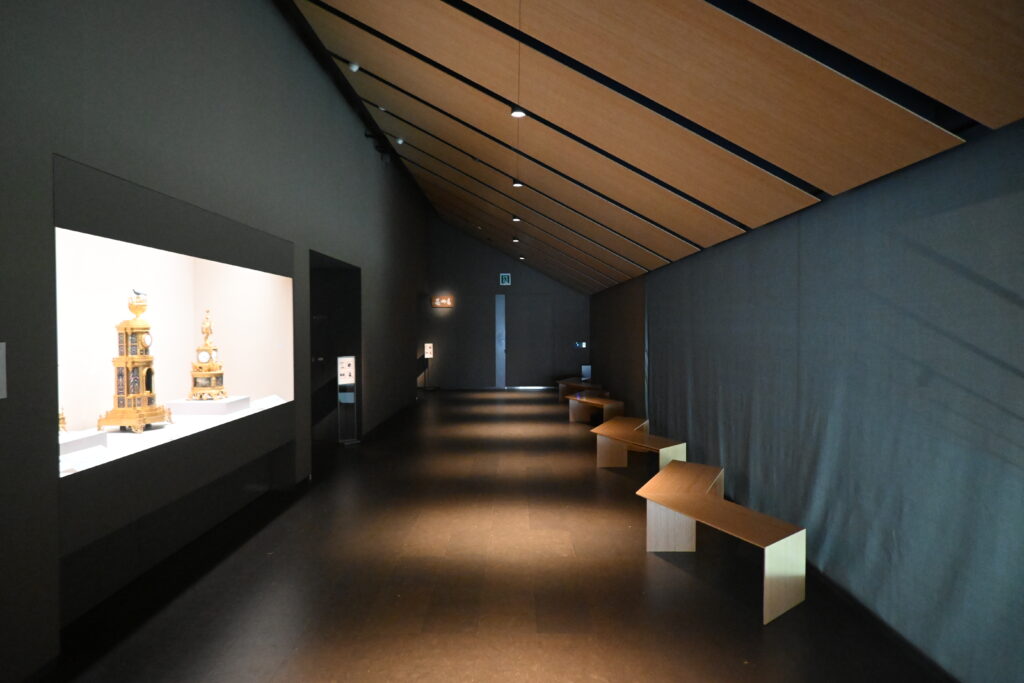
Inside, the high ceilings are lined with wood, and tall windows open onto the garden. Galleries 1 and 2 on the ground floor are for the changing exhibitions, and the other rooms show the permanent collection.
The garden and the café
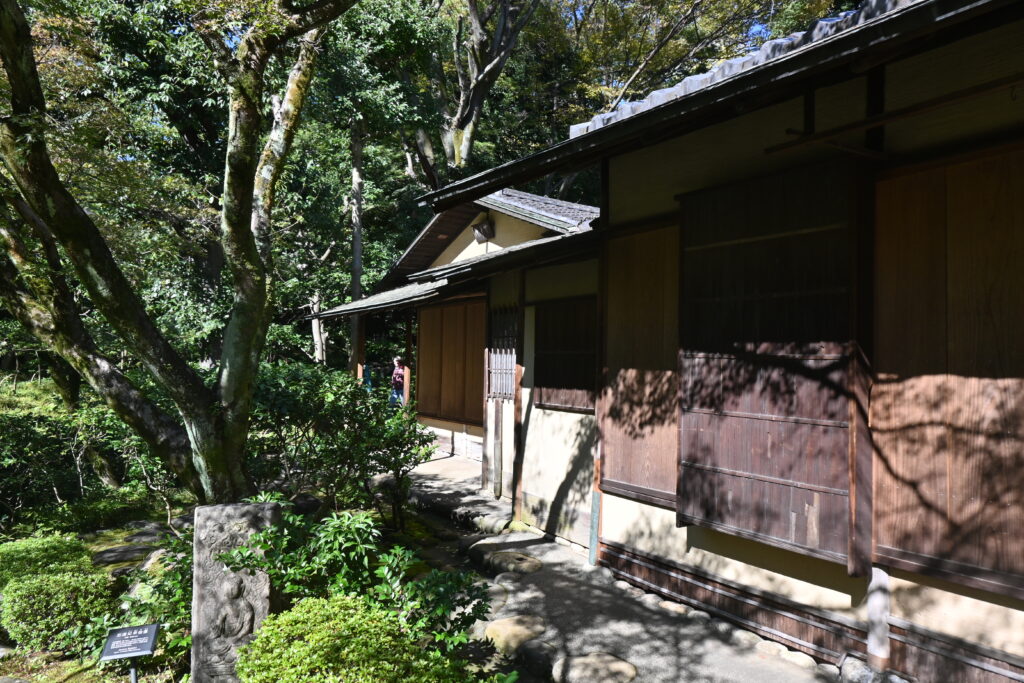
Do not leave without seeing the garden. Paths lead down through the woods, beside a small stream and past an old house. It is hard to believe you are a few minutes from Omotesando: the air feels cleaner, and all you hear is water and birds.
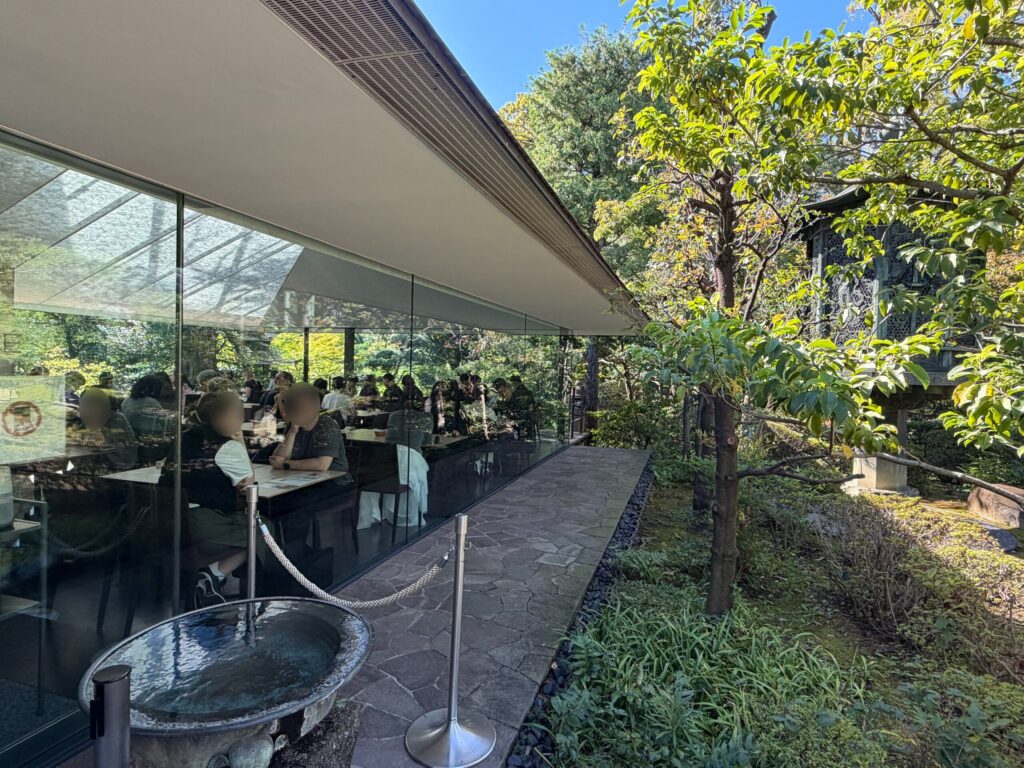
The glass-walled café in the garden is wonderful, and very popular. On a weekday it was already full, with a line, a few minutes after the museum opened at 10:00. The trick is to book a 10:00 entry and walk straight to the café. When it is busy, the menu may be limited to drinks, cakes and light meals. Photos are not allowed inside the café.
Tickets and facilities
Ticket prices change with each exhibition. During the special exhibition in autumn 2026, an adult ticket was ¥1,600 online and ¥1,800 at the door, and university students paid ¥700 online. High school students and younger are free. Online booking is recommended: on a weekday morning, I still waited five minutes for a ticket at the desk. Credit cards and contactless payment are accepted.
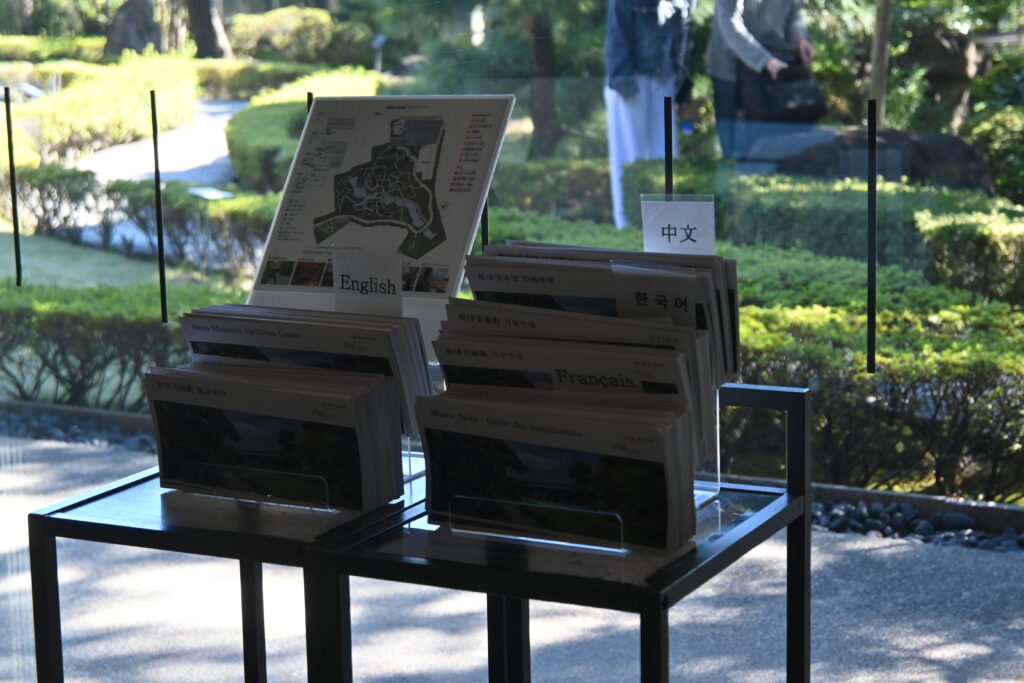
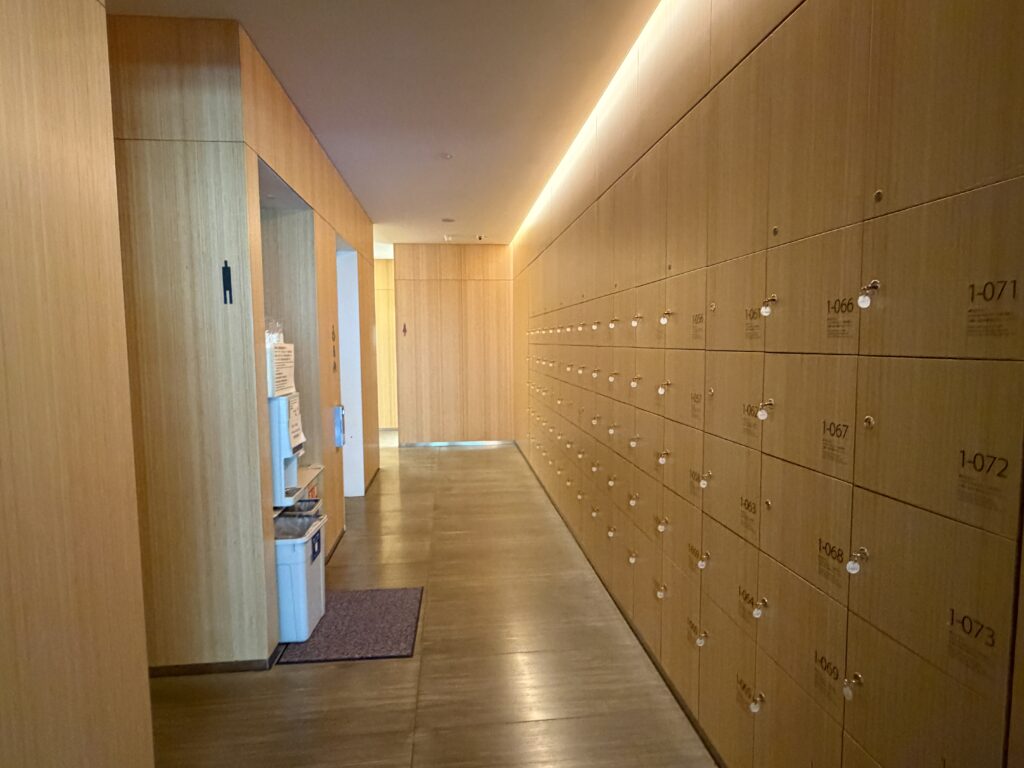
Free lockers are on the ground floor and the lower floor, and the toilets are clean, with accessible toilets. More than half of the visitors that morning were from abroad, and the staff and signs are in English too. The building itself is easy to walk around, but the garden has many steps and stone paths.
SunnyHills: a building like a bamboo basket
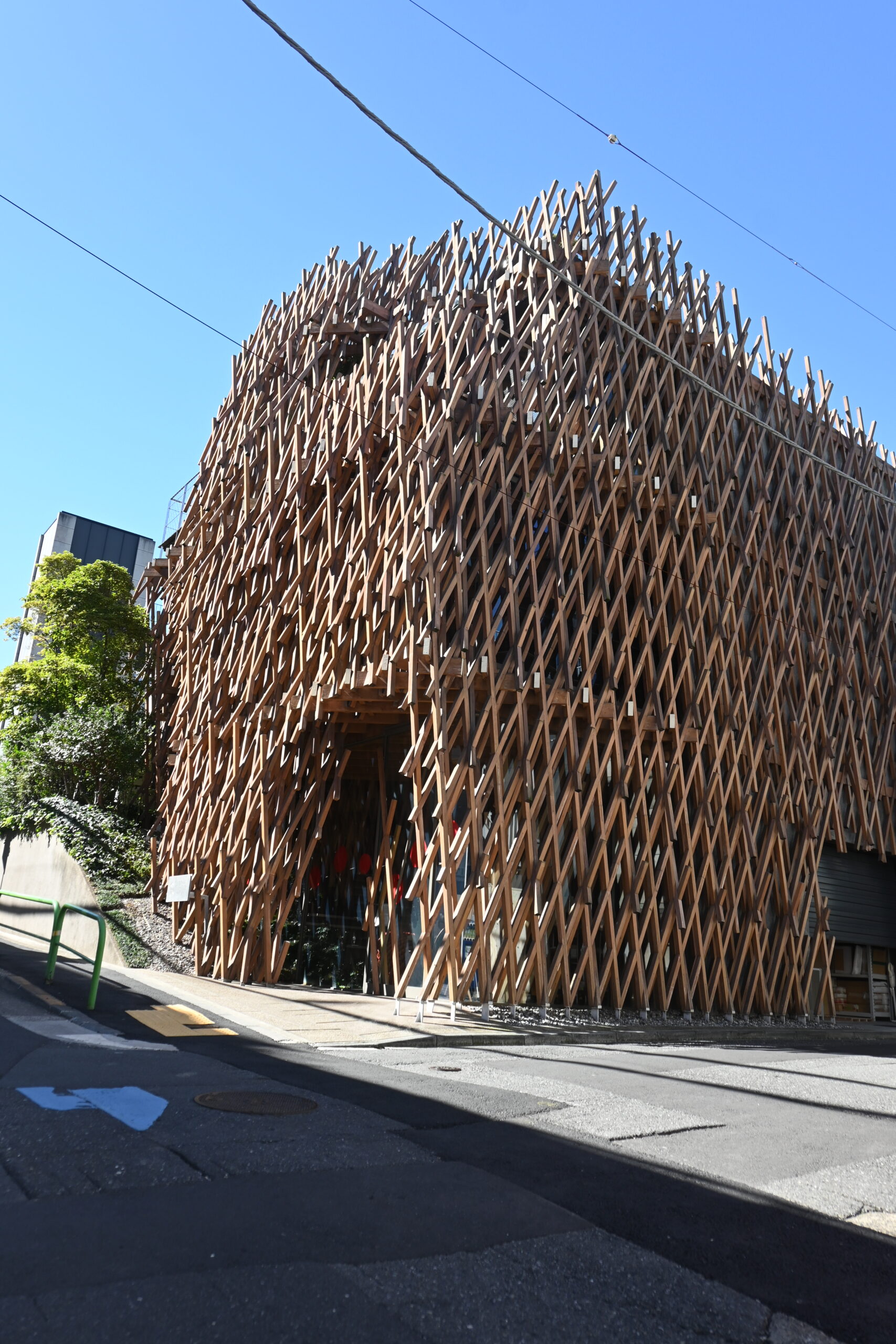
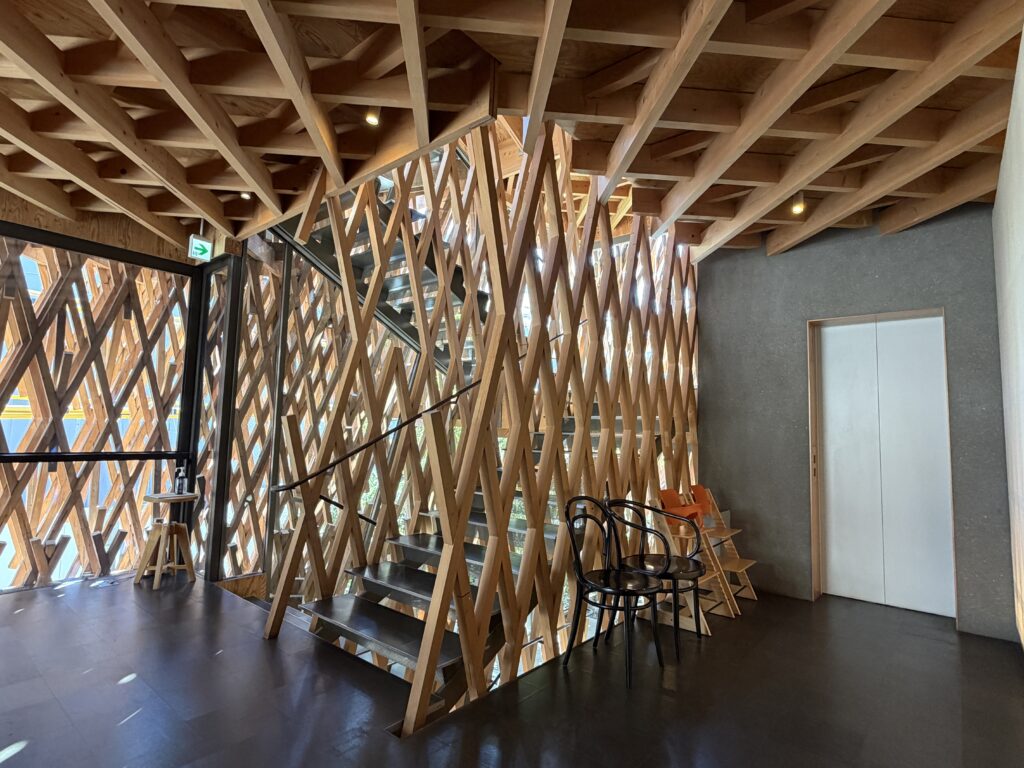
From the Nezu Museum, walk back toward Omotesando and turn into the quiet back streets of Minami-Aoyama. Suddenly, among the houses and concrete, there is a building that looks like a giant bamboo basket, or a cloud of wooden sticks. This is SunnyHills, a shop from Taiwan that sells pineapple cakes. It opened in December 2013.
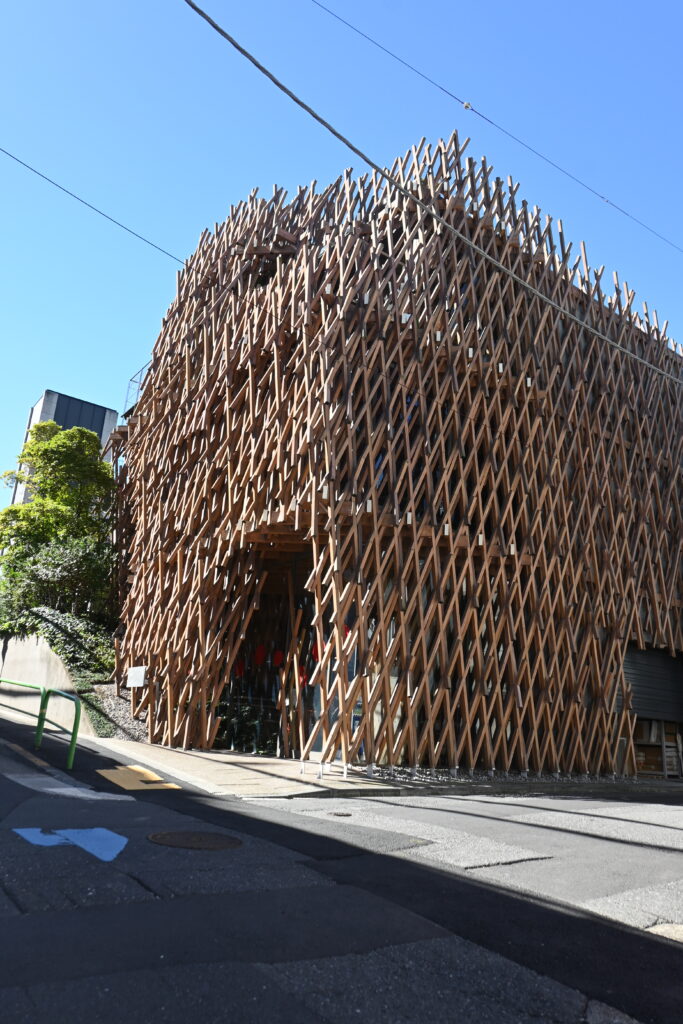
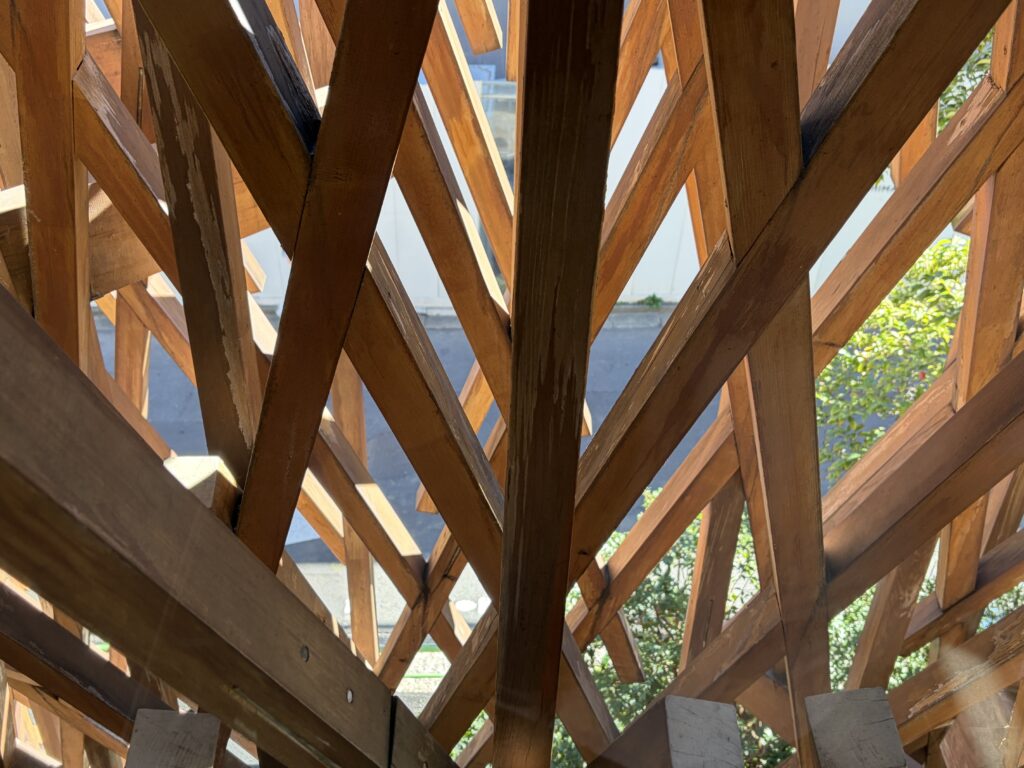
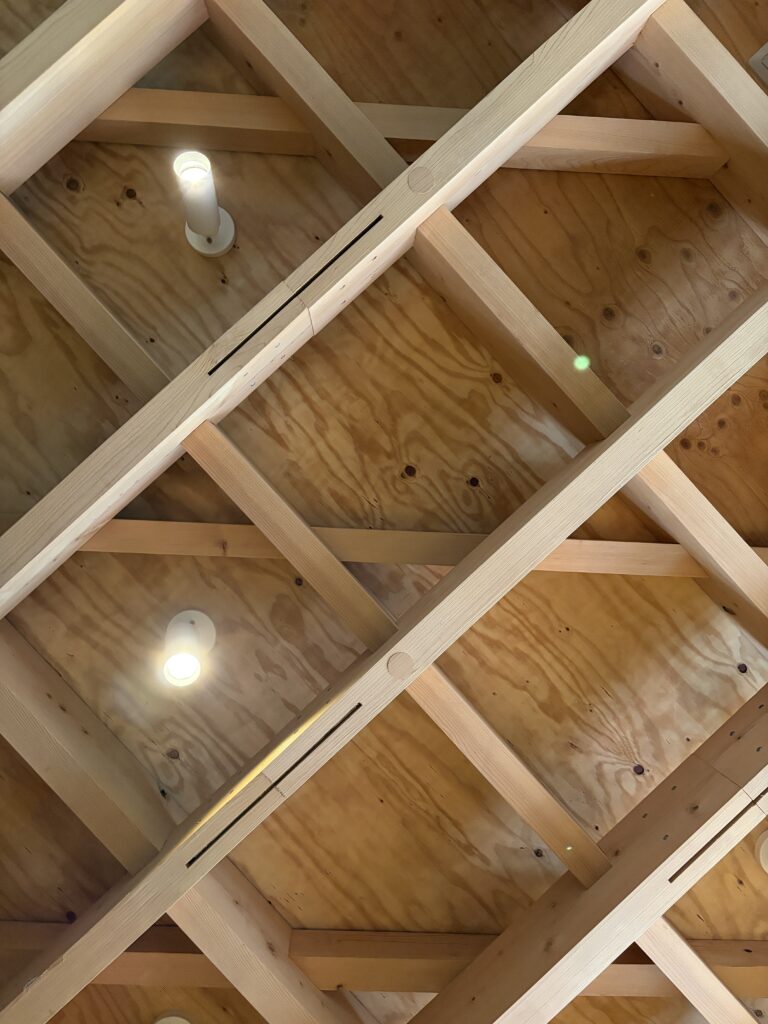
The structure uses a traditional Japanese joint called jigoku-gumi, literally “hell joinery”, because once the pieces lock together they can never come apart. Carpenters normally use it in flat lattices, with the pieces crossing at right angles. Kuma’s team tilted the joints to 30 degrees and built them up in three dimensions, which let them use sticks only 6 cm thick. The result is soft and light, very different from the concrete boxes around it.
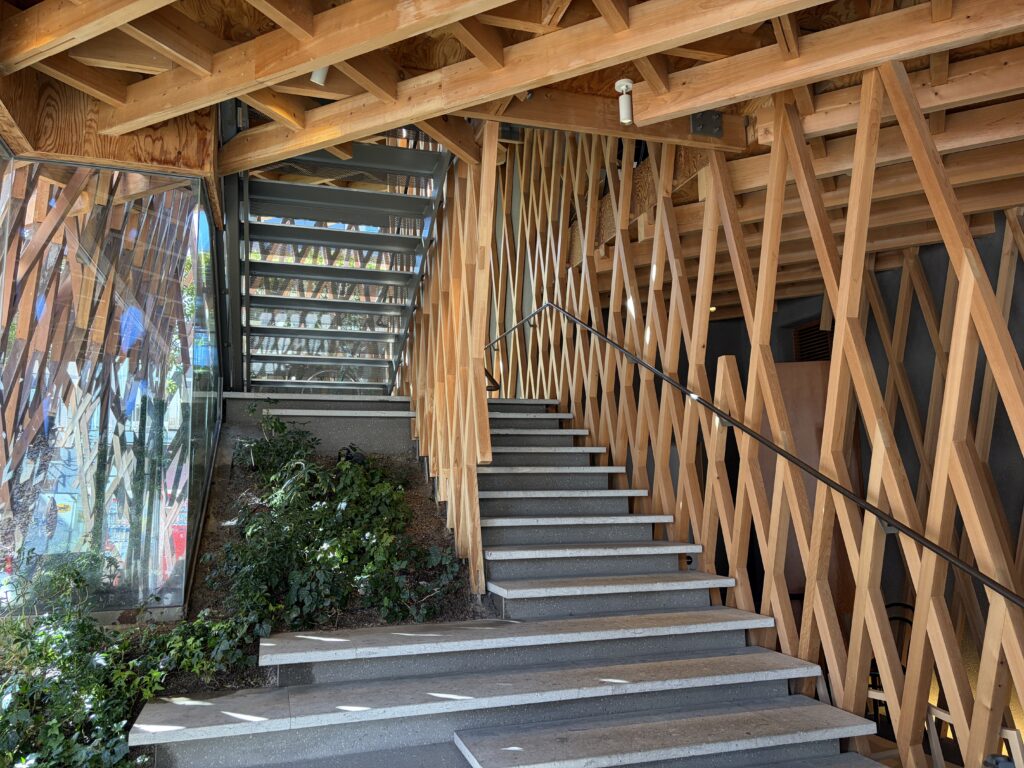
The wood outside is coated against rain and wind, but inside it is left bare, so you can see and smell real timber. Climb the stairs through the lattice, with sunlight falling through the gaps. There is also an elevator.

Tea and cake upstairs
If you buy something in the shop, you are invited upstairs to the tea room, where you get a cup of black tea or oolong tea with a pineapple cake and an apple cake. Without a purchase, it costs ¥600. The third floor has the toilets and a display about the building.

The shop opens at 11:00. On a weekday there were only a few people waiting, and it was not crowded. Photos are allowed inside, but a sign asks you not to photograph other customers. If you want photos of the interior, come right at opening time.
One Omotesando: the rhythm of the trees
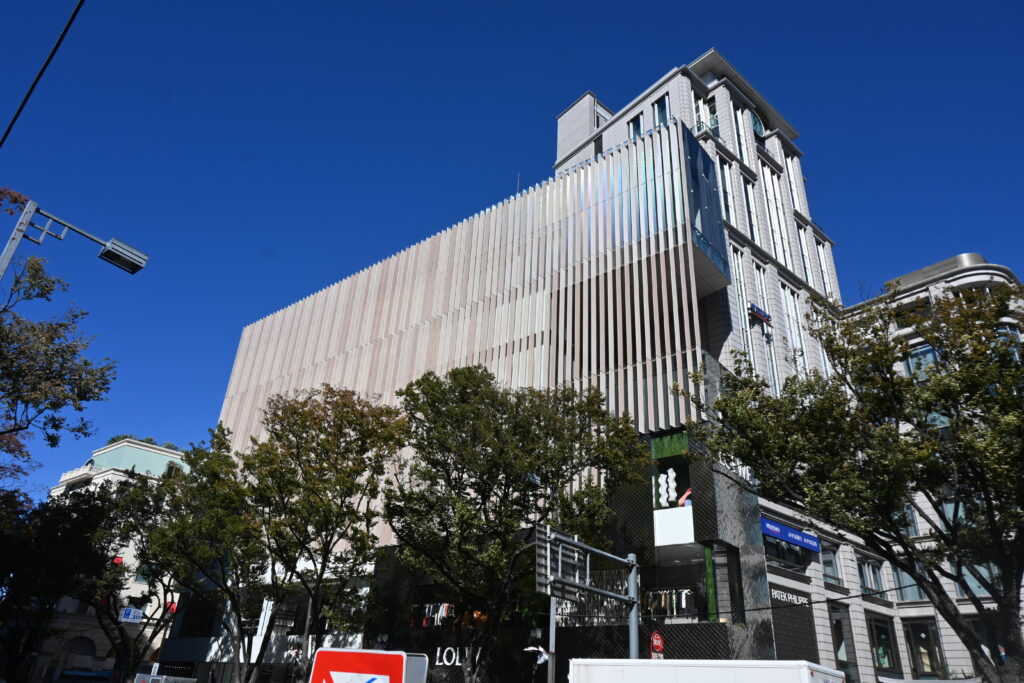
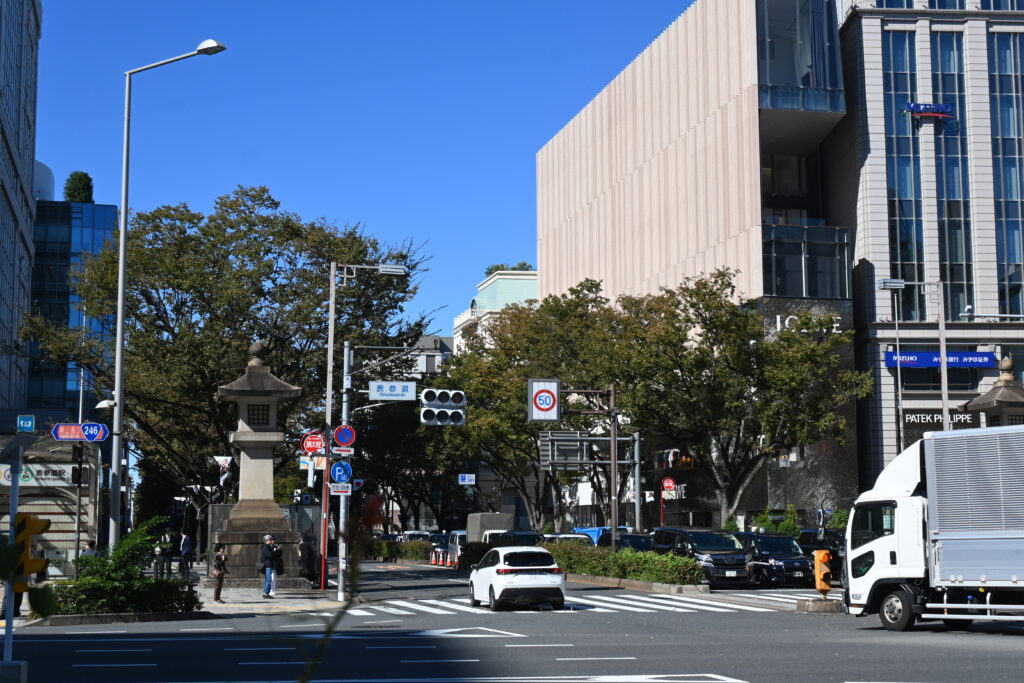
Walk back to the big Omotesando crossing. Right by the crossing stands One Omotesando, an eight-story building completed in 2003. Most of it is offices and shops for luxury brands, so just enjoy it from outside. Its long front is covered with vertical louvers of red pine. Kuma explained that he wanted them to echo the rhythm of the zelkova trees planted along Omotesando.
Walk the approach, not the subway
From here, you could take the subway one stop to Meiji-jingumae. But please walk. Omotesando means “the front approach”: this avenue was laid out as the road to Meiji Jingu, so walking it is part of visiting the shrine. Zelkova trees line both sides, and the boutiques and showrooms are fun just to look at.
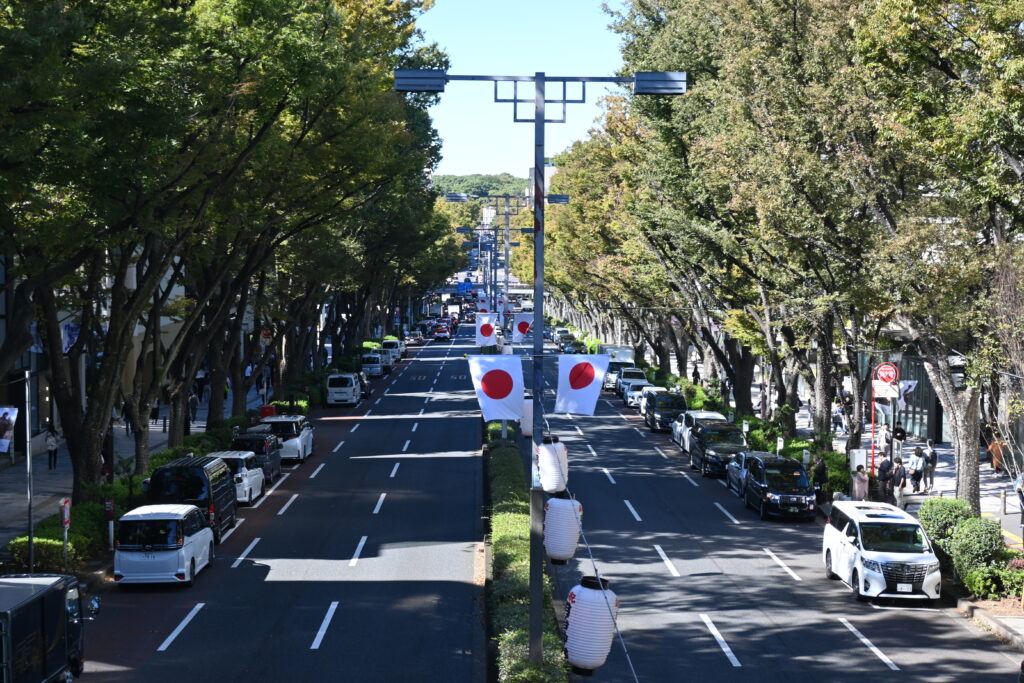
Turn into a side street now and then. The lanes behind Omotesando are full of small cafés and independent shops.

Meiji Jingu: a forest made by people
At the end of Omotesando, cross Jingu Bridge into the shrine. Look over the side: the JR Yamanote Line runs right underneath.
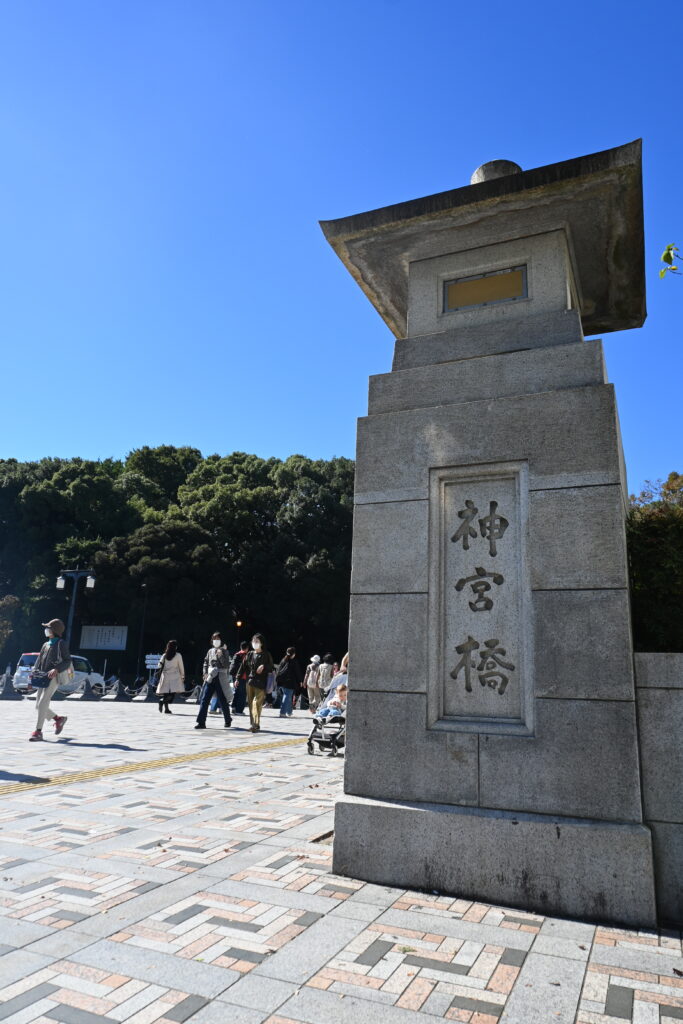
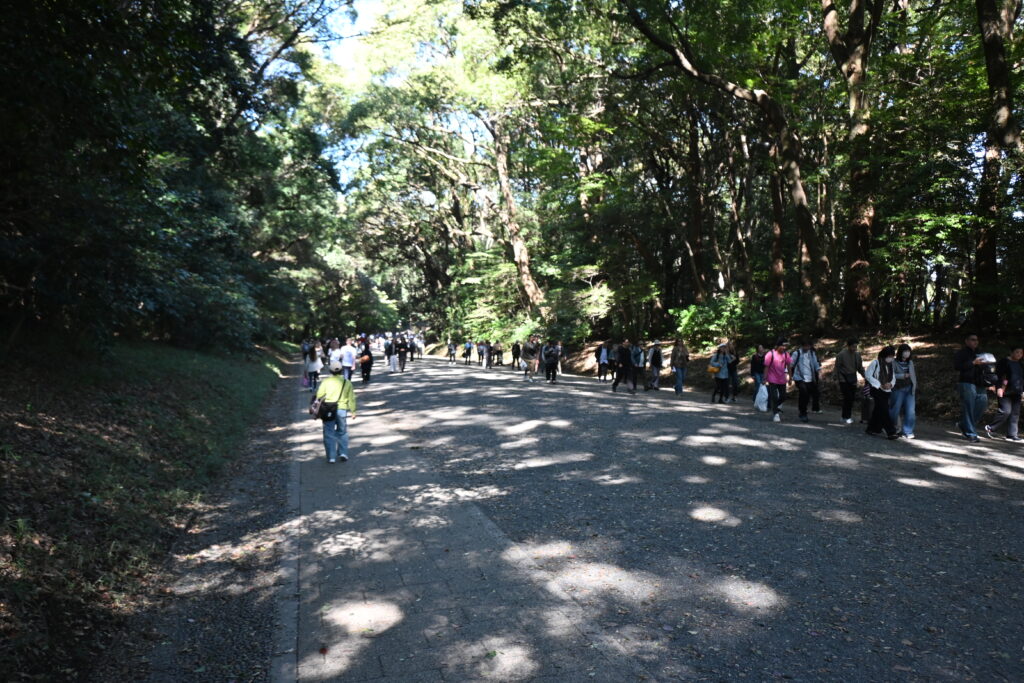
Meiji Jingu was founded in 1920 for Emperor Meiji and Empress Shoken. About 100,000 trees were donated from all over Japan and planted to create the forest, which was designed to grow, change and renew itself like a natural one. A century later, it looks like it has always been here.
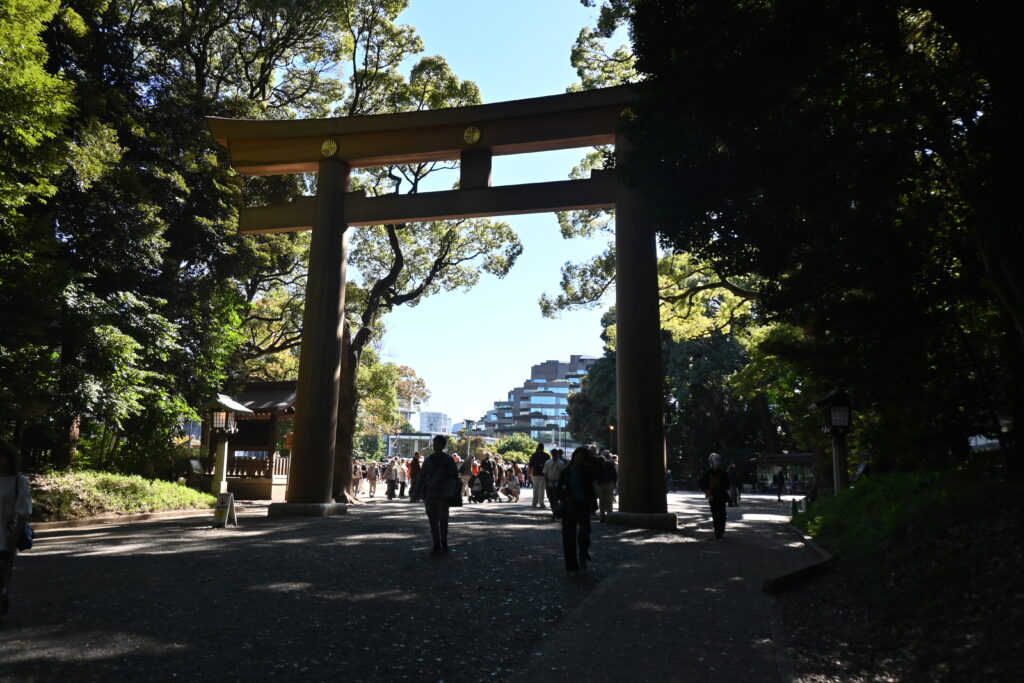
Pass under the torii gate and the city disappears. There are plenty of visitors, but it is calm: you hear leaves moving, birds, and a stream under a small bridge.
Meiji Jingu Museum: wood in the forest
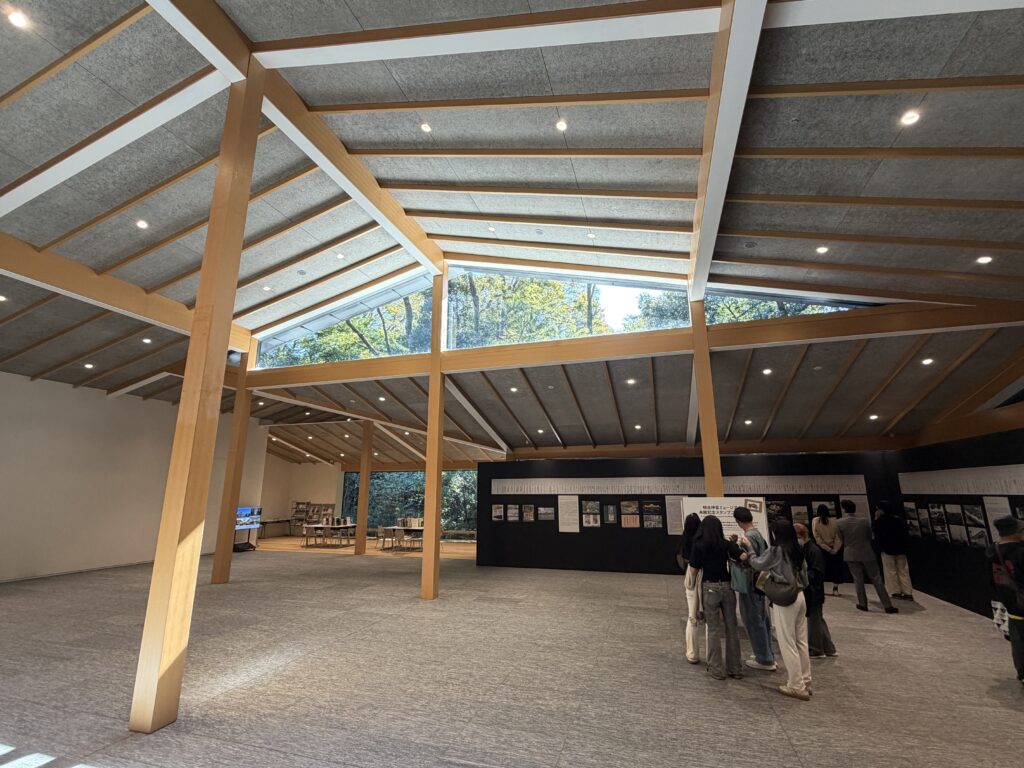
The Meiji Jingu Museum, a short walk from the torii gate, opened in October 2019 to mark the shrine’s 100th anniversary. It displays treasures connected with Emperor Meiji and Empress Shoken. Kuma kept the building low, with gently sloping roofs and colors that blend into the trees. The columns inside are meant to suggest the trunks of the forest.
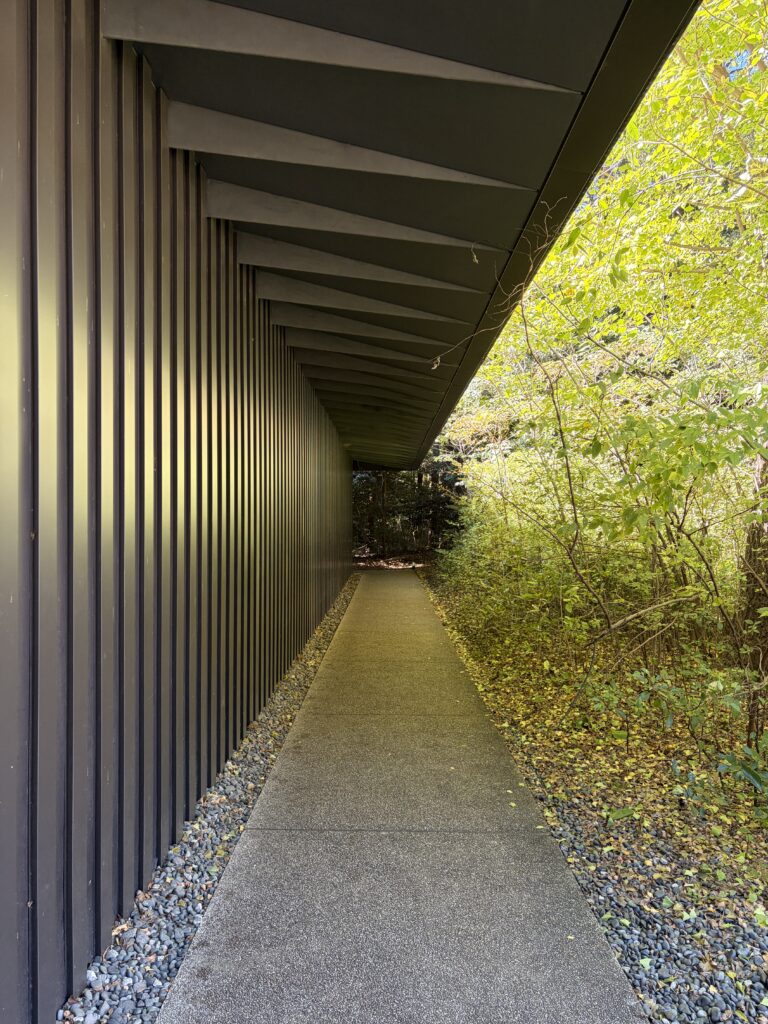
Now remember the eaves at the Nezu Museum. Walk along the outside of this building and you will find almost the same thing: a long path under a deep, low roof, with wood on one side and green on the other. Two buildings, ten years apart, one in the city and one in the forest.
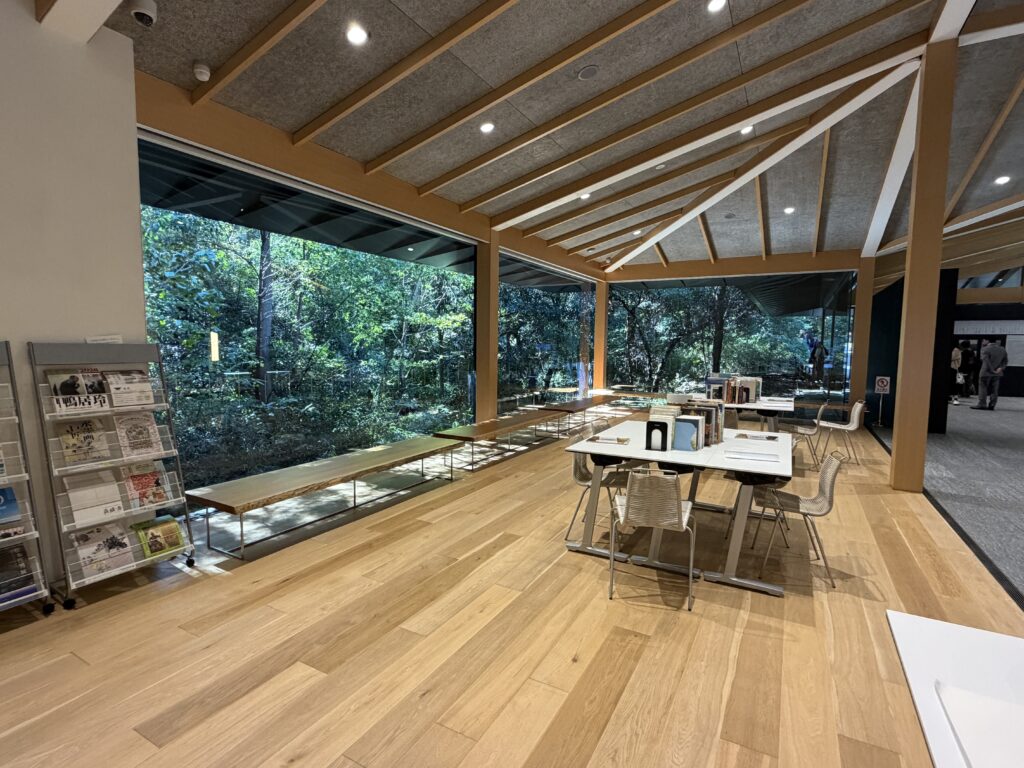
Inside, wood and natural light make the rooms warm. Big windows separate you from the forest only by glass, so it feels as if you are sitting among the trees. The reading corner and the rest area upstairs have the same views.

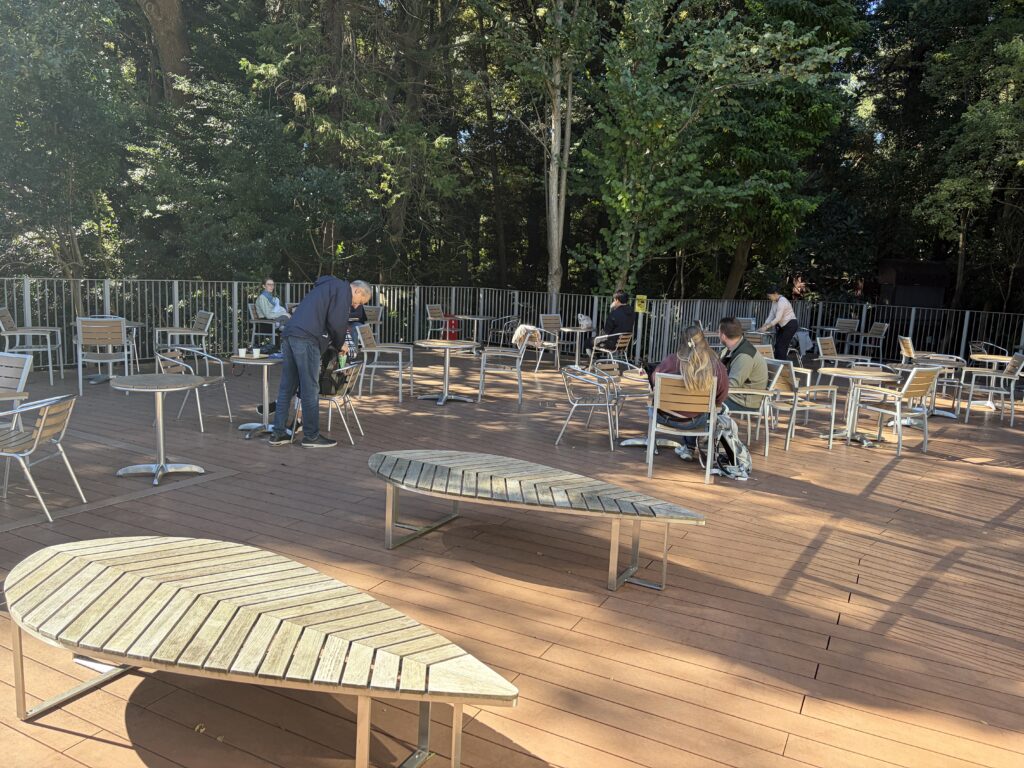
The museum is open 10:00 to 16:30 (last entry 16:00) and closed on Thursdays. Admission is ¥1,000, and you must pay in cash. Next door, Forest Terrace (not designed by Kuma) has indoor and outdoor tables for coffee or a light meal.
Standing here, I felt that this walk ends with a nice idea. The museum is clearly a man-made building, and the forest is a man-made forest. Yet a hundred years after the trees were planted, they look at home together.
Best time to go
Go on a weekday morning, and avoid Mondays and Thursdays. Book the Nezu Museum for 10:00 and head to the garden café first. SunnyHills opens at 11:00, which fits nicely after the museum. Leave enough time to reach the Meiji Jingu Museum before its last entry at 16:00.
One more thing I noticed: Kuma’s wood changes color with the light. Morning, afternoon, evening, sunshine or cloud, the same building looks different, so it is worth coming back at another time of day.
Good to know before you go
- Check the day. The Nezu Museum is closed on Mondays (and between exhibitions), the Meiji Jingu Museum on Thursdays.
- Bring cash. The Meiji Jingu Museum accepts cash only (¥1,000).
- Steps in the garden. The Nezu Museum garden has many steps and stone paths. Inside the museum building, getting around is easy.
- Stairs at Exit A5. Use Exit B3 and its elevator if stairs are difficult.
- The café fills up fast. Book a 10:00 museum entry and go to the café first. Photos are not allowed inside.
- Respect other customers. At SunnyHills, do not photograph other guests. Come at opening time for empty-room photos.
Getting there
- From Asakusa: Tokyo Metro Ginza Line direct to Omotesando, about 30 minutes, no change of train.
- From Ginza (Kabuki-za): Ginza Line to Omotesando, about 15 minutes.
- Going home: Harajuku Station (JR Yamanote Line) is right by Jingu Bridge, and Meiji-jingumae Station (Chiyoda and Fukutoshin lines) is next to it.
Make a day of it
See more of Omotesando’s architecture with a guide
Omotesando is packed with buildings by famous architects, from Tadao Ando to SANAA. If you want an expert to show you around, this private three-and-a-half-hour architecture tour in English starts at Jingu Bridge and covers works such as SunnyHills, Dior and Prada, plus the back streets. It has excellent reviews, is wheelchair accessible and can be cancelled free of charge up to 24 hours before. As a private tour it is not cheap, and prices may change, so check the details before you book.
Where to stay
TRUNK(HOTEL) CAT STREET
Why choose: A stylish boutique hotel on Cat Street, the relaxed shopping lane between Harajuku and Shibuya. You can walk to Meiji Jingu and Omotesando.
The Aoyama Grand Hotel
Why choose: A comfortable hotel on Aoyama-dori, on the Ginza Line, so getting to Ginza and Asakusa is easy, and Omotesando is close by.
Official websites
- Nezu Museum
- SunnyHills (Japanese)
- Meiji Jingu Museum
Next time
Next time, we take the Ginza Line from Omotesando back toward Asakusa and stop at Ueno Park. Once the grounds of a great temple, it has been a battlefield, a racecourse and finally Tokyo’s museum quarter, home to Le Corbusier’s only building in Japan.
Photos: Aozora Walks. Information as of October 2026. Sources: official websites of each facility.