Tag: Kengo Kuma

  • Kengo Kuma’s Wooden Walk: From the Nezu Museum to the Forest of Meiji Jingu

    Kengo Kuma’s Wooden Walk: From the Nezu Museum to the Forest of Meiji Jingu

    This post contains affiliate links. If you book through them, I may earn a small commission at no extra cost to you.

    Kengo Kuma loves wood. In Part 1 of this series we went inside his Kabuki-za in Ginza, and in Part 2 we visited Sakai, a small river town full of his buildings. For Part 3, we return to central Tokyo for a half-day walk from the streets of Aoyama to the forest of Meiji Jingu.

    We visit three of his buildings, the Nezu Museum, the SunnyHills cake shop and the Meiji Jingu Museum, and stop to look up at a fourth, One Omotesando. Each uses wood in a different way. As a geography teacher, what I love about this route is where it ends: in a forest that looks wild, but was planted by people about a hundred years ago.

    Quick facts

    RouteOmotesando Station → Nezu Museum → SunnyHills → One Omotesando → Omotesando avenue → Meiji Jingu → Meiji Jingu Museum
    DistanceAbout 3 km, mostly flat
    TimeHalf a day (3 to 4 hours with the two museums and a tea break)
    CostNezu Museum from ¥1,600 (online, changes by exhibition). Meiji Jingu Museum ¥1,000, cash only. SunnyHills: free tea with any purchase
    AvoidMondays (Nezu Museum closed) and Thursdays (Meiji Jingu Museum closed)
    Nearest stationsStart: Omotesando (Tokyo Metro Ginza, Chiyoda and Hanzomon lines). Finish: Harajuku (JR) or Meiji-jingumae

    Start: Omotesando Station

    Leave Omotesando Station by Exit A5 and walk straight on, away from the big crossing. The Nezu Museum is about 8 minutes ahead. Exit A5 has a long, steep staircase. If you use a wheelchair, push a stroller or prefer to avoid stairs, use Exit B3 instead: the subway elevator is in the Aoyama Rise Square building beside it.

    This short street already feels like Milan: elegant buildings, fashion boutiques and pastry shops under the trees.

    Nezu Museum: a bamboo path and a deep roof

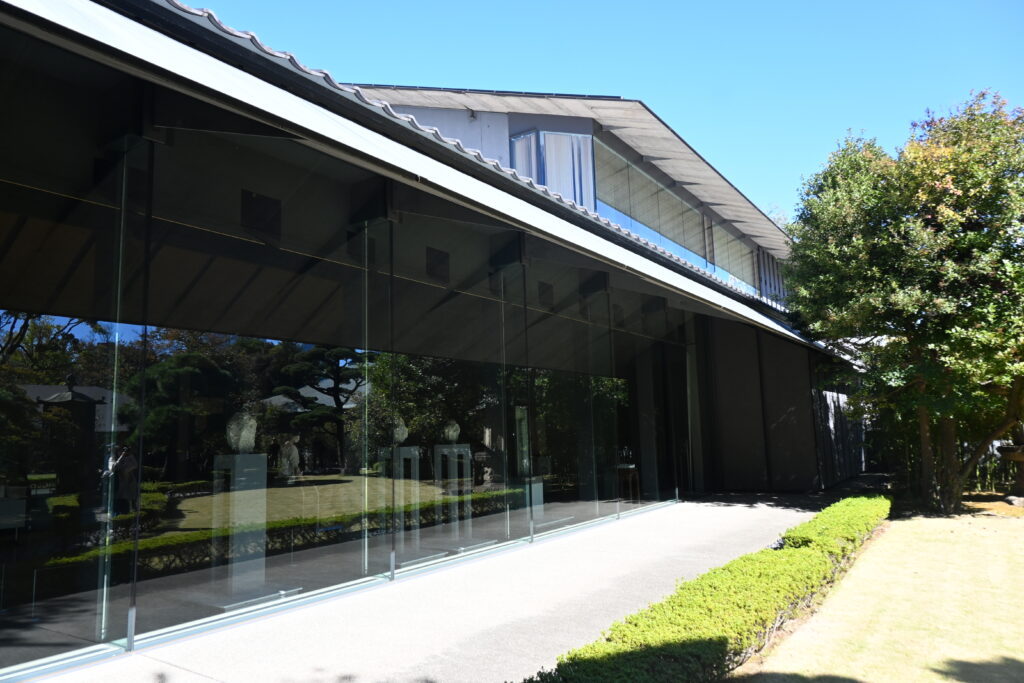
    The Nezu Museum opened in 1941 to show the collection of Nezu Kaichiro, a railway businessman who collected Japanese and East Asian art: tea ceremony objects, Buddhist art, paintings and calligraphy, about 7,400 works including several National Treasures. In 2009 the museum reopened in a new building by Kengo Kuma.

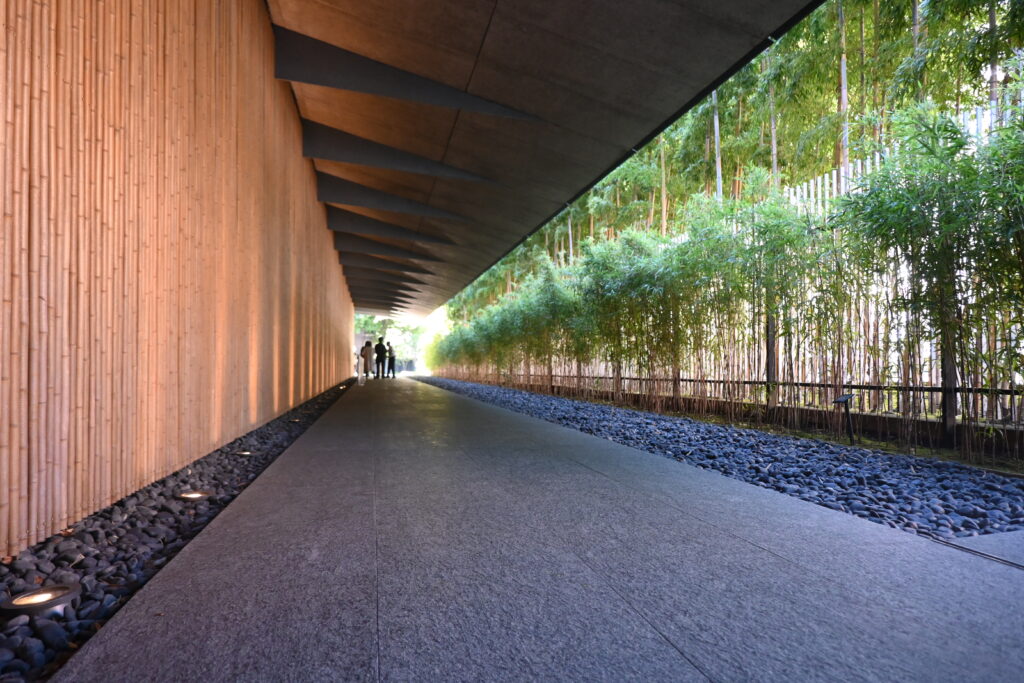
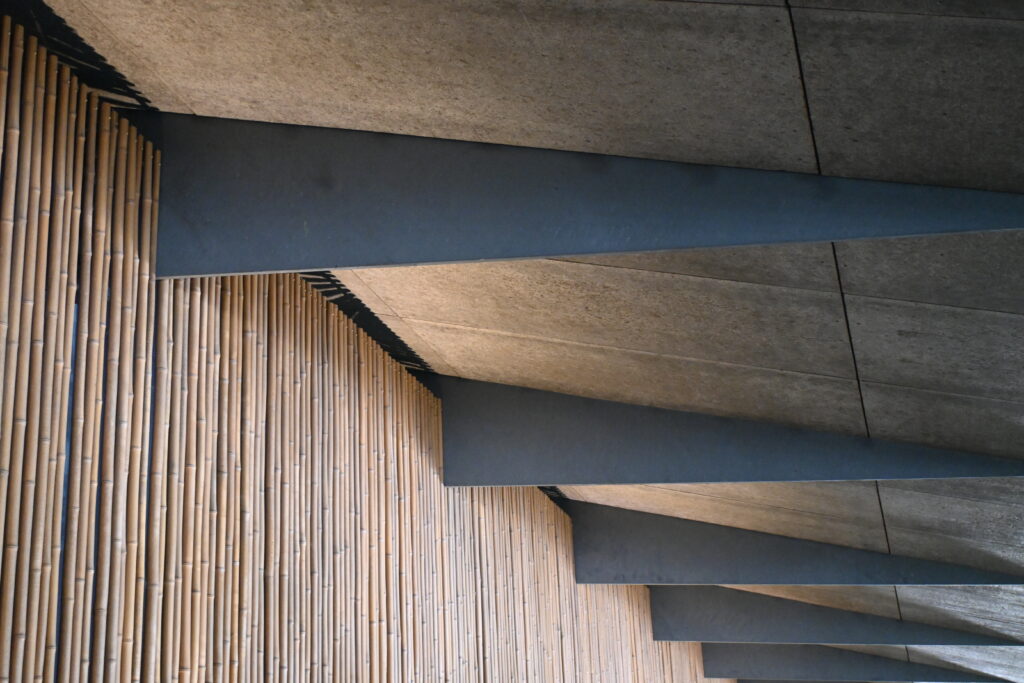
    Kuma begins before you even reach the door. From the street, you walk along a long, quiet path between a wall of bamboo and a screen of thin bamboo poles, under a low, deep roof. The noise of the city fades with every step.
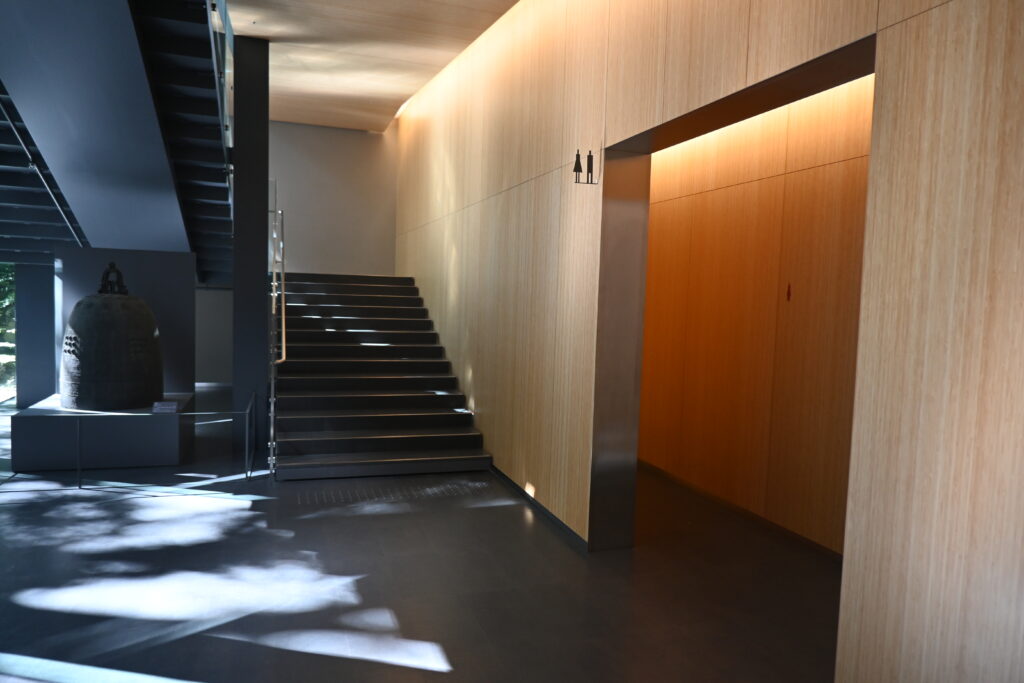
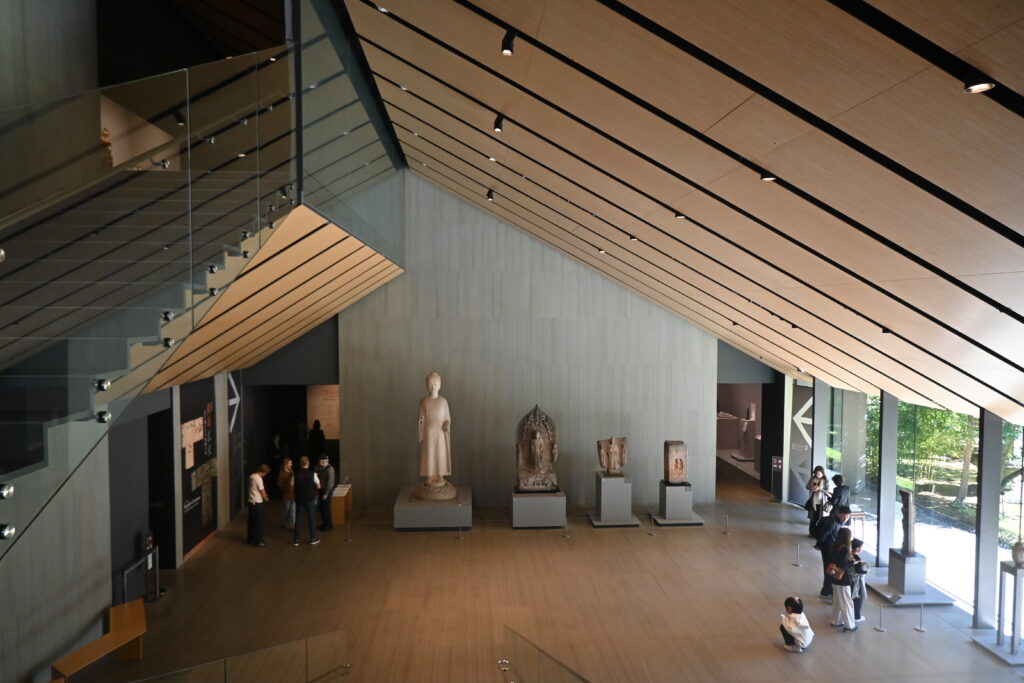
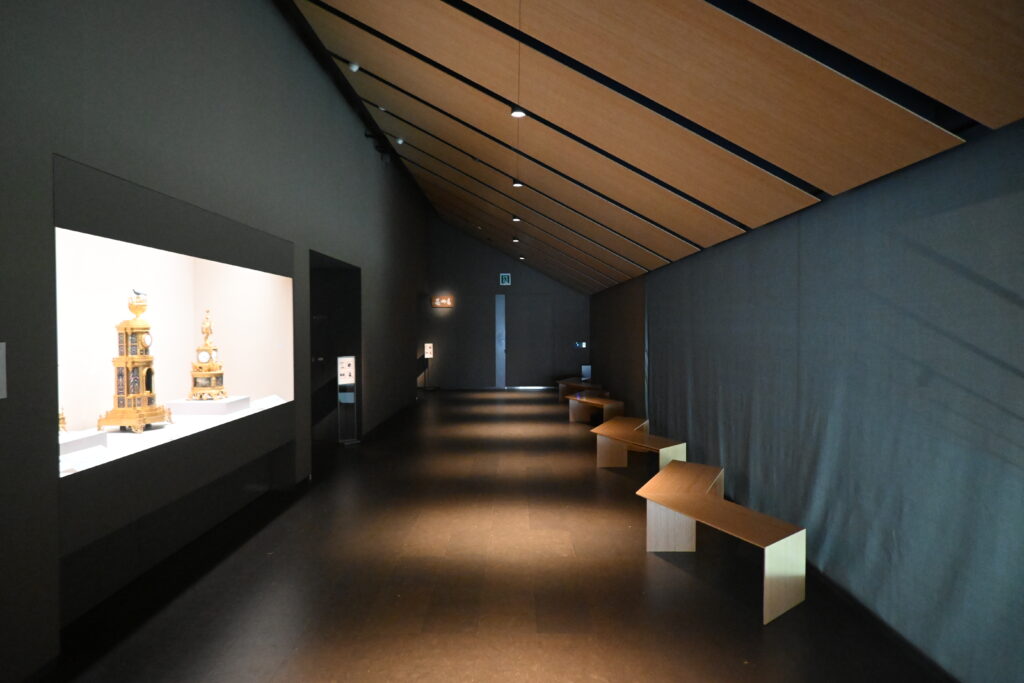
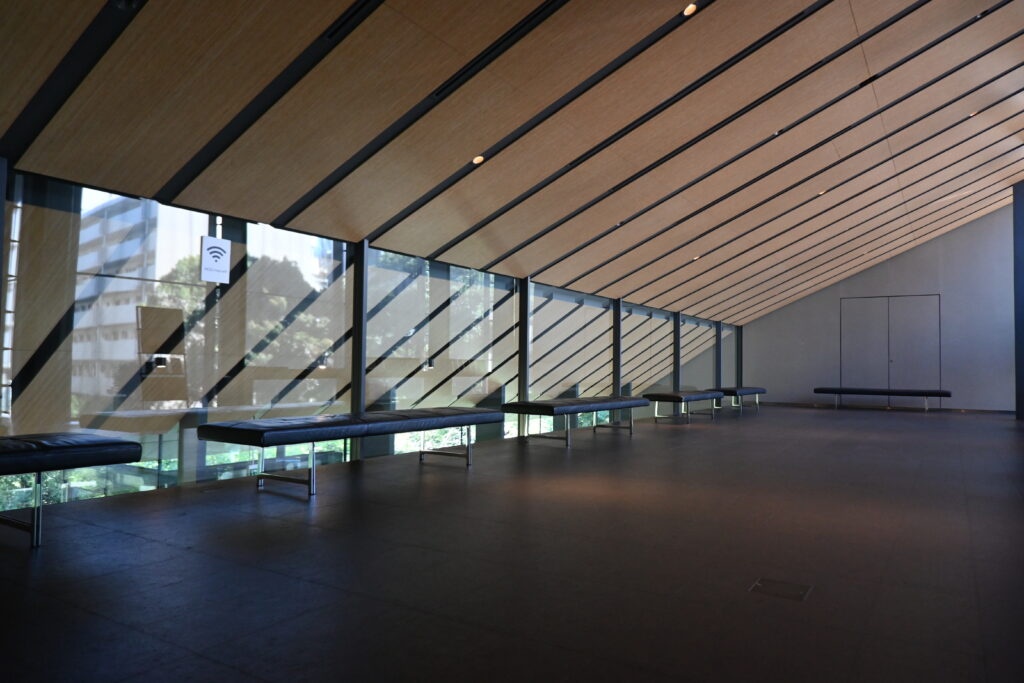
    Inside, the high ceilings are lined with wood, and tall windows open onto the garden. Galleries 1 and 2 on the ground floor are for the changing exhibitions, and the other rooms show the permanent collection.
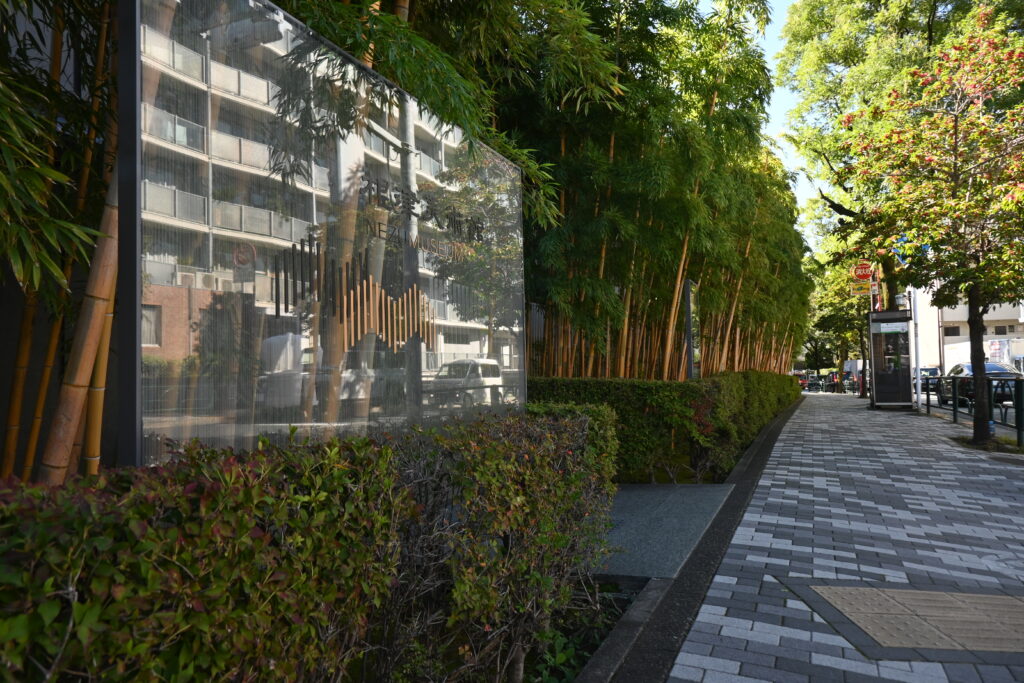
    The garden and the café

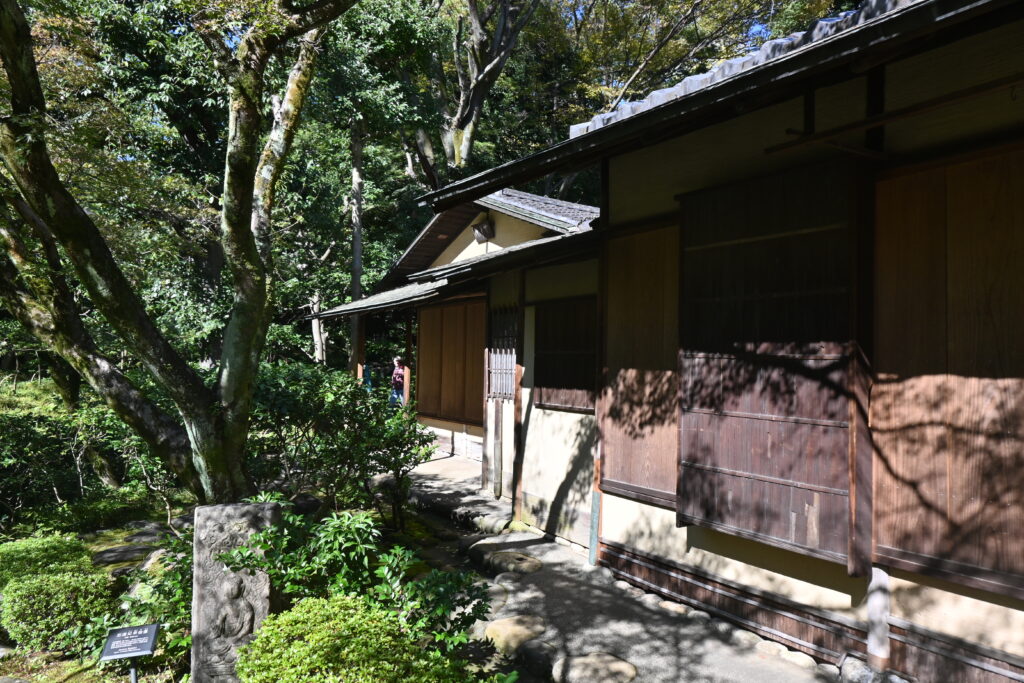
    Do not leave without seeing the garden. Paths lead down through the woods, beside a small stream and past an old house. It is hard to believe you are a few minutes from Omotesando: the air feels cleaner, and all you hear is water and birds.
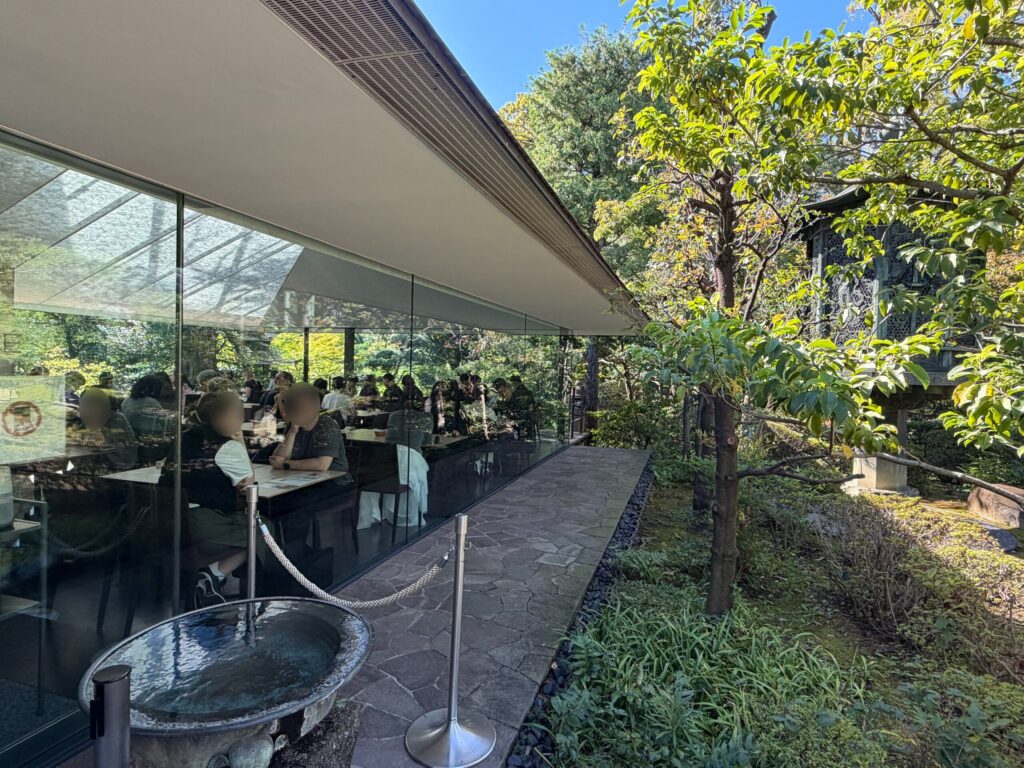
    The glass-walled café in the garden is wonderful, and very popular. On a weekday it was already full, with a line, a few minutes after the museum opened at 10:00. The trick is to book a 10:00 entry and walk straight to the café. When it is busy, the menu may be limited to drinks, cakes and light meals. Photos are not allowed inside the café.
    Tickets and facilities

    Ticket prices change with each exhibition. During the special exhibition in autumn 2026, an adult ticket was ¥1,600 online and ¥1,800 at the door, and university students paid ¥700 online. High school students and younger are free. Online booking is recommended: on a weekday morning, I still waited five minutes for a ticket at the desk. Credit cards and contactless payment are accepted.

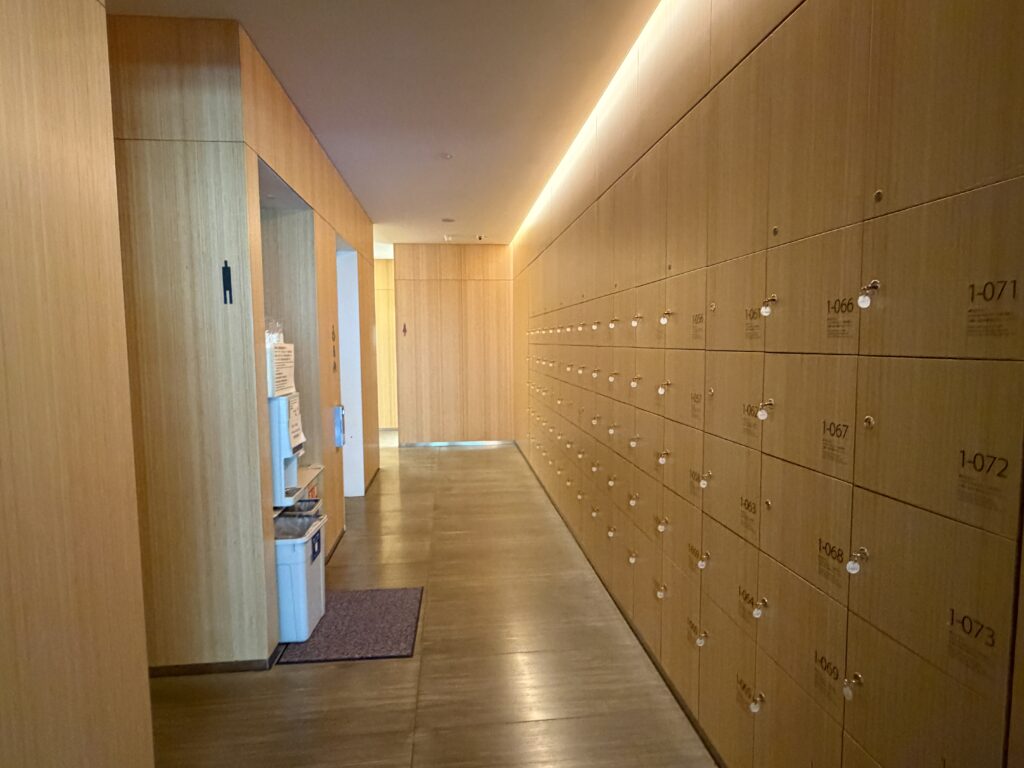
    Free lockers are on the ground floor and the lower floor, and the toilets are clean, with accessible toilets. More than half of the visitors that morning were from abroad, and the staff and signs are in English too. The building itself is easy to walk around, but the garden has many steps and stone paths.
    SunnyHills: a building like a bamboo basket

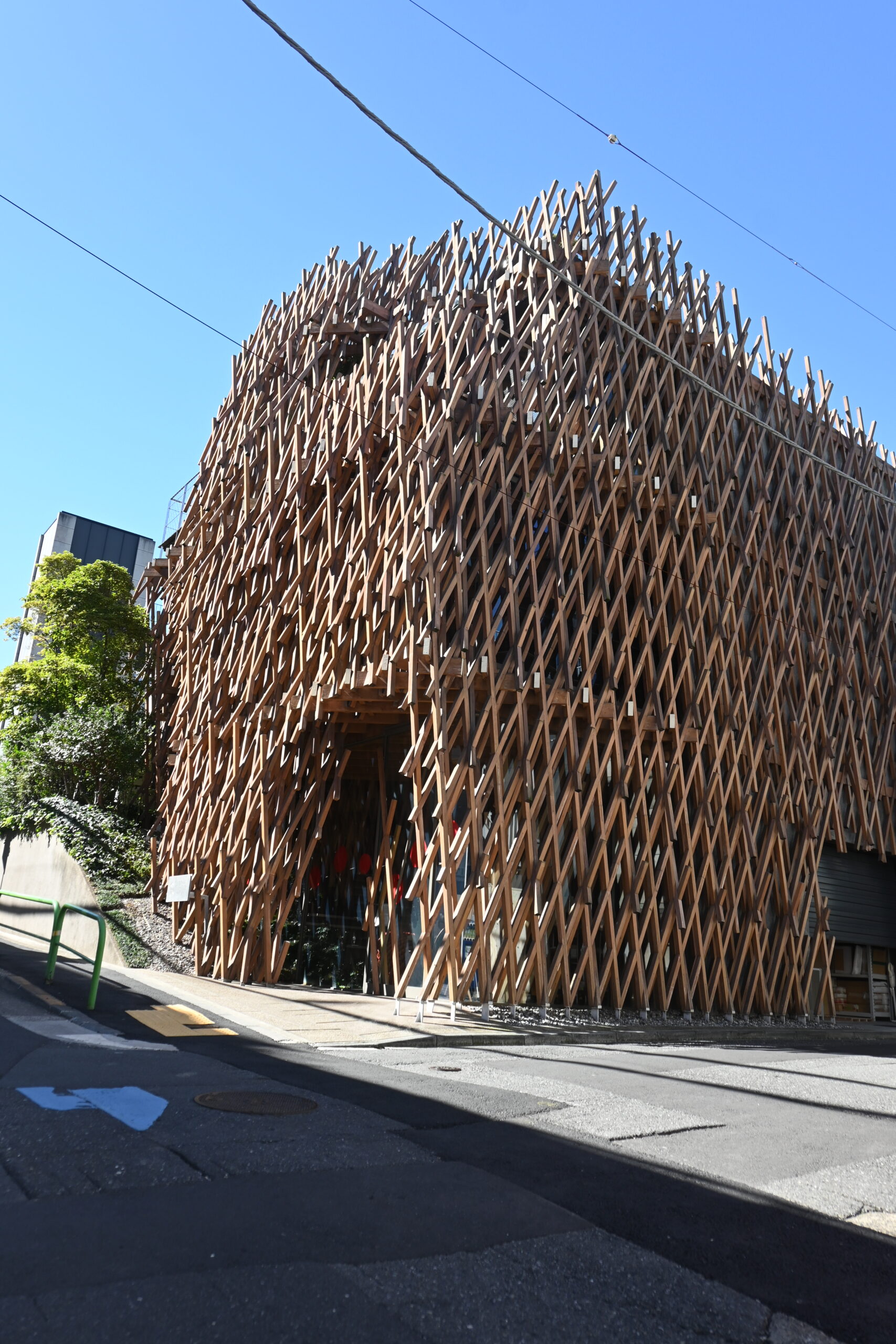
    From the Nezu Museum, walk back toward Omotesando and turn into the quiet back streets of Minami-Aoyama. Suddenly, among the houses and concrete, there is a building that looks like a giant bamboo basket, or a cloud of wooden sticks. This is SunnyHills, a shop from Taiwan that sells pineapple cakes. It opened in December 2013.
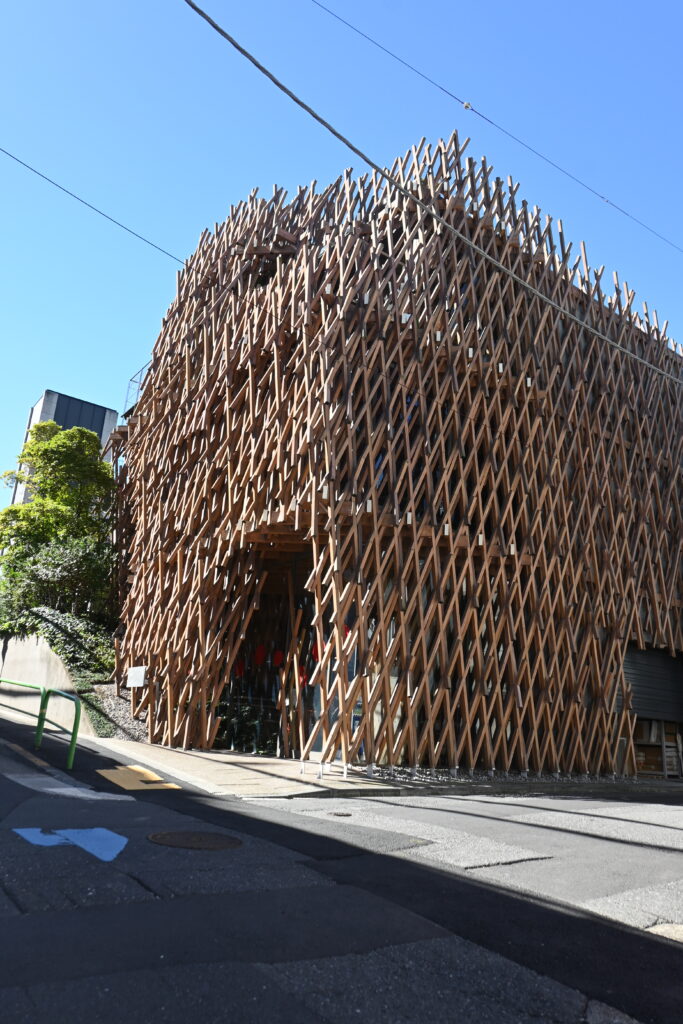
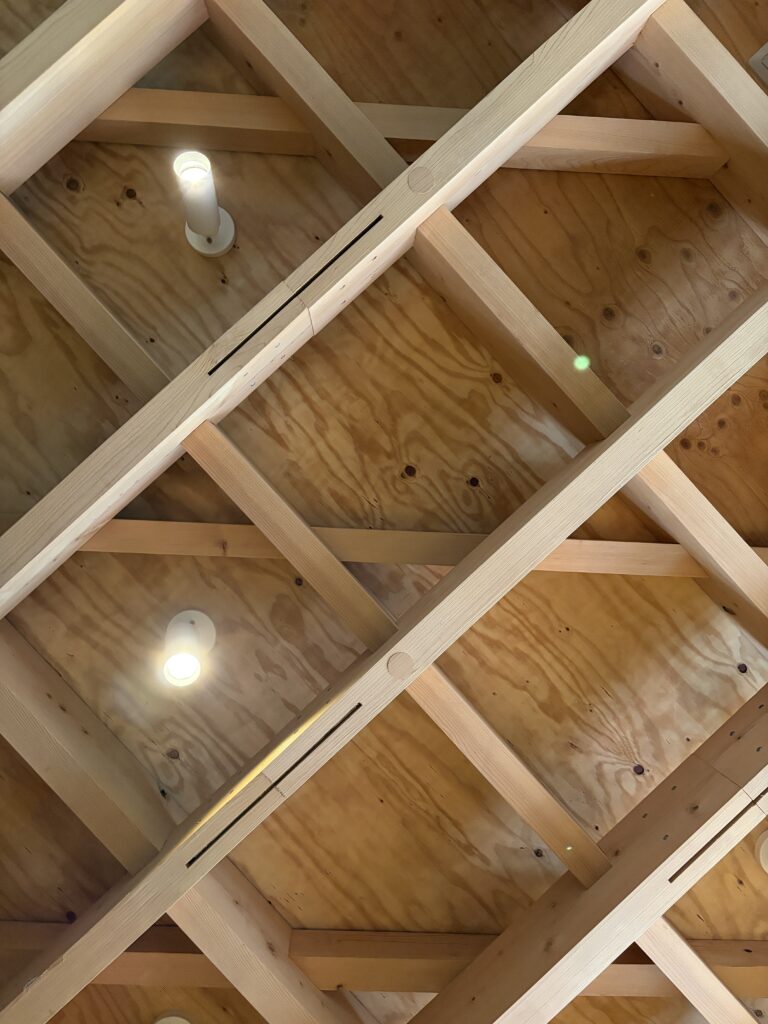
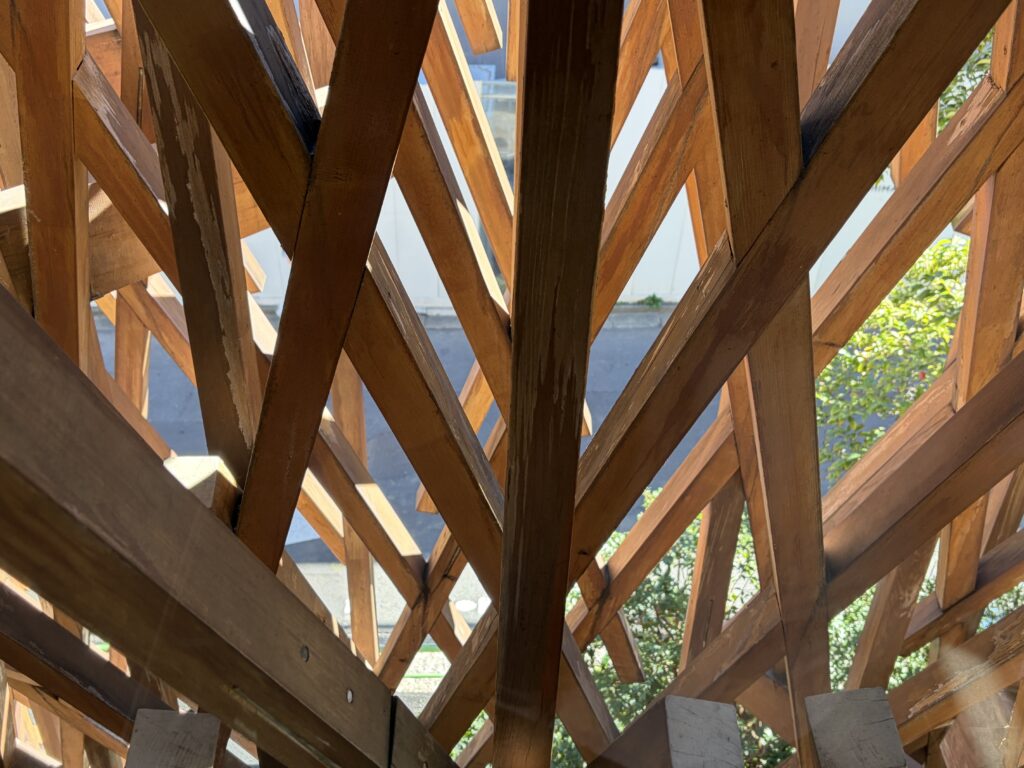
    The structure uses a traditional Japanese joint called jigoku-gumi, literally “hell joinery”, because once the pieces lock together they can never come apart. Carpenters normally use it in flat lattices, with the pieces crossing at right angles. Kuma’s team tilted the joints to 30 degrees and built them up in three dimensions, which let them use sticks only 6 cm thick. The result is soft and light, very different from the concrete boxes around it.
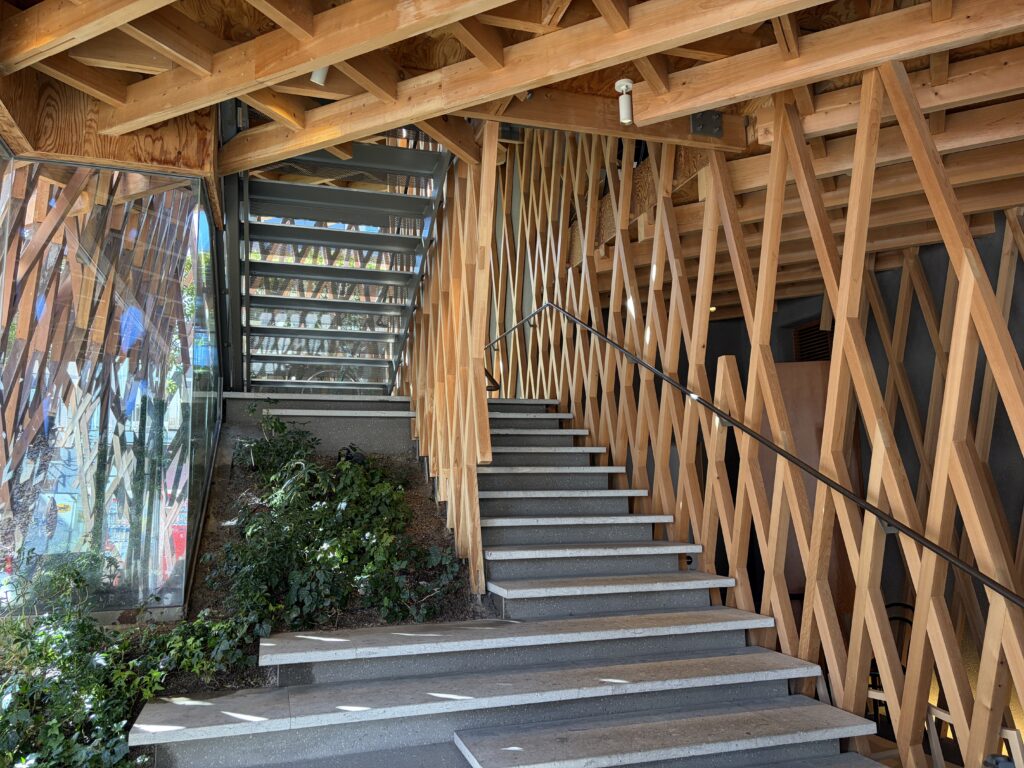
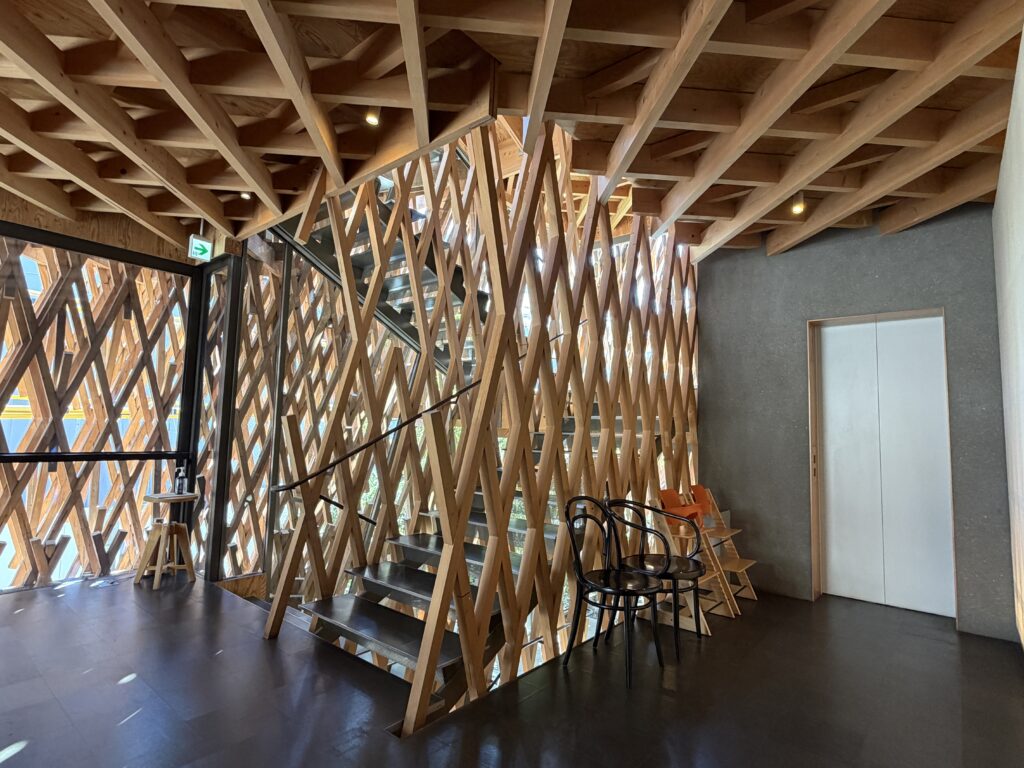
    The wood outside is coated against rain and wind, but inside it is left bare, so you can see and smell real timber. Climb the stairs through the lattice, with sunlight falling through the gaps. There is also an elevator.
    Tea and cake upstairs

    If you buy something in the shop, you are invited upstairs to the tea room, where you get a cup of black tea or oolong tea with a pineapple cake and an apple cake. Without a purchase, it costs ¥600. The third floor has the toilets and a display about the building.

    The shop opens at 11:00. On a weekday there were only a few people waiting, and it was not crowded. Photos are allowed inside, but a sign asks you not to photograph other customers. If you want photos of the interior, come right at opening time.

    One Omotesando: the rhythm of the trees

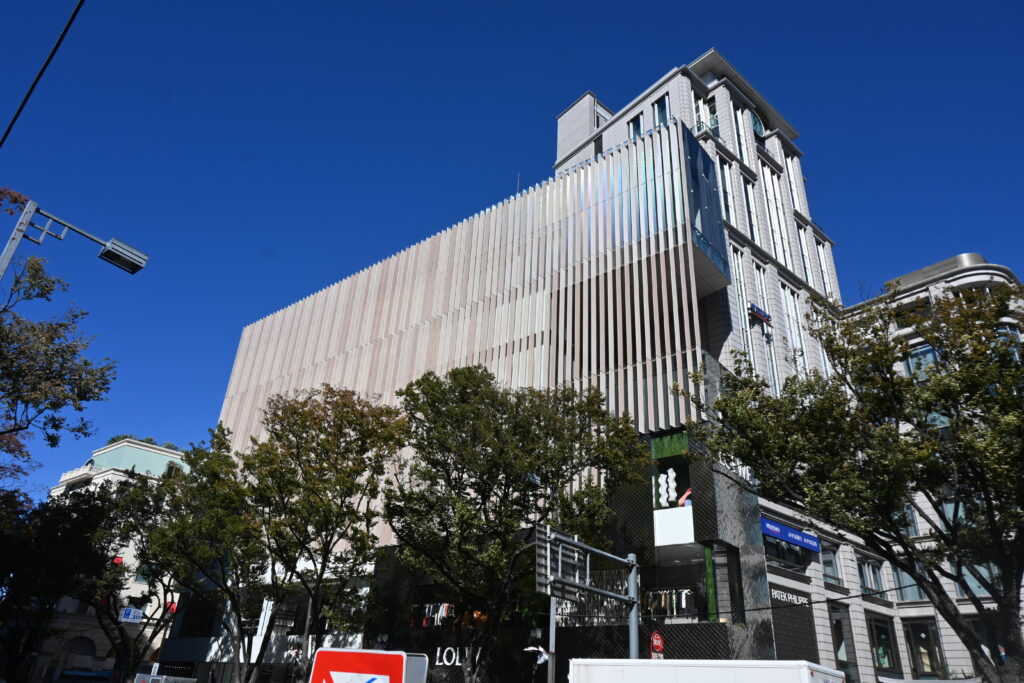
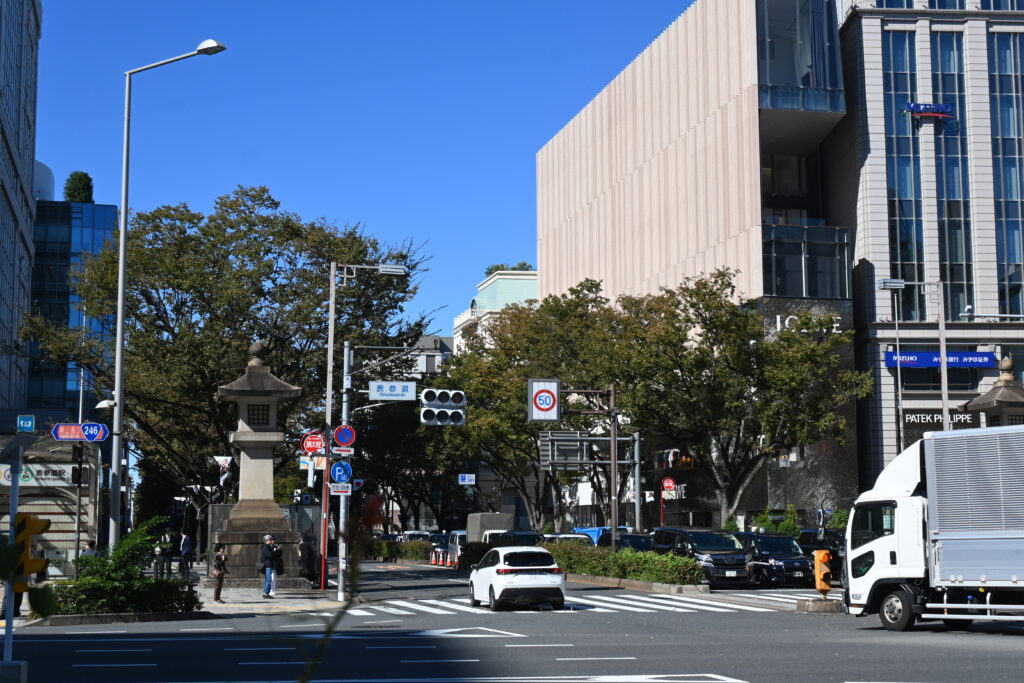
    Walk back to the big Omotesando crossing. Right by the crossing stands One Omotesando, an eight-story building completed in 2003. Most of it is offices and shops for luxury brands, so just enjoy it from outside. Its long front is covered with vertical louvers of red pine. Kuma explained that he wanted them to echo the rhythm of the zelkova trees planted along Omotesando.
    Walk the approach, not the subway

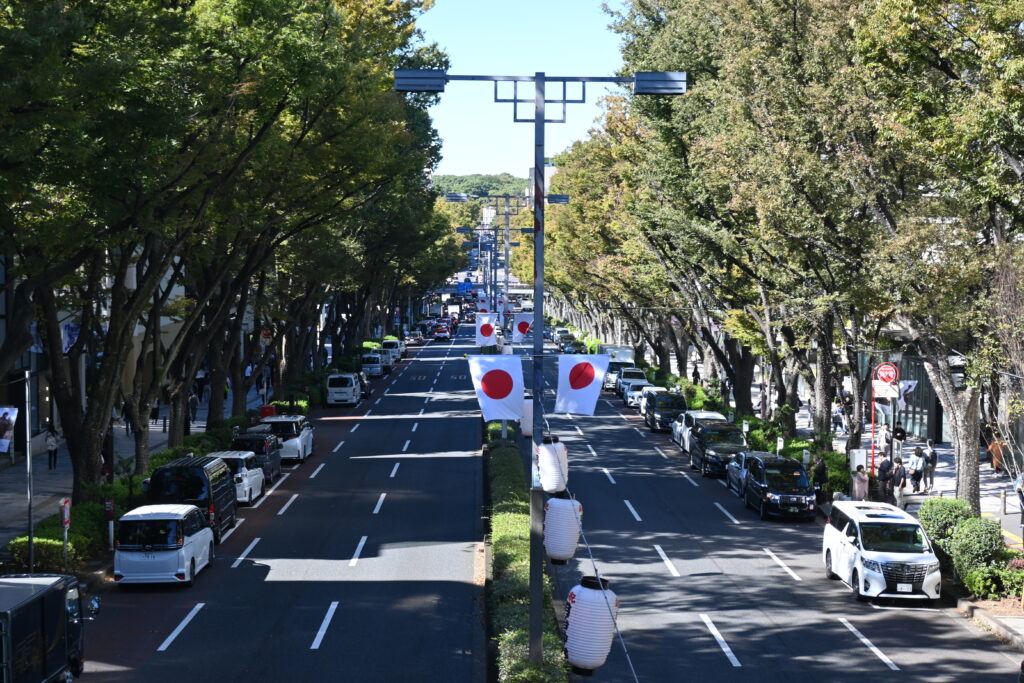
    From here, you could take the subway one stop to Meiji-jingumae. But please walk. Omotesando means “the front approach”: this avenue was laid out as the road to Meiji Jingu, so walking it is part of visiting the shrine. Zelkova trees line both sides, and the boutiques and showrooms are fun just to look at.
    Turn into a side street now and then. The lanes behind Omotesando are full of small cafés and independent shops.

    Meiji Jingu: a forest made by people

    At the end of Omotesando, cross Jingu Bridge into the shrine. Look over the side: the JR Yamanote Line runs right underneath.
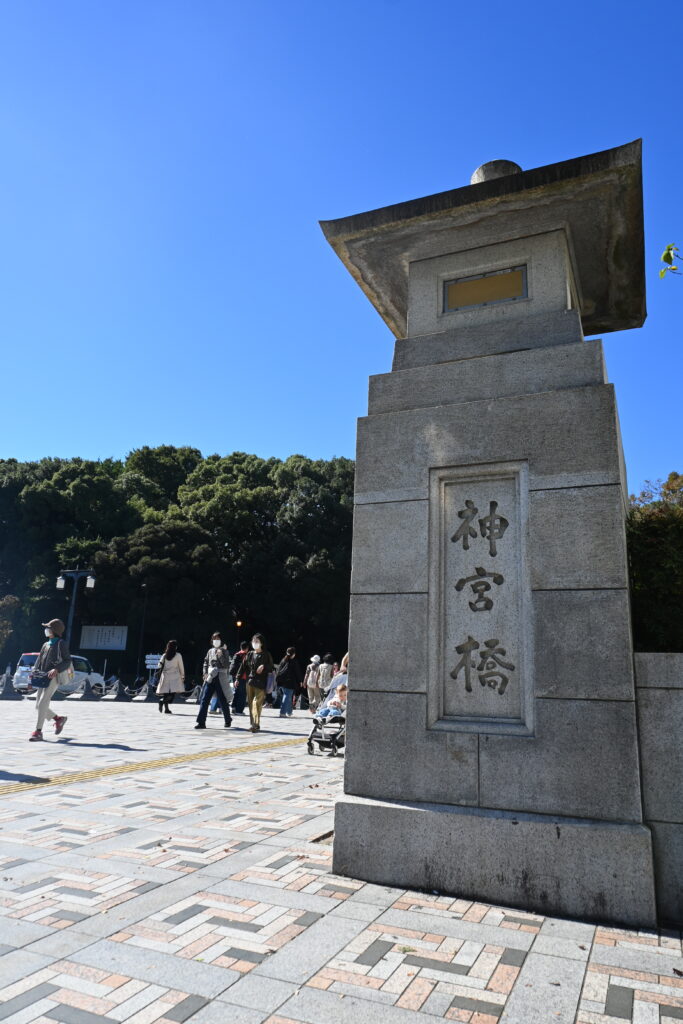
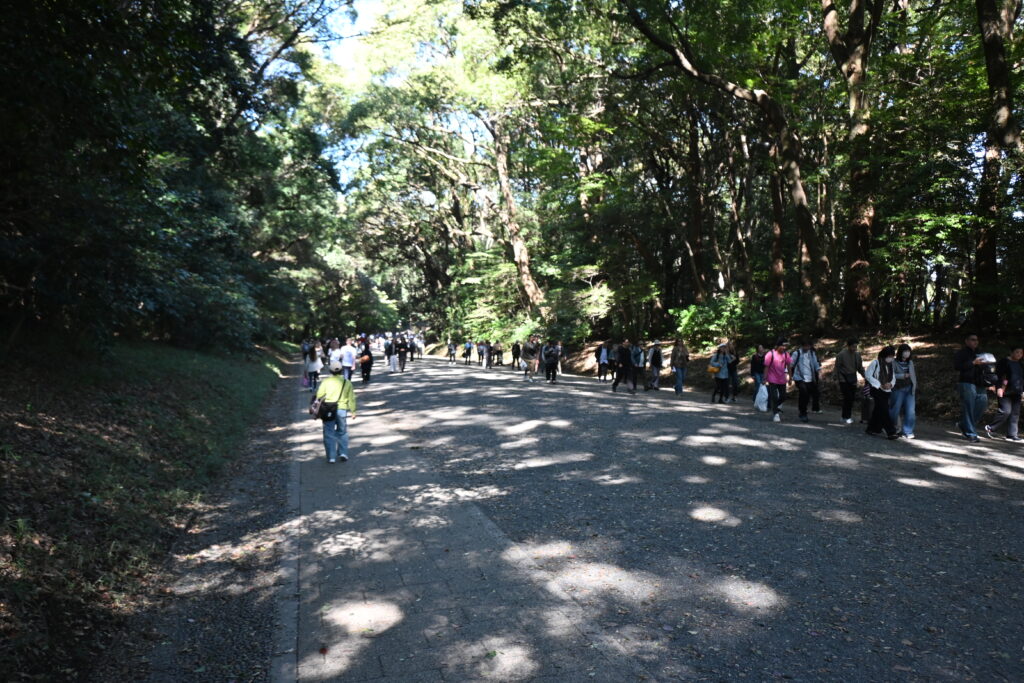
    Meiji Jingu was founded in 1920 for Emperor Meiji and Empress Shoken. About 100,000 trees were donated from all over Japan and planted to create the forest, which was designed to grow, change and renew itself like a natural one. A century later, it looks like it has always been here.

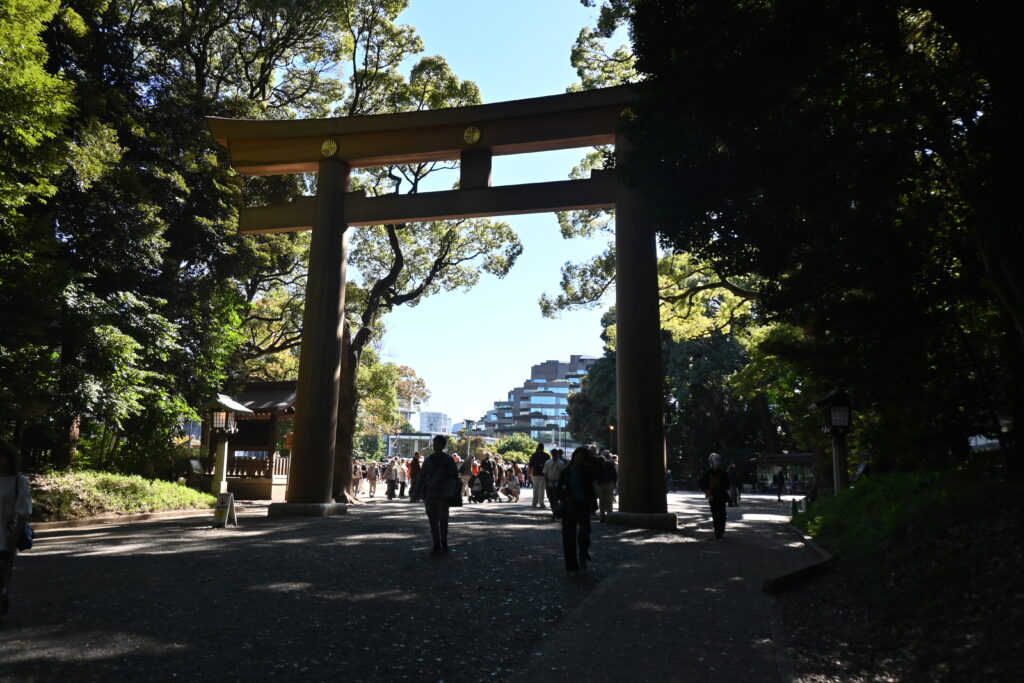
    Pass under the torii gate and the city disappears. There are plenty of visitors, but it is calm: you hear leaves moving, birds, and a stream under a small bridge.
    Meiji Jingu Museum: wood in the forest

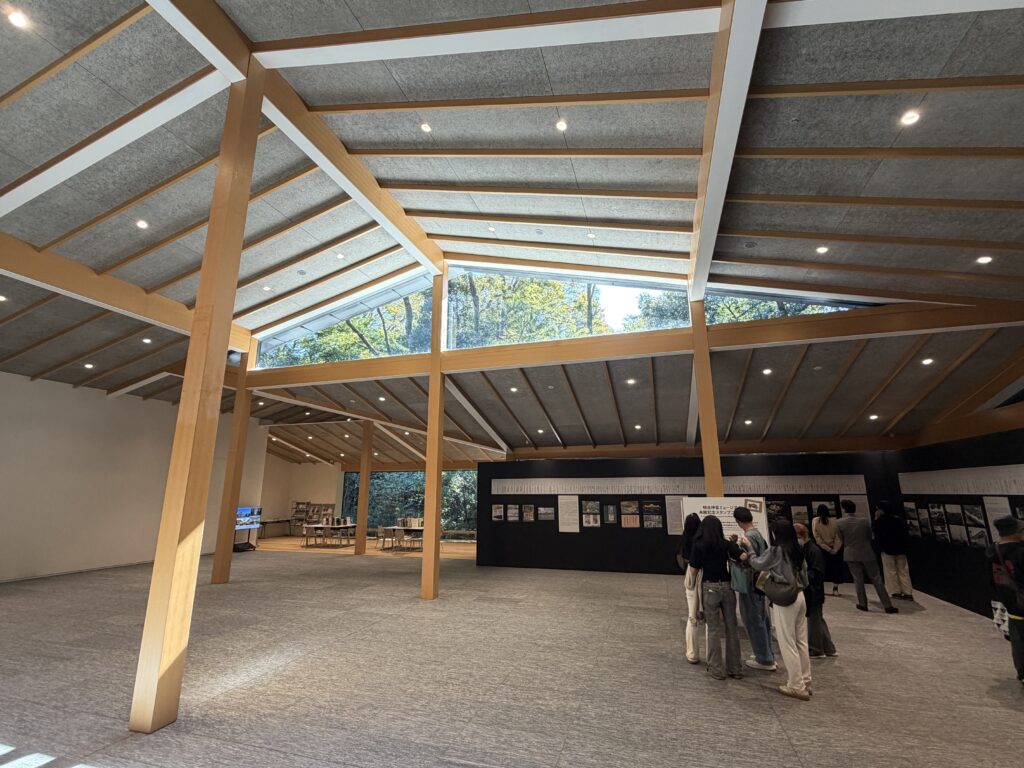
    The Meiji Jingu Museum, a short walk from the torii gate, opened in October 2019 to mark the shrine’s 100th anniversary. It displays treasures connected with Emperor Meiji and Empress Shoken. Kuma kept the building low, with gently sloping roofs and colors that blend into the trees. The columns inside are meant to suggest the trunks of the forest.

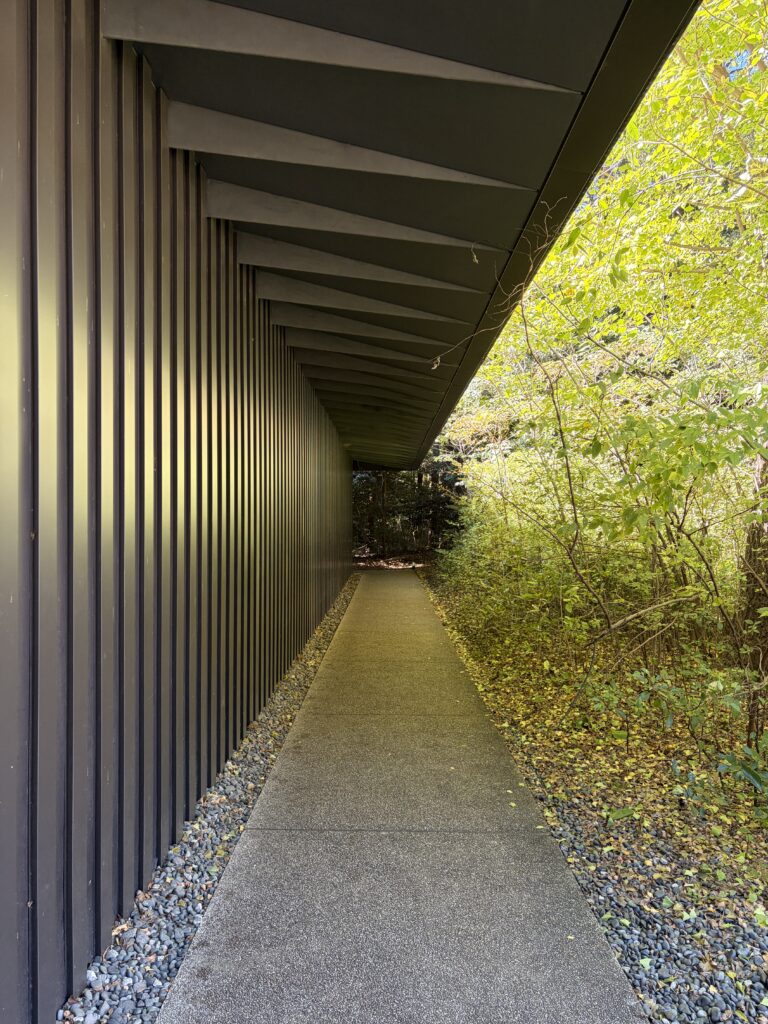
    Now remember the eaves at the Nezu Museum. Walk along the outside of this building and you will find almost the same thing: a long path under a deep, low roof, with wood on one side and green on the other. Two buildings, ten years apart, one in the city and one in the forest.
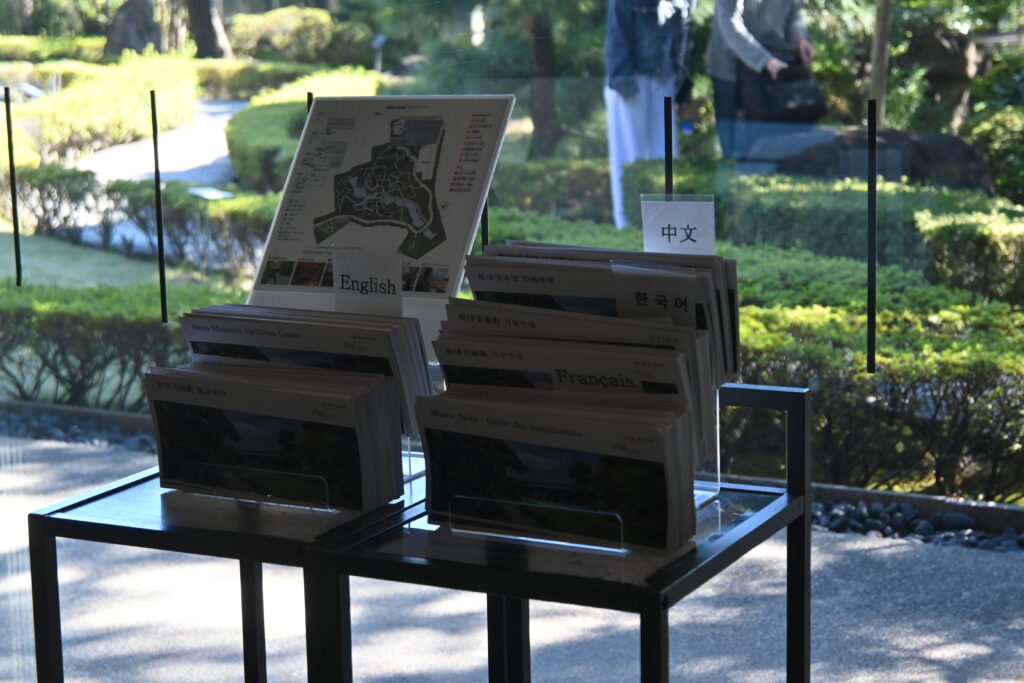
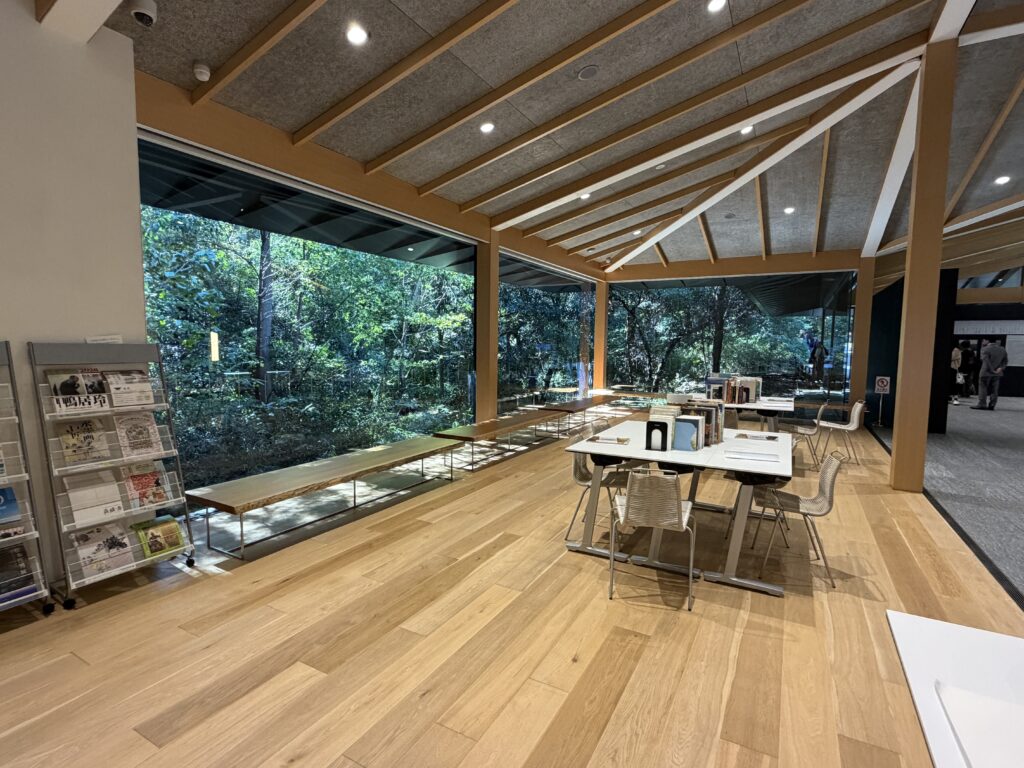
    Inside, wood and natural light make the rooms warm. Big windows separate you from the forest only by glass, so it feels as if you are sitting among the trees. The reading corner and the rest area upstairs have the same views.

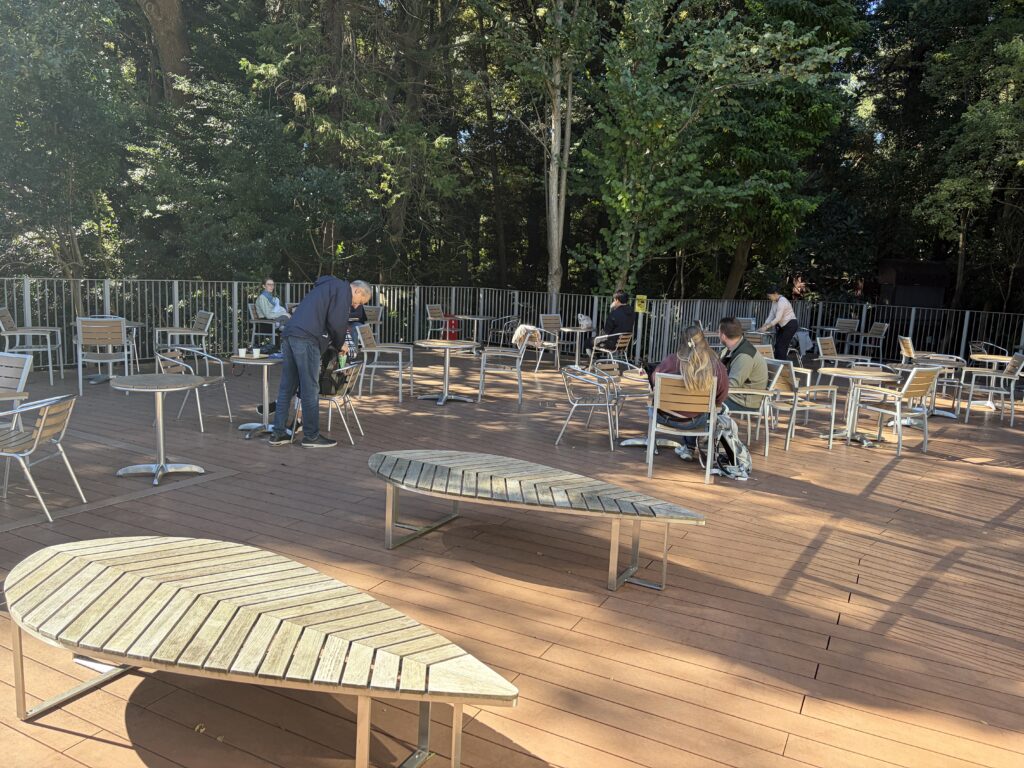
    The museum is open 10:00 to 16:30 (last entry 16:00) and closed on Thursdays. Admission is ¥1,000, and you must pay in cash. Next door, Forest Terrace (not designed by Kuma) has indoor and outdoor tables for coffee or a light meal.

    Standing here, I felt that this walk ends with a nice idea. The museum is clearly a man-made building, and the forest is a man-made forest. Yet a hundred years after the trees were planted, they look at home together.

    Best time to go

    Go on a weekday morning, and avoid Mondays and Thursdays. Book the Nezu Museum for 10:00 and head to the garden café first. SunnyHills opens at 11:00, which fits nicely after the museum. Leave enough time to reach the Meiji Jingu Museum before its last entry at 16:00.

    One more thing I noticed: Kuma’s wood changes color with the light. Morning, afternoon, evening, sunshine or cloud, the same building looks different, so it is worth coming back at another time of day.

    Good to know before you go

    • Check the day. The Nezu Museum is closed on Mondays (and between exhibitions), the Meiji Jingu Museum on Thursdays.
    • Bring cash. The Meiji Jingu Museum accepts cash only (¥1,000).
    • Steps in the garden. The Nezu Museum garden has many steps and stone paths. Inside the museum building, getting around is easy.
    • Stairs at Exit A5. Use Exit B3 and its elevator if stairs are difficult.
    • The café fills up fast. Book a 10:00 museum entry and go to the café first. Photos are not allowed inside.
    • Respect other customers. At SunnyHills, do not photograph other guests. Come at opening time for empty-room photos.

    Getting there

    • From Asakusa: Tokyo Metro Ginza Line direct to Omotesando, about 30 minutes, no change of train.
    • From Ginza (Kabuki-za): Ginza Line to Omotesando, about 15 minutes.
    • Going home: Harajuku Station (JR Yamanote Line) is right by Jingu Bridge, and Meiji-jingumae Station (Chiyoda and Fukutoshin lines) is next to it.

    Make a day of it

    See more of Omotesando’s architecture with a guide

    Omotesando is packed with buildings by famous architects, from Tadao Ando to SANAA. If you want an expert to show you around, this private three-and-a-half-hour architecture tour in English starts at Jingu Bridge and covers works such as SunnyHills, Dior and Prada, plus the back streets. It has excellent reviews, is wheelchair accessible and can be cancelled free of charge up to 24 hours before. As a private tour it is not cheap, and prices may change, so check the details before you book.

    Where to stay

    TRUNK(HOTEL) CAT STREET

    Why choose: A stylish boutique hotel on Cat Street, the relaxed shopping lane between Harajuku and Shibuya. You can walk to Meiji Jingu and Omotesando.

    The Aoyama Grand Hotel

    Why choose: A comfortable hotel on Aoyama-dori, on the Ginza Line, so getting to Ginza and Asakusa is easy, and Omotesando is close by.

    Official websites

    Next time

    Next time, we take the Ginza Line from Omotesando back toward Asakusa and stop at Ueno Park. Once the grounds of a great temple, it has been a battlefield, a racecourse and finally Tokyo’s museum quarter, home to Le Corbusier’s only building in Japan.

    Photos: Aozora Walks. Information as of October 2026. Sources: official websites of each facility.
  • Sakai, Ibaraki: A Kengo Kuma Town on the Tone River, One Bus Ride from Tokyo

    Sakai, Ibaraki: A Kengo Kuma Town on the Tone River, One Bus Ride from Tokyo

    This post contains affiliate links. If you book through them, I may earn a small commission at no extra cost to you.

    In Part 1, we watched kabuki inside Kengo Kuma’s Kabuki-za in Ginza. For Part 2, we leave Tokyo for a small town most visitors have never heard of: Sakai, in Ibaraki Prefecture. Kuma has designed seven or eight buildings here, and the main ones stand within a few minutes’ walk of each other. Few places in Japan let you see so many of his works in one stroll.

    As a geography teacher, I was curious about one question: why would a world-famous architect keep coming back to a quiet farming town on the Tone River? The answer, as so often in Japan, starts with a river.

    Quick facts

    WhatWalk between Kengo Kuma buildings in a small river town, with a dried sweet potato café and a lunch stop
    WhereSakai, Ibaraki Prefecture, on the Tone River
    CostHighway bus from Tokyo Station ¥1,800 one way. Town bus: free. Buildings: free to see from outside
    TimeHalf a day in town, plus about 1.5 hours each way from Tokyo
    From TokyoHighway bus from Tokyo Station (Yaesu South Exit) to Sakai Highway Bus Terminal, then the free town bus

    Find your way

    The buildings are in two groups, a short walk apart. Open these on your phone to find them:

    Why Kuma came to a small river town

    Sakai grew up as a kashi, a river port. In the Edo period, rice, soy sauce and other goods from northern Japan came down the Tone River to Sakai. Just across the water, at Sekiyado, the Edo River branches off and flows south to Tokyo Bay. So from Sakai, boats could carry cargo all the way to the city of Edo, today’s Tokyo. Katsushika Hokusai, the artist of the famous Great Wave, made a print of this river in the early 1830s: “The Tone River in Sōshū,” from his series A Thousand Pictures of the Sea, with fishermen casting their nets from small boats.

    If you rode the water bus down the Sumida River with us, you have already seen the other end of this old water network. You will still find the memory of the river port in Sakai today, in names like “Kashi-no-Eki” and “Sakai Kashi Restaurant.”

    When trains and trucks replaced boats, the town lost its role and, like many places in rural Japan, its center began to empty out. The turning point was a mix of local food and modern design. The town built S-Lab, one of Kuma’s buildings, as a lab for developing local products. A dried sweet potato (hoshiimo) created there became a hit as a thank-you gift in Japan’s furusato nozei program, a system where people donate to a town of their choice and receive local products in return. According to Japan’s Ministry of Finance, donations to Sakai rose from just ¥65,000 in fiscal 2013 to ¥4.85 billion in fiscal 2021. Here, architecture became part of how the town earns its living.

    Look closely and you will see that Kuma’s designs here borrow from local life: the bamboo blinds used to dry sweet potatoes, the fibers of the potato itself, the storehouses of the old river port. Most of them use wooden louvers, slats of timber set at angles, his signature.

    HOSHIIMONO100 Café: a building inspired by dried sweet potatoes

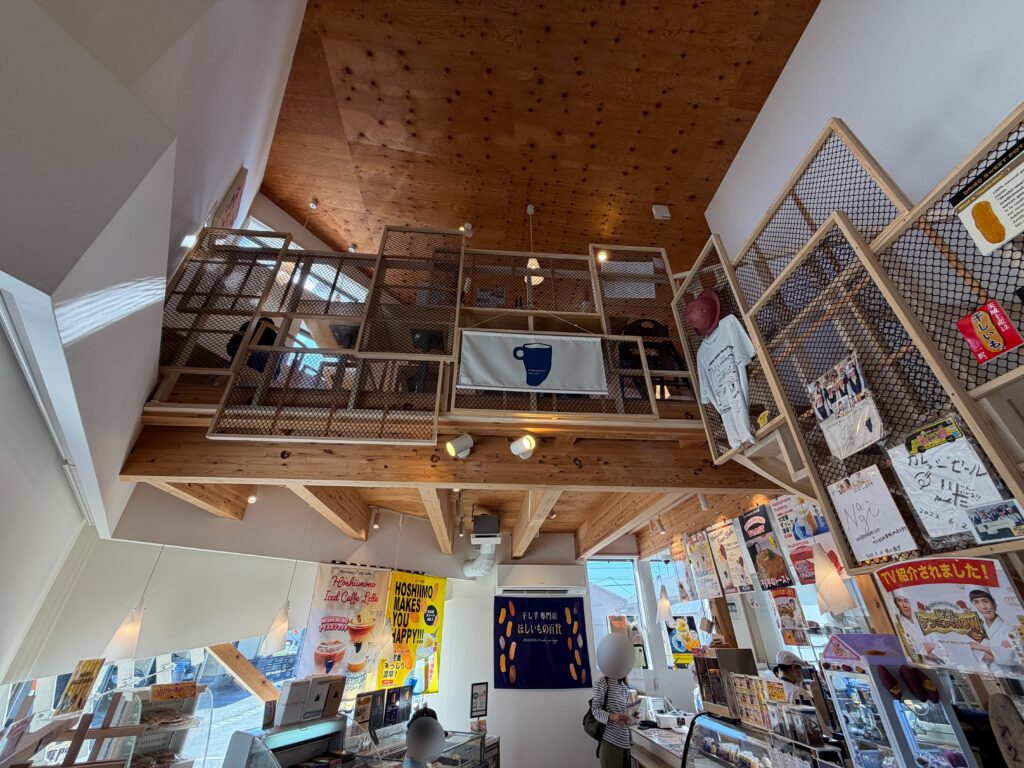
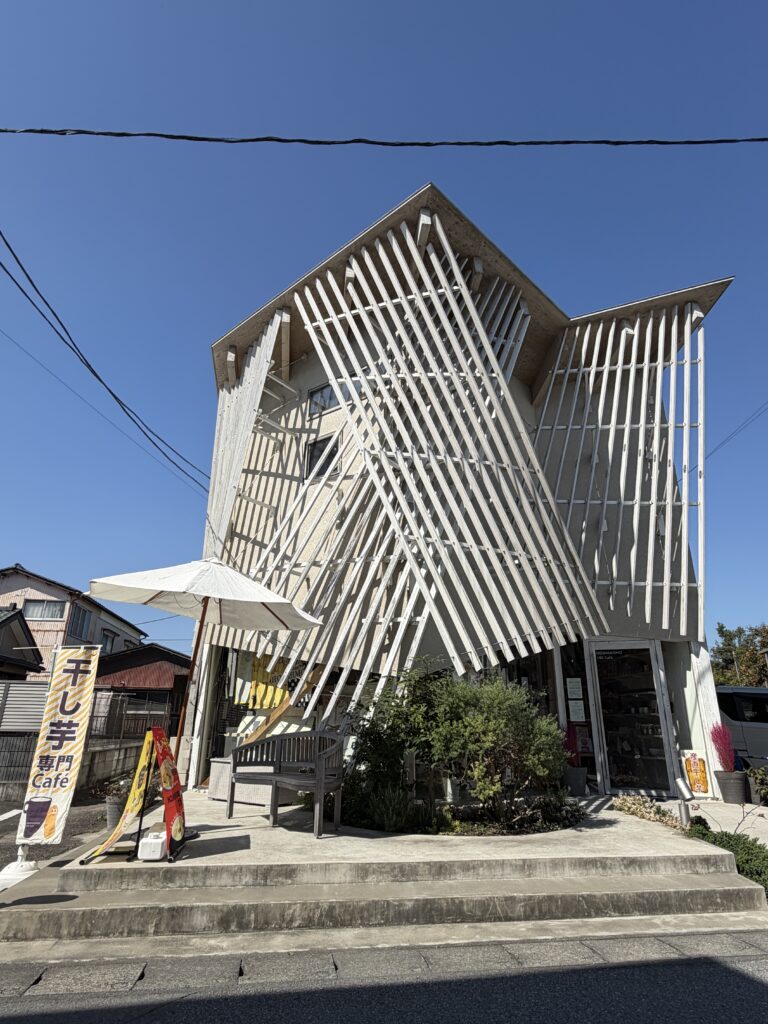
    Get off the town bus at Sakahana-cho and you will see it right away: a white building wrapped in slanted wooden louvers. They are said to echo the bamboo blinds used to dry sweet potatoes, and the fibers of the potato itself. As the sun moves, the louvers throw layers of light and shadow across the facade, so the building looks different every time you glance at it.

    This is the main shop of Hoshiimono Hyakka, a dried sweet potato specialist, with a café inside. Try the hoshiimo pudding, a cake or a café latte. The sweetness comes gently from the potato itself. With all that warm wood around you, it is a genuinely calming place to sit for a while, and a good spot to buy snacks for the trip home.

    S-Lab and S-Gallery: a lab you can look into

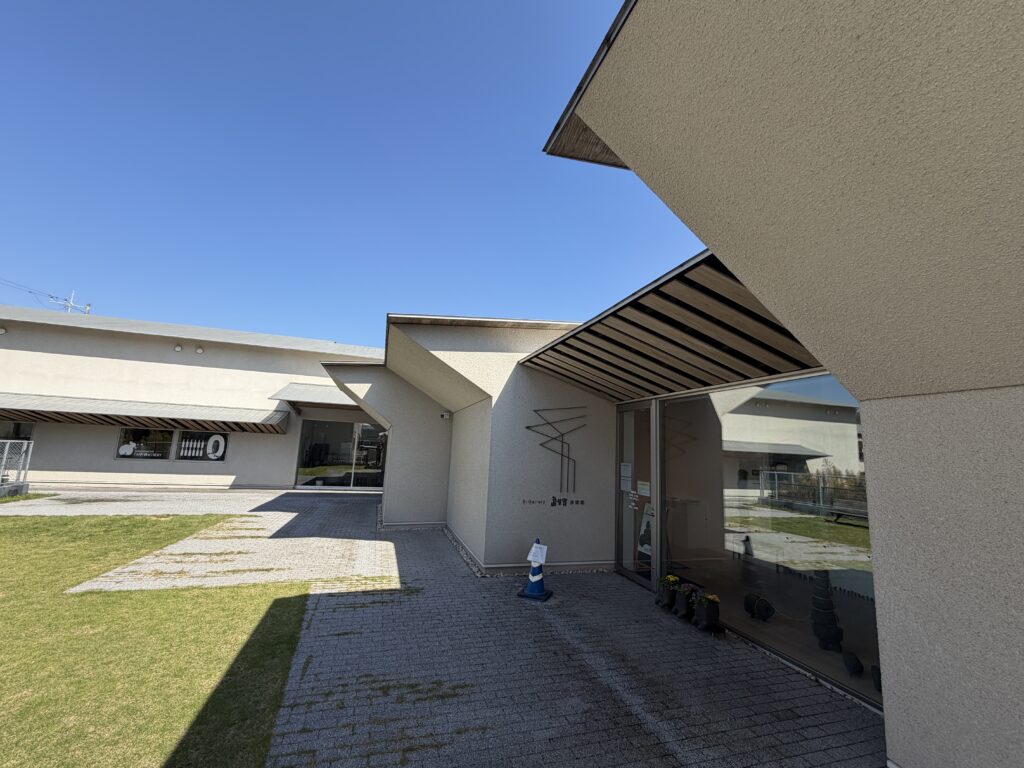
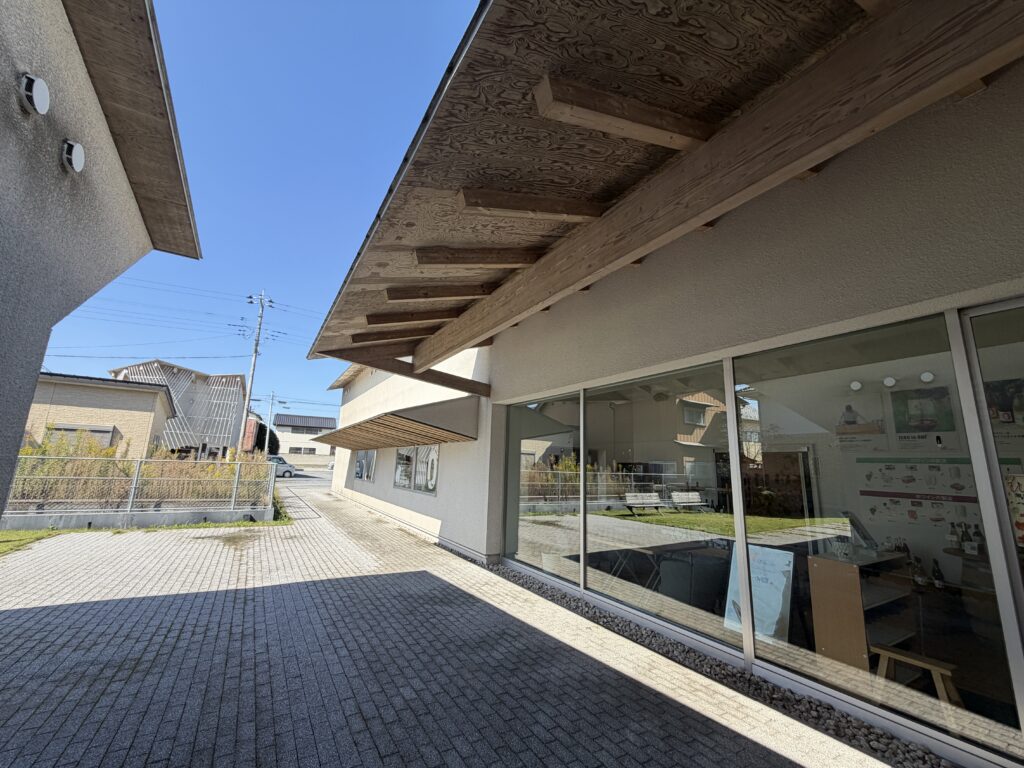
    Right next to the café is S-Lab, the research and development center where local products are created. Its walls are mostly large sheets of glass, so you can watch steps such as dried sweet potato processing and winemaking from outside. Look up at the deep eaves: their wooden underside is the building’s best feature. S-Lab is joined in an L shape to S-Gallery, a small museum for the painter Shukusanpō, who spent his later years in Sakai.

    Both were closed on the Sunday I visited, so I could only enjoy them from outside. S-Gallery is officially closed on Mondays and Tuesdays, but it may also close on other days, so check before you go if you want to step inside.

    Sakai Sand: where it all began

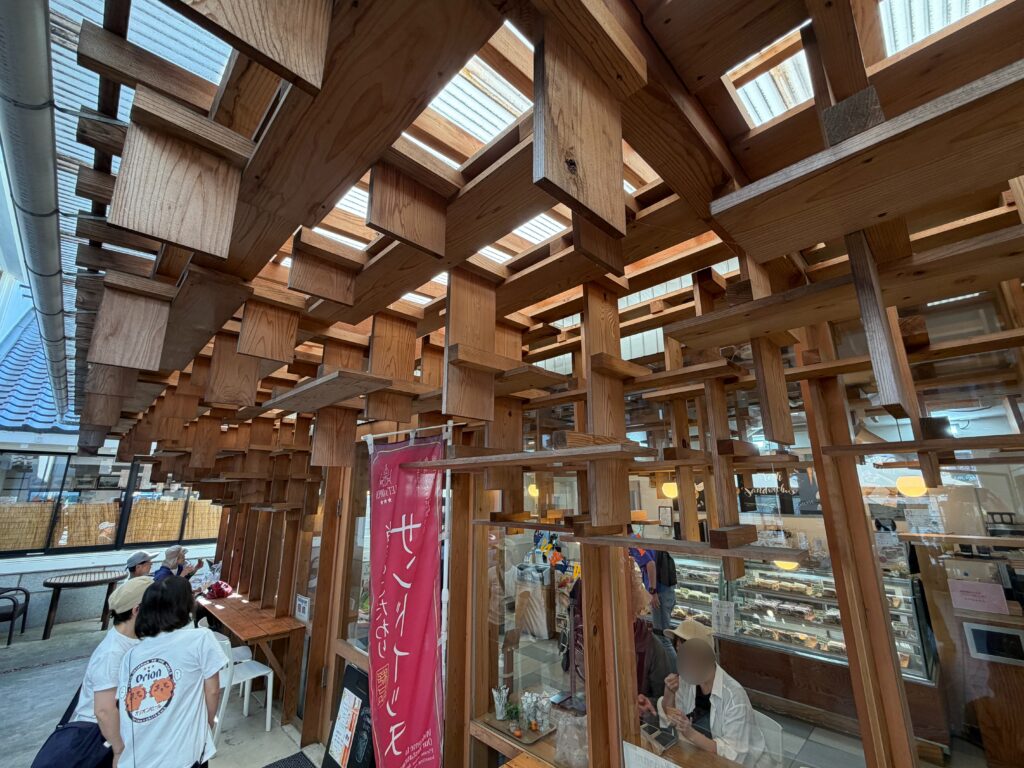
    From the café, walk south to Michi-no-Eki Sakai, the town’s roadside station with a farmers’ market and souvenir shop. Inside is Sakai Sand, a sandwich shop that opened in 2018 as the very first project between Kuma and the town. The sandwiches are filled with fresh local vegetables and fruit. What I loved most was the structure: boards of timber stacked and crossed overhead in a bold, almost playful way.

    Chakura: a storehouse with wings

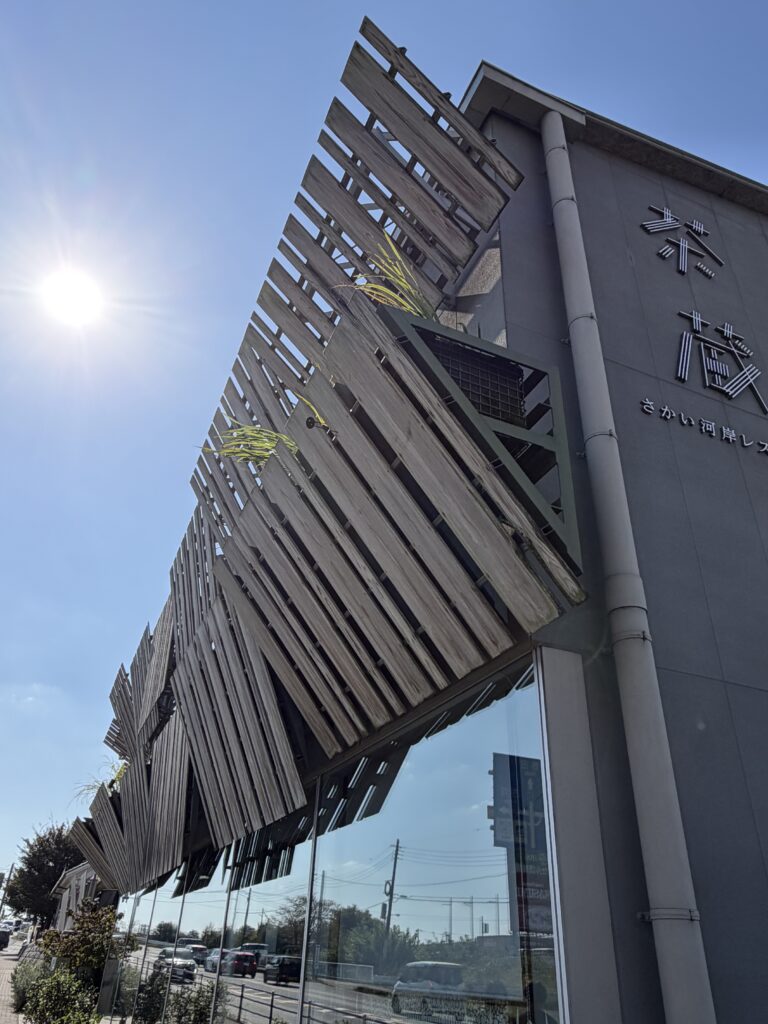
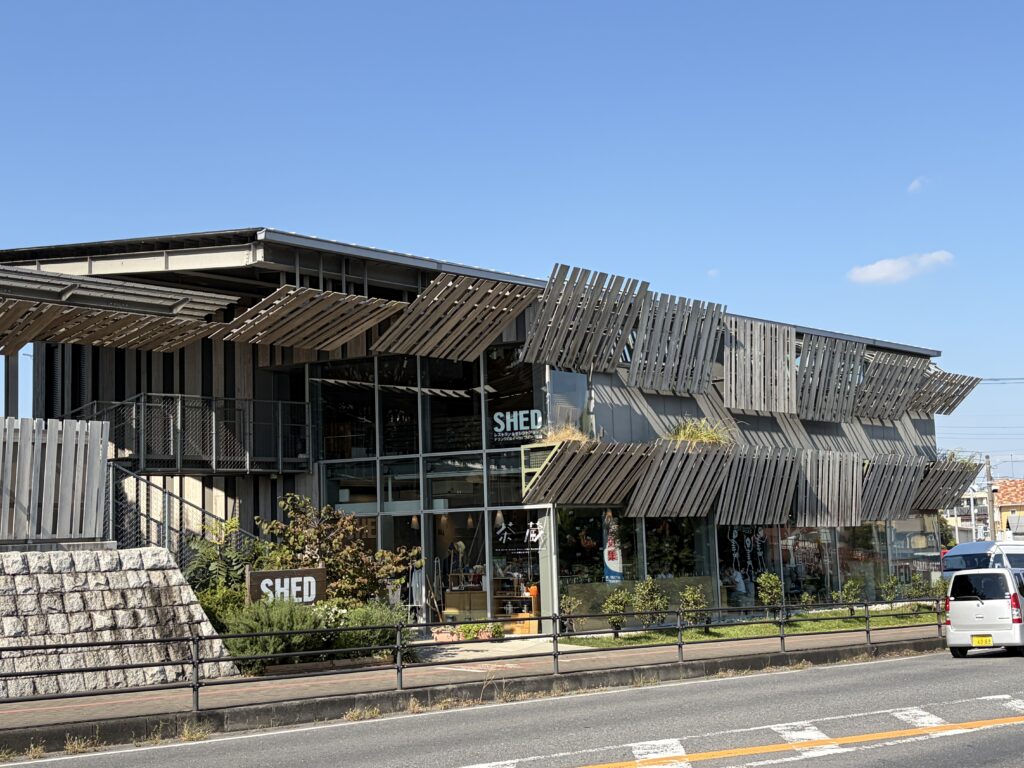
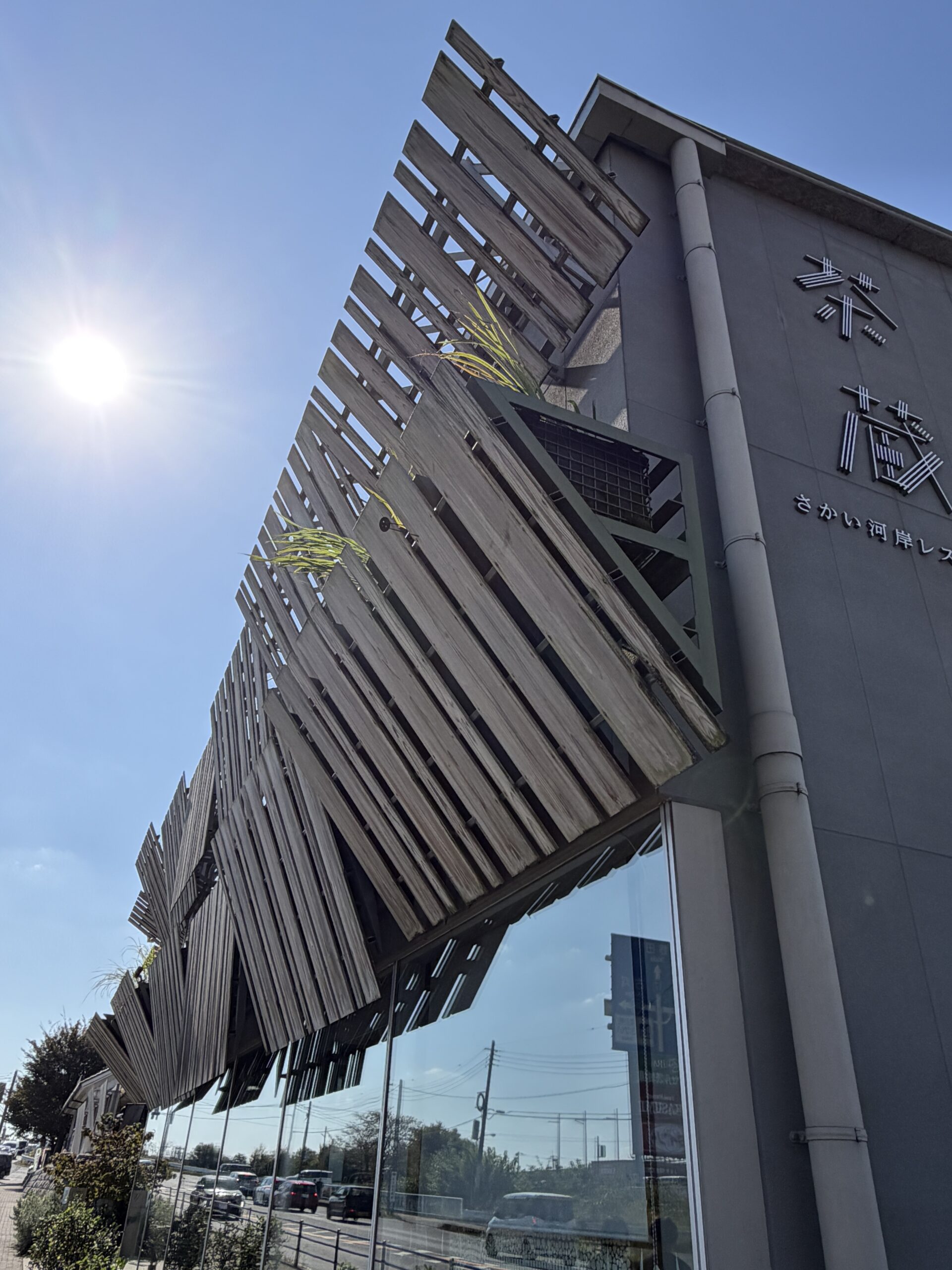
    Next door stands Chakura, the “Sakai Kashi Restaurant.” Its tall gray wall recalls the kura storehouses of the old river port, and on it hang huge wooden louvers that spread out like wings. Seen from below, it is breathtaking, one of the boldest designs in the town.

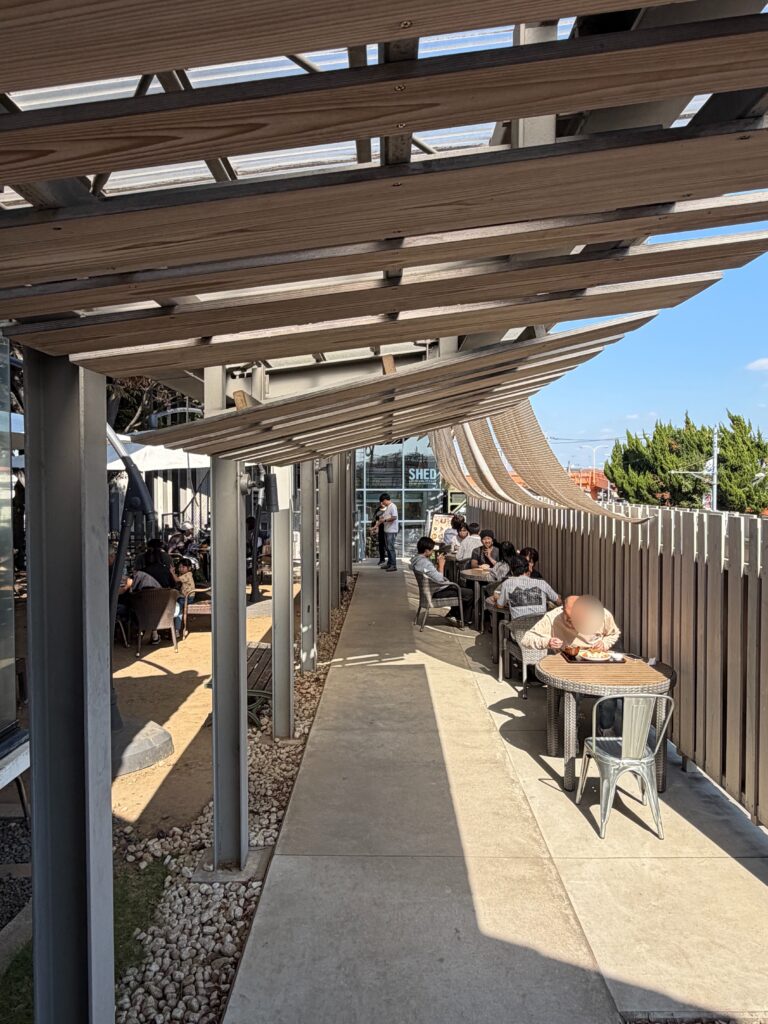
    Don’t let the storehouse look fool you: the restaurant inside is now SHED, a casual café-restaurant using local ingredients. The menu changes with the seasons and has included steak rice bowls, pasta, hamburg steak and bento boxes. Between the building and the roadside station runs a semi-outdoor walkway with tables, shaded by another wooden louver roof in Kuma’s typical style. On a fine day, it is a lovely, relaxed place for lunch.

    Across the road from the roadside station is a shopping area with a Kasumi supermarket, Don Quijote and Mister Donut, and Goroko-no-Yu, a large public bathhouse, if you would like to end your day with a soak. Just to the south flows the Tone River, crossed by the Sakai-Ōhashi Bridge to Sekiyado in Chiba Prefecture.

    The town bus (and the self-driving bus)

    Sakai is famous in Japan for another reason: in 2020, it became the first town in the country to run self-driving buses on public roads every day as regular public transport, using small electric buses made by the French company Navya. As of October 2026, however, the self-driving buses are out of service for long-term maintenance, and no restart date has been announced. A regular bus with a driver runs on the same route and timetable instead, and it is still free.

    For this walk, take the bus from Sakai Highway Bus Terminal to the Sakahana-cho stop, right in front of the café. After that, everything is within walking distance.

    Best time to go

    Thursday to Saturday. Each place has different closing days, so on Sunday to Wednesday, something will be closed: the café closes on Tuesdays and Wednesdays, S-Gallery on Mondays and Tuesdays, and S-Lab was closed on the Sunday I visited. Go on a sunny day if you can. The louvers look their best when the light throws strong shadows.

    Good to know before you go

    • Check the bus home first. Highway buses back to Tokyo are not frequent, so check the timetable before you set off.
    • Trains are slow here. Sakai has no train station. By train, you need a local bus from Tobu-Dobutsu-Koen or Koga Station, so the highway bus is much easier.
    • Not a big sightseeing spot. This is a quiet working town, not a tourist attraction. Come for the architecture, the food and the calm, not for crowds or souvenir streets.
    • Opening hours (as of October 2026): Michi-no-Eki Sakai and Sakai Sand, usually 9:30–17:00 (10:00–17:00 on weekends, hours vary by day). SHED, 10:00–17:00. HOSHIIMONO100 Café, 10:00–18:00 (last order 17:00), closed Tuesdays and Wednesdays. S-Gallery, 10:00–12:00 and 13:15–17:00, closed Mondays and Tuesdays, ¥330.

    Getting there

    • Highway bus (easiest): Tokyo Station, Yaesu South Exit, to Sakai Highway Bus Terminal, via Oji Station. About 1 hour 30 minutes, ¥1,800 (JR Bus Kanto and Kanto Railway). Then take the free town bus to Sakahana-cho.
    • By train and bus: Tobu Nikko Line to Tobu-Dobutsu-Koen Station, or JR Utsunomiya Line to Koga Station, then an Asahi Bus bound for “Sakai Shako.” Get off at “Sakai-machi Yakuba Iriguchi.”
    • By car: the buildings have parking.

    Book your trip

    Highway bus

    You can check timetables and reserve seats on the operator’s official site.

    Stay connected

    Out in the countryside, you will want mobile data for bus timetables and maps.

    Official websites

    Next time

    In Part 3, we return to Tokyo and walk from Aoyama to Harajuku, from the bamboo-lined approach of the Nezu Museum to the forest of Meiji Jingu, to see how Kuma brings wood and green into the heart of the city.

    Photos: Aozora Walks. Information as of October 2026. Sources: Ministry of Finance, Japan, “Finance” (December 2022); official websites of each facility.
  • Kabuki-za in Ginza: Watch One Act of Kabuki and Find the Upside-Down Phoenix

    Kabuki-za in Ginza: Watch One Act of Kabuki and Find the Upside-Down Phoenix

    This post contains affiliate links. If you book through them, I may earn a small commission at no extra cost to you.

    At the end of our water bus trip, I promised a closer look at the buildings of Kengo Kuma. We start with one of his best-loved works: Kabuki-za, the home of kabuki in Ginza.

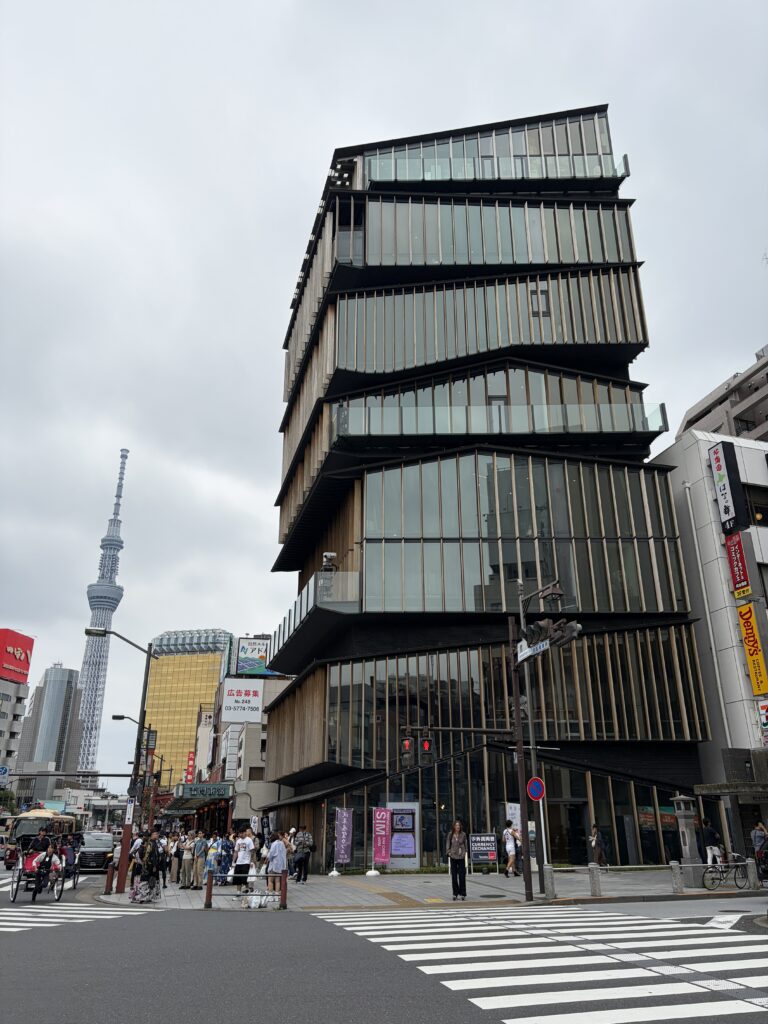
    Our journey begins in Asakusa, at another Kuma building, the Asakusa Culture Tourist Information Center across from Kaminarimon. From Asakusa, the Toei Asakusa Line takes you to Higashi-Ginza Station in about 15 minutes with no change of trains, and the station connects directly to Kabuki-za.

    Before you set off, step inside the ground-floor entrance and look up. The ceiling is made of layers of wooden slats and beams, so the building feels warm even though it is made of glass and steel. Bringing wood into modern buildings is one of Kuma’s trademarks, and you will see it again in Part 2.

    Quick facts

    WhatWatch one act of kabuki, then explore the free rooftop garden
    WhereKabuki-za, Ginza (Higashi-Ginza Station, Exit 3)
    CostVaries by act (I paid ¥3,000 for a 75-minute act). Rooftop garden: free
    Time30–90 minutes per act, plus about 30 minutes for the rooftop
    From AsakusaToei Asakusa Line, about 15 minutes, no transfer

    Arriving at Kabuki-za

    Exit 3 at Higashi-Ginza Station brings you straight into Kobikicho Hiroba, a basement floor with souvenir shops, a 7-Eleven and a Tully’s Coffee, so it is a good place to wait if you arrive early. It is named after Kobiki-cho, the old name of this area, where Kabuki-za first opened in 1889.

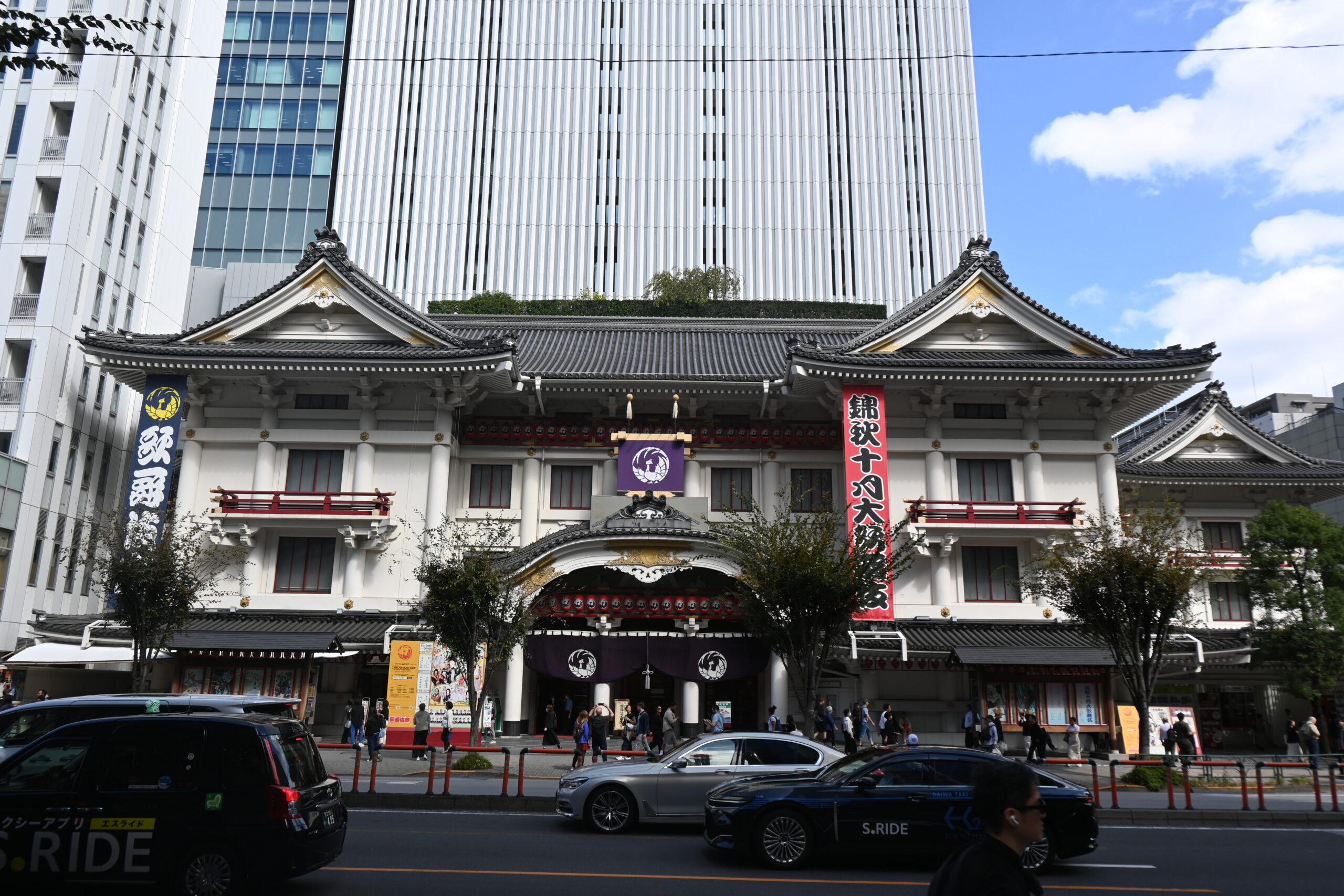
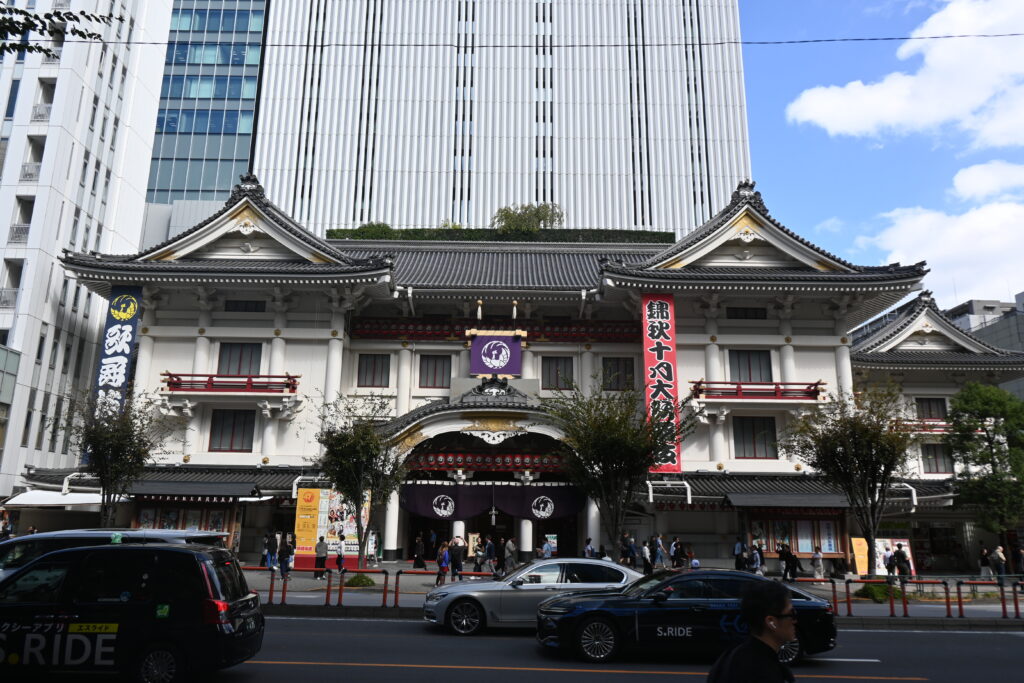
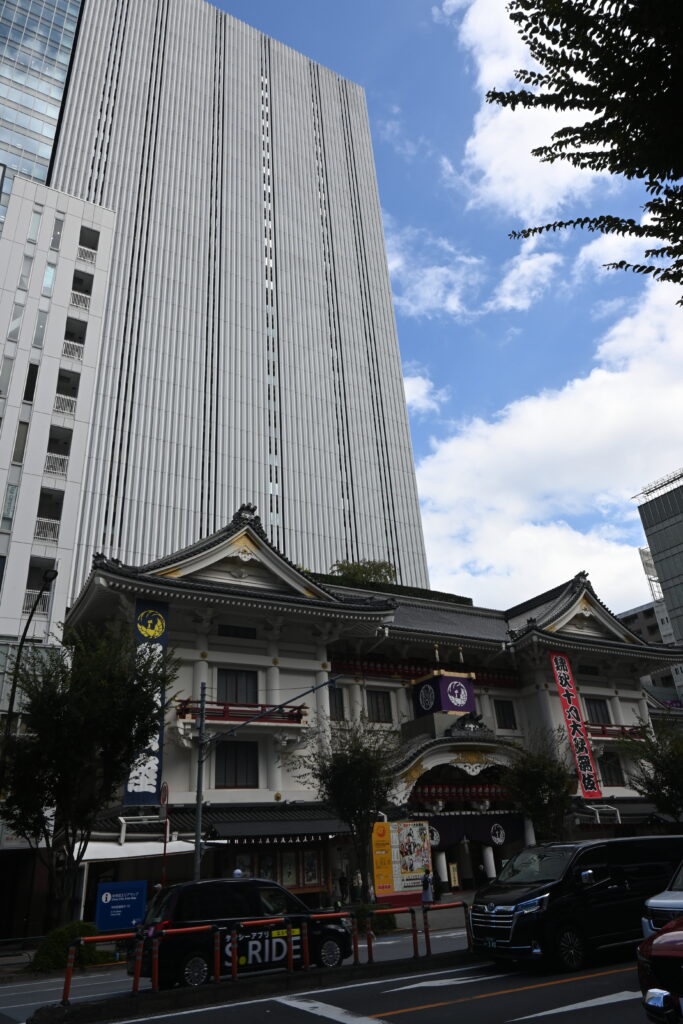
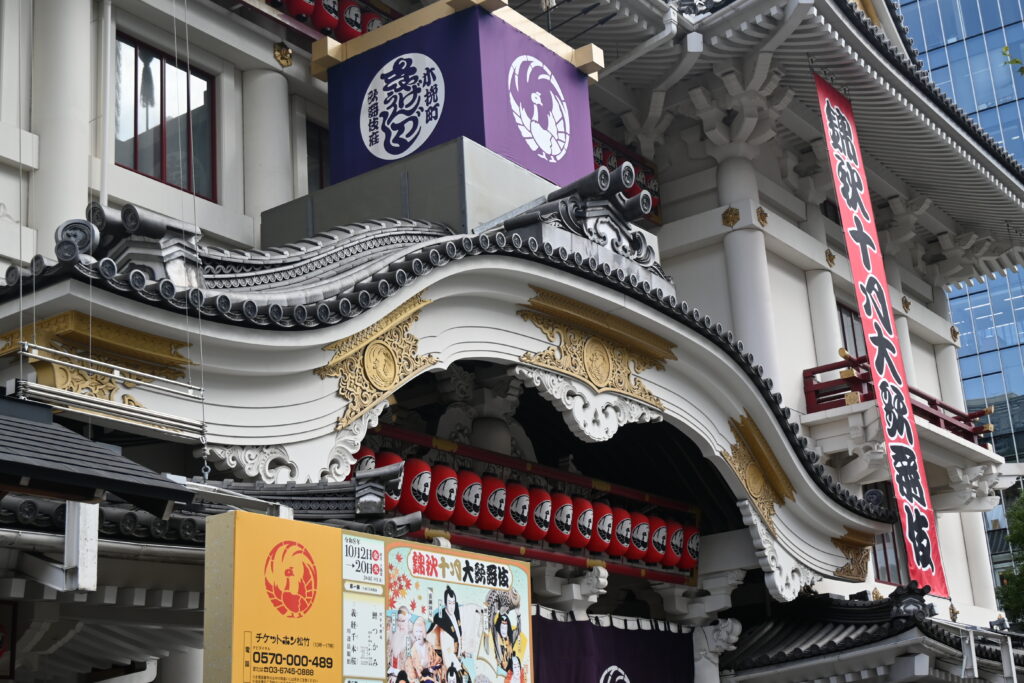
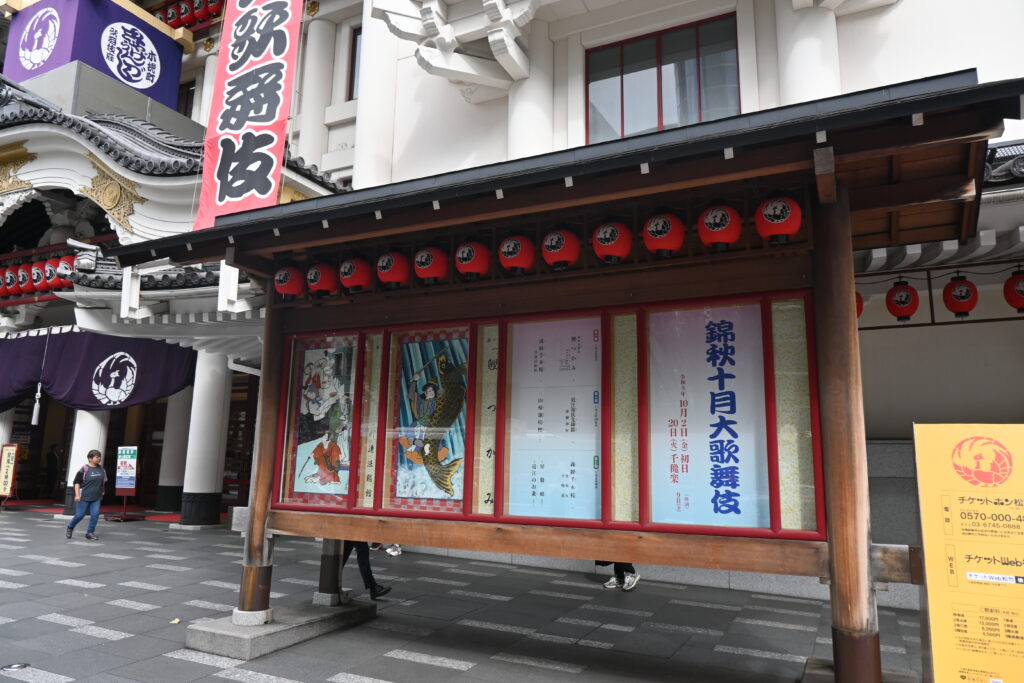
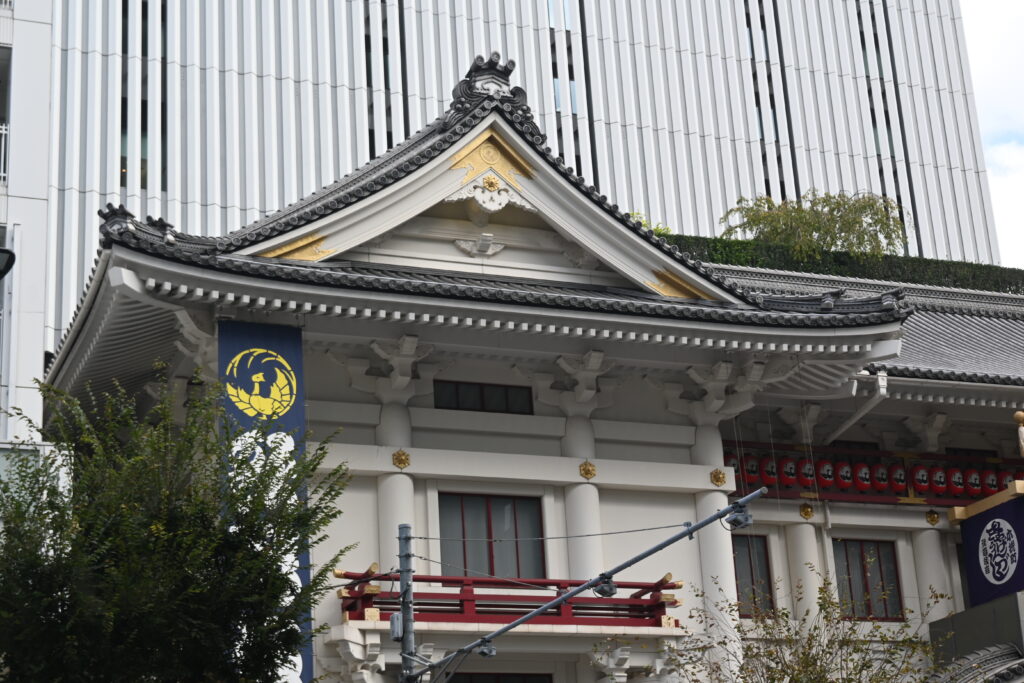
    Take the escalator up and cross Harumi-dori. From the other side of the street, you can see the whole facade: the curved roof and red lanterns of a traditional theater in front, and the modern Kabuki-za Tower rising behind. This is how Kuma rebuilt a beloved old theater without losing its face.

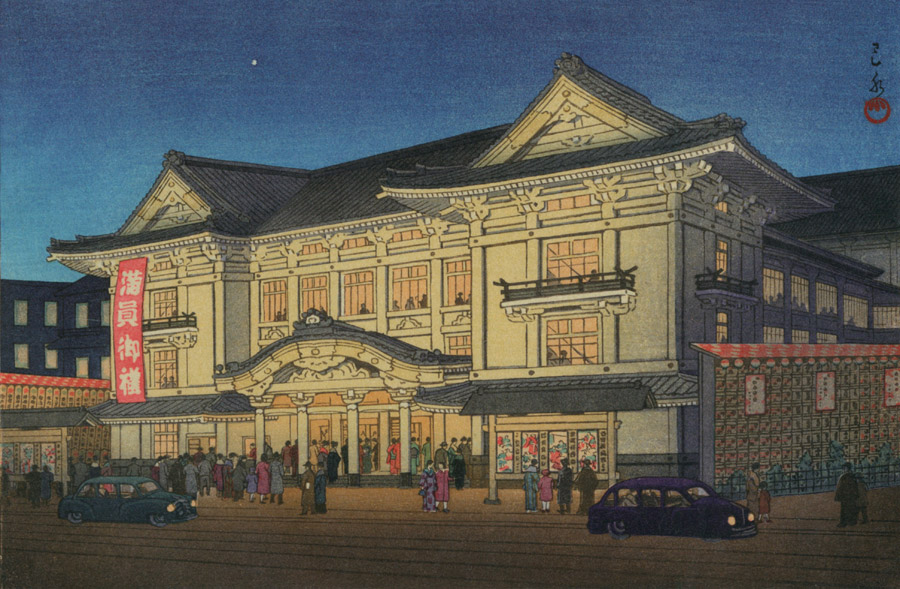
    The woodblock print below by Kawase Hasui shows Kabuki-za in 1951, the year it reopened after being burned in the war. Compare it with today’s facade: the curved gables and the tiled roofline live on.

    Watching kabuki for one act

    A full kabuki program lasts four hours or more. The Ichimakumi seats let you watch just one act, from about 30 to 90 minutes. Not too short, not too long, and easy on the wallet: for first-timers, it is the perfect way to try kabuki.

    • Online: reserved seats go on sale at noon the day before. You show a QR code on your phone at the entrance.
    • On the day: a small number of seats are sold from 10:00 at the window beside the main entrance. Popular acts sell out fast. On the day I went, some people were turned away.

    The Ichimakumi entrance is right next to the same-day ticket window, to the left of the main entrance. An elevator takes you straight up to the 4th floor, where there are restrooms and drink vending machines. Once you enter, you cannot go out and come back in.

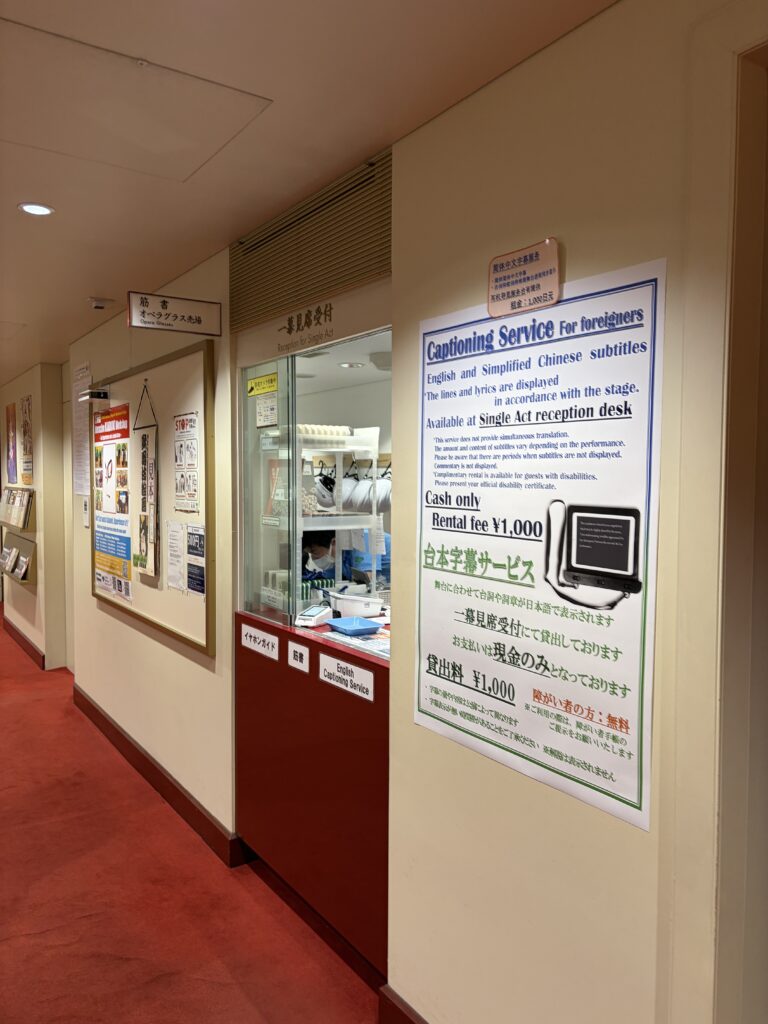
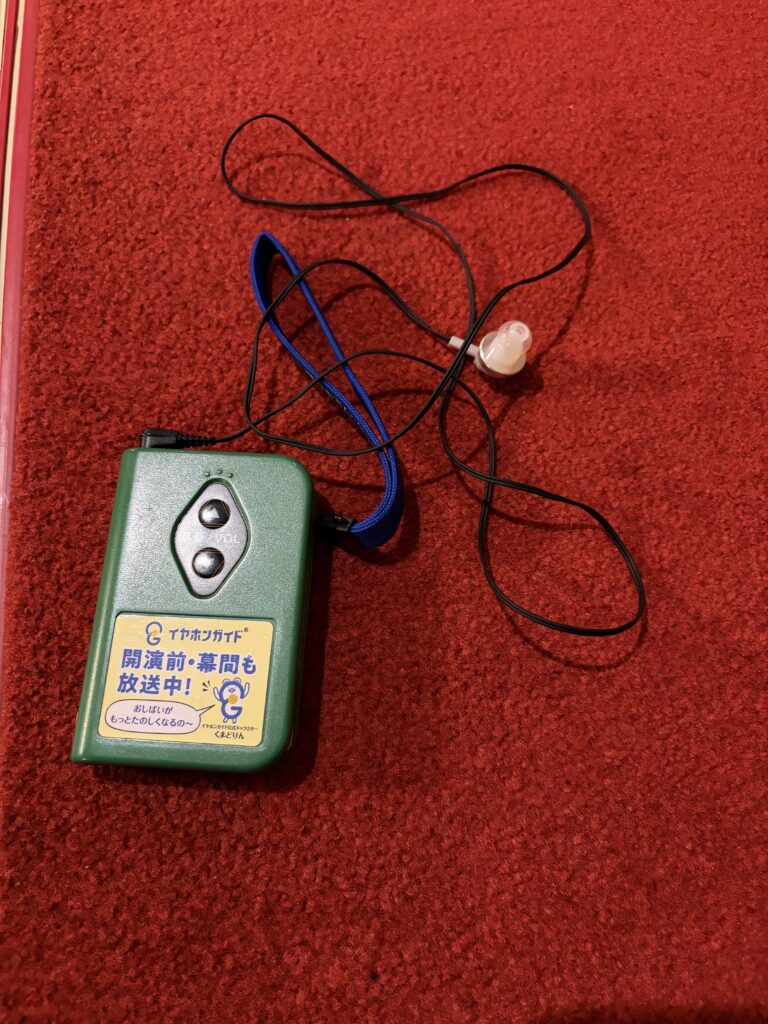
    Get the audio guide. You can rent it at the desk right in front of the elevator on the 4th floor. Kabuki’s way of speaking and storytelling is hard to follow even for many Japanese people. The guide explains the story, the meaning of lines and gestures, the costumes and the actors, always at just the right moment without getting in the way. At the Ichimakumi seats, the English version costs ¥1,000. A subtitle device that shows the lines in English or Simplified Chinese is also available at the same desk (¥1,000, cash only).

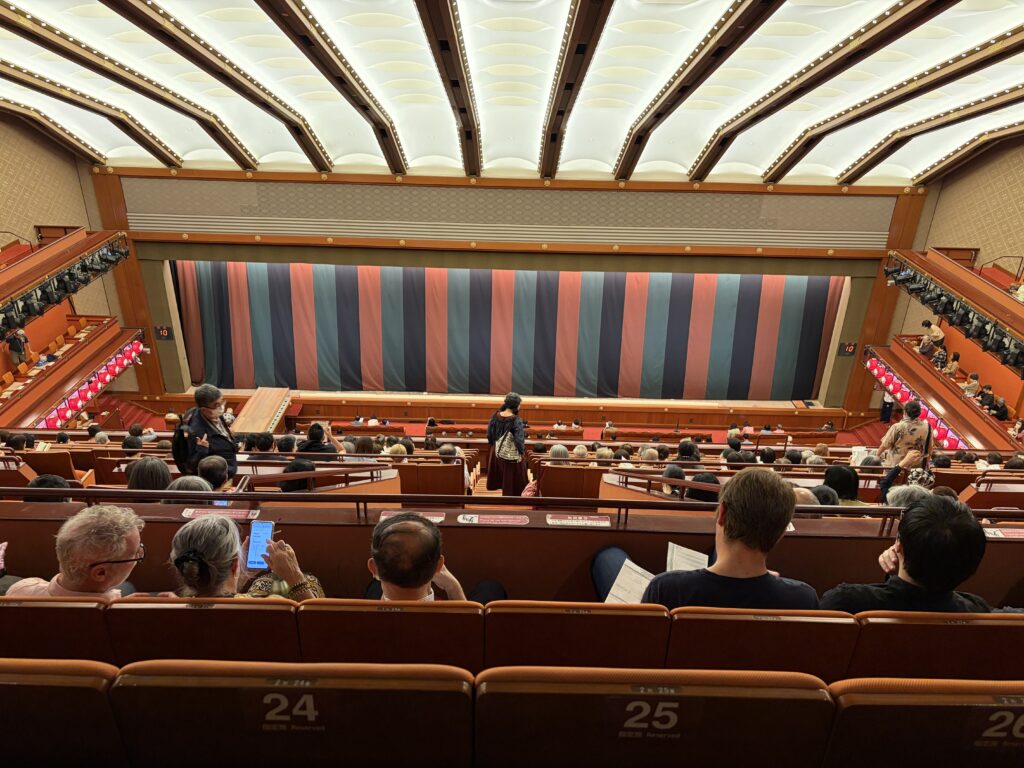
    The view. You look down on the stage from high up, and part of the hanamichi, the walkway actors use to make their entrances, is out of sight. Still, you get used to it quickly, and it is not very different from the 3rd-floor seats. Bring opera glasses if you want to see faces and costumes.

    What surprised me most was the atmosphere. Regular fans shout the actors’ stage names at key moments, and with the music and the rise and fall of the voices, you always know when the big moment is coming. Even without following every word, you can enjoy the skill of the performance.

    After the show: Goemon Stairs and the upside-down phoenix

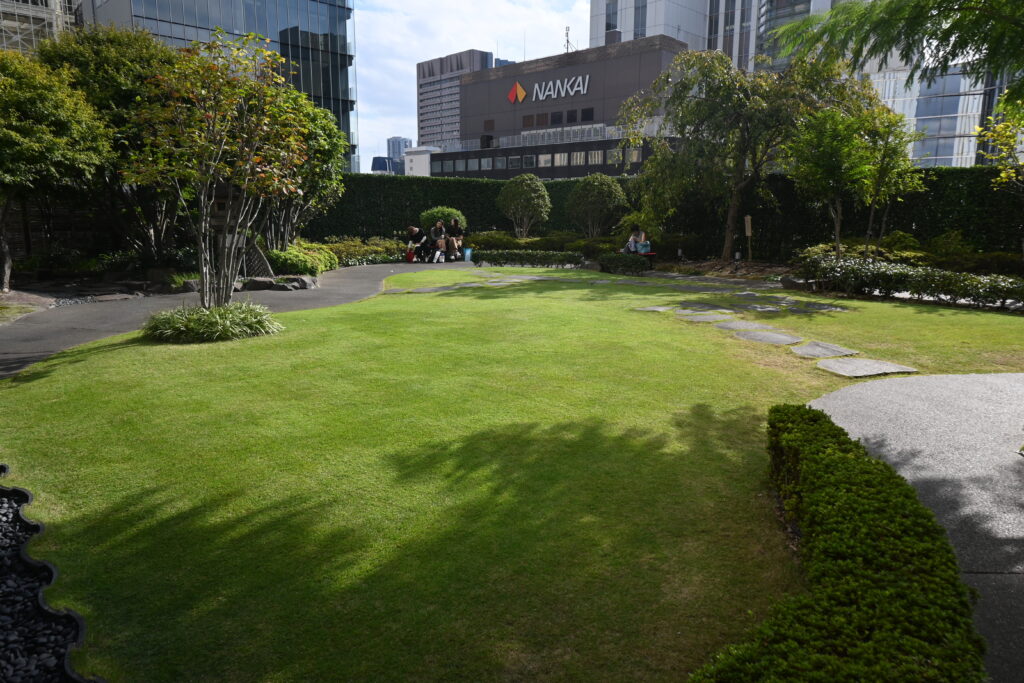
    After the act, go back down to the basement and take the elevator at the back of Kobikicho Hiroba to the 5th floor. The rooftop garden here is free and open to anyone during opening hours.

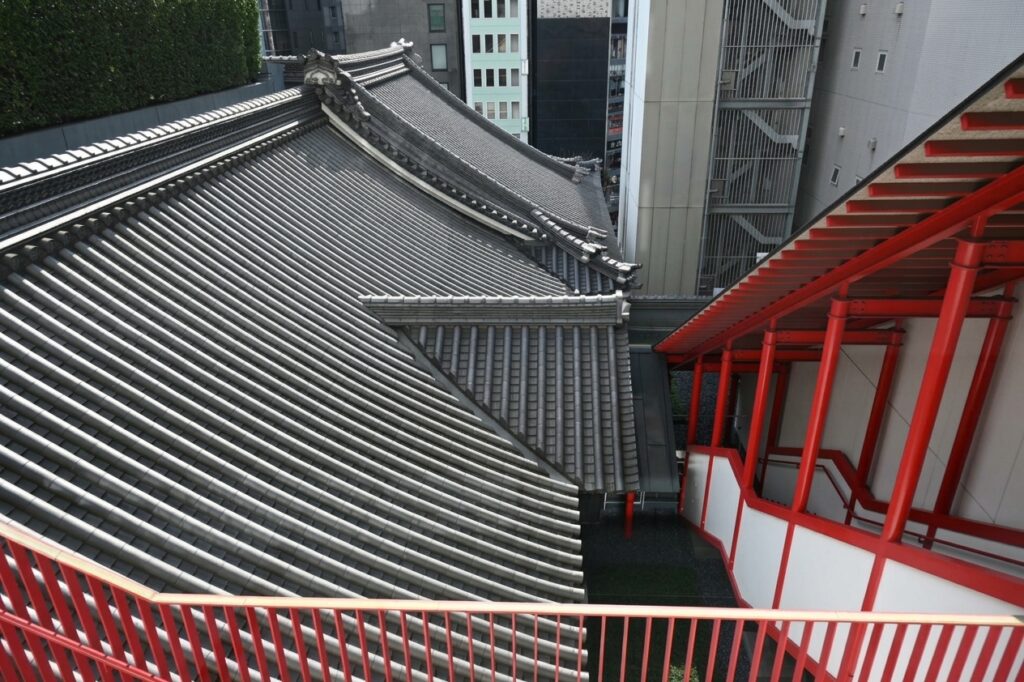
    From the garden, an outdoor staircase leads down to the 4th floor. It is called the Goemon Stairs, after a famous kabuki scene in which the thief Ishikawa Goemon looks out from a temple gate and cries, “What a magnificent view!” For me, these stairs are the best part of Kabuki-za, because they bring you closer than anywhere else to Kuma’s great roof.

    Look at the round tiles at the ends of the roof. Each bears a phoenix, the symbol of Kabuki-za. But one of them faces the other way. This “upside-down phoenix” is said to carry a message: nothing perfect lasts forever, so one part was left imperfect on purpose.

    Most people walk straight past it. I found it, but I won’t spoil the fun by showing you where. Look carefully from the Goemon Stairs and see if you can find it yourself.

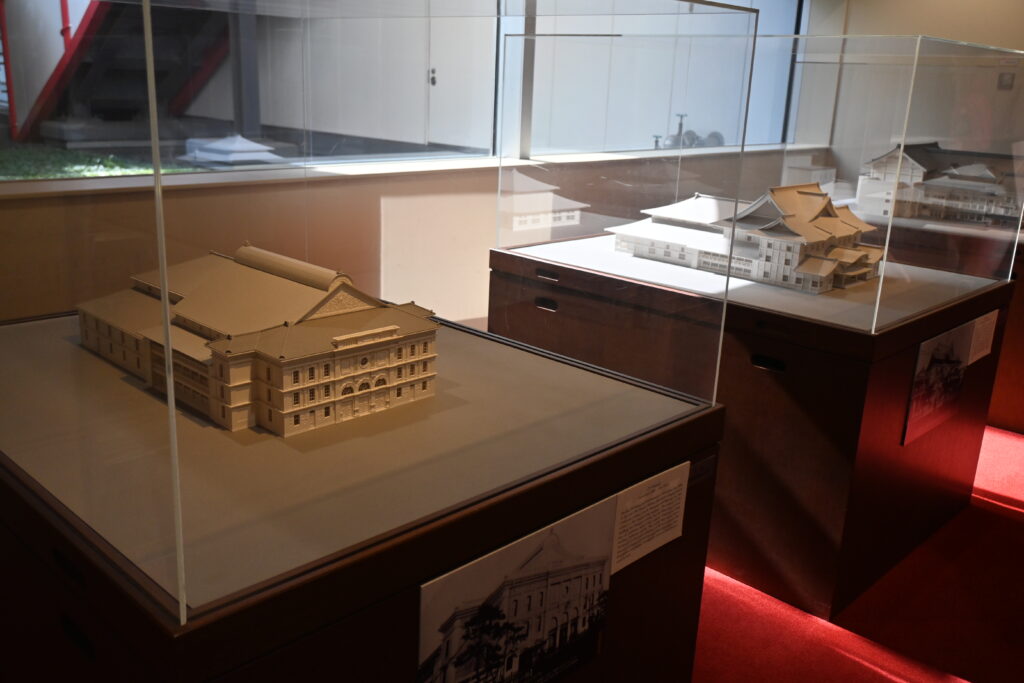
    At the bottom of the stairs, the 4th-floor corridor displays photos of great actors and models of the earlier theaters, a reminder that today’s Kabuki-za, joined to a modern tower, still carries the face of the old ones.

    Good to know before you go

    • Book online the day before if you can. Same-day tickets for popular acts sell out fast.
    • No re-entry. Buy drinks in Kobikicho Hiroba before you go up.
    • Prices vary by act. Watching several acts can cost more than one regular ticket.
    • Photos: never during a performance. Photos of the auditorium are allowed during intermissions, and the rooftop garden and Goemon Stairs are fine at any time.

    Getting there

    • Toei Asakusa Line or Tokyo Metro Hibiya Line, Higashi-Ginza Station, Exit 3 (direct connection)
    • From Asakusa: Toei Asakusa Line, about 15 minutes, no transfer

    Make a morning of it: Tsukiji

    Kabuki-za is only about a 10-minute walk from Tsukiji Outer Market along Harumi-dori, or one stop on the Hibiya Line from Higashi-Ginza to Tsukiji. A good plan is to have breakfast at the market, where the stalls are busiest in the morning, and then walk over to Kabuki-za in time for same-day tickets at 10:00. Many shops close in the early afternoon, and many are also closed on Sundays, public holidays and market holidays (mostly Wednesdays), so check before you go.

    Book your trip

    Single-act seats (Ichimakumi)

    These are sold only by Kabuki-za itself: online from noon the day before, or at the theater on the day. They are not available through tour or ticket websites.

    Full performances

    If you would like to see a whole program, Shochiku’s official multilingual ticket site sells all seat types at the regular price.

    You can also book through GetYourGuide, where Shochiku, the company that runs Kabuki-za, lists tickets itself. The ticket includes an English subtitle device, and you can cancel for free up to two days before. You cannot choose your seat, and the price may be higher than on the official site, so compare before you book. You will receive a voucher, which you exchange for a ticket at the box office on Basement Level 2 on the day.

    Ticket prices, seat types and sales rules change by program and season. The information here is as of October 2026, so please check the official site before you go.

    Stay connected

    You will need mobile data to show your QR ticket at the entrance.

    Where to stay

    Mitsui Garden Hotel Ginza Tsukiji

    Why choose: Opened in 2024, a 3-minute walk from Higashi-Ginza Station and close to Tsukiji Outer Market, so you can start the day with a market breakfast. Every room has a washer-dryer and a microwave, there is a cave-like guest bath in the basement, and the bath products are vegan-certified.

    Tokyu Stay Ginza

    Why choose: About a 1-minute walk from Higashi-Ginza Station, practically next door to Kabuki-za. Every room has a microwave and most have a washer-dryer, which makes it a practical base for a longer stay in central Tokyo.

    Hotel Grand Bach Tokyo Ginza

    Why choose: A quiet hotel 1 minute from Higashi-Ginza Station, built around the music of J.S. Bach and the idea of wellness. You can hear live piano in the lobby, and breakfast is a buffet focused on healthy, balanced food. Corner rooms look out over the lights of Ginza.

    Next time

    In Part 2, we leave Tokyo for Sakai in Ibaraki Prefecture, an old river-port town on the Tone River where Kuma has designed a whole group of wooden buildings, just one bus ride from Tokyo Station.

    Photos: Aozora Walks. Information as of October 2026.