
This post contains affiliate links. If you book through them, I may earn a small commission at no extra cost to you.
At the end of our water bus trip, I promised a closer look at the buildings of Kengo Kuma. We start with one of his best-loved works: Kabuki-za, the home of kabuki in Ginza.
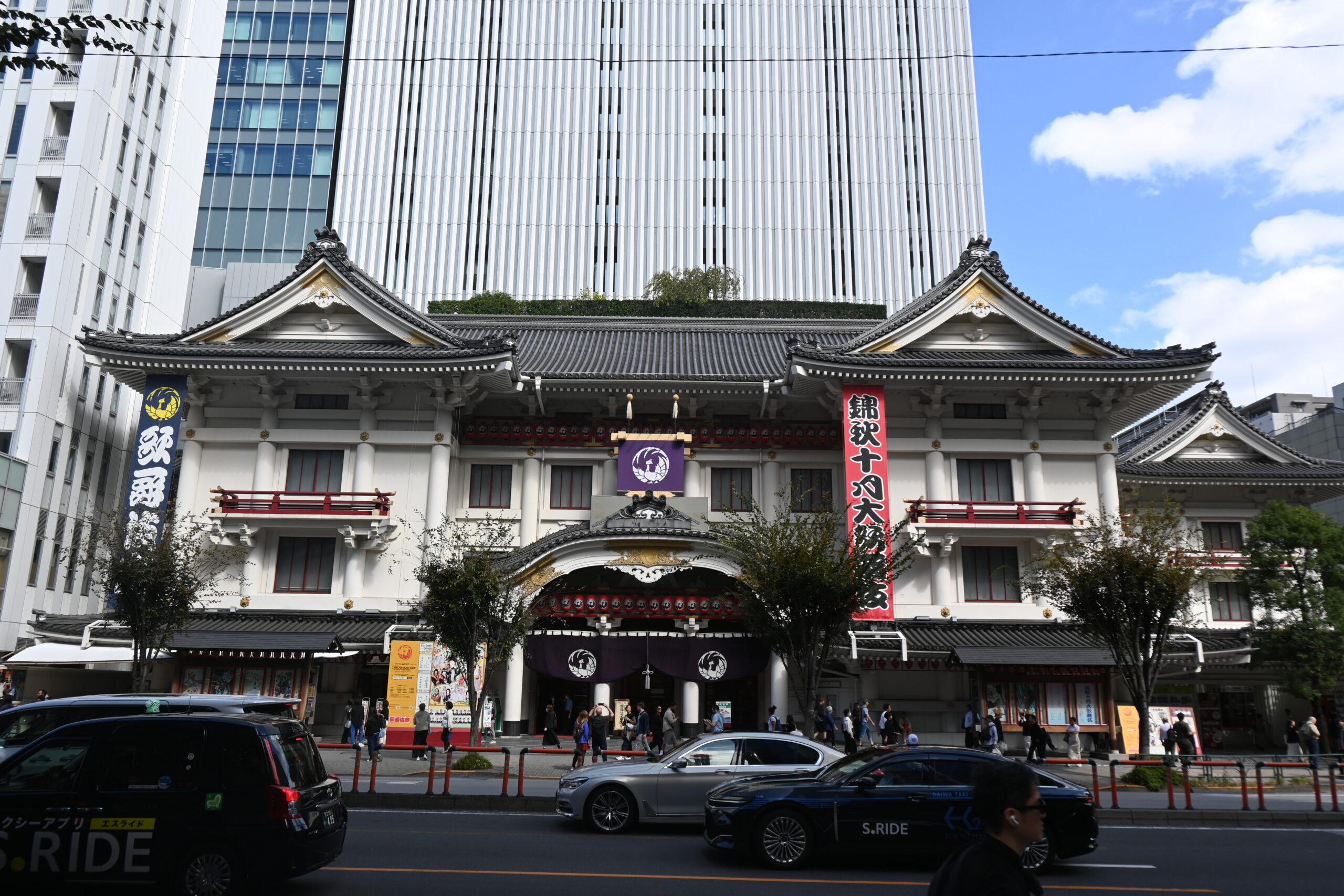
Our journey begins in Asakusa, at another Kuma building, the Asakusa Culture Tourist Information Center across from Kaminarimon. From Asakusa, the Toei Asakusa Line takes you to Higashi-Ginza Station in about 15 minutes with no change of trains, and the station connects directly to Kabuki-za.
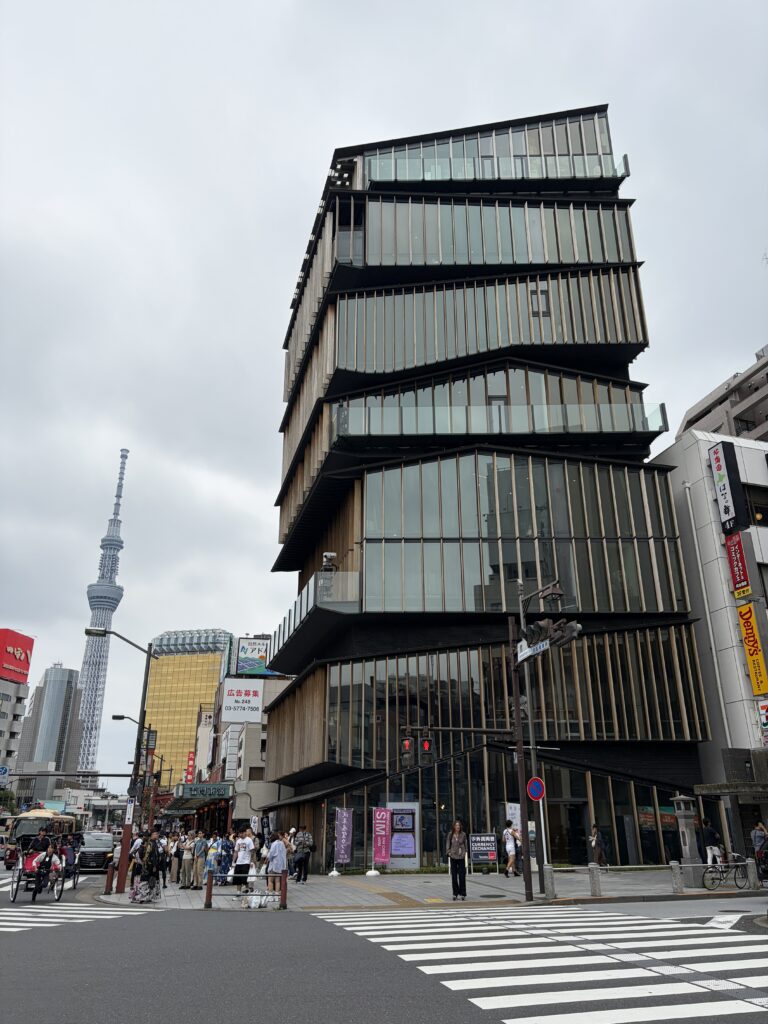

Before you set off, step inside the ground-floor entrance and look up. The ceiling is made of layers of wooden slats and beams, so the building feels warm even though it is made of glass and steel. Bringing wood into modern buildings is one of Kuma’s trademarks, and you will see it again in Part 2.
Quick facts
| What | Watch one act of kabuki, then explore the free rooftop garden |
| Where | Kabuki-za, Ginza (Higashi-Ginza Station, Exit 3) |
| Cost | Varies by act (I paid ¥3,000 for a 75-minute act). Rooftop garden: free |
| Time | 30–90 minutes per act, plus about 30 minutes for the rooftop |
| From Asakusa | Toei Asakusa Line, about 15 minutes, no transfer |
Arriving at Kabuki-za
Exit 3 at Higashi-Ginza Station brings you straight into Kobikicho Hiroba, a basement floor with souvenir shops, a 7-Eleven and a Tully’s Coffee, so it is a good place to wait if you arrive early. It is named after Kobiki-cho, the old name of this area, where Kabuki-za first opened in 1889.


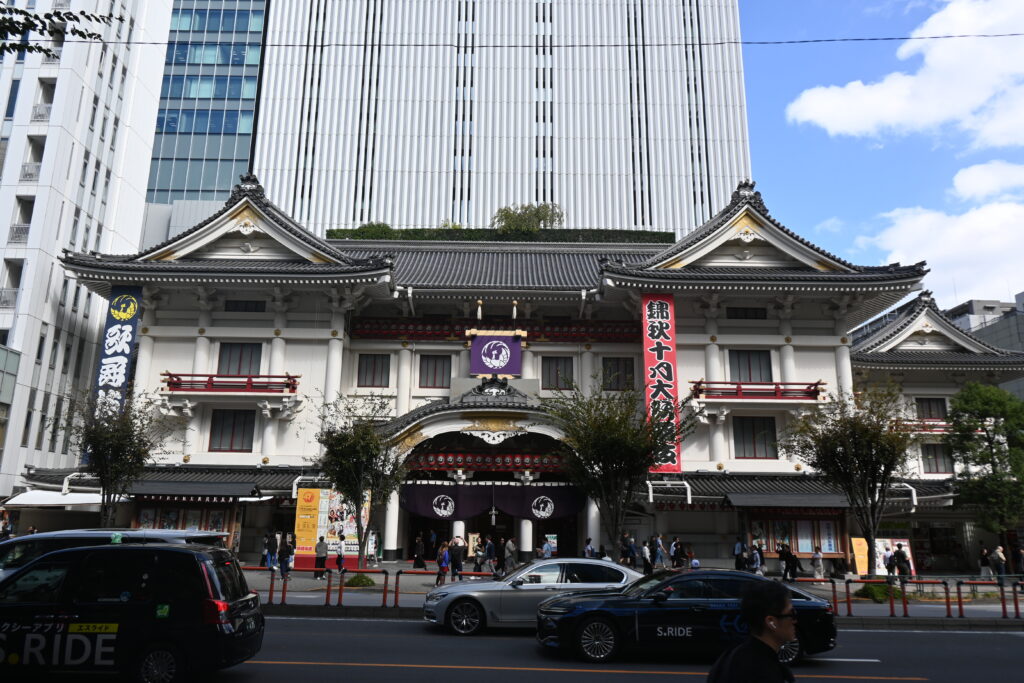
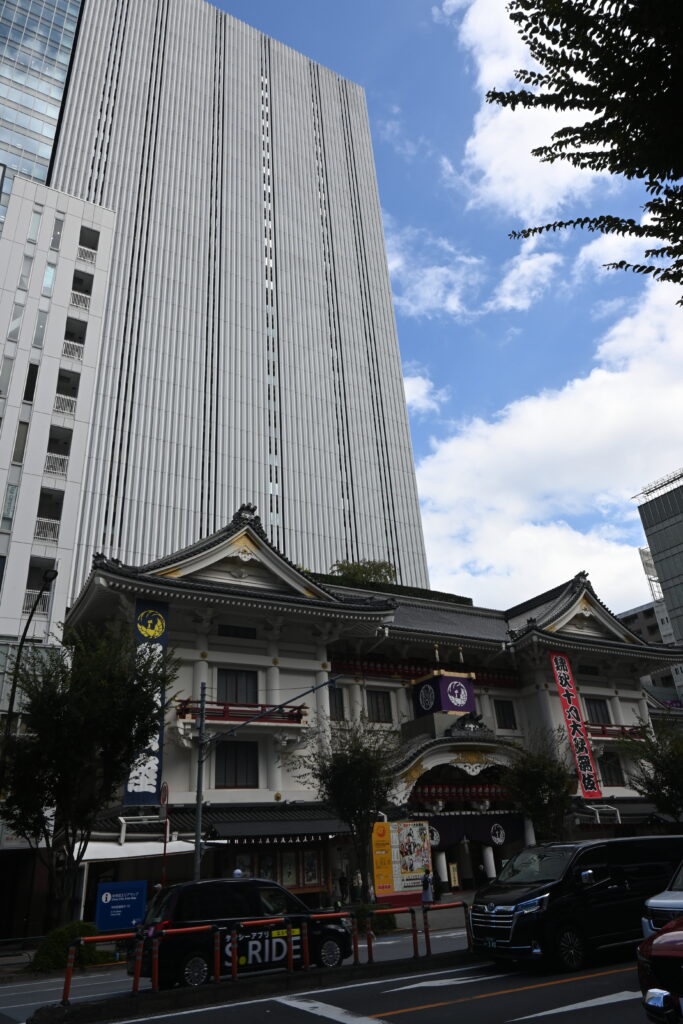
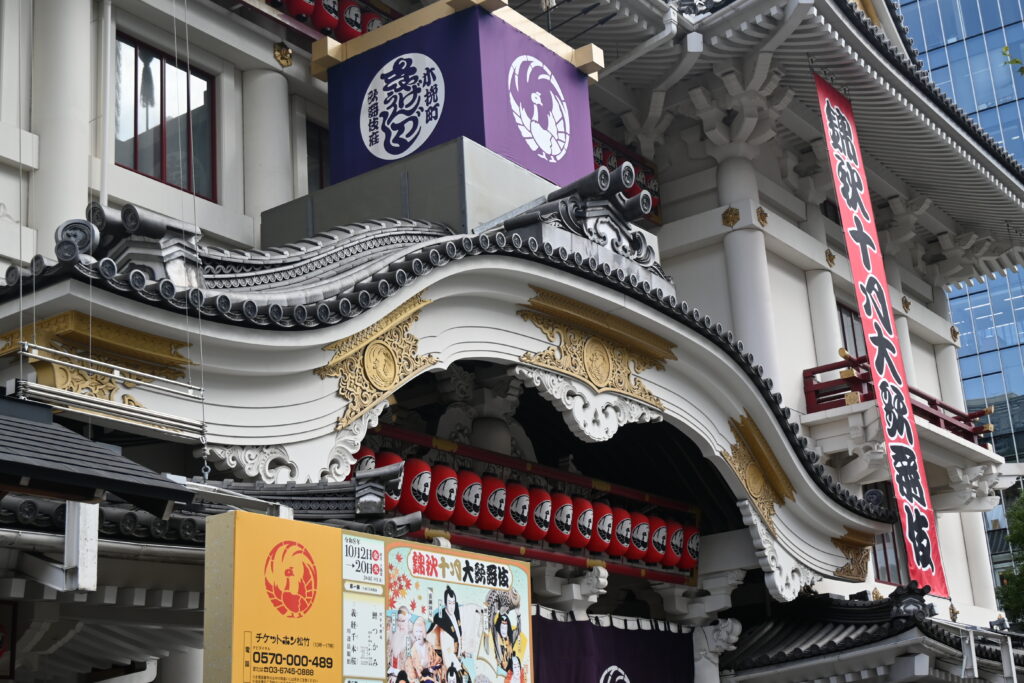
Take the escalator up and cross Harumi-dori. From the other side of the street, you can see the whole facade: the curved roof and red lanterns of a traditional theater in front, and the modern Kabuki-za Tower rising behind. This is how Kuma rebuilt a beloved old theater without losing its face.
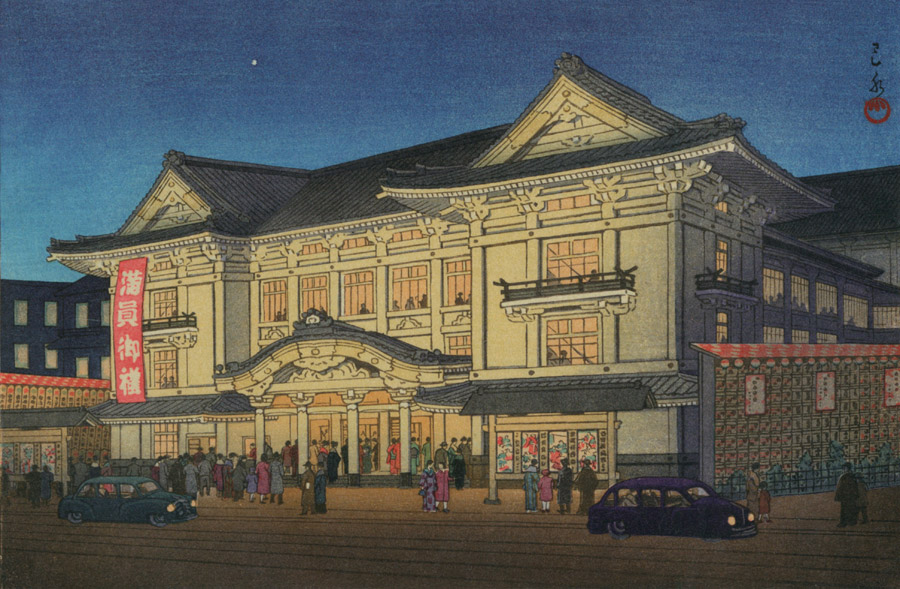
The woodblock print below by Kawase Hasui shows Kabuki-za in 1951, the year it reopened after being burned in the war. Compare it with today’s facade: the curved gables and the tiled roofline live on.
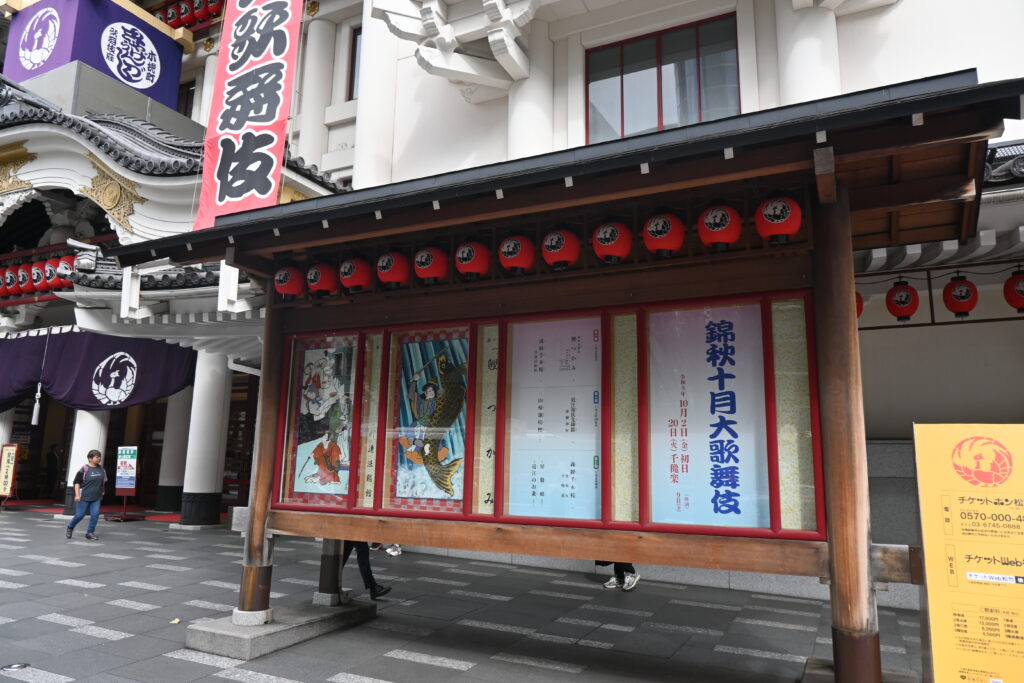
Watching kabuki for one act
A full kabuki program lasts four hours or more. The Ichimakumi seats let you watch just one act, from about 30 to 90 minutes. Not too short, not too long, and easy on the wallet: for first-timers, it is the perfect way to try kabuki.
- Online: reserved seats go on sale at noon the day before. You show a QR code on your phone at the entrance.
- On the day: a small number of seats are sold from 10:00 at the window beside the main entrance. Popular acts sell out fast. On the day I went, some people were turned away.
The Ichimakumi entrance is right next to the same-day ticket window, to the left of the main entrance. An elevator takes you straight up to the 4th floor, where there are restrooms and drink vending machines. Once you enter, you cannot go out and come back in.

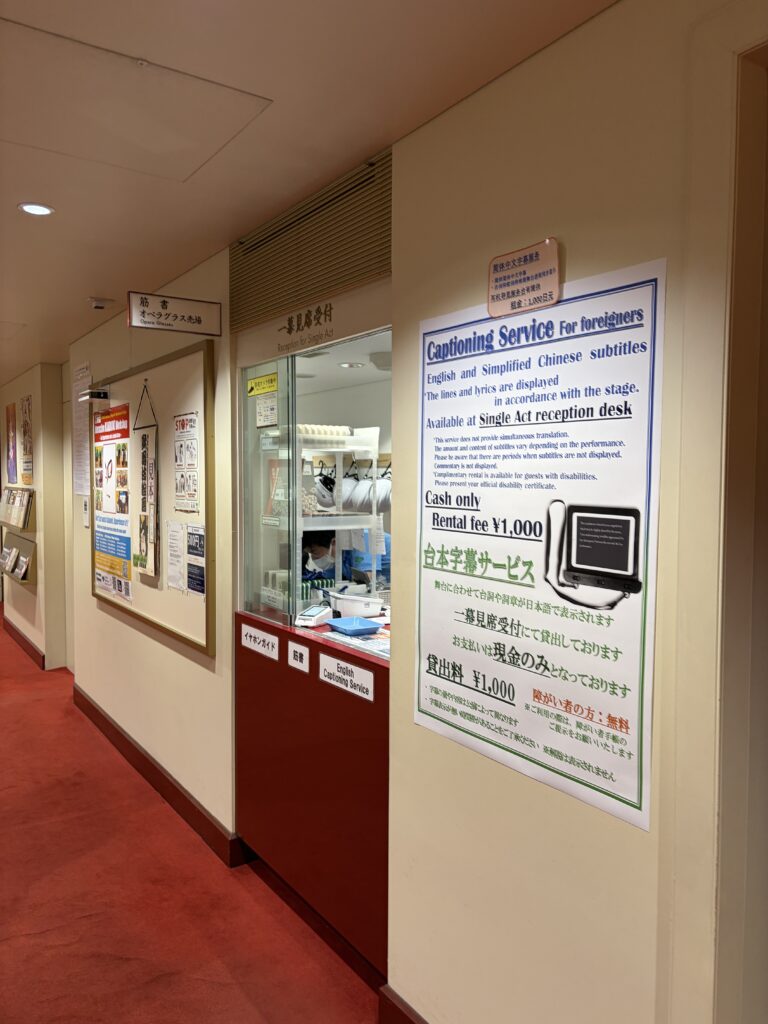
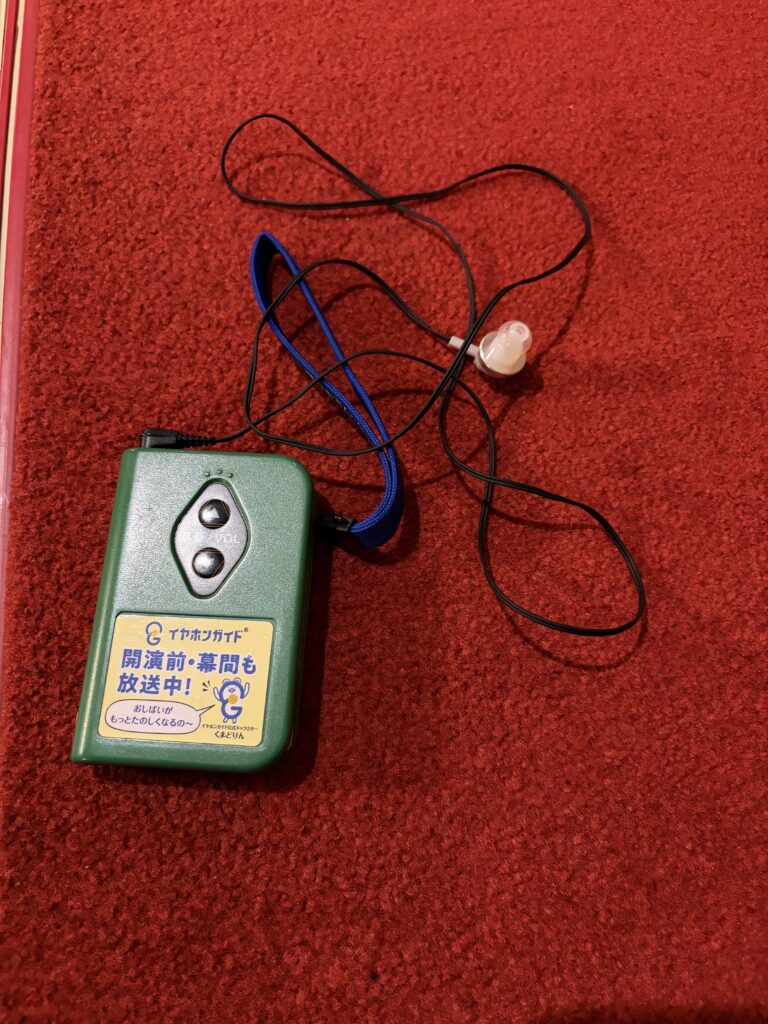
Get the audio guide. You can rent it at the desk right in front of the elevator on the 4th floor. Kabuki’s way of speaking and storytelling is hard to follow even for many Japanese people. The guide explains the story, the meaning of lines and gestures, the costumes and the actors, always at just the right moment without getting in the way. At the Ichimakumi seats, the English version costs ¥1,000. A subtitle device that shows the lines in English or Simplified Chinese is also available at the same desk (¥1,000, cash only).
The view. You look down on the stage from high up, and part of the hanamichi, the walkway actors use to make their entrances, is out of sight. Still, you get used to it quickly, and it is not very different from the 3rd-floor seats. Bring opera glasses if you want to see faces and costumes.
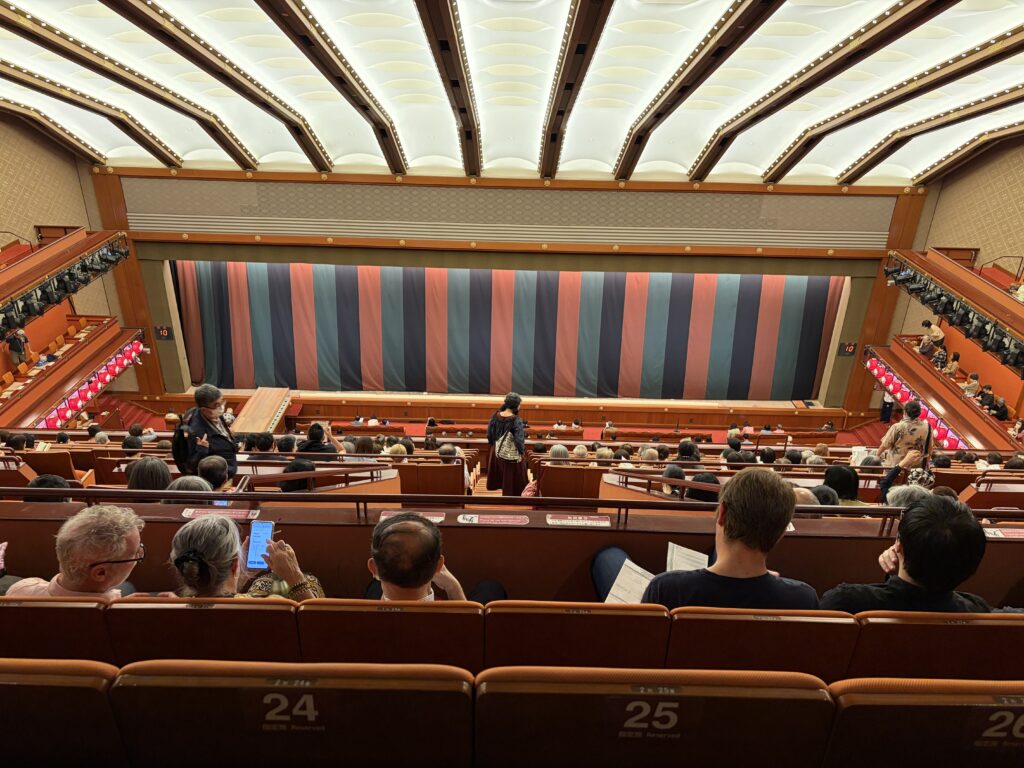
What surprised me most was the atmosphere. Regular fans shout the actors’ stage names at key moments, and with the music and the rise and fall of the voices, you always know when the big moment is coming. Even without following every word, you can enjoy the skill of the performance.
After the show: Goemon Stairs and the upside-down phoenix
After the act, go back down to the basement and take the elevator at the back of Kobikicho Hiroba to the 5th floor. The rooftop garden here is free and open to anyone during opening hours.

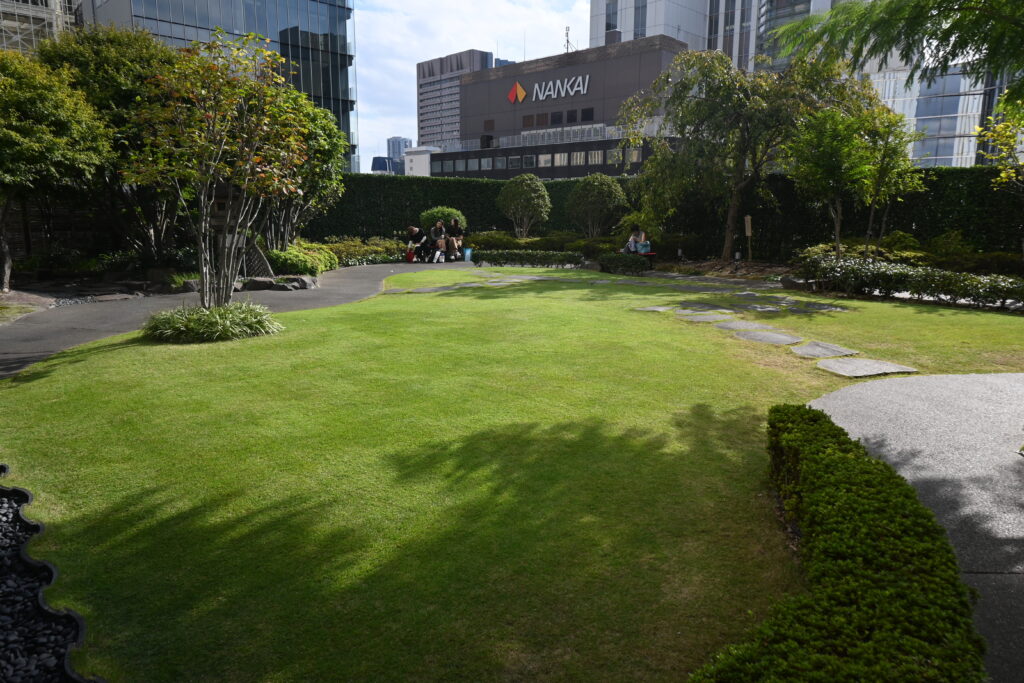
From the garden, an outdoor staircase leads down to the 4th floor. It is called the Goemon Stairs, after a famous kabuki scene in which the thief Ishikawa Goemon looks out from a temple gate and cries, “What a magnificent view!” For me, these stairs are the best part of Kabuki-za, because they bring you closer than anywhere else to Kuma’s great roof.
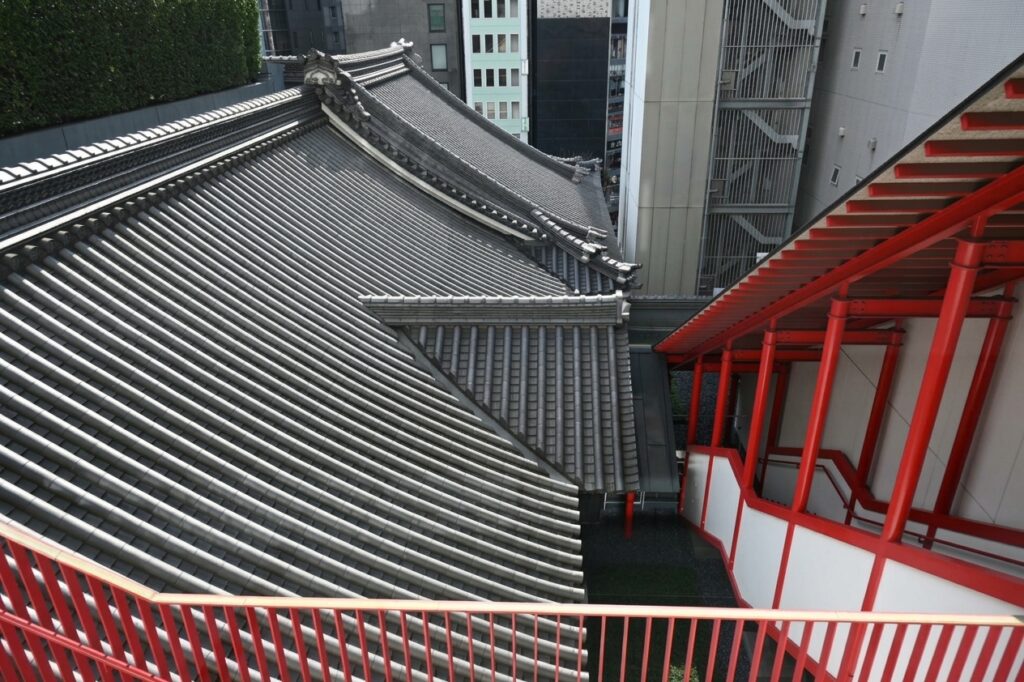
Look at the round tiles at the ends of the roof. Each bears a phoenix, the symbol of Kabuki-za. But one of them faces the other way. This “upside-down phoenix” is said to carry a message: nothing perfect lasts forever, so one part was left imperfect on purpose.
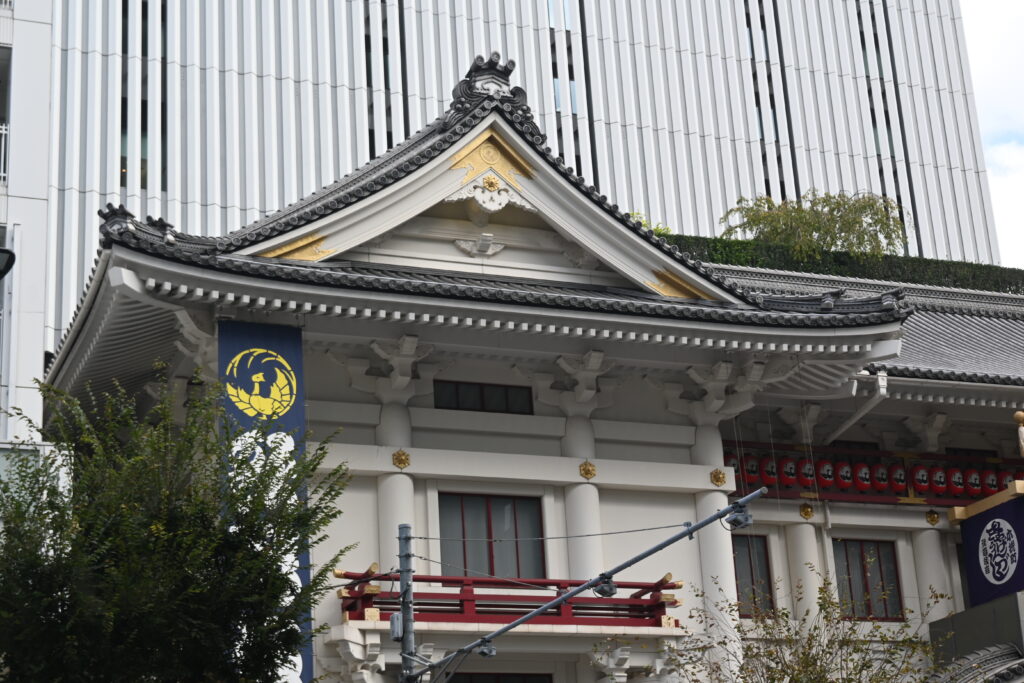

Most people walk straight past it. I found it, but I won’t spoil the fun by showing you where. Look carefully from the Goemon Stairs and see if you can find it yourself.
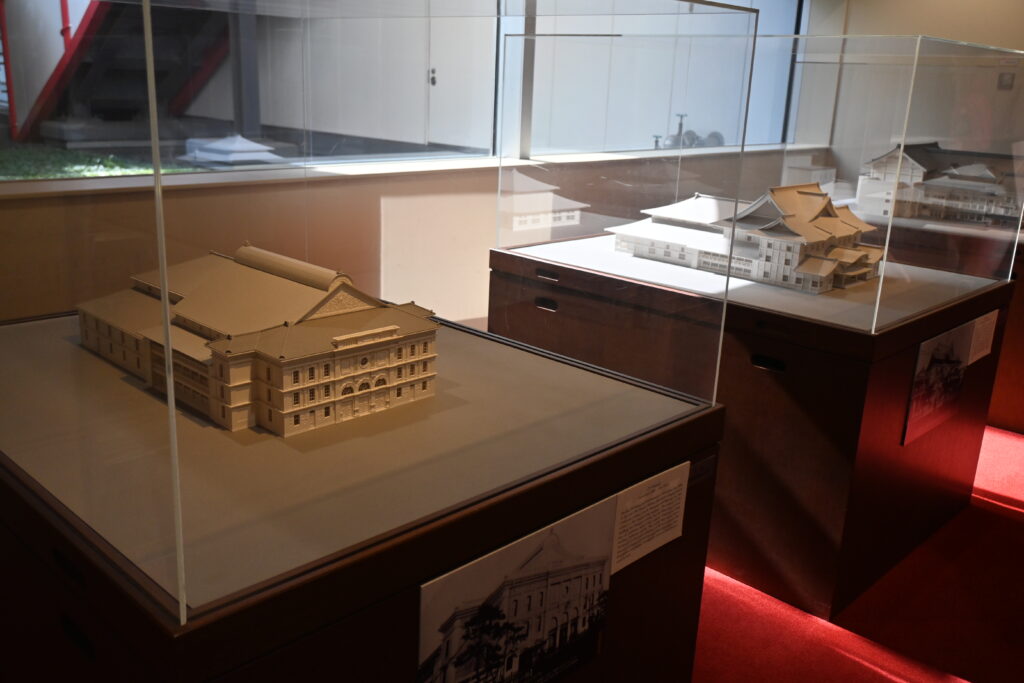
At the bottom of the stairs, the 4th-floor corridor displays photos of great actors and models of the earlier theaters, a reminder that today’s Kabuki-za, joined to a modern tower, still carries the face of the old ones.
Good to know before you go
- Book online the day before if you can. Same-day tickets for popular acts sell out fast.
- No re-entry. Buy drinks in Kobikicho Hiroba before you go up.
- Prices vary by act. Watching several acts can cost more than one regular ticket.
- Photos: never during a performance. Photos of the auditorium are allowed during intermissions, and the rooftop garden and Goemon Stairs are fine at any time.
Getting there
- Toei Asakusa Line or Tokyo Metro Hibiya Line, Higashi-Ginza Station, Exit 3 (direct connection)
- From Asakusa: Toei Asakusa Line, about 15 minutes, no transfer
Make a morning of it: Tsukiji
Kabuki-za is only about a 10-minute walk from Tsukiji Outer Market along Harumi-dori, or one stop on the Hibiya Line from Higashi-Ginza to Tsukiji. A good plan is to have breakfast at the market, where the stalls are busiest in the morning, and then walk over to Kabuki-za in time for same-day tickets at 10:00. Many shops close in the early afternoon, and many are also closed on Sundays, public holidays and market holidays (mostly Wednesdays), so check before you go.
Book your trip
Single-act seats (Ichimakumi)
These are sold only by Kabuki-za itself: online from noon the day before, or at the theater on the day. They are not available through tour or ticket websites.
Full performances
If you would like to see a whole program, Shochiku’s official multilingual ticket site sells all seat types at the regular price.
You can also book through GetYourGuide, where Shochiku, the company that runs Kabuki-za, lists tickets itself. The ticket includes an English subtitle device, and you can cancel for free up to two days before. You cannot choose your seat, and the price may be higher than on the official site, so compare before you book. You will receive a voucher, which you exchange for a ticket at the box office on Basement Level 2 on the day.
Ticket prices, seat types and sales rules change by program and season. The information here is as of October 2026, so please check the official site before you go.
Stay connected
You will need mobile data to show your QR ticket at the entrance.
Where to stay
Mitsui Garden Hotel Ginza Tsukiji
Why choose: Opened in 2024, a 3-minute walk from Higashi-Ginza Station and close to Tsukiji Outer Market, so you can start the day with a market breakfast. Every room has a washer-dryer and a microwave, there is a cave-like guest bath in the basement, and the bath products are vegan-certified.
Tokyu Stay Ginza
Why choose: About a 1-minute walk from Higashi-Ginza Station, practically next door to Kabuki-za. Every room has a microwave and most have a washer-dryer, which makes it a practical base for a longer stay in central Tokyo.
Hotel Grand Bach Tokyo Ginza
Why choose: A quiet hotel 1 minute from Higashi-Ginza Station, built around the music of J.S. Bach and the idea of wellness. You can hear live piano in the lobby, and breakfast is a buffet focused on healthy, balanced food. Corner rooms look out over the lights of Ginza.
Next time
In Part 2, we leave Tokyo for Sakai in Ibaraki Prefecture, an old river-port town on the Tone River where Kuma has designed a whole group of wooden buildings, just one bus ride from Tokyo Station.
Photos: Aozora Walks. Information as of October 2026.