Tag: architecture

  • Ueno Park History Walk, Part 2: From Battlefield to Museum Hill, with Le Corbusier

    Ueno Park History Walk, Part 2: From Battlefield to Museum Hill, with Le Corbusier

    This post contains affiliate links. If you book through them, I may earn a small commission at no extra cost to you.

    In Part 1 we walked the south side of Ueno Park: the shoguns’ temple of Kan’ei-ji, the Battle of Ueno in 1868, and the racecourse around Shinobazu Pond. We ended with a question. The battle left most of the hilltop in ashes, so what happened to all that empty land?

    The answer is all around you on the north side of the park. In about 150 years, the burned temple grounds became Japan’s greatest museum quarter: the Tokyo National Museum, the National Museum of Nature and Science, and the National Museum of Western Art, Le Corbusier’s only building in Japan. Along the way we will meet a Dutch doctor with the wrong face, a ghost station built with the Emperor’s permission, and, at the end, a bridge where the ancient seashore meets Tokyo’s busiest railway lines.

    Quick facts

    RouteJR Ueno (Park Exit) → Tokyo Bunka Kaikan → National Museum of Western Art → National Museum of Nature and Science → Bauduin statue → fountain square → Tokyo National Museum → old Hakubutsukan-Dobutsuen Station and Sogakudo → Kan’ei-ji main hall → Ryodaishi Bridge
    DistanceAbout 2 km, mostly flat
    Time1.5 hours outside only, or a full half day with one museum
    CostWalking is free, and so are the Rodin sculptures outside the National Museum of Western Art. Tokyo National Museum collection: ¥1,000. Western Art permanent collection: ¥500 (¥1,000 from 20 March 2027)
    AvoidMondays: the main museums are closed
    Nearest stationsStart: JR Ueno, Park Exit. Finish: JR Ueno or JR Uguisudani

    Start: the Park Exit

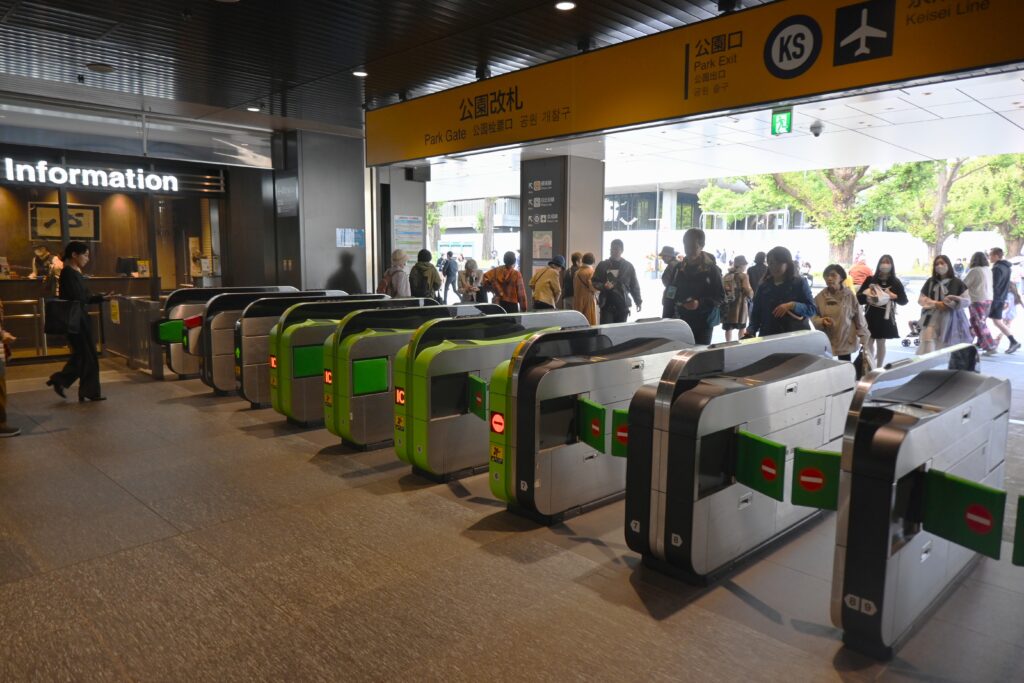
    JR Ueno Station’s Park Exit (Koen-guchi) is the front door of the museum quarter. As soon as you walk out of the ticket gates, the National Museum of Western Art is on your left and the Tokyo Bunka Kaikan concert hall on your right, with the zoo and the museums beyond.
    The Tokyo Bunka Kaikan, opened in 1961, is the work of Kunio Maekawa, one of Le Corbusier’s Japanese students. It faces his teacher’s museum across the square, which is a nice way to begin. Note that the hall is closed for major renovation from May 2026 until some time in fiscal 2028, so for now you can only see it from outside.
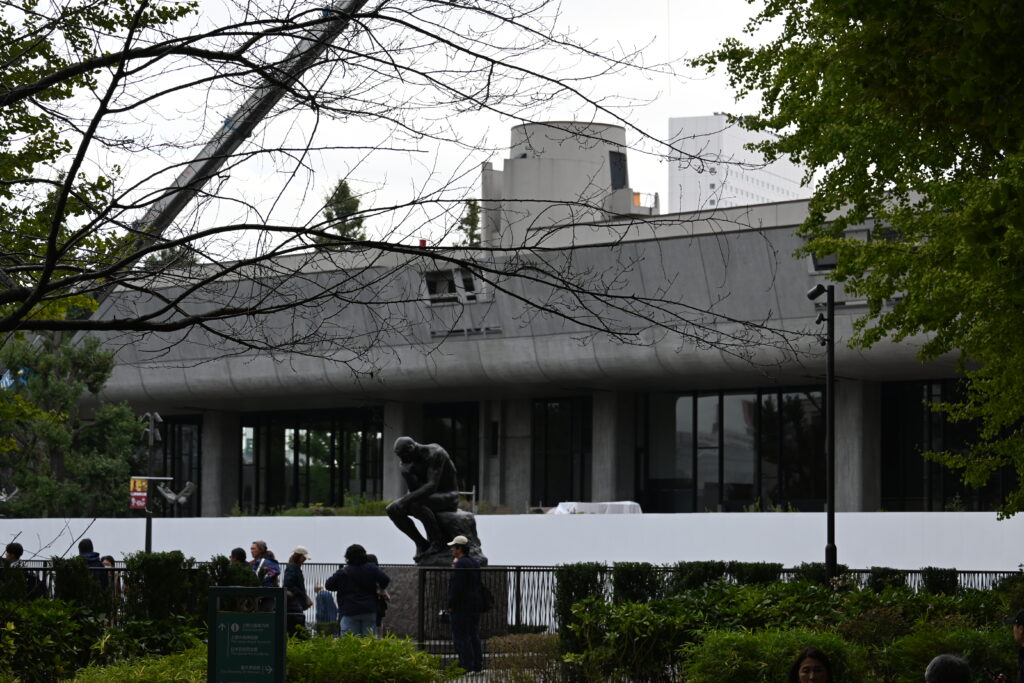
    Le Corbusier’s museum: the National Museum of Western Art

    The National Museum of Western Art opened in 1959. Its story begins with a businessman, Matsukata Kojiro, who collected thousands of European paintings and sculptures in the early 20th century. Part of his collection stayed in France and was held by the French government after the Second World War. When France agreed to return many of the works to Japan, Japan promised to build a museum for them, and Le Corbusier was chosen to design it. His Japanese students, Maekawa Kunio, Sakakura Junzo and Yoshizaka Takamasa, finished the drawings and supervised the work.
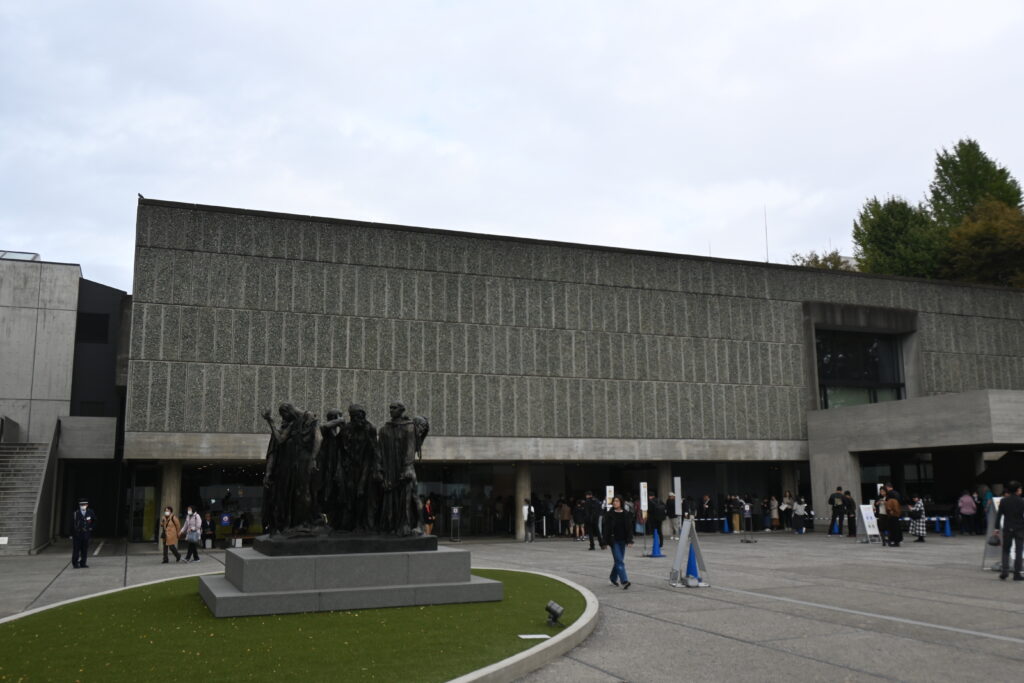
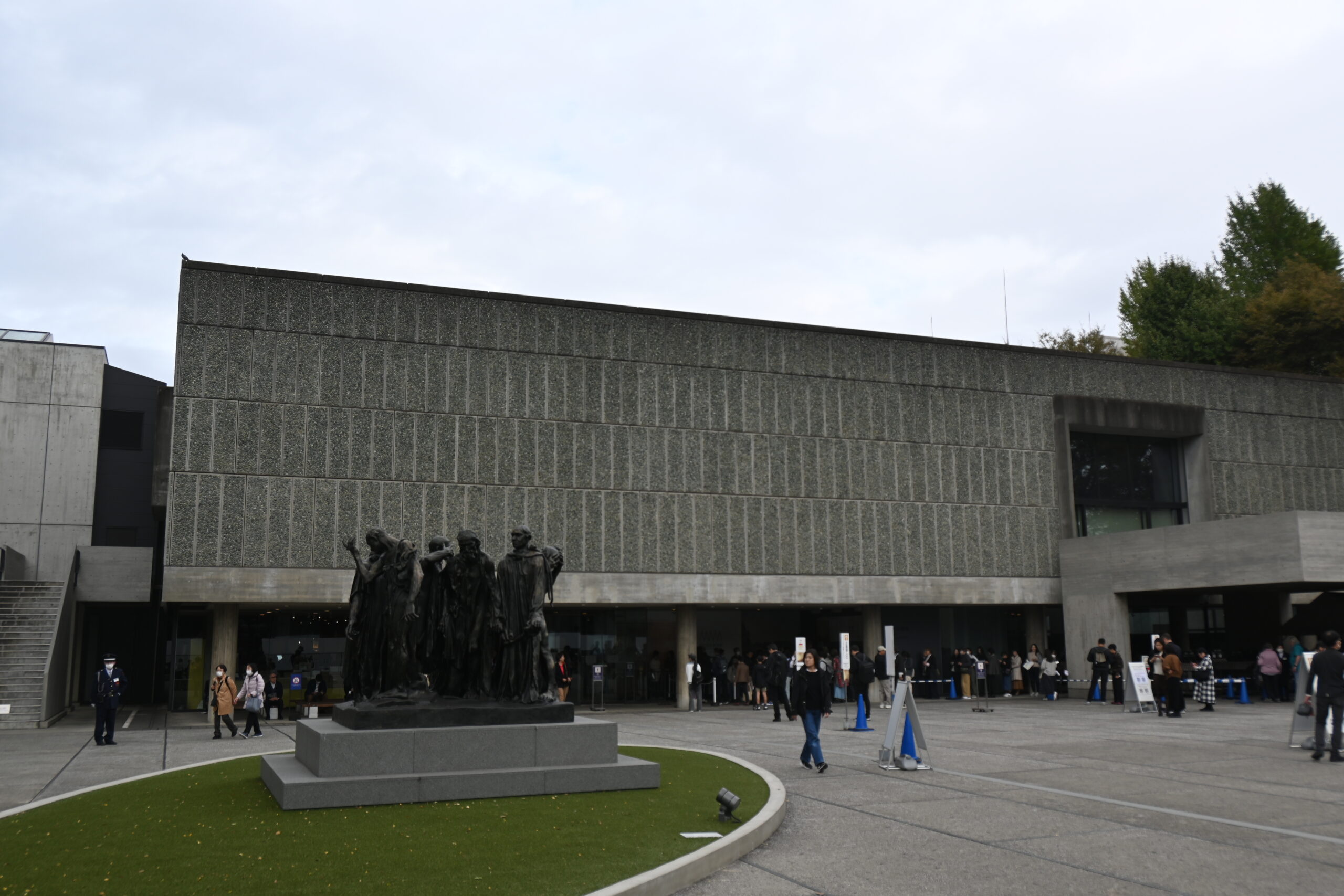
    At first sight it is a plain box. But look at how it stands. The ground floor is lifted on columns, with open space underneath: Le Corbusier called these columns pilotis. Inside, the galleries wind around a central hall in a square spiral. His idea was a “museum of unlimited growth”, which could keep expanding outward like a snail shell as the collection grew. In 2016 the building became a UNESCO World Heritage Site, as one of 17 works by Le Corbusier in seven countries listed together.
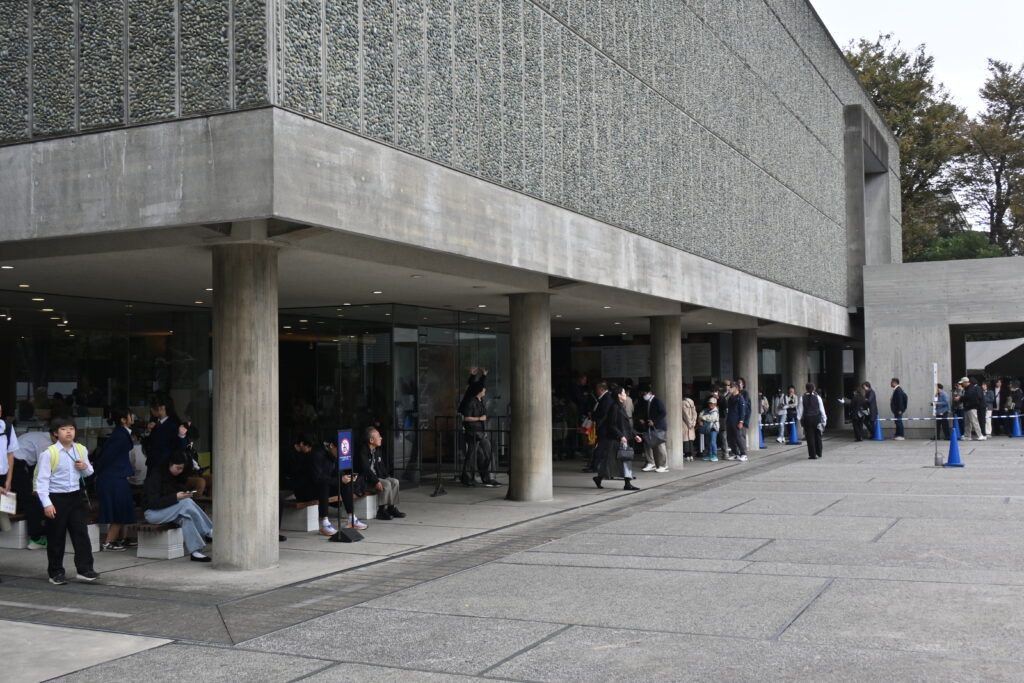
    On my visit, the special exhibition was so crowded that I could not get in. Many visitors seemed to have come for the World Heritage building as much as the art. But I have been here many times before, and I can say this: the permanent collection is wonderful, and a bargain. Look for El Greco, Monet and Renoir. Adults pay ¥500, university students ¥250, and high school students and younger are free. From 20 March 2027 the price for adults rises to ¥1,000 and for students to ¥500, still very reasonable.

    Rodin in the front garden, free

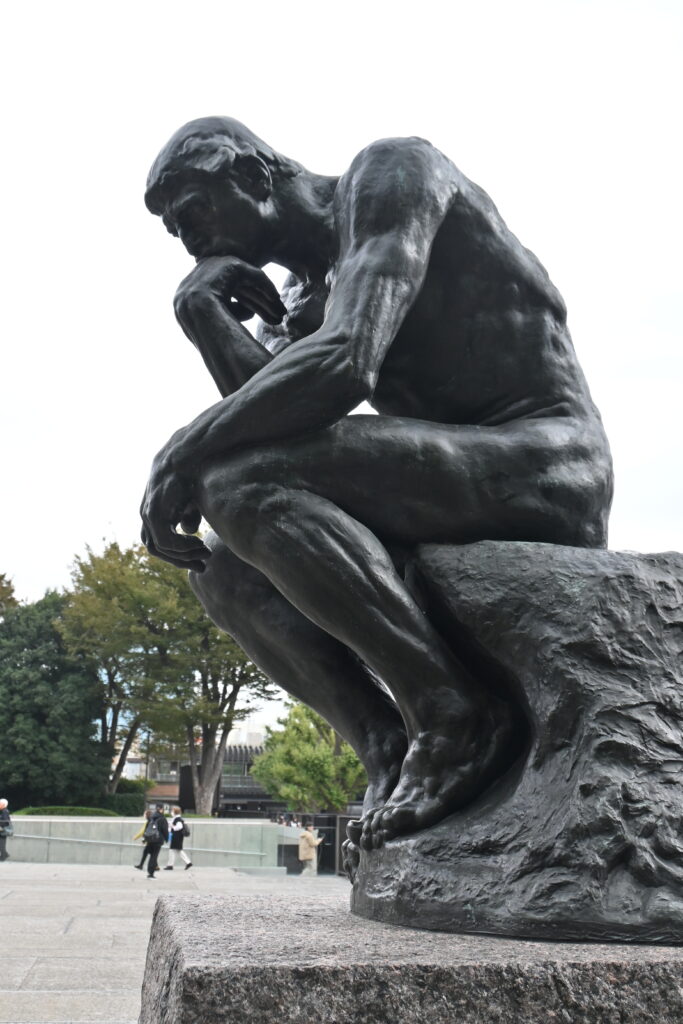
    You do not need a ticket for the best-known works. In the front garden stand Rodin’s The Gates of Hell and The Thinker.
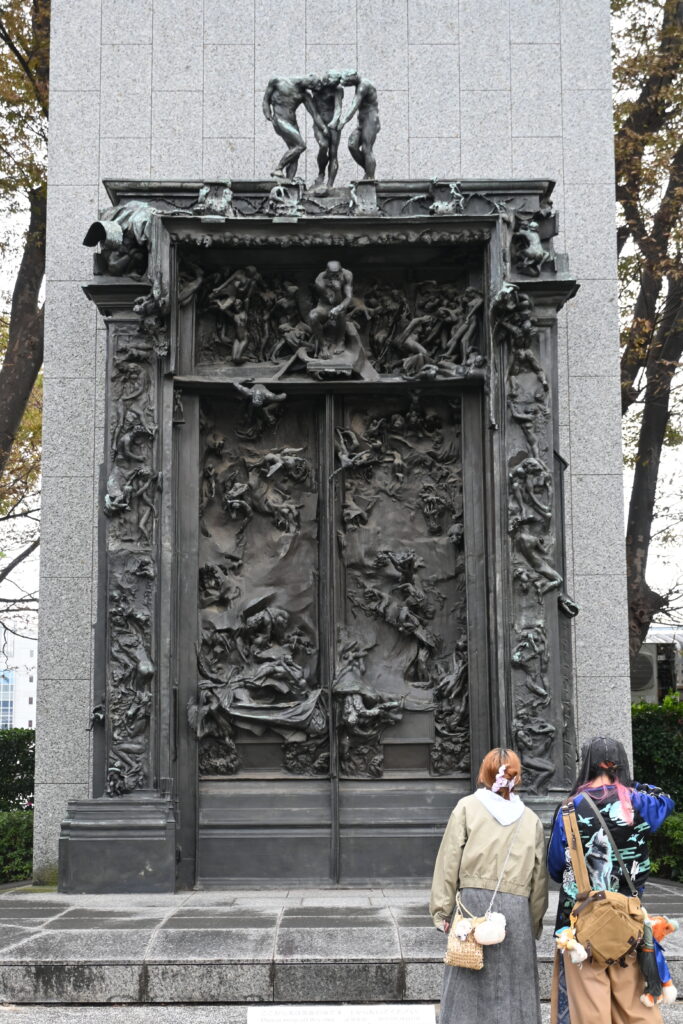
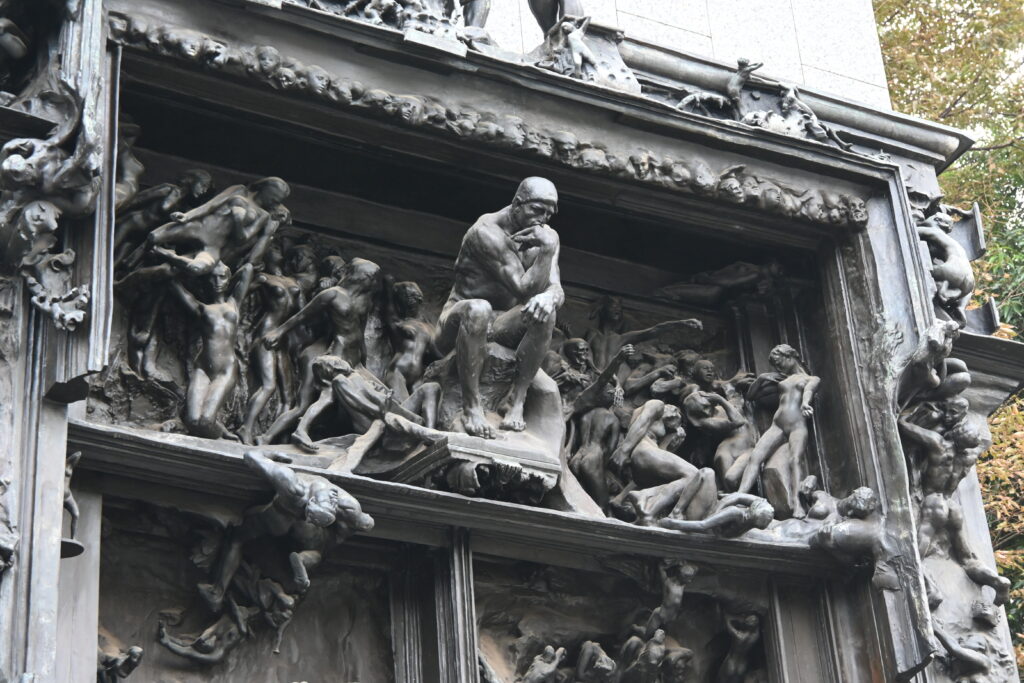
    Find the small seated figure above the doors. Rodin first made The Thinker as part of this gate, looking down on the souls below, before he enlarged it as a separate statue. Then walk over to the big Thinker, which you can see from very close. Look carefully at his pose: he rests his right elbow on his left thigh. Try it yourself. It is surprisingly uncomfortable! Then look at his feet. His toes are curled and gripping the stone, as if his whole body is working, not only his head.
    A whale and a rocket launcher: the National Museum of Nature and Science

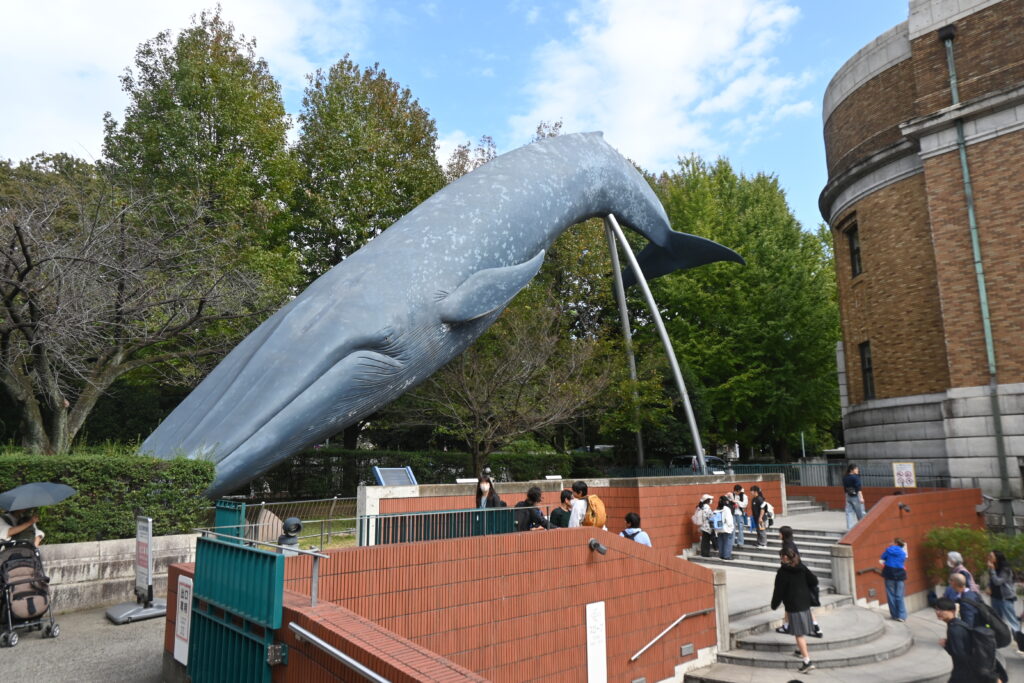
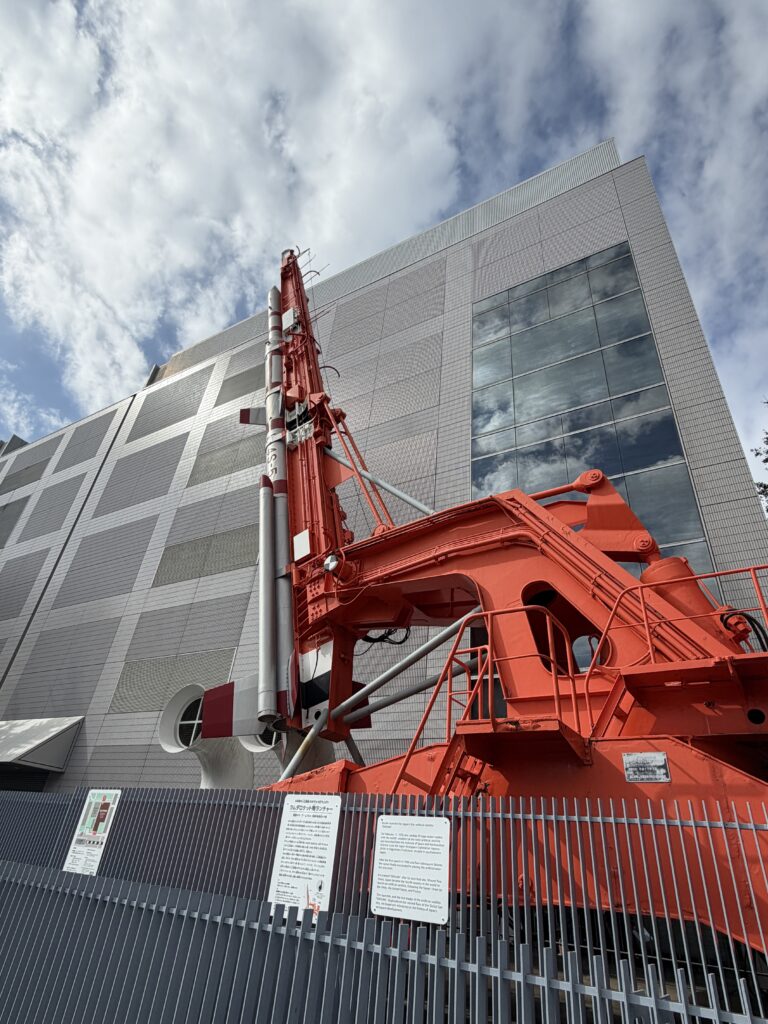
    Next door is the National Museum of Nature and Science, founded in 1877, Japan’s main museum of natural history and science. Even from outside there are two things to see. One is a life-size model of a blue whale, about 30 meters long, diving beside the entrance. The other is a big red launcher. It is not a rocket, but the real launch rail used for the Lambda rocket that put Japan’s first satellite, Ohsumi, into orbit in 1970, from Uchinoura in Kagoshima Prefecture.
    Why is this a park? Thank a Dutch doctor

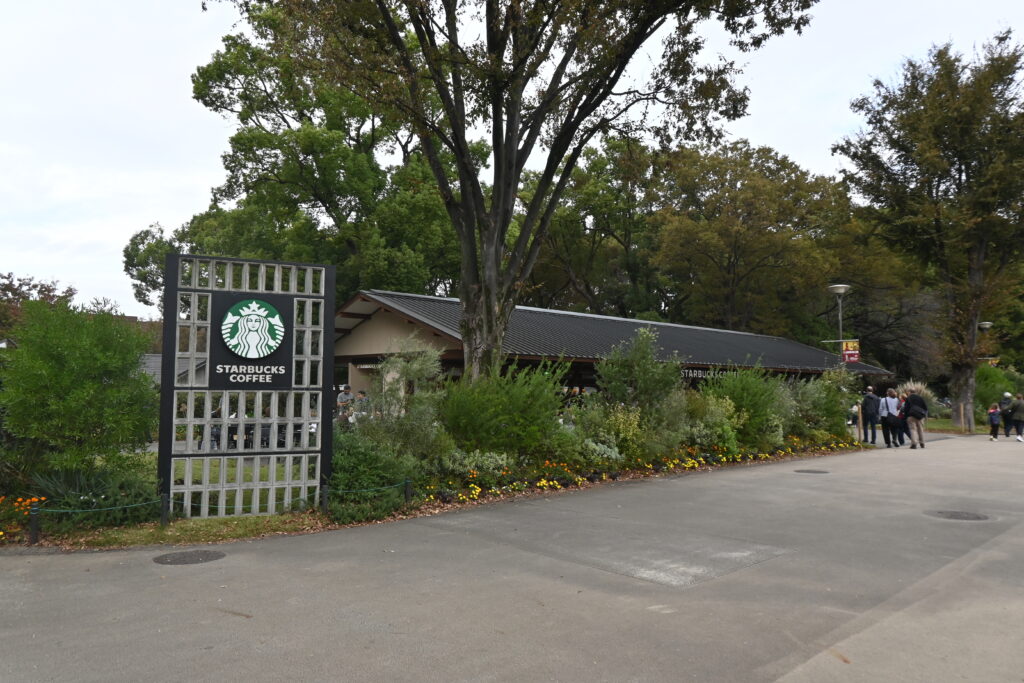
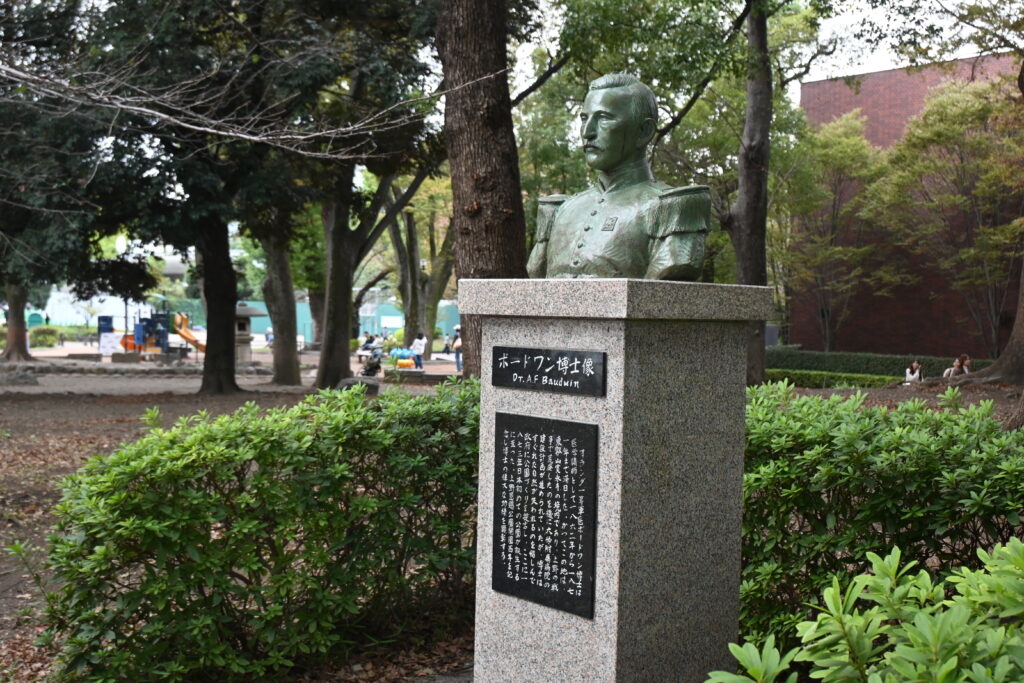
    Walk on toward the fountain. Past the Starbucks, at the back on the right, stands a small bust that most visitors walk straight past. This man is the reason Ueno Park exists.
    After the Battle of Ueno, the new government planned to build a medical school and hospital on the burned hilltop, and work had already started. In 1870, the Dutch army doctor Anthonius Bauduin, who was teaching medicine in Japan, was shown the site. He told the Japanese officials that it would be a waste to cut down the trees, and that Ueno should become a park, like the great parks of European cities. The medical school was moved to Hongo instead, and became the University of Tokyo. In 1873 Ueno was named one of Japan’s first public parks, together with Asakusa, Shiba, Fukagawa and Asukayama, and it opened officially in 1876. Without Dr. Bauduin, Ueno might be a university campus today.
    The wrong face, again

    Remember Saigo Takamori’s statue in Part 1, whose widow said, “My husband was not like this”? Ueno has a second face problem. When Bauduin’s bust was first put up in 1973, the family had supplied a photograph of the wrong man, his younger brother, who had been the Dutch consul in Japan. Nobody noticed for decades. In 2006 the bust was finally replaced with the right face. So if you want to see the real Dr. Bauduin, you are just in time.

    The fountain square: a temple, then a world fair

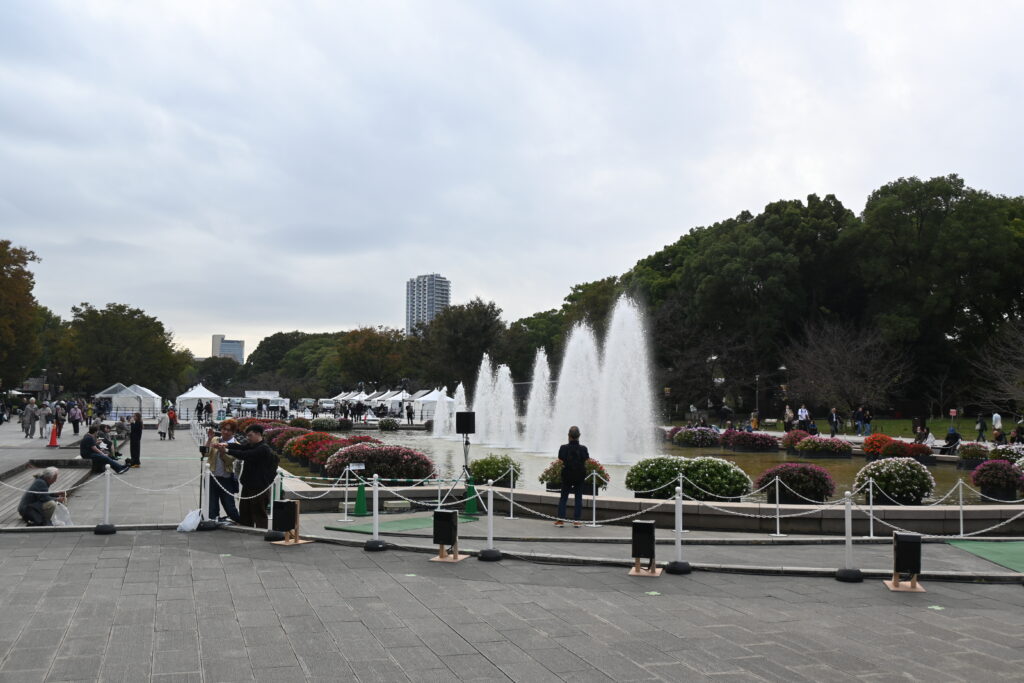
    The big fountain square is the heart of the park. Look back at Hiroshige’s view of Kan’ei-ji in Part 1: the great main hall of the temple stood right here. After the battle, this empty ground became the stage for modern Japan.
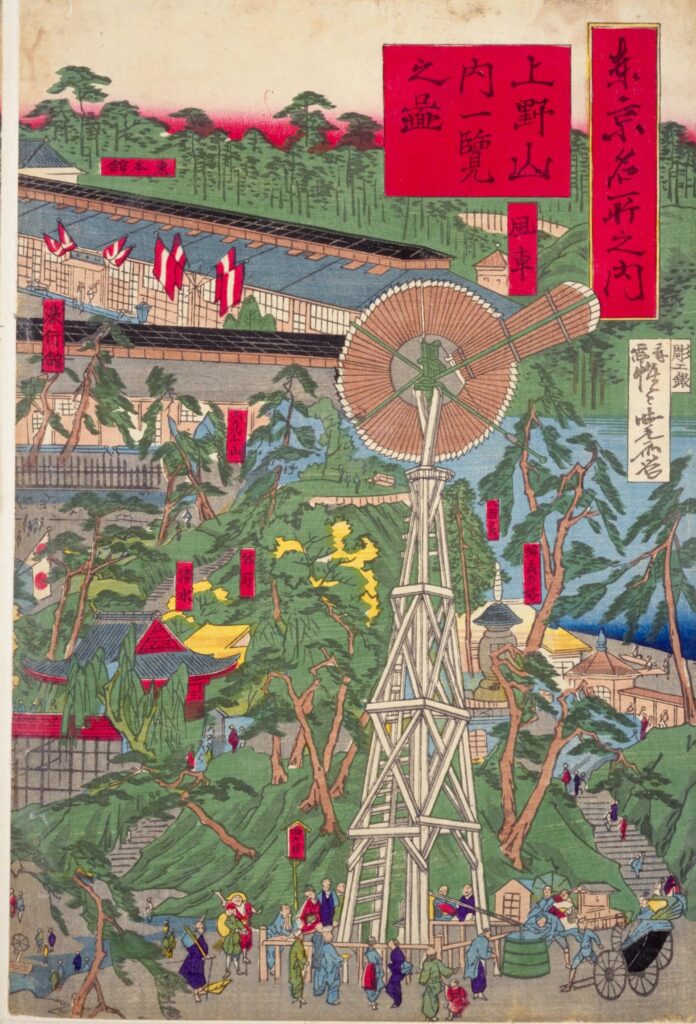
    In 1877 the government held the First National Industrial Exhibition here, a Japanese world fair to show off new machines, crafts and products. Kawanabe Kyosai’s print from that year shows Ueno full of flags, halls and visitors, with a tall windmill turning above the pines. Only ten years earlier this was a temple ground where the shoguns came to pray.
    Exhibitions kept coming back to Ueno, and the museums grew out of them. That is why so many museums stand side by side here today.

    The Tokyo National Museum

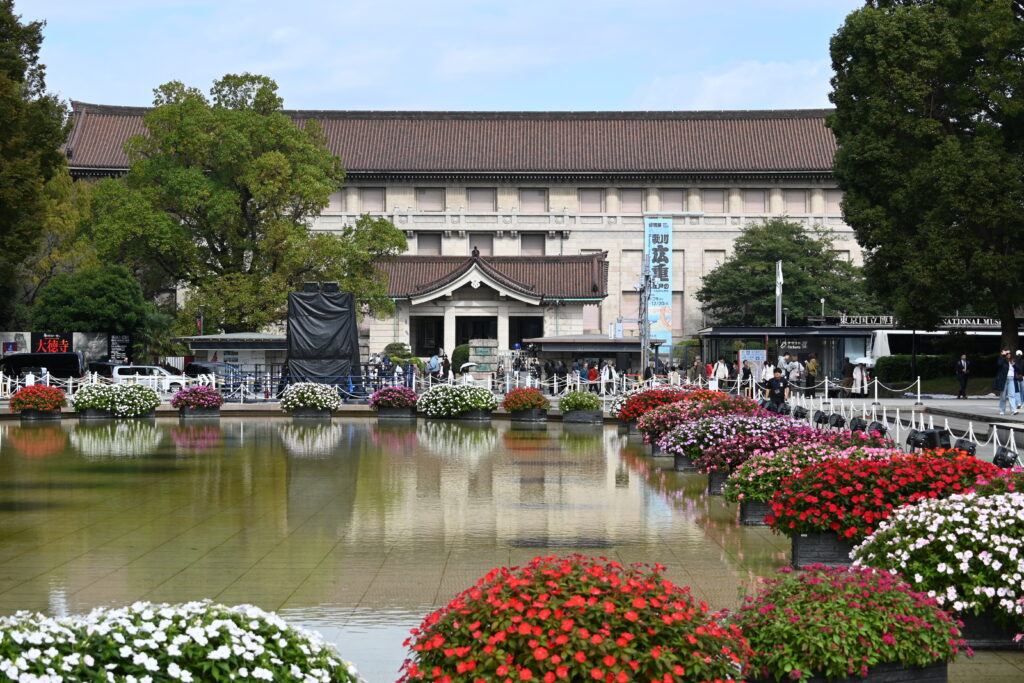
    At the end of the fountain square stands the Tokyo National Museum, Japan’s oldest museum, founded in 1872. Its collection of Japanese and Asian art is one of the largest in the world, with many National Treasures.
    Then and now: two main buildings

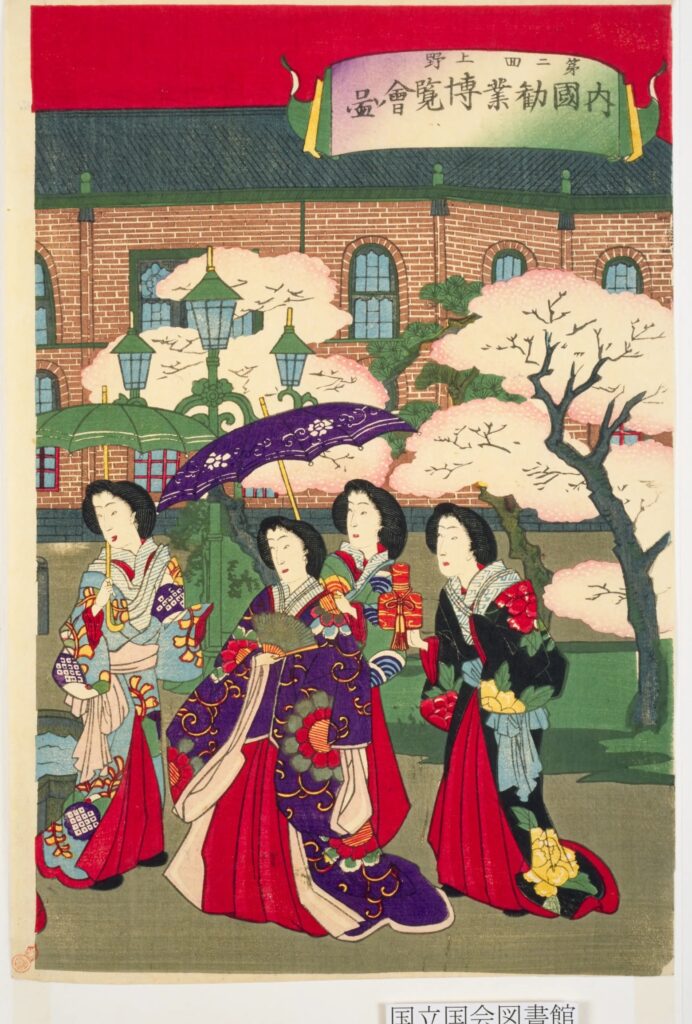
    The building you see today is not the first. In 1881 the British architect Josiah Conder, the “father of modern Japanese architecture”, designed a red-brick gallery for the Second National Industrial Exhibition. When the exhibition closed, it became the museum’s main building. Yoshu Chikanobu printed it in 1881, with fashionable ladies strolling in front. That brick hall was badly damaged in the Great Kanto Earthquake of 1923.
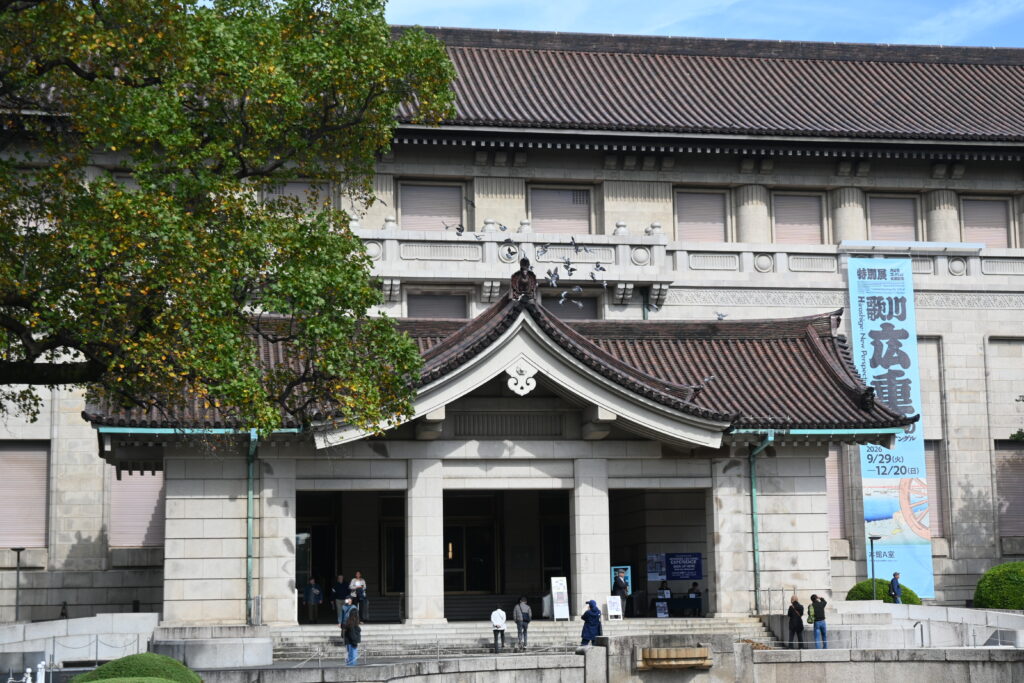
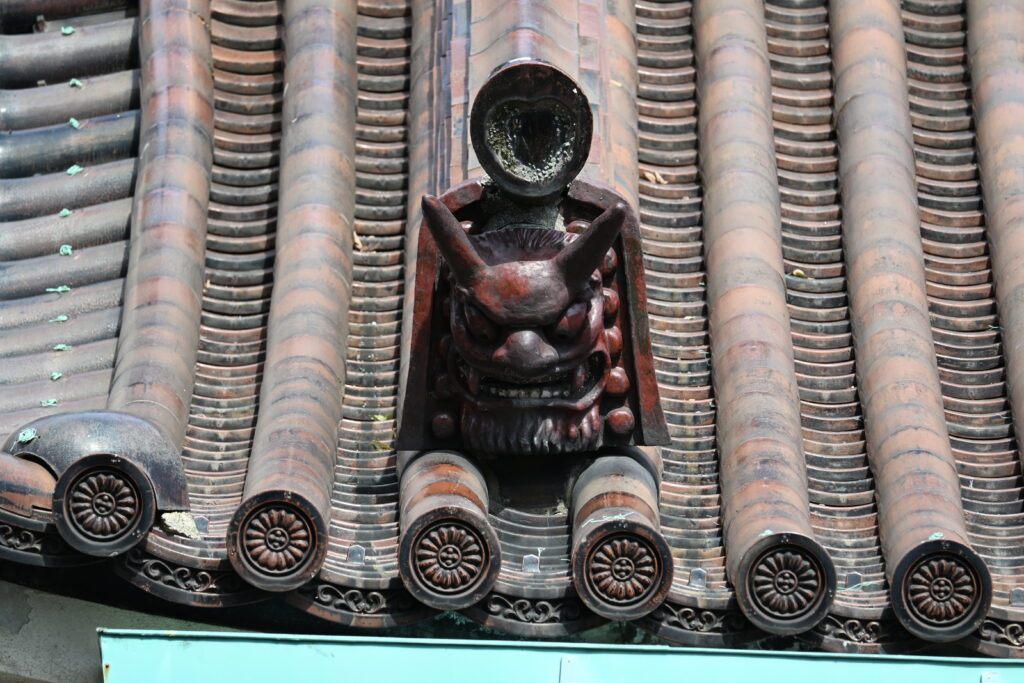
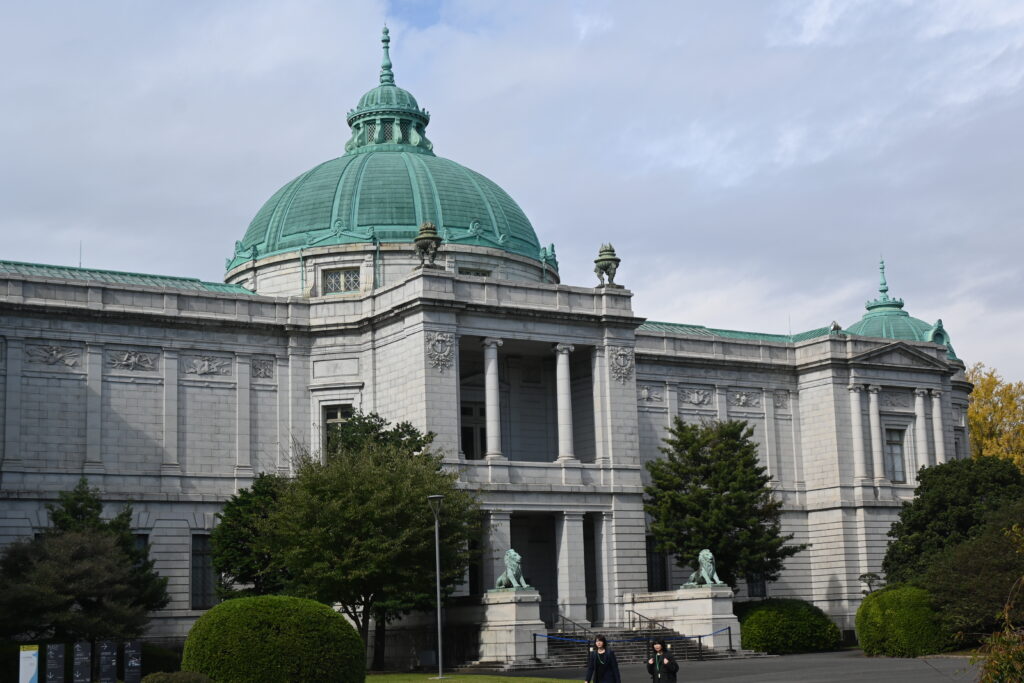
    What stayed the same: the place, and the idea of a grand building to show Japan’s treasures. What changed: the style. The present main building, completed in 1938, is a Western-style concrete building wearing a heavy Japanese tiled roof, a style popular in 1930s Japan. Look up at the roof: you will find onigawara demon tiles and phoenix ornaments, traditionally meant to keep away evil and bring good fortune.
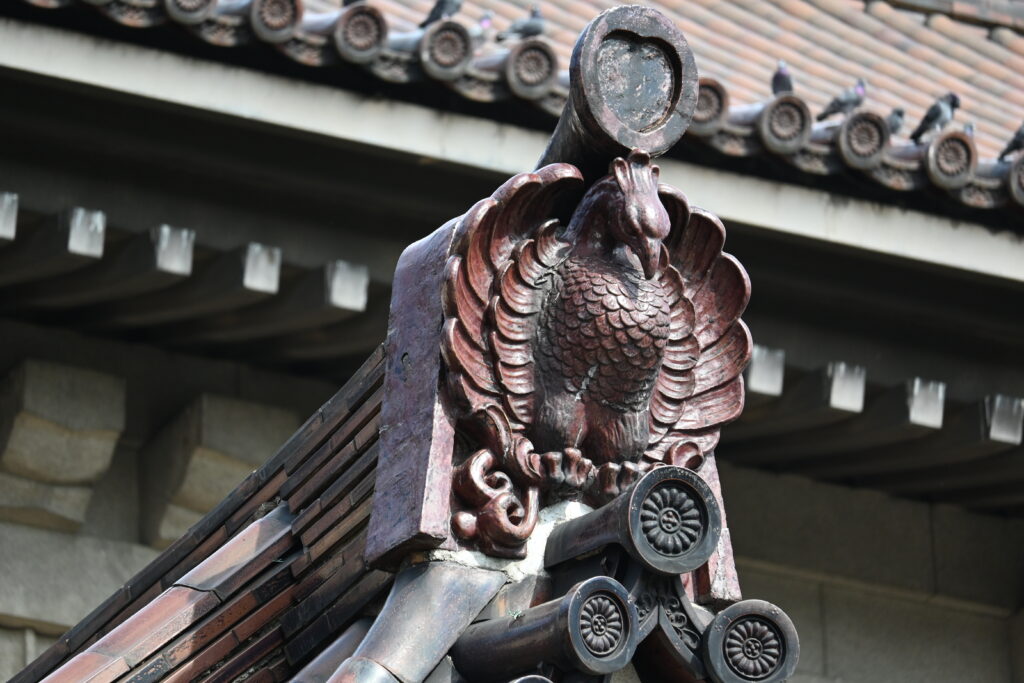
    Inside the main building

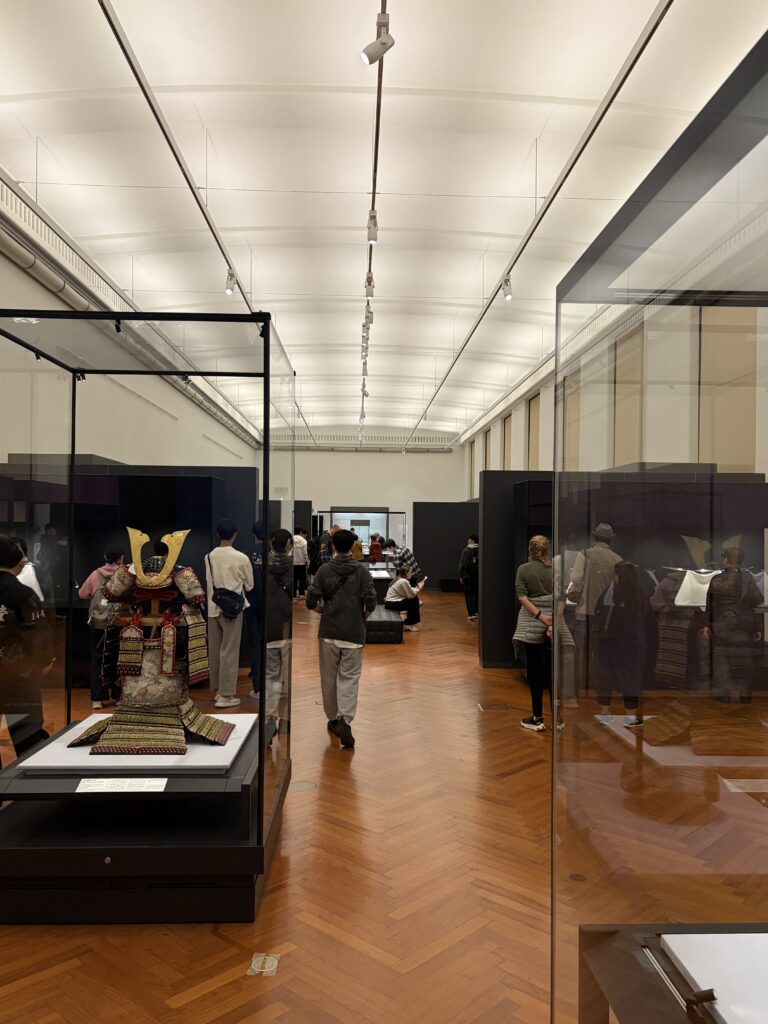
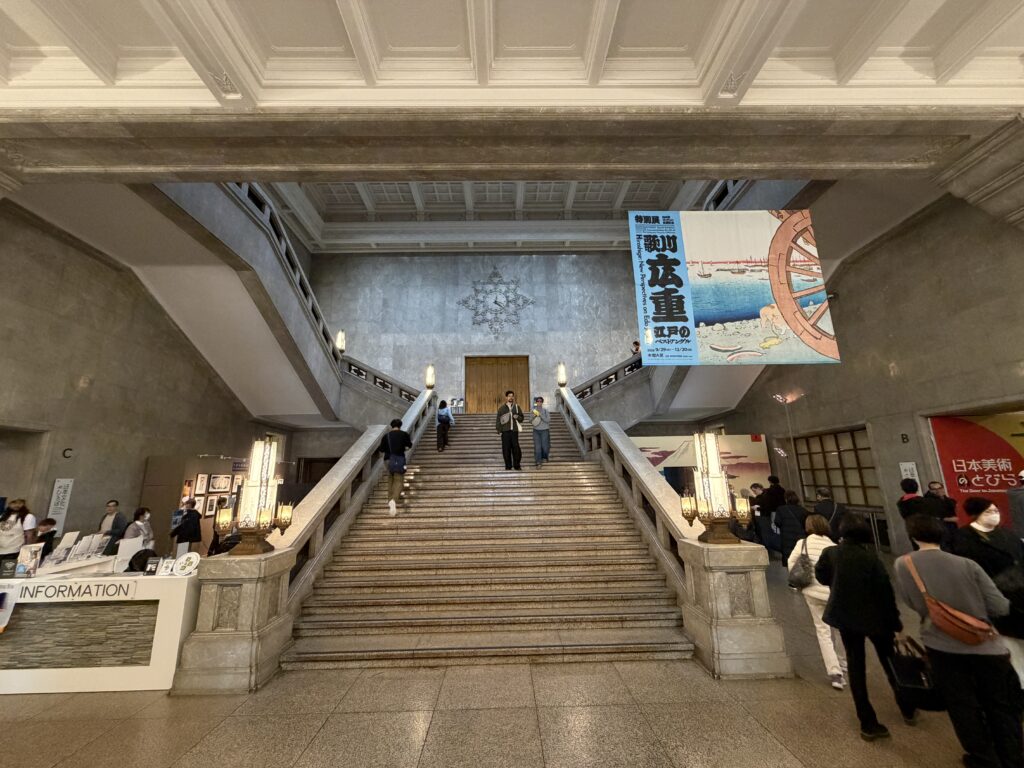
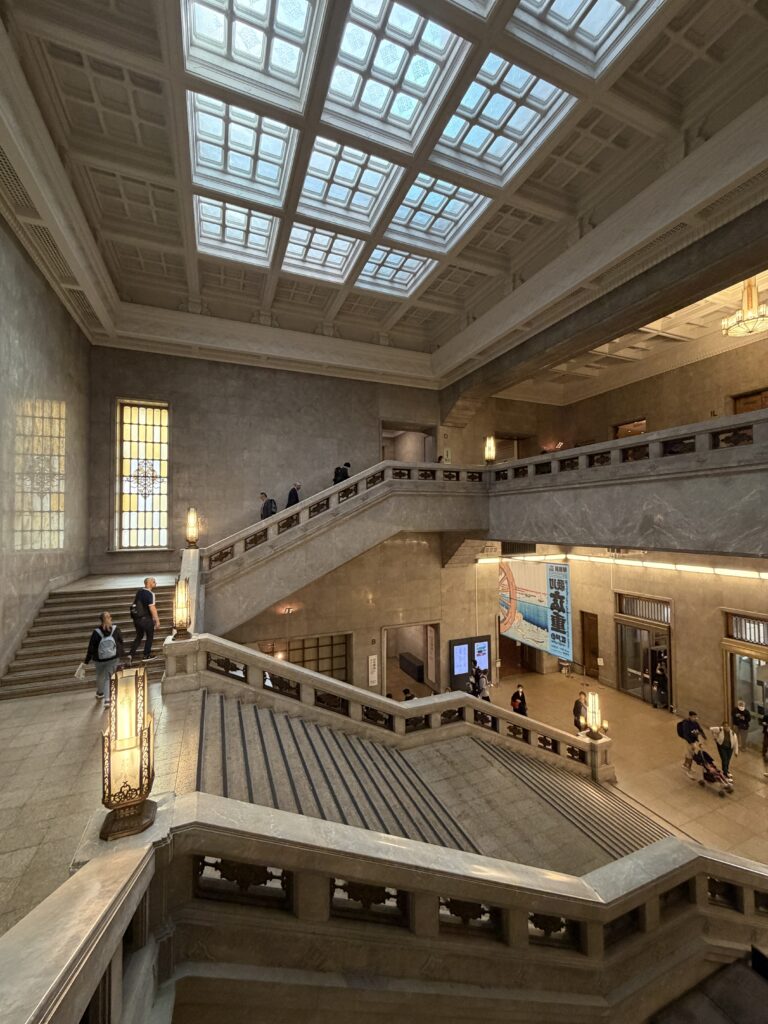
    Inside the entrance hall, a grand staircase rises under a coffered ceiling. You may recognize it: it often appears in Japanese TV dramas. The main building is huge, on two floors, and seeing the whole collection properly takes several hours. Visitors from abroad especially love the tea bowls used in the tea ceremony, the samurai armor and the Japanese swords.
    Make your own ukiyo-e print

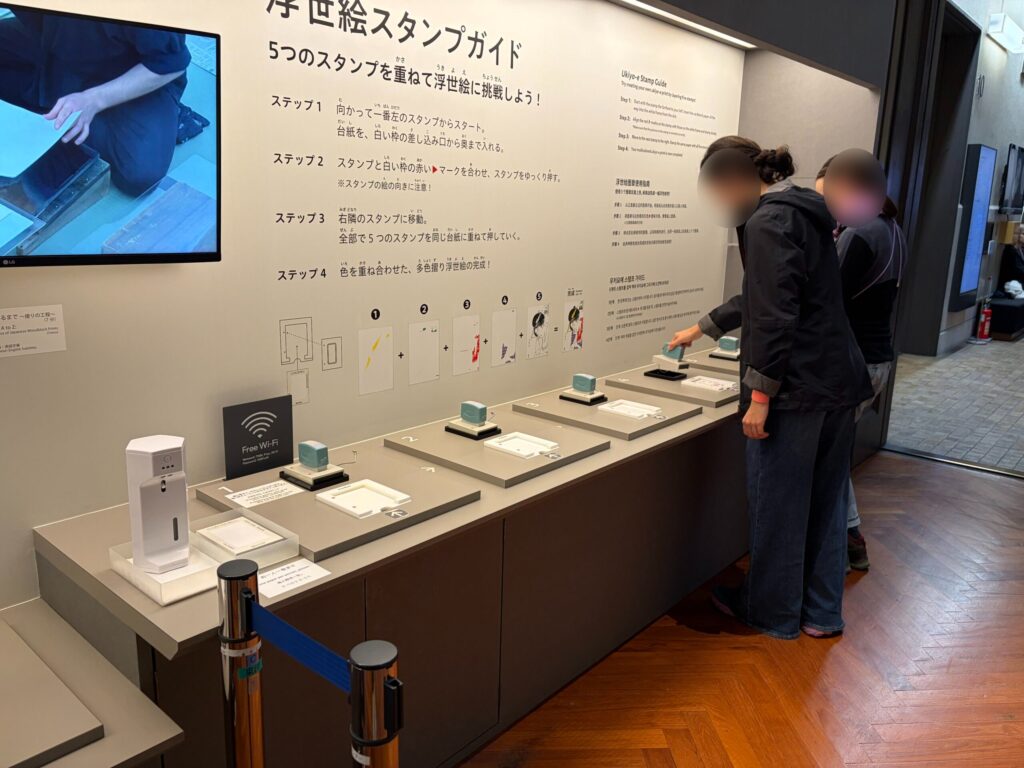
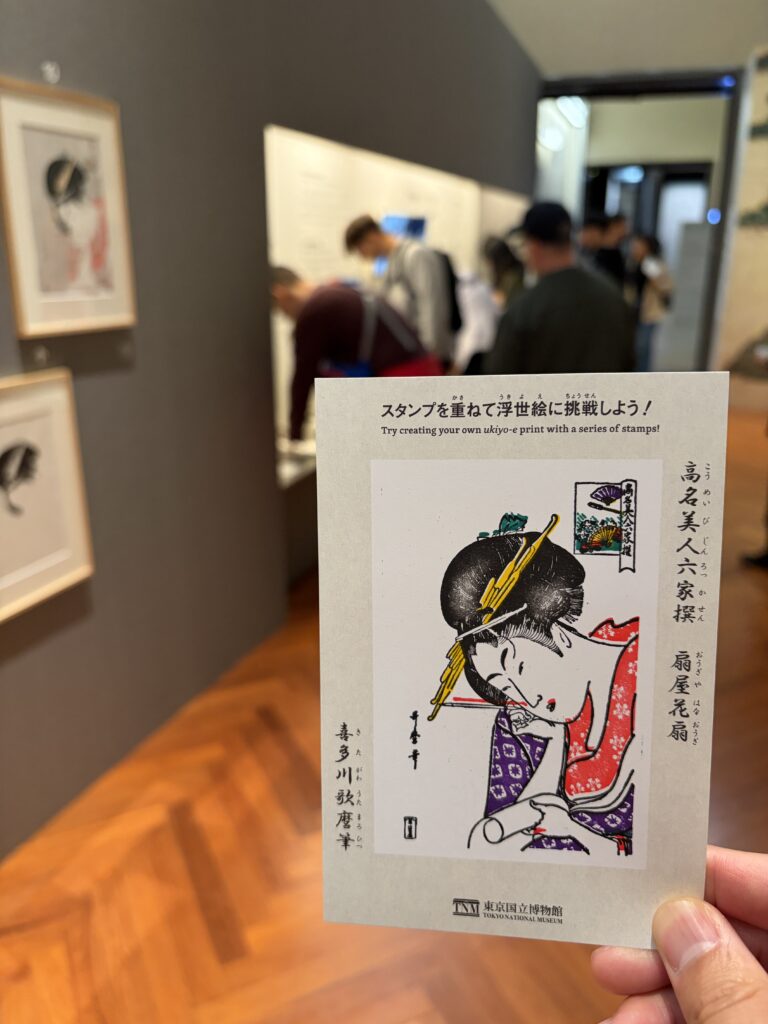
    My favorite corner is near the entrance of the main building: a hands-on ukiyo-e corner, at no extra charge. You press five color stamps, one after another, onto the same card, lining each one up with a guide mark. Color by color, a woodblock-style picture appears, and you take home your own ukiyo-e postcard. Real ukiyo-e used many more blocks, and the panels explain how the professionals did it. It makes a lovely souvenir.
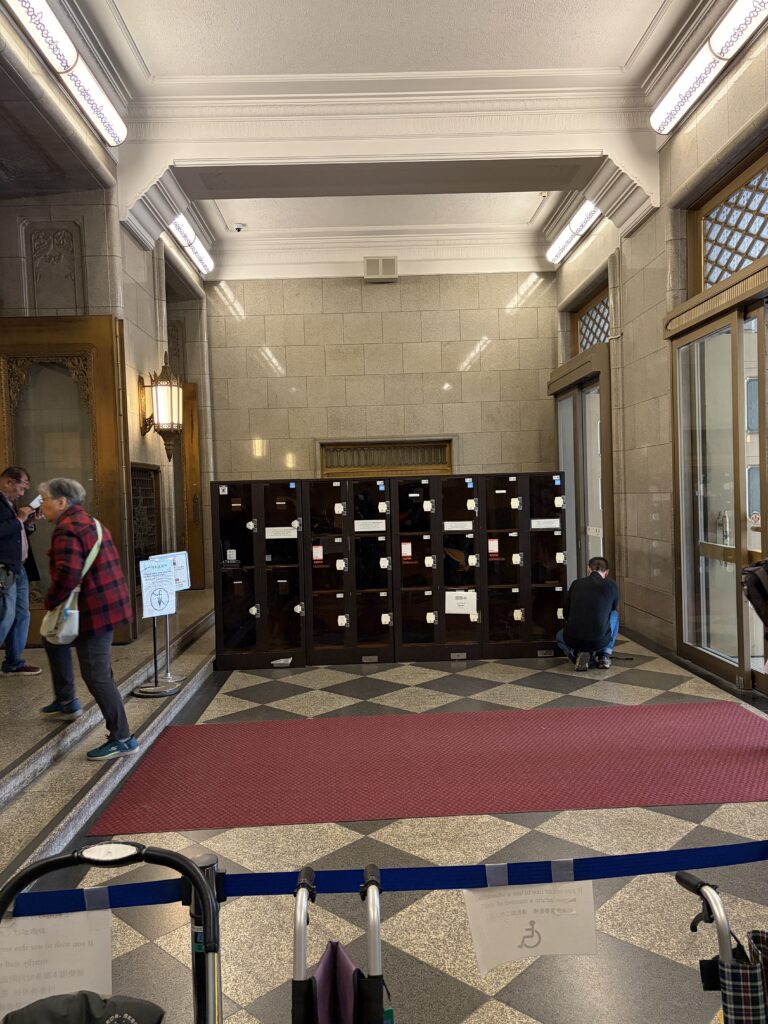
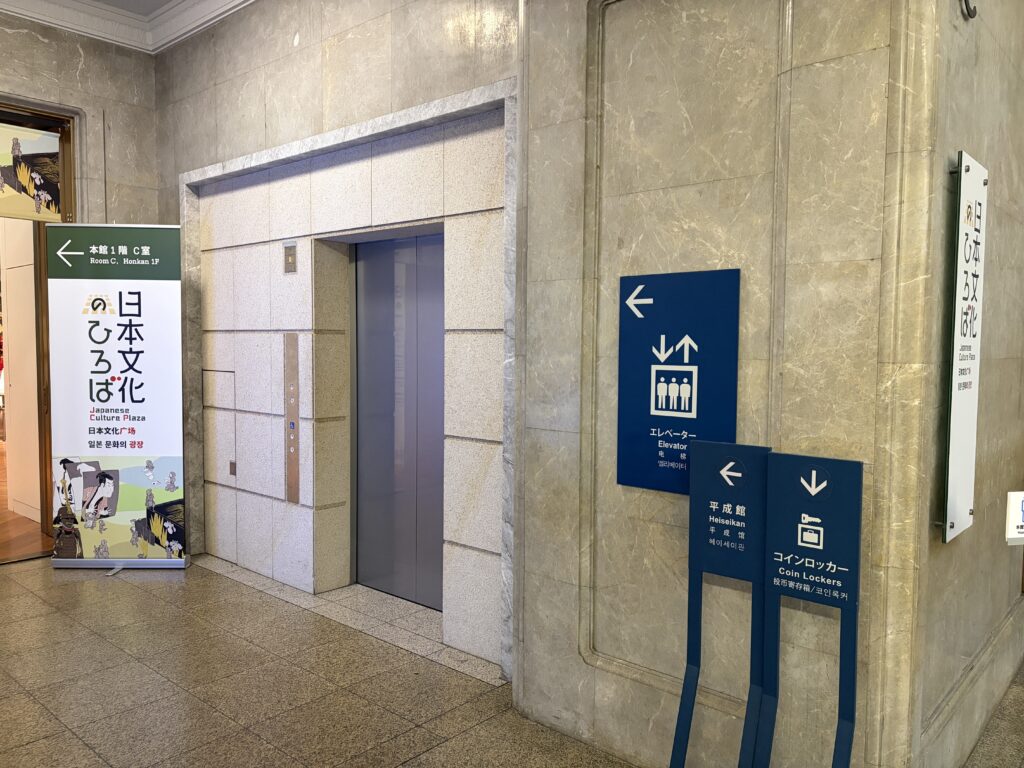
    When I visited, a special Hiroshige exhibition was on, and the museum was busy. There are plenty of sofas to rest on, coin lockers, and elevators as well as stairs.
    Two more buildings for two imperial weddings

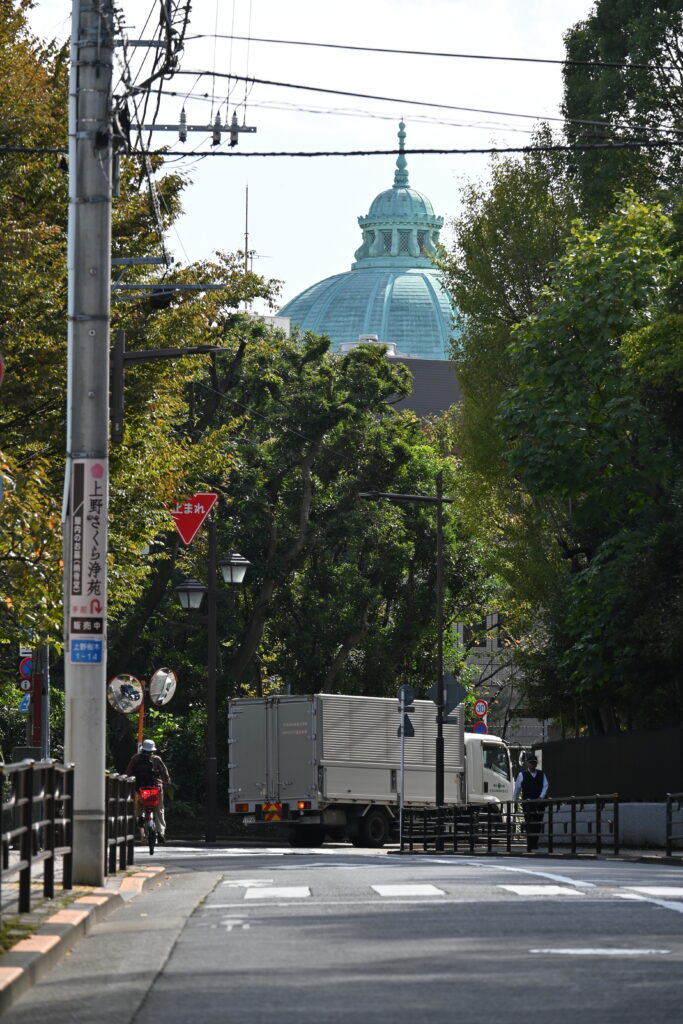
    To the left of the main building is the Hyokeikan, a domed palace in the Western style completed in 1908 to celebrate the wedding of the Crown Prince, later Emperor Taisho. It was designed by Katayama Tokuma, a student of Josiah Conder, and it is an Important Cultural Property. It was closed on my visit. Behind it, the modern Heiseikan opened in 1999 to mark the wedding of the then Crown Prince, today’s Emperor. It shows archaeology, including clay haniwa figures and Jomon dogu, and hosts the big special exhibitions.
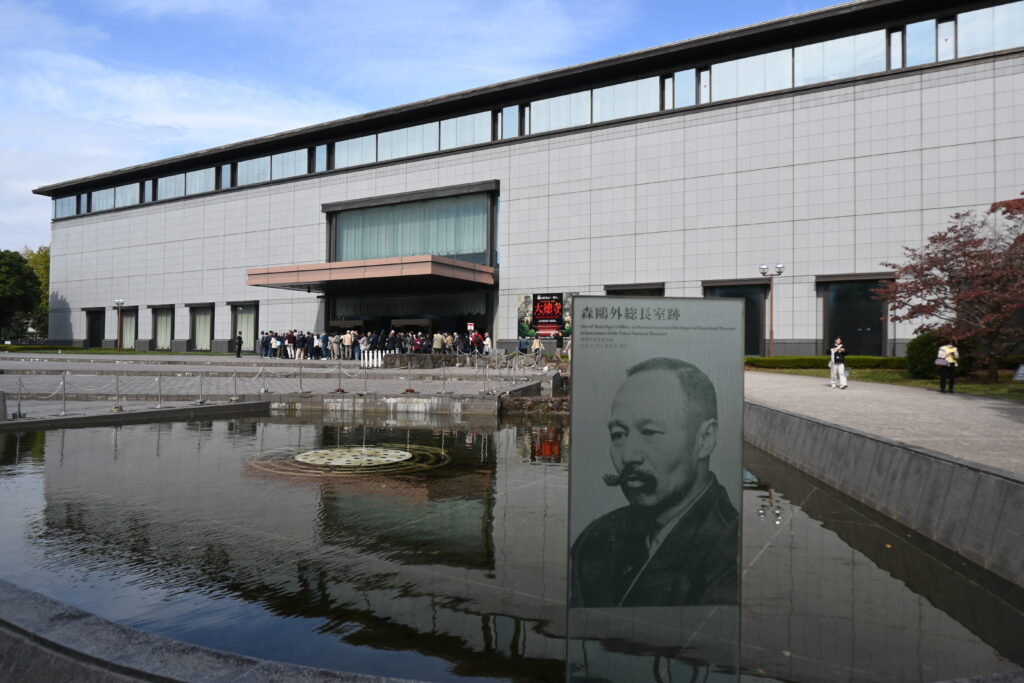
    A ghost station and Japan’s oldest concert hall

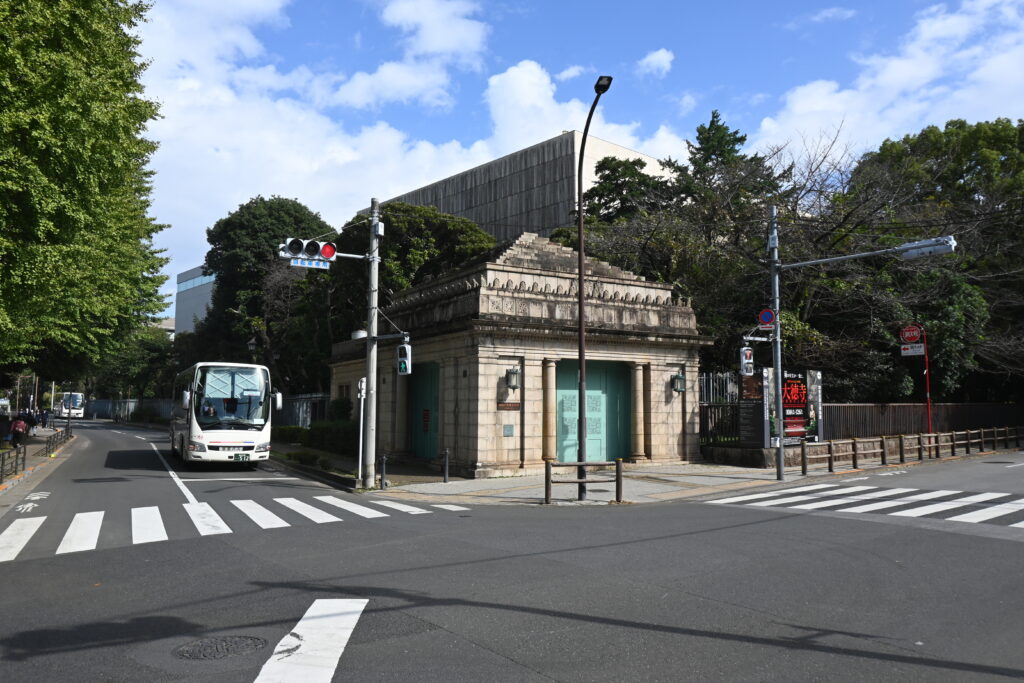
    Leave the museum and walk west along the road beside it. Opposite the Kuroda Memorial Hall stands a small stone building: the old Hakubutsukan-Dobutsuen Station, “Museum and Zoo Station”, on the Keisei Line. It opened in 1933. The land belonged to the Imperial family, so building a station here needed the approval of the Emperor himself, and the railway was told the building must be dignified enough for the site. That is why a small station looks like a little temple of classical architecture. Trains stopped calling in 1997, and the station was closed for good in 2004. It is opened to the public only for special events, so check the Keisei website.
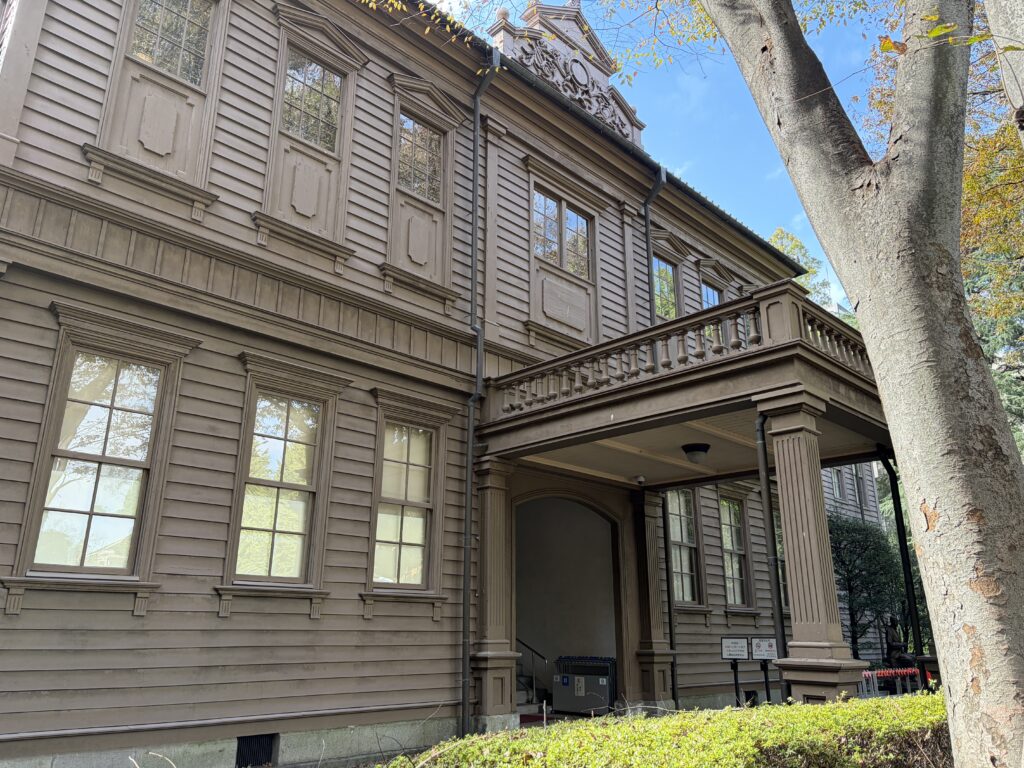
    Across the road stands the Sogakudo, built in 1890 for the Tokyo Music School, the forerunner of today’s Tokyo University of the Arts. It is the oldest Western-style concert hall in Japan and an Important Cultural Property. It is open to visitors on certain days, and there are often concerts.
    My favorite coffee break

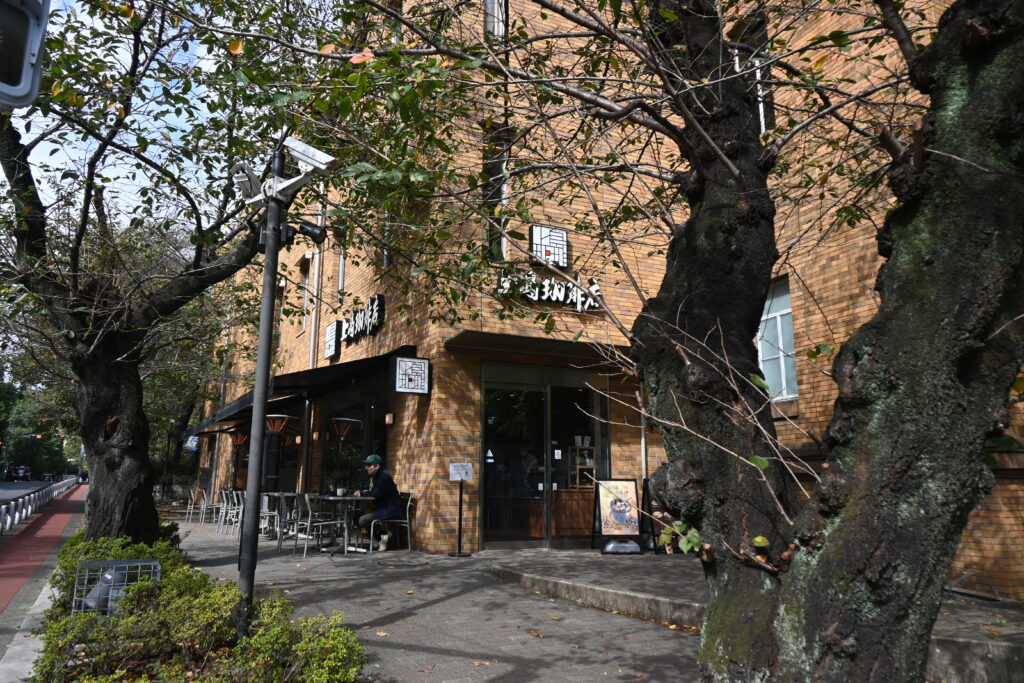
    On the corner opposite the old station is Ueshima Coffee House, at the Kuroda Memorial Hall. It is one of my favorite cafés in Ueno: it is usually less crowded than the cafés in the middle of the park, and from the window you can sit and look out at the old station and the Sogakudo. The perfect place to rest your legs before the last stretch.
    Kan’ei-ji today: a temple hall from Kawagoe

    Walk north along the road to find what remains of Kan’ei-ji. After the battle, the temple had lost almost everything, including its great main hall on today’s fountain square. In 1879 the monks brought a hall from Kitain, a temple in Kawagoe with deep ties to Kan’ei-ji’s founder Tenkai. It had been built there in 1638. The hall was taken apart, carried to Tokyo by boat, and rebuilt here as the new main hall. So the shoguns’ great temple, which once covered the whole hill, now lives quietly in a corner at the north end of the park.
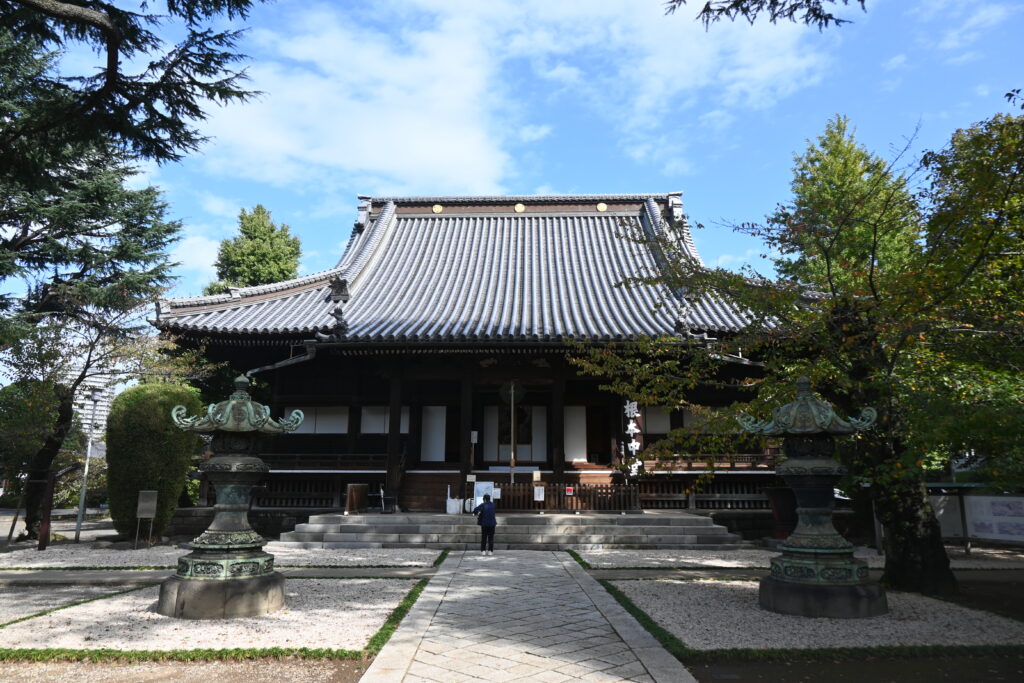
    From the road in front of the temple, look back: you can see the green dome of the Hyokeikan above the trees.
    Finish: Ryodaishi Bridge, on the ancient shore

    End the walk at Ryodaishi Bridge, just north of Ueno Station, which crosses the railway from the hilltop. Its name comes from Ryodaishi, a temple of Kan’ei-ji nearby. From here you look down on a river of tracks: the Yamanote and Keihin-Tohoku Lines, the Utsunomiya, Takasaki and Joban Lines, and limited express trains such as the Hitachi. Because the trains are just leaving or entering Ueno Station, they move slowly, so you can watch them properly. Stay ten minutes and you will see many kinds of trains, sometimes three or four at once. Children love it, and so do I.
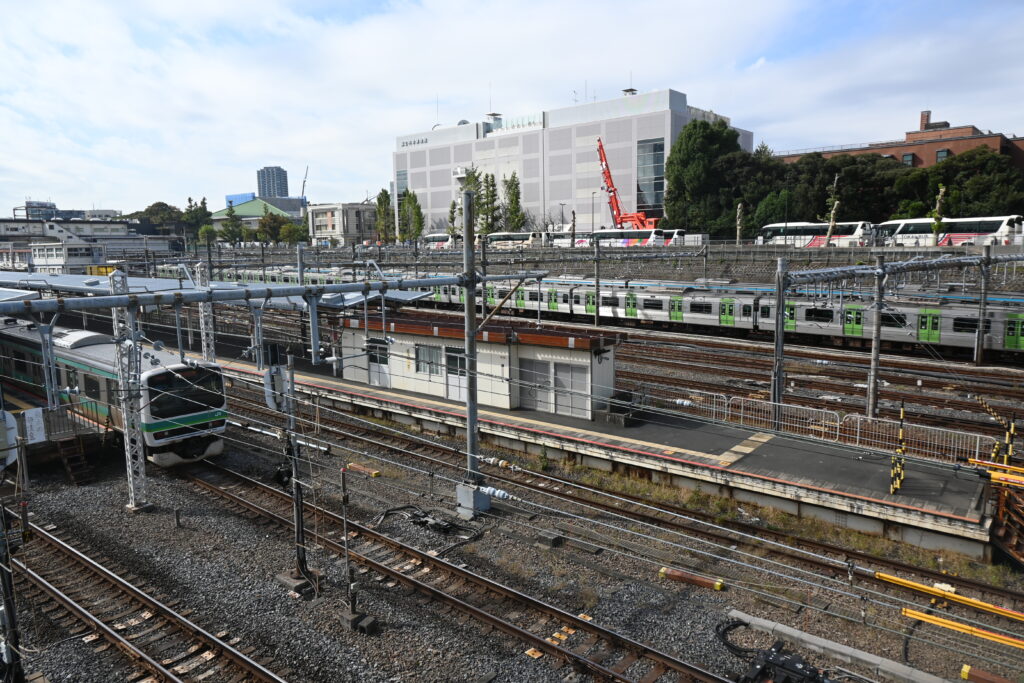
    Why the trains run along the foot of the hill

    Remember the elevation map in Part 1? The railway runs exactly along the foot of the Ueno Plateau, on the flat lowland. About 6,000 years ago, when the sea was higher than today, this lowland was the seashore.
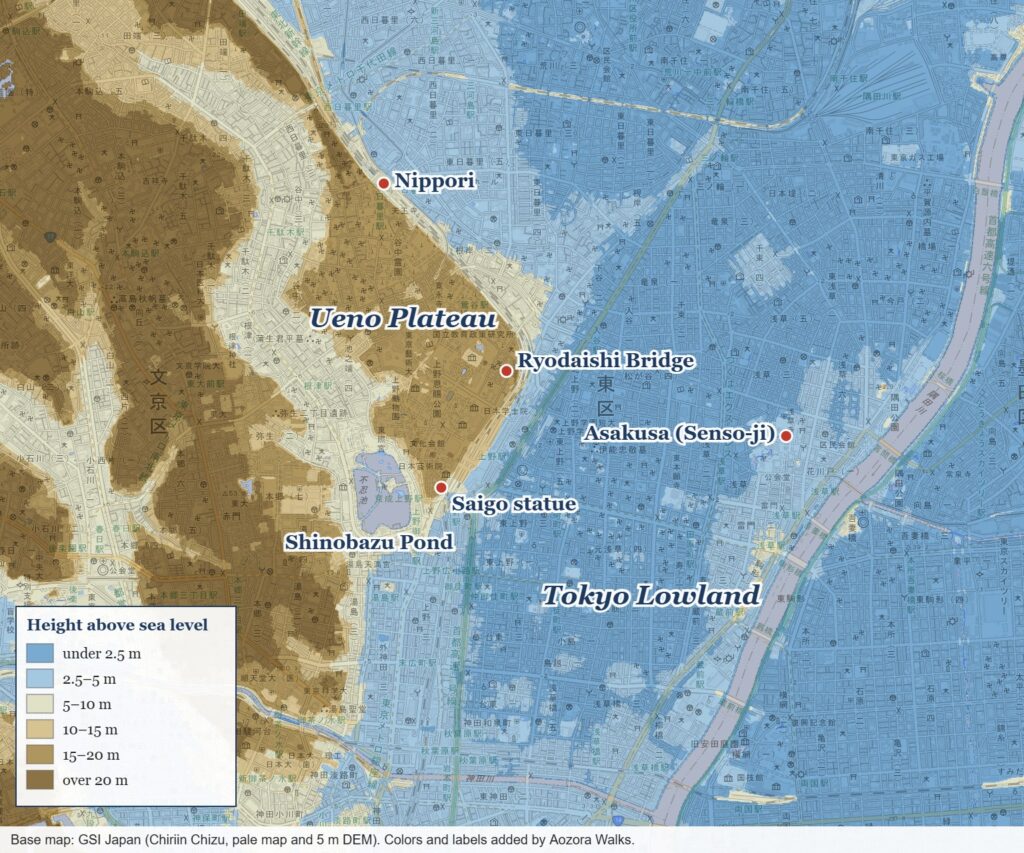
    The proof lies a little farther north. At Kami-Nakazato in Kita City, at the foot of the same plateau, the Jomon people left the Nakazato shell mound, a heap of shells about 1 kilometer long and up to 4.5 meters deep, made about 4,600 to 3,900 years ago. It sits on what was then a sandy beach, and archaeologists think it was a kind of seafood factory, where people heated and dried shellfish to trade inland. Today the shell mound, now a National Historic Site, lies between two railway depots, the Tokyo Shinkansen depot and the Oku train depot. The Jomon beach has become a parking lot for trains.

    Trains and shell mounds have met before. In 1877 the American zoologist Edward Morse was riding the train from Yokohama to Shinbashi when he spotted layers of shells in a cliff near Omori. Because the railway runs along the foot of the plateau, the cliff was right beside his window. His dig at the Omori shell mound is remembered as the start of modern archaeology in Japan. So as you watch the trains from Ryodaishi Bridge, remember: you are standing on the edge of an ancient sea.

    Best time to go

    Come on a weekday morning, Tuesday to Friday, when the museums open (9:30). The Tokyo National Museum and the National Museum of Western Art stay open until 20:00 on Fridays and Saturdays, which is a quieter time to visit. In late March and early April, the cherry blossoms make the walk beautiful, but very crowded.

    Good to know before you go

    • Mondays: the Tokyo National Museum and the National Museum of Western Art are closed (except on public holidays).
    • Tokyo Bunka Kaikan is closed for renovation until some time in fiscal 2028. You can only see the outside.
    • The National Museum of Western Art can be very crowded during special exhibitions. The Rodin sculptures outside are free.
    • Prices change: the permanent collection of the National Museum of Western Art will cost ¥1,000 for adults from 20 March 2027.
    • Give the Tokyo National Museum time. The main building alone can take several hours.
    • The old station is open only during special events, and the Sogakudo only on certain days. Check before you go.

    Getting there

    • Start: JR Ueno Station, Park Exit. From Asakusa, take the Ginza Line to Ueno (about 5 minutes) and walk through the station to the Park Exit.
    • From Narita Airport: Keisei Skyliner to Keisei Ueno, then walk up through the park (or start with Part 1).
    • Finish: from Ryodaishi Bridge, walk back to JR Ueno Station (about 5 minutes), or north to JR Uguisudani Station.

    Make a day of it

    See Ueno with a local guide

    This three-hour small-group tour in English covers Ueno Park, the Tokyo National Museum and the Ameyoko market. It is still new, with only a few reviews so far, though they are good. The museum ticket (¥1,000) is not included. Free cancellation up to 24 hours before. Prices may change, so check the details before you book.

    Where to stay

    Mitsui Garden Hotel Ueno

    Why choose: Right by JR Ueno and Keisei Ueno stations, so you can walk to the museums in minutes, and the Skyliner to Narita Airport is on your doorstep.

    Nohga Hotel Ueno Tokyo

    Why choose: A stylish small hotel that works with local craftspeople, in a quieter street east of Ueno Station. Good for design lovers.

    Official websites

    Next time

    Next time, we keep walking north from Kan’ei-ji into Yanaka and Nippori: quiet temple streets, the old-fashioned Yanaka Ginza shopping street, and the edge of the plateau where the Jomon people once lived beside the sea.

    Photos: Aozora Walks unless otherwise noted. Woodblock prints: National Diet Library Digital Collections (public domain): Kawanabe Kyosai, “Panorama of Ueno” (Famous Places of Tokyo, 1877), https://dl.ndl.go.jp/pid/1305644; Yoshu Chikanobu, “The Second National Industrial Exhibition at Ueno” (1881), https://dl.ndl.go.jp/pid/1307421. Elevation map made from GSI Japan’s Chiriin Chizu (pale map and 5 m DEM), with colors and labels added by Aozora Walks. Information as of October 2026.
  • Kengo Kuma’s Wooden Walk: From the Nezu Museum to the Forest of Meiji Jingu

    Kengo Kuma’s Wooden Walk: From the Nezu Museum to the Forest of Meiji Jingu

    This post contains affiliate links. If you book through them, I may earn a small commission at no extra cost to you.

    Kengo Kuma loves wood. In Part 1 of this series we went inside his Kabuki-za in Ginza, and in Part 2 we visited Sakai, a small river town full of his buildings. For Part 3, we return to central Tokyo for a half-day walk from the streets of Aoyama to the forest of Meiji Jingu.

    We visit three of his buildings, the Nezu Museum, the SunnyHills cake shop and the Meiji Jingu Museum, and stop to look up at a fourth, One Omotesando. Each uses wood in a different way. As a geography teacher, what I love about this route is where it ends: in a forest that looks wild, but was planted by people about a hundred years ago.

    Quick facts

    RouteOmotesando Station → Nezu Museum → SunnyHills → One Omotesando → Omotesando avenue → Meiji Jingu → Meiji Jingu Museum
    DistanceAbout 3 km, mostly flat
    TimeHalf a day (3 to 4 hours with the two museums and a tea break)
    CostNezu Museum from ¥1,600 (online, changes by exhibition). Meiji Jingu Museum ¥1,000, cash only. SunnyHills: free tea with any purchase
    AvoidMondays (Nezu Museum closed) and Thursdays (Meiji Jingu Museum closed)
    Nearest stationsStart: Omotesando (Tokyo Metro Ginza, Chiyoda and Hanzomon lines). Finish: Harajuku (JR) or Meiji-jingumae

    Start: Omotesando Station

    Leave Omotesando Station by Exit A5 and walk straight on, away from the big crossing. The Nezu Museum is about 8 minutes ahead. Exit A5 has a long, steep staircase. If you use a wheelchair, push a stroller or prefer to avoid stairs, use Exit B3 instead: the subway elevator is in the Aoyama Rise Square building beside it.

    This short street already feels like Milan: elegant buildings, fashion boutiques and pastry shops under the trees.

    Nezu Museum: a bamboo path and a deep roof

    The Nezu Museum opened in 1941 to show the collection of Nezu Kaichiro, a railway businessman who collected Japanese and East Asian art: tea ceremony objects, Buddhist art, paintings and calligraphy, about 7,400 works including several National Treasures. In 2009 the museum reopened in a new building by Kengo Kuma.

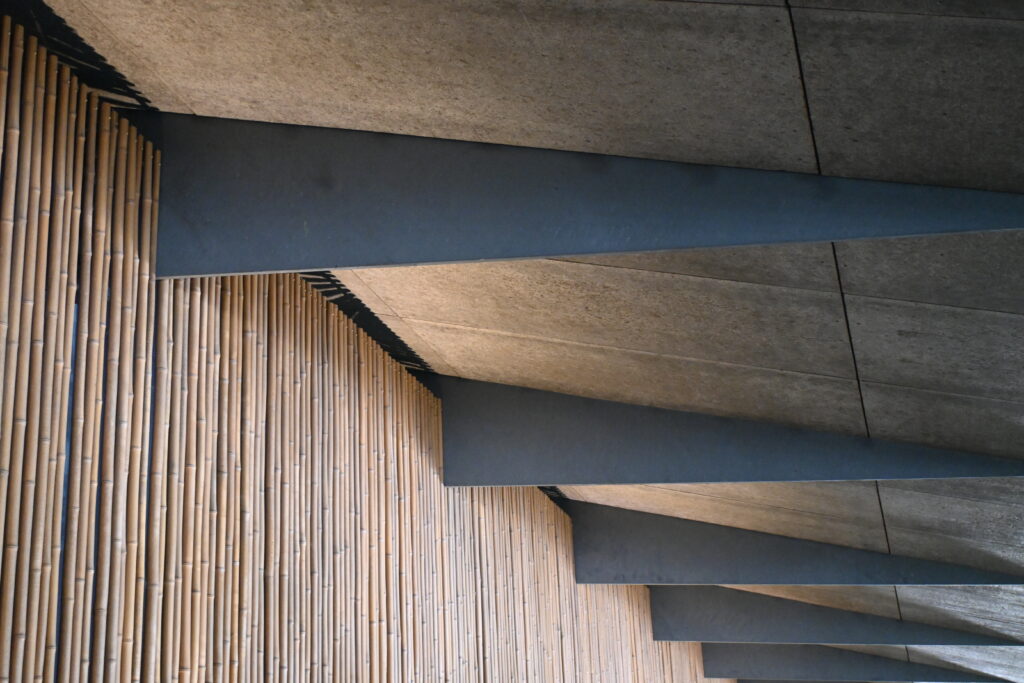
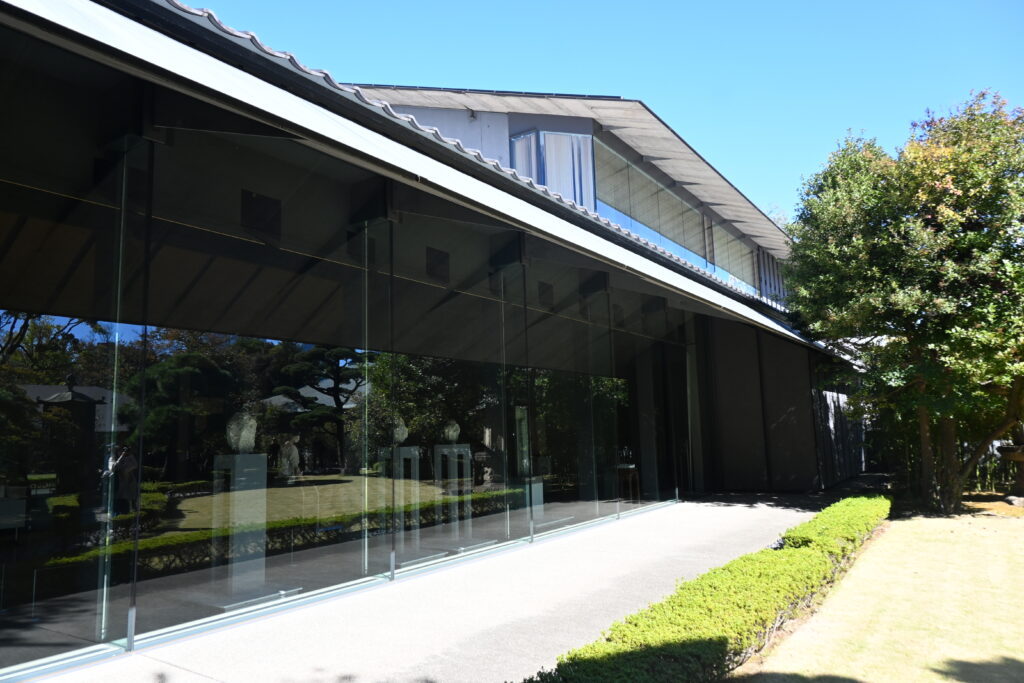
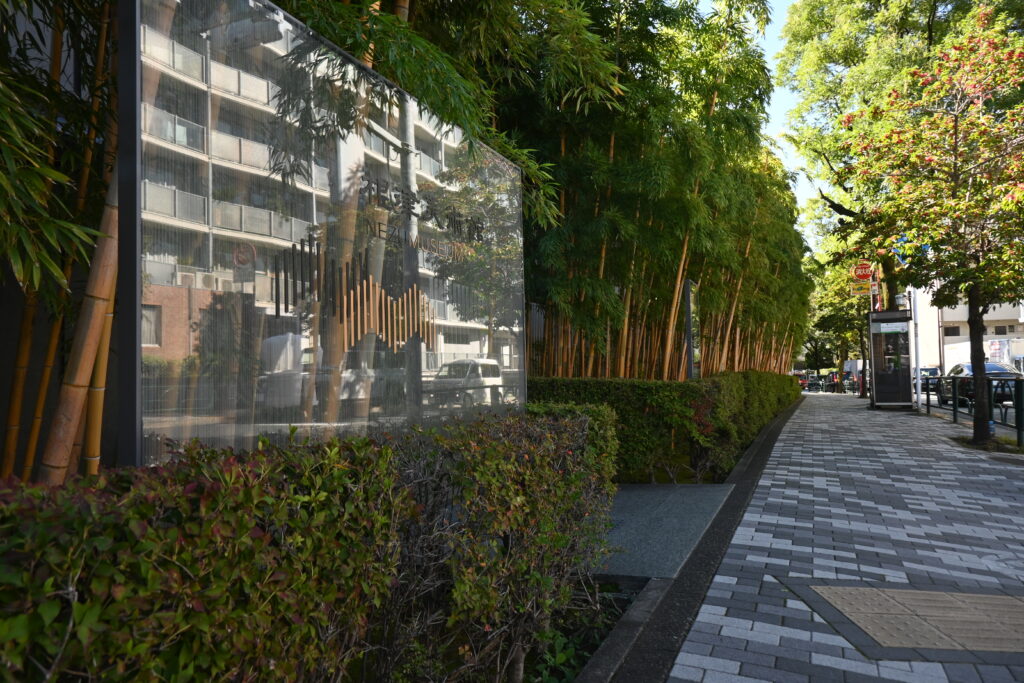
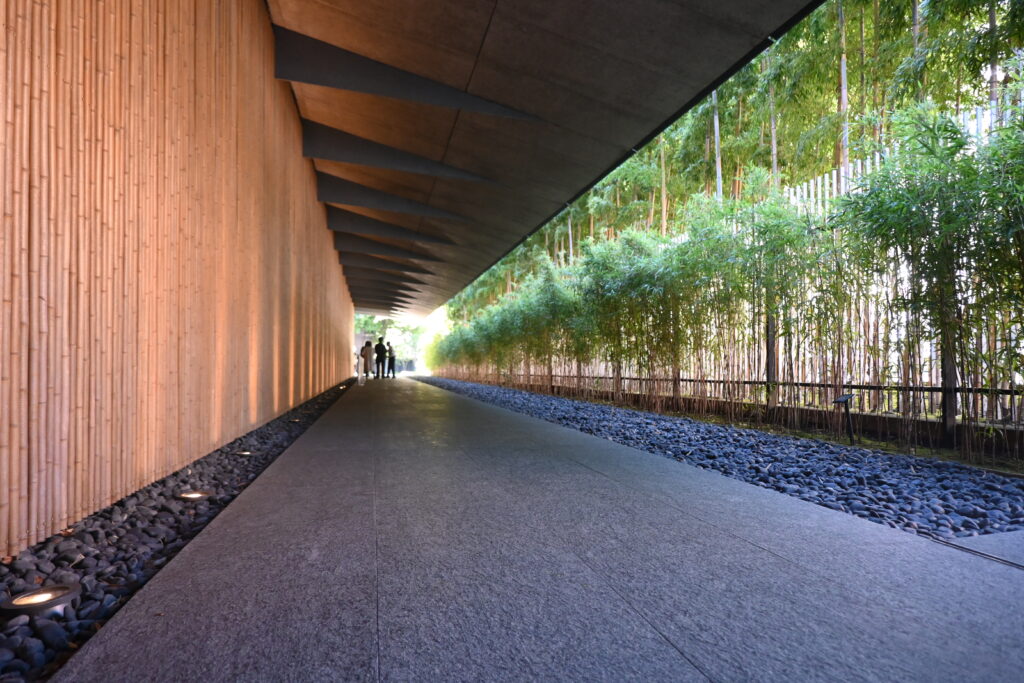
    Kuma begins before you even reach the door. From the street, you walk along a long, quiet path between a wall of bamboo and a screen of thin bamboo poles, under a low, deep roof. The noise of the city fades with every step.

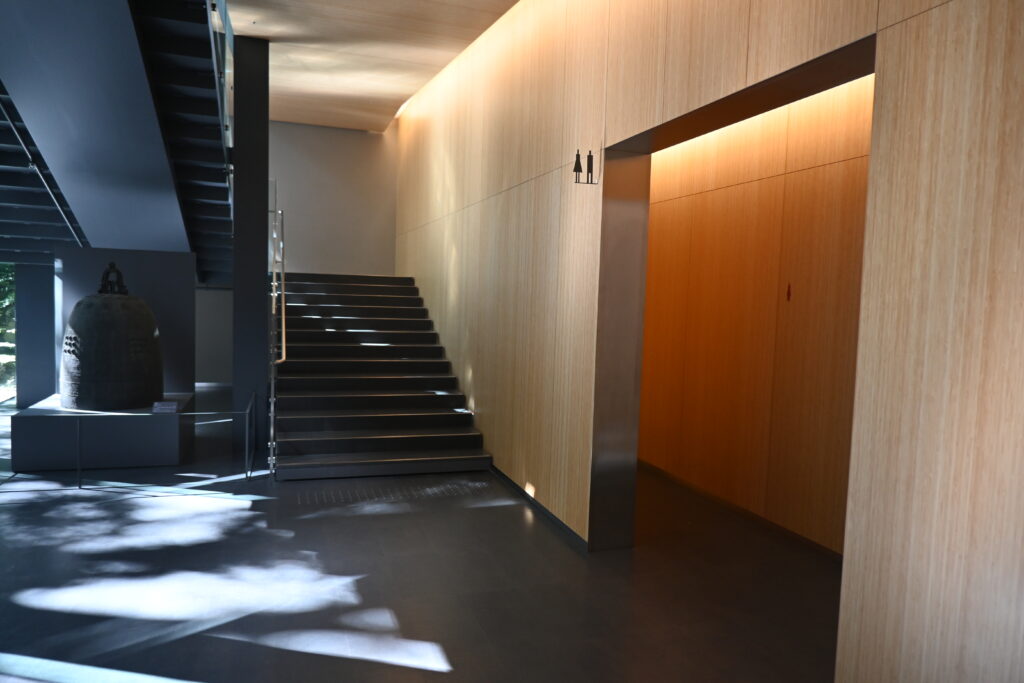
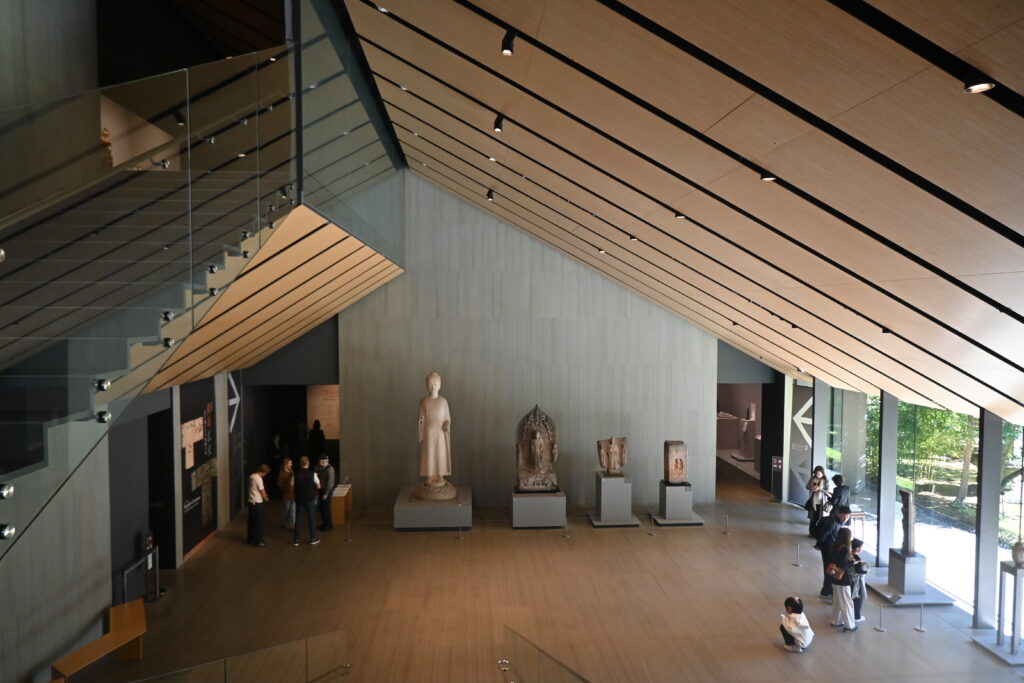
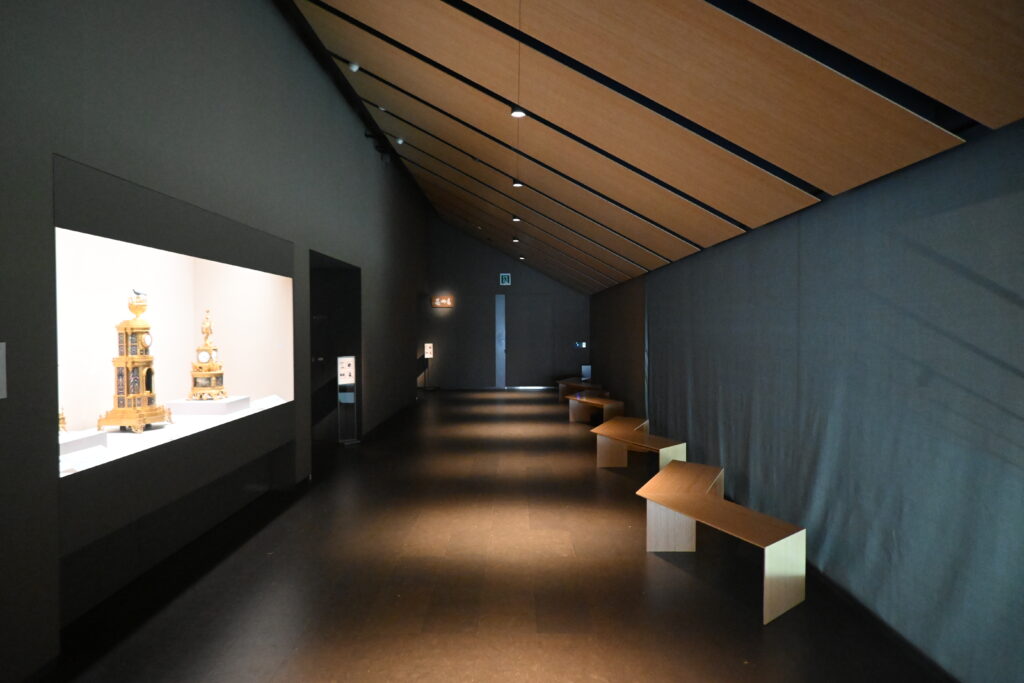
    Inside, the high ceilings are lined with wood, and tall windows open onto the garden. Galleries 1 and 2 on the ground floor are for the changing exhibitions, and the other rooms show the permanent collection.

    The garden and the café

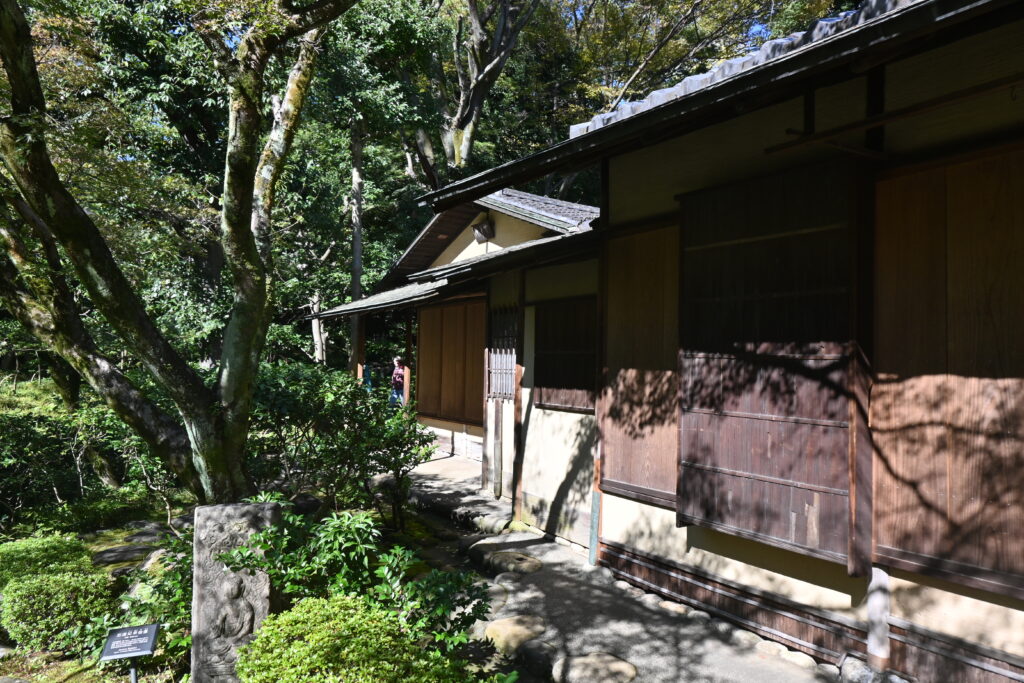
    Do not leave without seeing the garden. Paths lead down through the woods, beside a small stream and past an old house. It is hard to believe you are a few minutes from Omotesando: the air feels cleaner, and all you hear is water and birds.

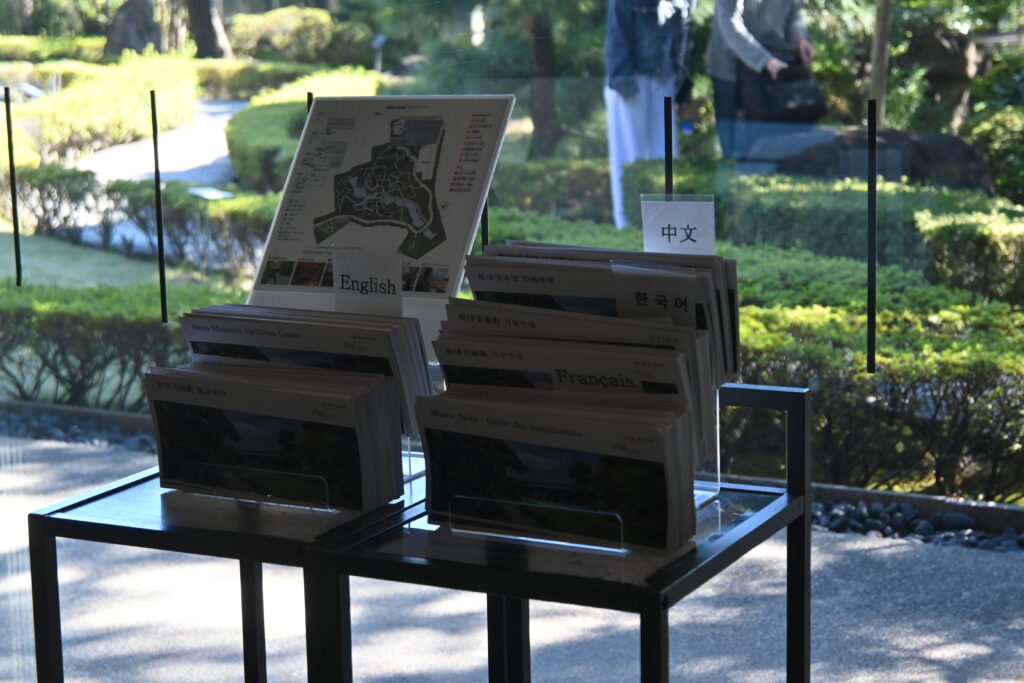
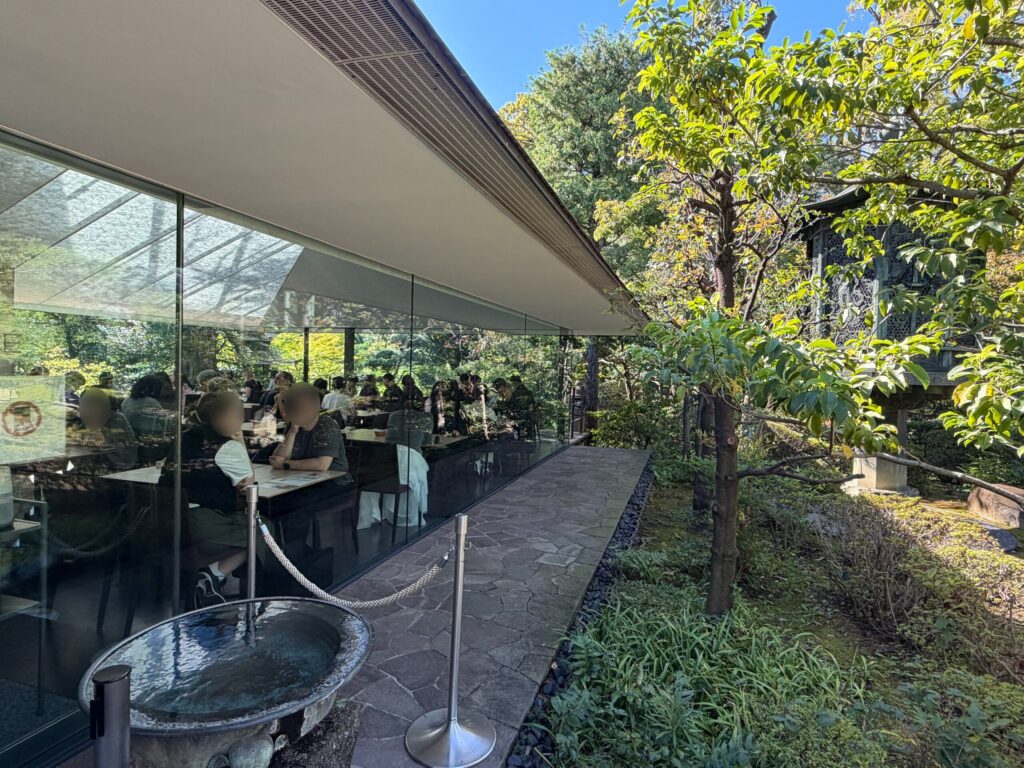
    The glass-walled café in the garden is wonderful, and very popular. On a weekday it was already full, with a line, a few minutes after the museum opened at 10:00. The trick is to book a 10:00 entry and walk straight to the café. When it is busy, the menu may be limited to drinks, cakes and light meals. Photos are not allowed inside the café.

    Tickets and facilities

    Ticket prices change with each exhibition. During the special exhibition in autumn 2026, an adult ticket was ¥1,600 online and ¥1,800 at the door, and university students paid ¥700 online. High school students and younger are free. Online booking is recommended: on a weekday morning, I still waited five minutes for a ticket at the desk. Credit cards and contactless payment are accepted.

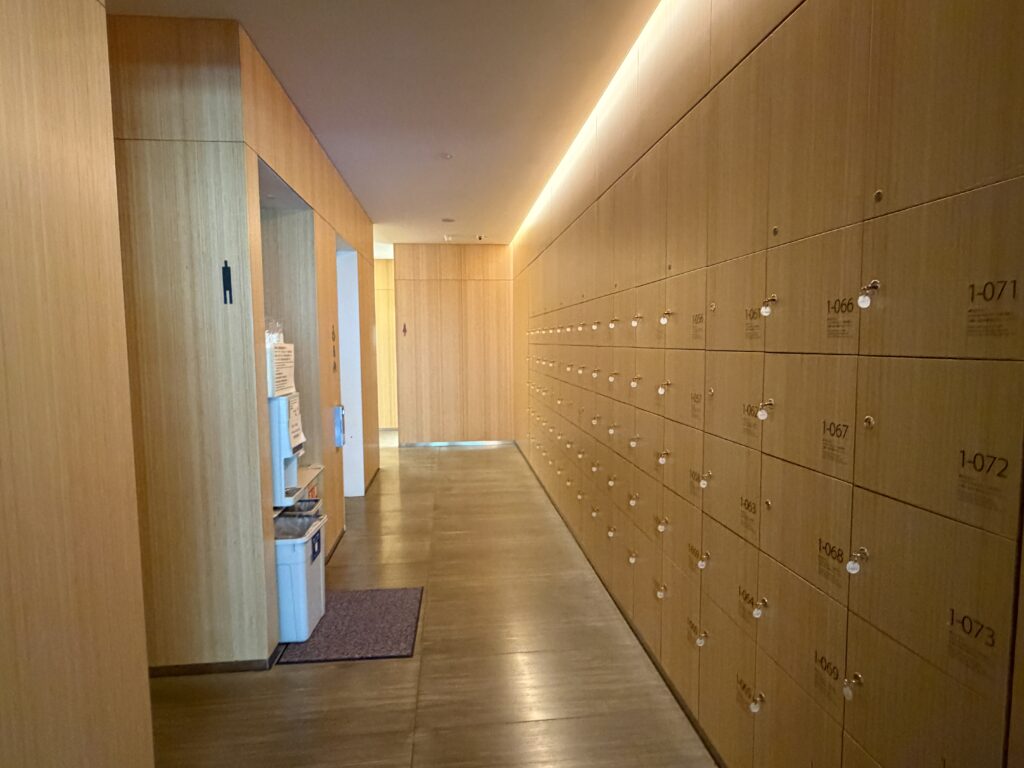
    Free lockers are on the ground floor and the lower floor, and the toilets are clean, with accessible toilets. More than half of the visitors that morning were from abroad, and the staff and signs are in English too. The building itself is easy to walk around, but the garden has many steps and stone paths.

    SunnyHills: a building like a bamboo basket

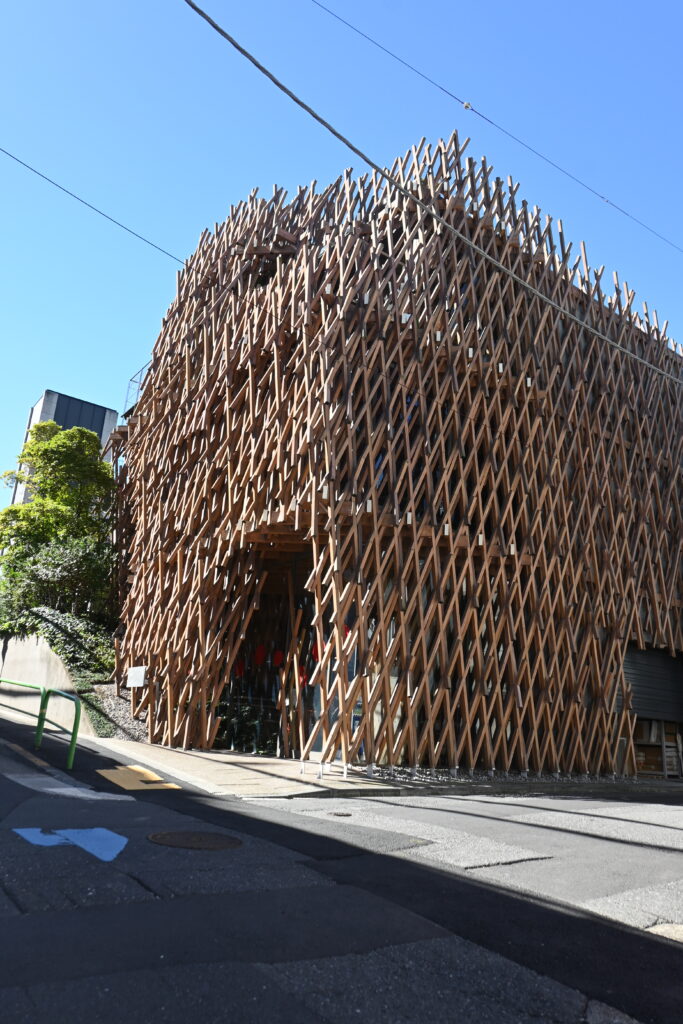
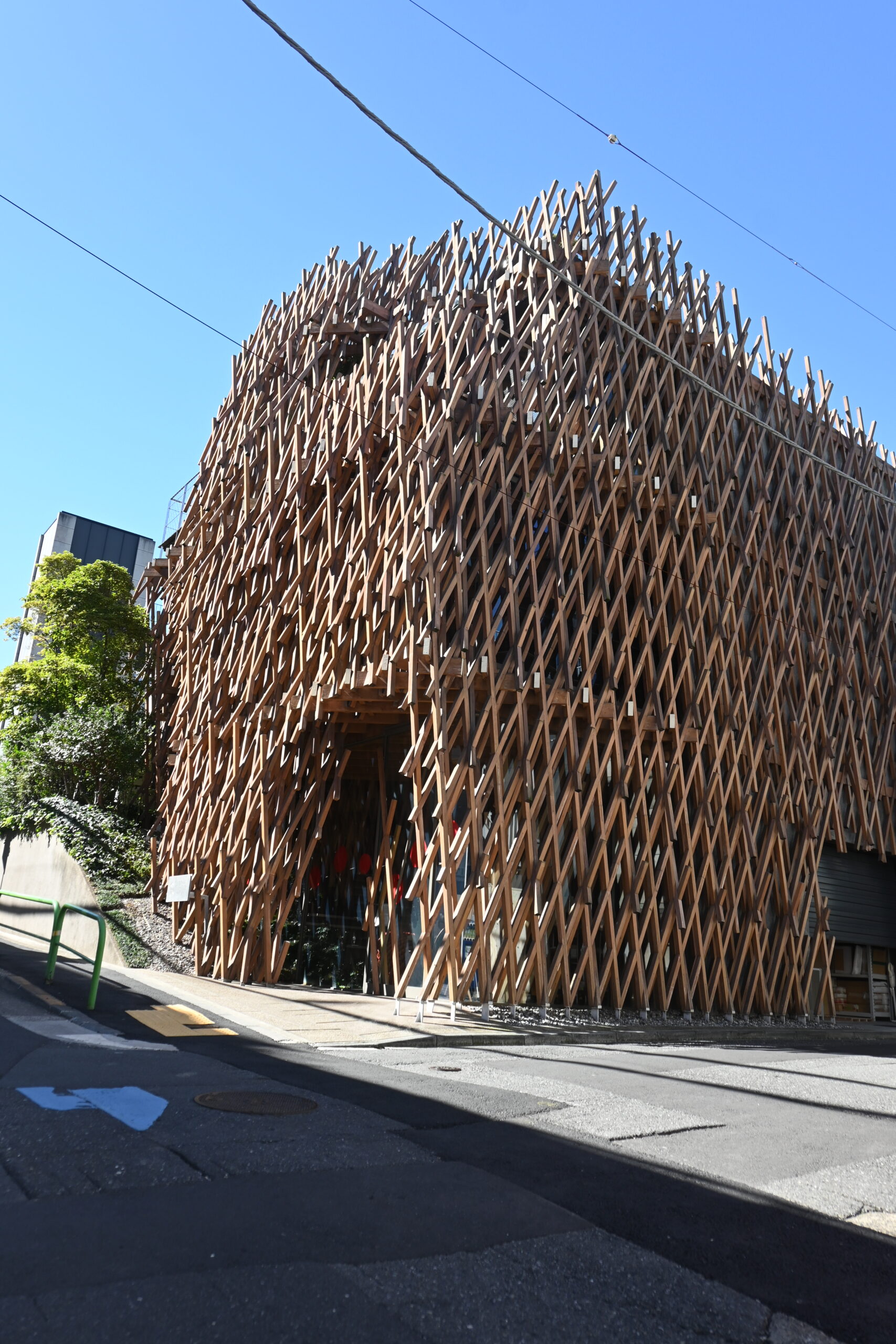
    From the Nezu Museum, walk back toward Omotesando and turn into the quiet back streets of Minami-Aoyama. Suddenly, among the houses and concrete, there is a building that looks like a giant bamboo basket, or a cloud of wooden sticks. This is SunnyHills, a shop from Taiwan that sells pineapple cakes. It opened in December 2013.

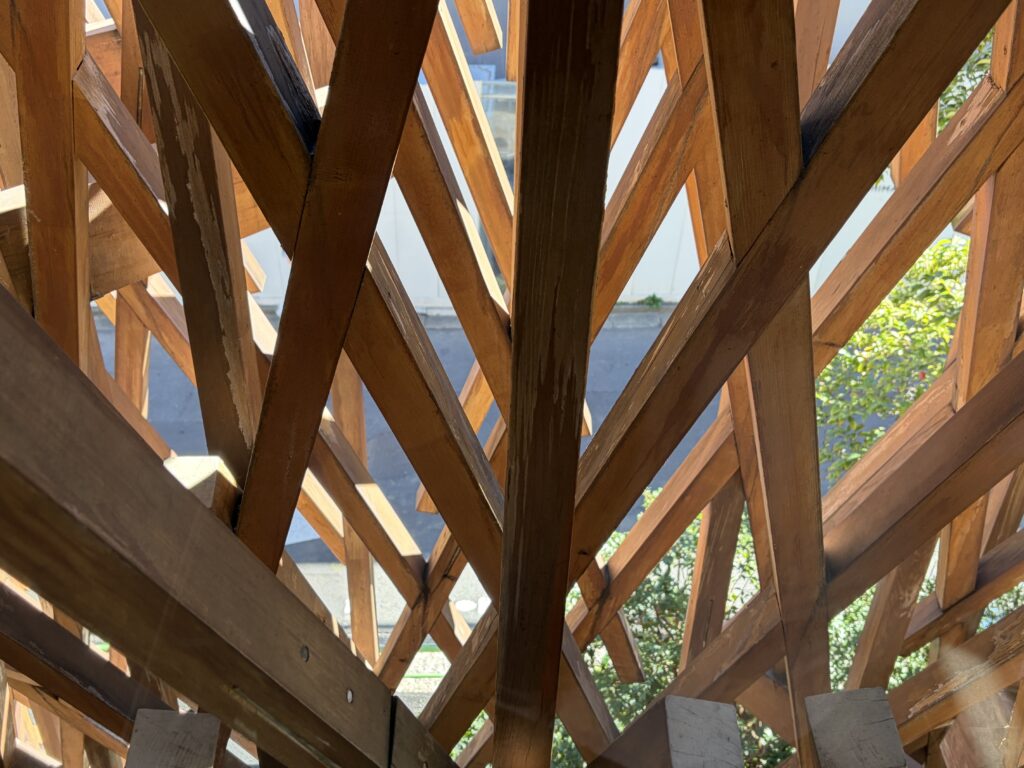
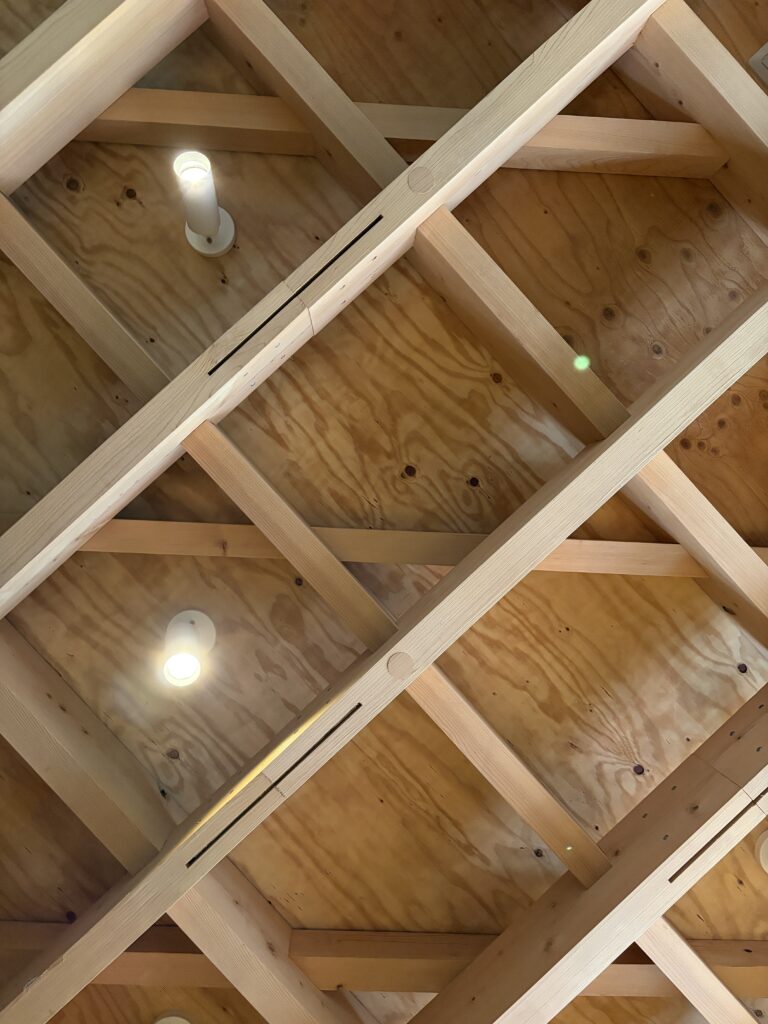
    The structure uses a traditional Japanese joint called jigoku-gumi, literally “hell joinery”, because once the pieces lock together they can never come apart. Carpenters normally use it in flat lattices, with the pieces crossing at right angles. Kuma’s team tilted the joints to 30 degrees and built them up in three dimensions, which let them use sticks only 6 cm thick. The result is soft and light, very different from the concrete boxes around it.

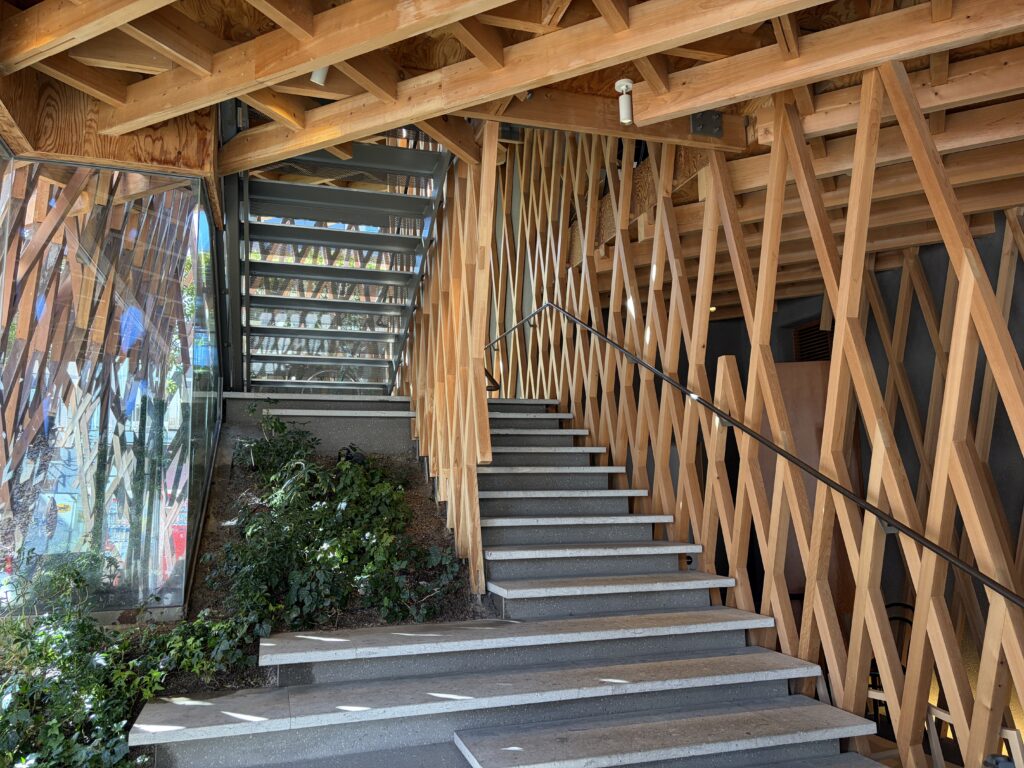
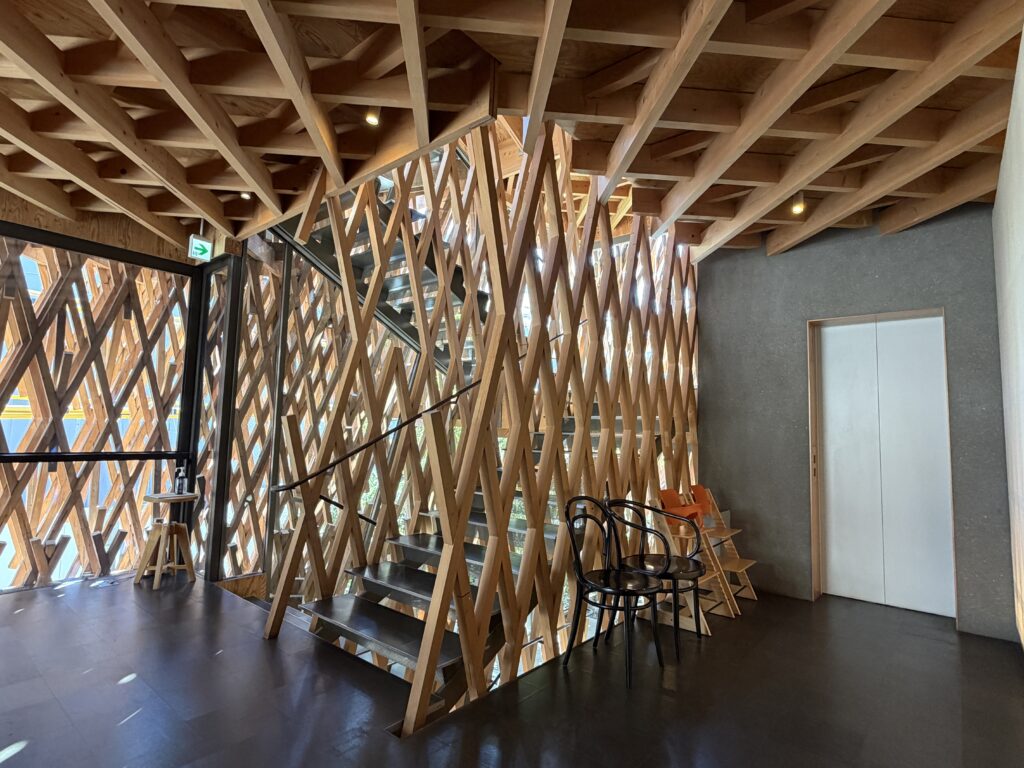
    The wood outside is coated against rain and wind, but inside it is left bare, so you can see and smell real timber. Climb the stairs through the lattice, with sunlight falling through the gaps. There is also an elevator.

    Tea and cake upstairs

    If you buy something in the shop, you are invited upstairs to the tea room, where you get a cup of black tea or oolong tea with a pineapple cake and an apple cake. Without a purchase, it costs ¥600. The third floor has the toilets and a display about the building.

    The shop opens at 11:00. On a weekday there were only a few people waiting, and it was not crowded. Photos are allowed inside, but a sign asks you not to photograph other customers. If you want photos of the interior, come right at opening time.

    One Omotesando: the rhythm of the trees

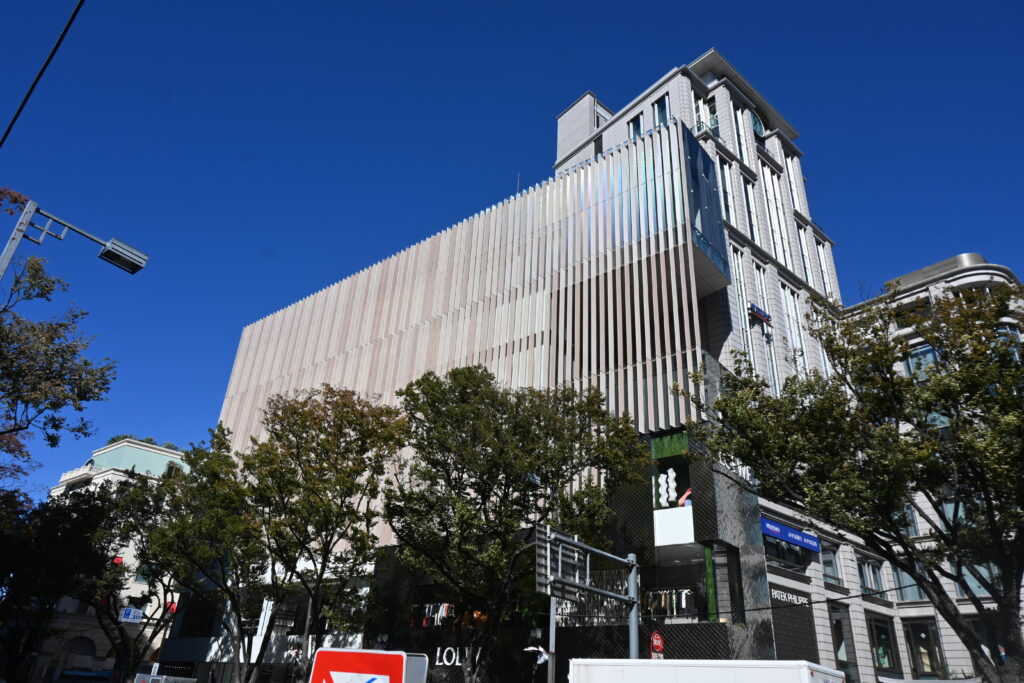
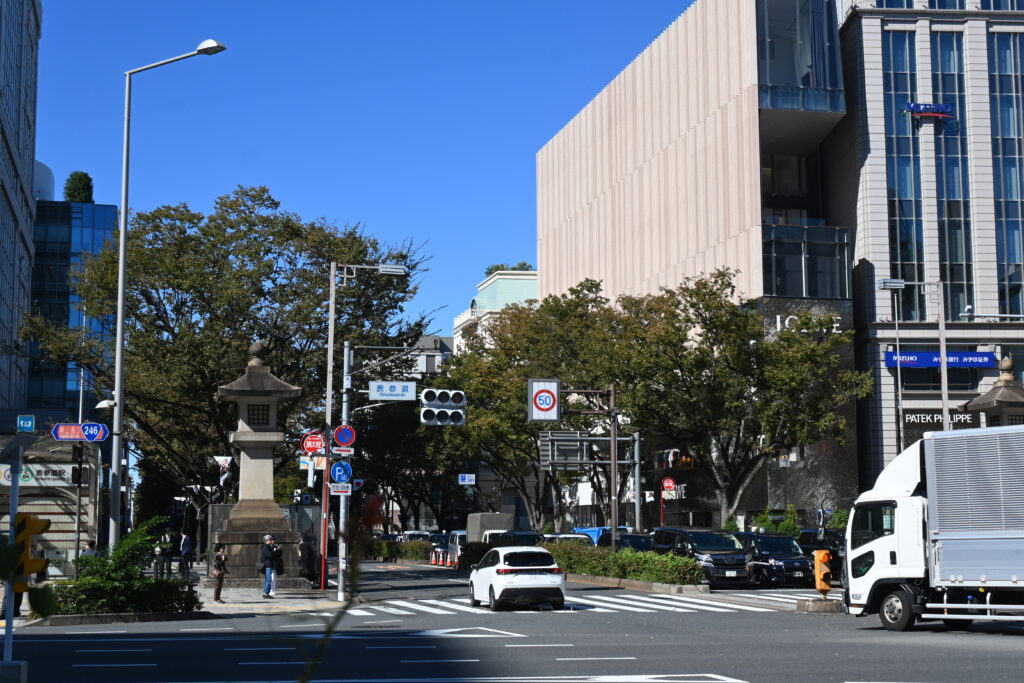
    Walk back to the big Omotesando crossing. Right by the crossing stands One Omotesando, an eight-story building completed in 2003. Most of it is offices and shops for luxury brands, so just enjoy it from outside. Its long front is covered with vertical louvers of red pine. Kuma explained that he wanted them to echo the rhythm of the zelkova trees planted along Omotesando.

    Walk the approach, not the subway

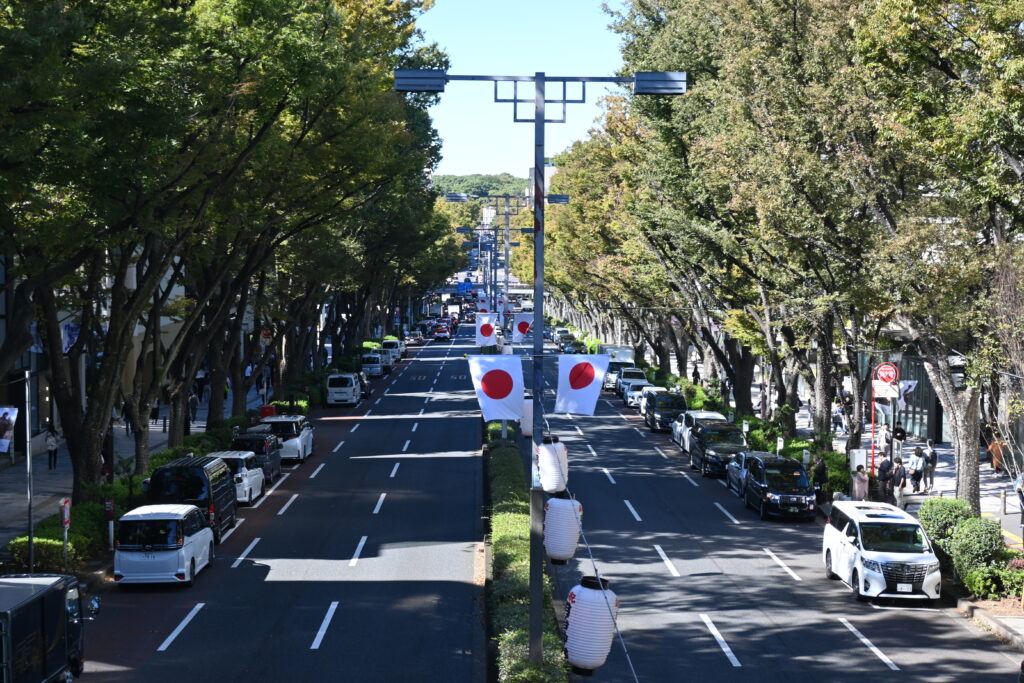
    From here, you could take the subway one stop to Meiji-jingumae. But please walk. Omotesando means “the front approach”: this avenue was laid out as the road to Meiji Jingu, so walking it is part of visiting the shrine. Zelkova trees line both sides, and the boutiques and showrooms are fun just to look at.

    Turn into a side street now and then. The lanes behind Omotesando are full of small cafés and independent shops.

    Meiji Jingu: a forest made by people

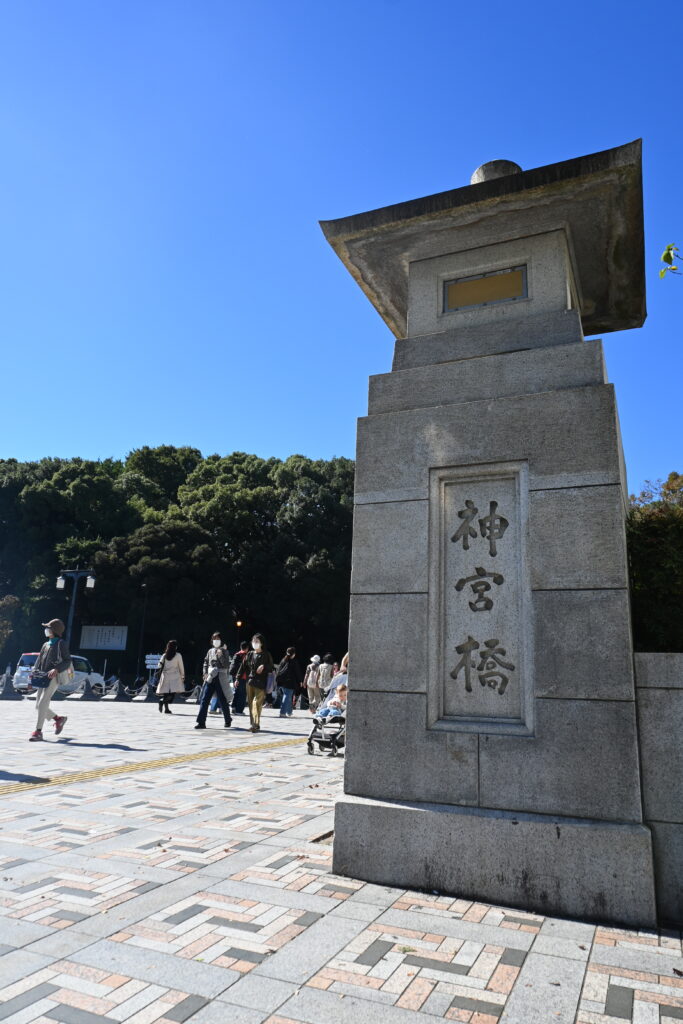
    At the end of Omotesando, cross Jingu Bridge into the shrine. Look over the side: the JR Yamanote Line runs right underneath.

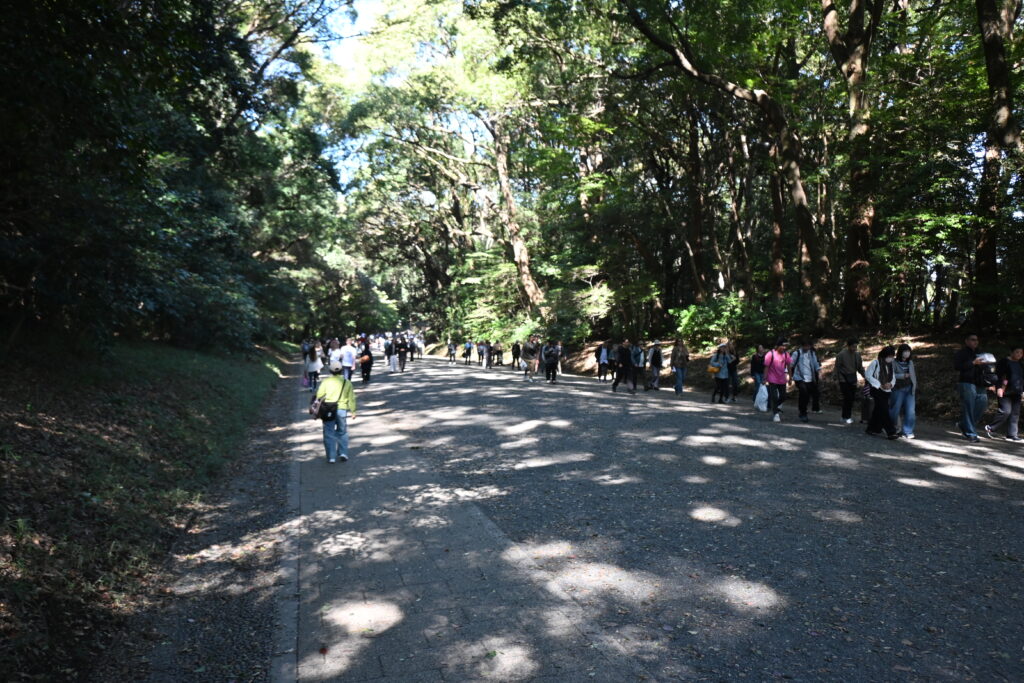
    Meiji Jingu was founded in 1920 for Emperor Meiji and Empress Shoken. About 100,000 trees were donated from all over Japan and planted to create the forest, which was designed to grow, change and renew itself like a natural one. A century later, it looks like it has always been here.

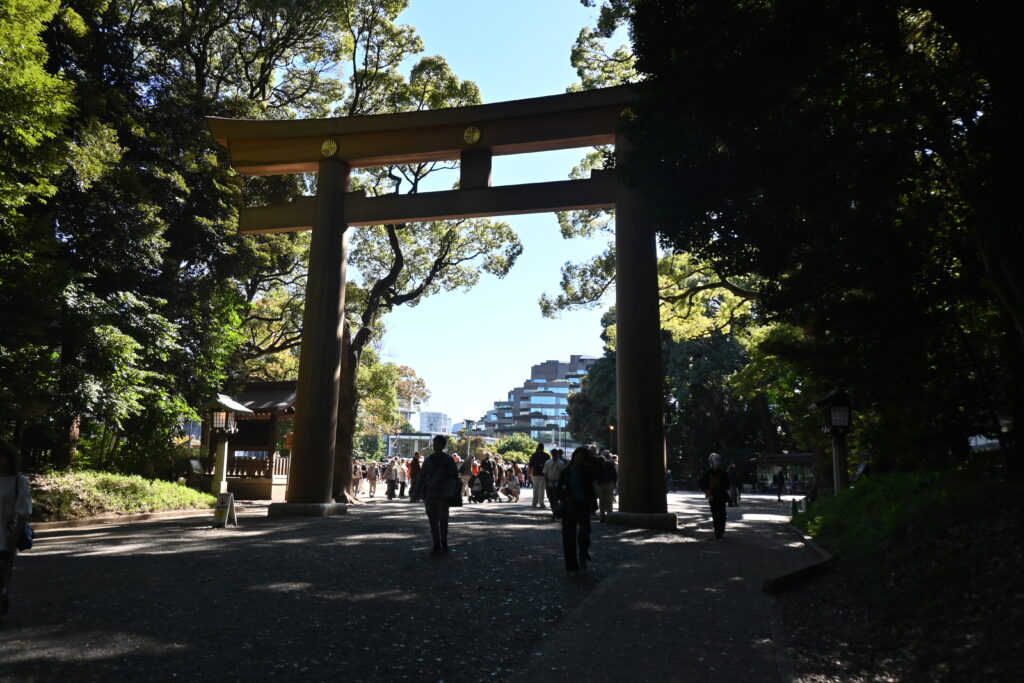
    Pass under the torii gate and the city disappears. There are plenty of visitors, but it is calm: you hear leaves moving, birds, and a stream under a small bridge.

    Meiji Jingu Museum: wood in the forest

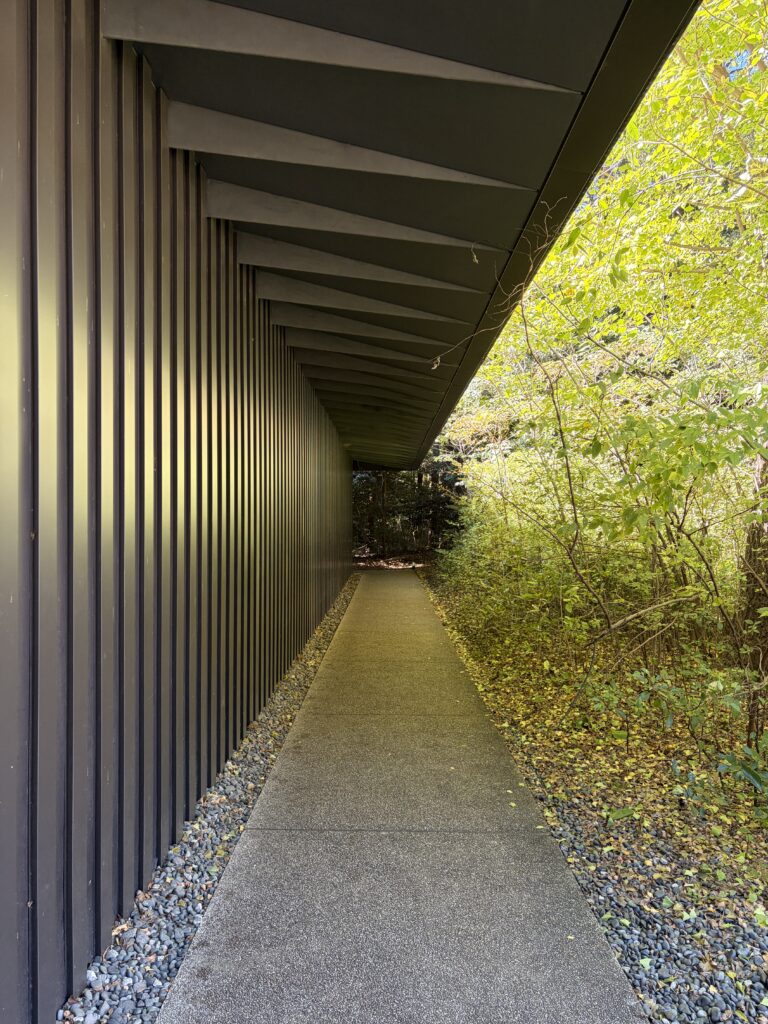
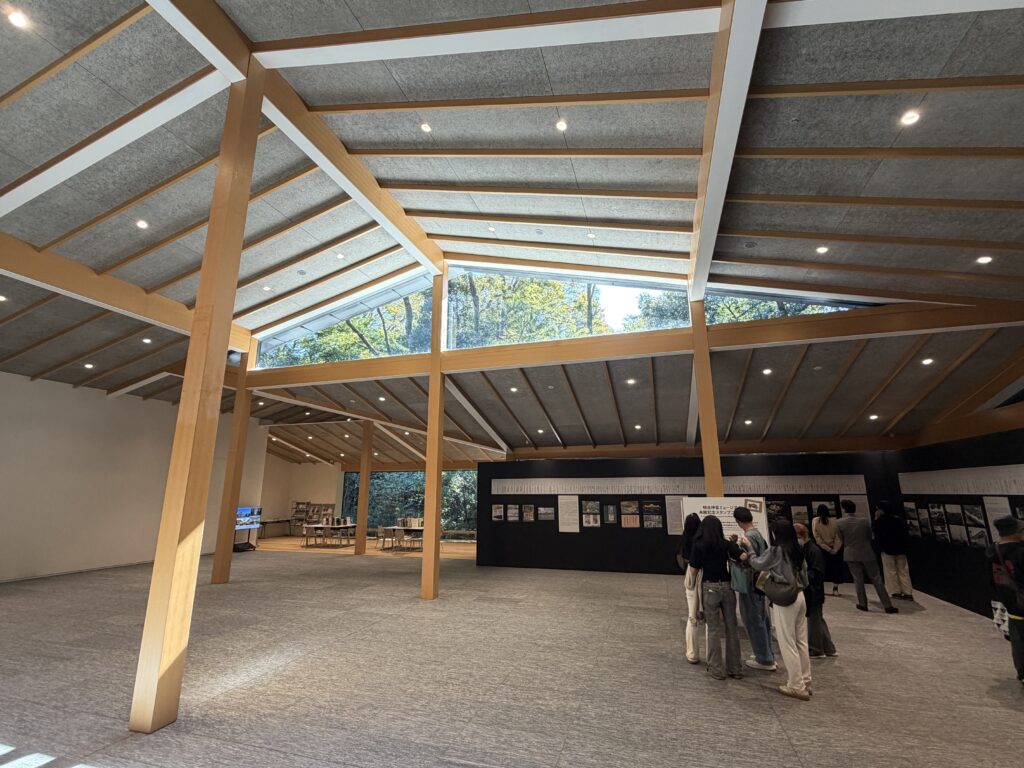
    The Meiji Jingu Museum, a short walk from the torii gate, opened in October 2019 to mark the shrine’s 100th anniversary. It displays treasures connected with Emperor Meiji and Empress Shoken. Kuma kept the building low, with gently sloping roofs and colors that blend into the trees. The columns inside are meant to suggest the trunks of the forest.

    Now remember the eaves at the Nezu Museum. Walk along the outside of this building and you will find almost the same thing: a long path under a deep, low roof, with wood on one side and green on the other. Two buildings, ten years apart, one in the city and one in the forest.

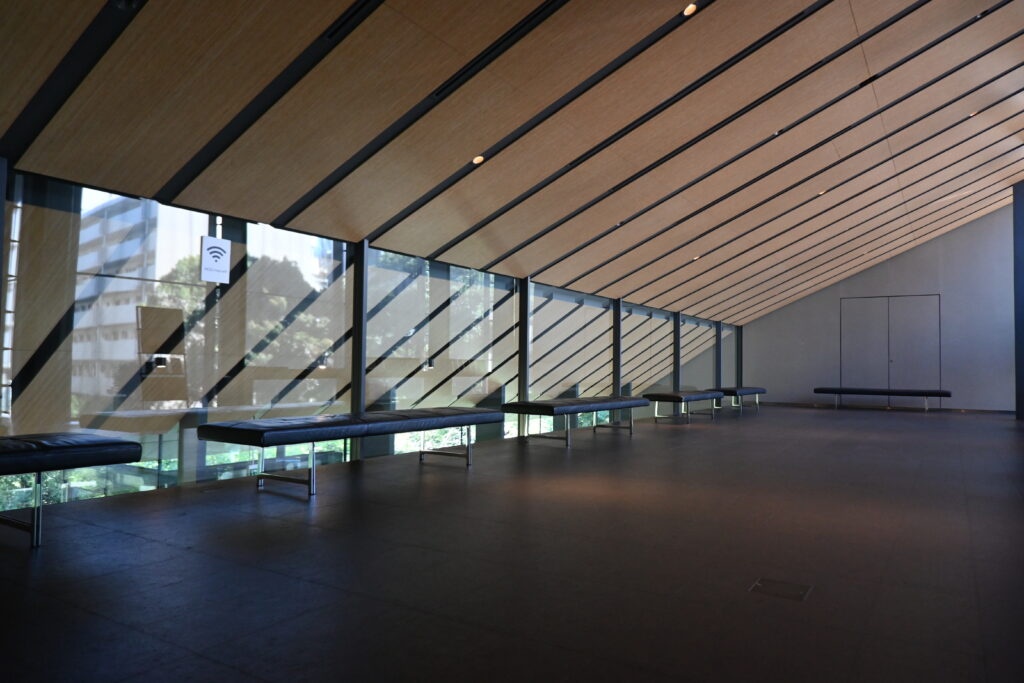
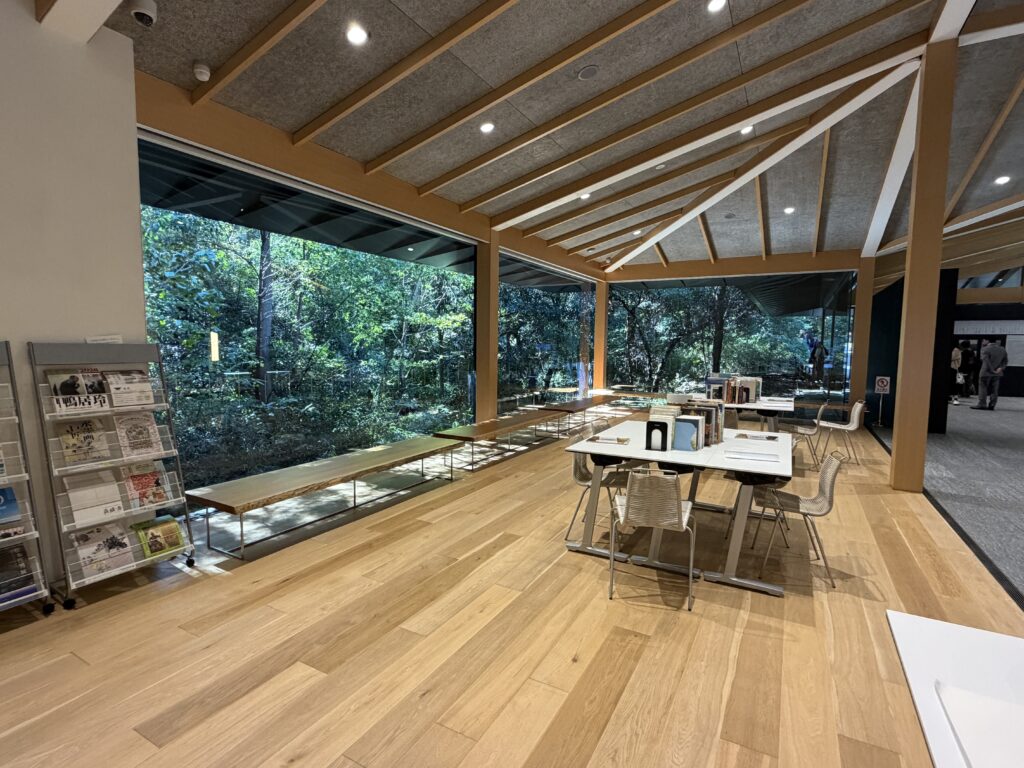
    Inside, wood and natural light make the rooms warm. Big windows separate you from the forest only by glass, so it feels as if you are sitting among the trees. The reading corner and the rest area upstairs have the same views.

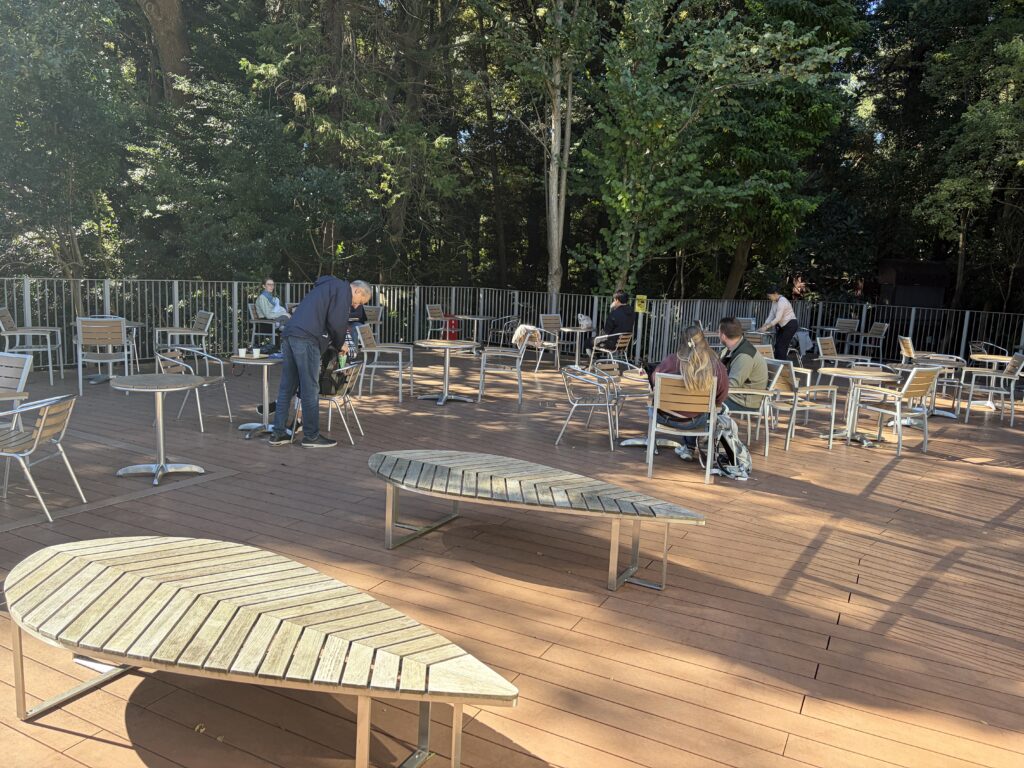
    The museum is open 10:00 to 16:30 (last entry 16:00) and closed on Thursdays. Admission is ¥1,000, and you must pay in cash. Next door, Forest Terrace (not designed by Kuma) has indoor and outdoor tables for coffee or a light meal.

    Standing here, I felt that this walk ends with a nice idea. The museum is clearly a man-made building, and the forest is a man-made forest. Yet a hundred years after the trees were planted, they look at home together.

    Best time to go

    Go on a weekday morning, and avoid Mondays and Thursdays. Book the Nezu Museum for 10:00 and head to the garden café first. SunnyHills opens at 11:00, which fits nicely after the museum. Leave enough time to reach the Meiji Jingu Museum before its last entry at 16:00.

    One more thing I noticed: Kuma’s wood changes color with the light. Morning, afternoon, evening, sunshine or cloud, the same building looks different, so it is worth coming back at another time of day.

    Good to know before you go

    • Check the day. The Nezu Museum is closed on Mondays (and between exhibitions), the Meiji Jingu Museum on Thursdays.
    • Bring cash. The Meiji Jingu Museum accepts cash only (¥1,000).
    • Steps in the garden. The Nezu Museum garden has many steps and stone paths. Inside the museum building, getting around is easy.
    • Stairs at Exit A5. Use Exit B3 and its elevator if stairs are difficult.
    • The café fills up fast. Book a 10:00 museum entry and go to the café first. Photos are not allowed inside.
    • Respect other customers. At SunnyHills, do not photograph other guests. Come at opening time for empty-room photos.

    Getting there

    • From Asakusa: Tokyo Metro Ginza Line direct to Omotesando, about 30 minutes, no change of train.
    • From Ginza (Kabuki-za): Ginza Line to Omotesando, about 15 minutes.
    • Going home: Harajuku Station (JR Yamanote Line) is right by Jingu Bridge, and Meiji-jingumae Station (Chiyoda and Fukutoshin lines) is next to it.

    Make a day of it

    See more of Omotesando’s architecture with a guide

    Omotesando is packed with buildings by famous architects, from Tadao Ando to SANAA. If you want an expert to show you around, this private three-and-a-half-hour architecture tour in English starts at Jingu Bridge and covers works such as SunnyHills, Dior and Prada, plus the back streets. It has excellent reviews, is wheelchair accessible and can be cancelled free of charge up to 24 hours before. As a private tour it is not cheap, and prices may change, so check the details before you book.

    Where to stay

    TRUNK(HOTEL) CAT STREET

    Why choose: A stylish boutique hotel on Cat Street, the relaxed shopping lane between Harajuku and Shibuya. You can walk to Meiji Jingu and Omotesando.

    The Aoyama Grand Hotel

    Why choose: A comfortable hotel on Aoyama-dori, on the Ginza Line, so getting to Ginza and Asakusa is easy, and Omotesando is close by.

    Official websites

    Next time

    Next time, we take the Ginza Line from Omotesando back toward Asakusa and stop at Ueno Park. Once the grounds of a great temple, it has been a battlefield, a racecourse and finally Tokyo’s museum quarter, home to Le Corbusier’s only building in Japan.

    Photos: Aozora Walks. Information as of October 2026. Sources: official websites of each facility.

  • Nihonbashi Walk: Where Japan’s Roads Begin, Under an Expressway About to Vanish

    Nihonbashi Walk: Where Japan’s Roads Begin, Under an Expressway About to Vanish

    This post contains affiliate links. If you book through them, I may earn a small commission at no extra cost to you.

    Stand in the middle of Nihonbashi and look up. Instead of sky, you see the underside of an expressway. Look down, and there is a small bronze plate in the road: the point from which distances across Japan are still measured. This bridge was the starting point of the old highways of Edo, and today it is one of the best places in Tokyo to see how the city keeps rebuilding itself.

    In the last post, we rode the Yurikamome back from Odaiba to Shimbashi. From there, the Ginza Line takes you to Nihonbashi in a few minutes. As a geography teacher, I think this short walk explains more about Tokyo than almost anywhere else: the roads, the river, the fish market, the first department store, the central bank and the gates of Edo Castle, all within about one kilometer.

    Quick facts

    RouteNihonbashi Station → Nihonbashi bridge → fish market memorial → Mitsukoshi → COREDO Muromachi → Bank of Japan → the three Tokiwa bridges
    DistanceAbout 1.5 km on flat ground
    Time2 to 3 hours with stops (1 hour if you only walk)
    CostFree to walk. River cruises from ¥2,500 (optional)
    Nearest stationsNihonbashi or Mitsukoshimae (Tokyo Metro Ginza Line)

    Start: Nihonbashi Station

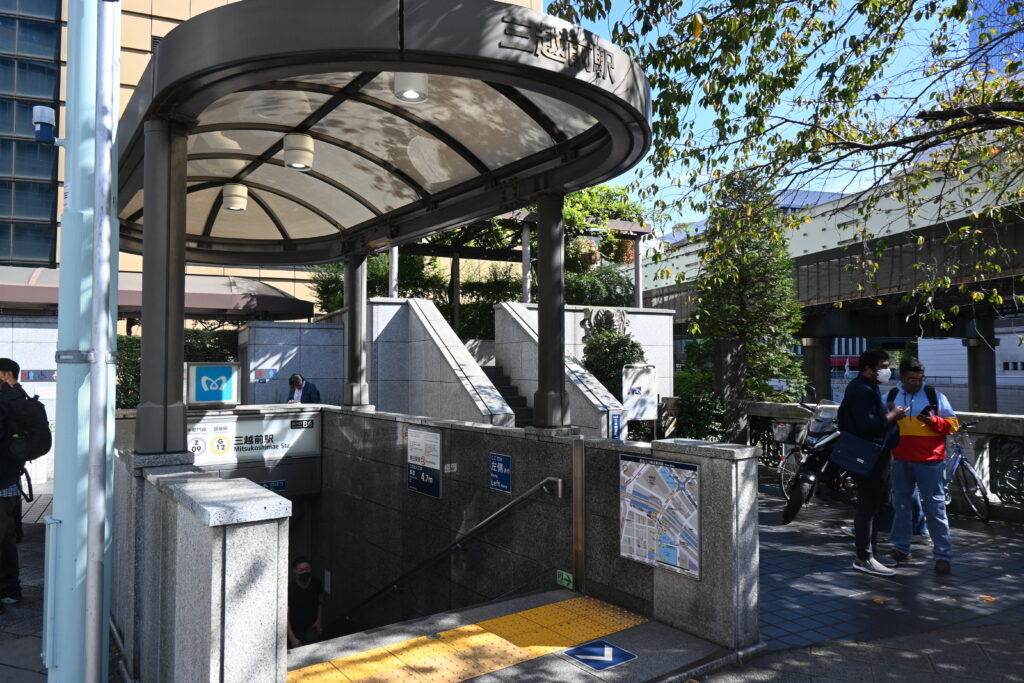
    From Nihonbashi Station on the Ginza Line, take Exit B10. You come up on Chuo-dori, the main street. Walk to the next big intersection and turn right, and the bridge appears under the expressway.

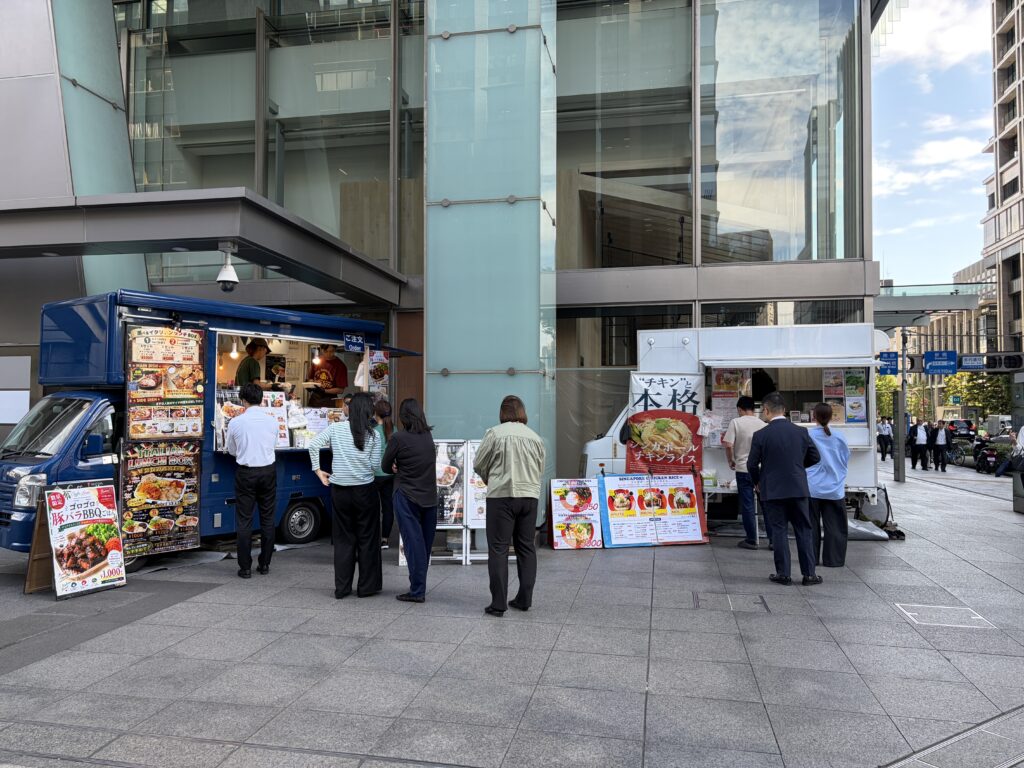
    Right outside Exit B10, on the south-east corner of the Nihonbashi intersection, food trucks park at lunchtime, selling bento boxes to office workers. A handy stop if you want to eat before you start walking.

    The bridge where all roads began

    The first Nihonbashi, a wooden bridge, was built in 1603, the year Tokugawa Ieyasu became shogun. Soon after, the shogunate made it the starting point of the five main highways of Japan, including the Tokaido to Kyoto. Travelers, goods and news all passed over it. The name simply means “Japan Bridge”.

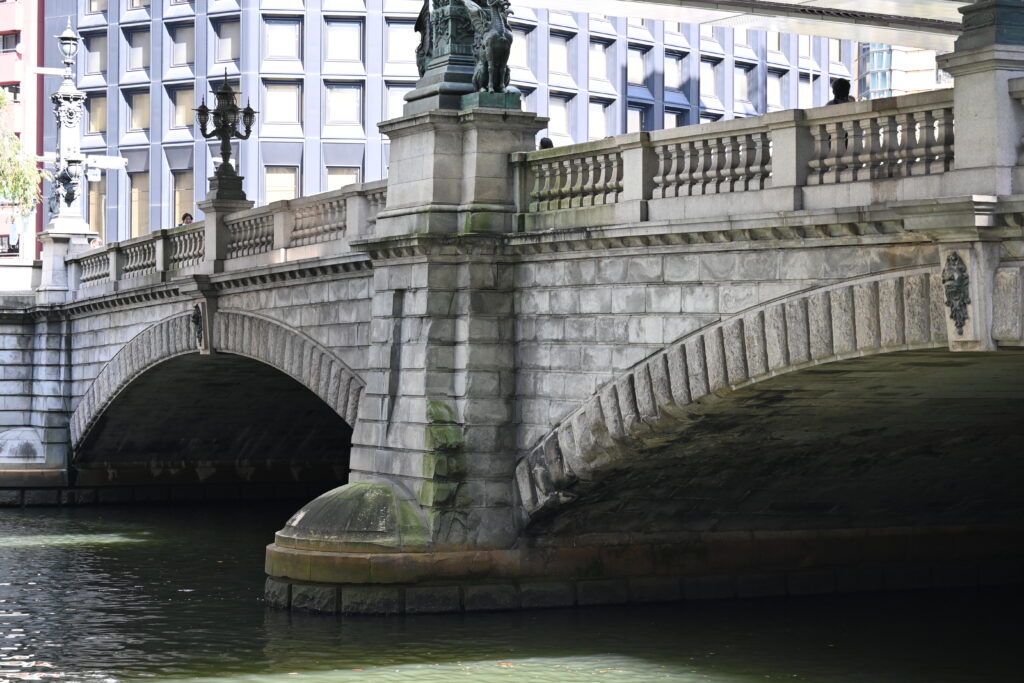
    The wooden bridge burned and was rebuilt many times. The stone bridge you see today was completed in 1911. It is the 20th Nihonbashi, and it became a national Important Cultural Property in 1999.

    Lions, kirin and the last shogun

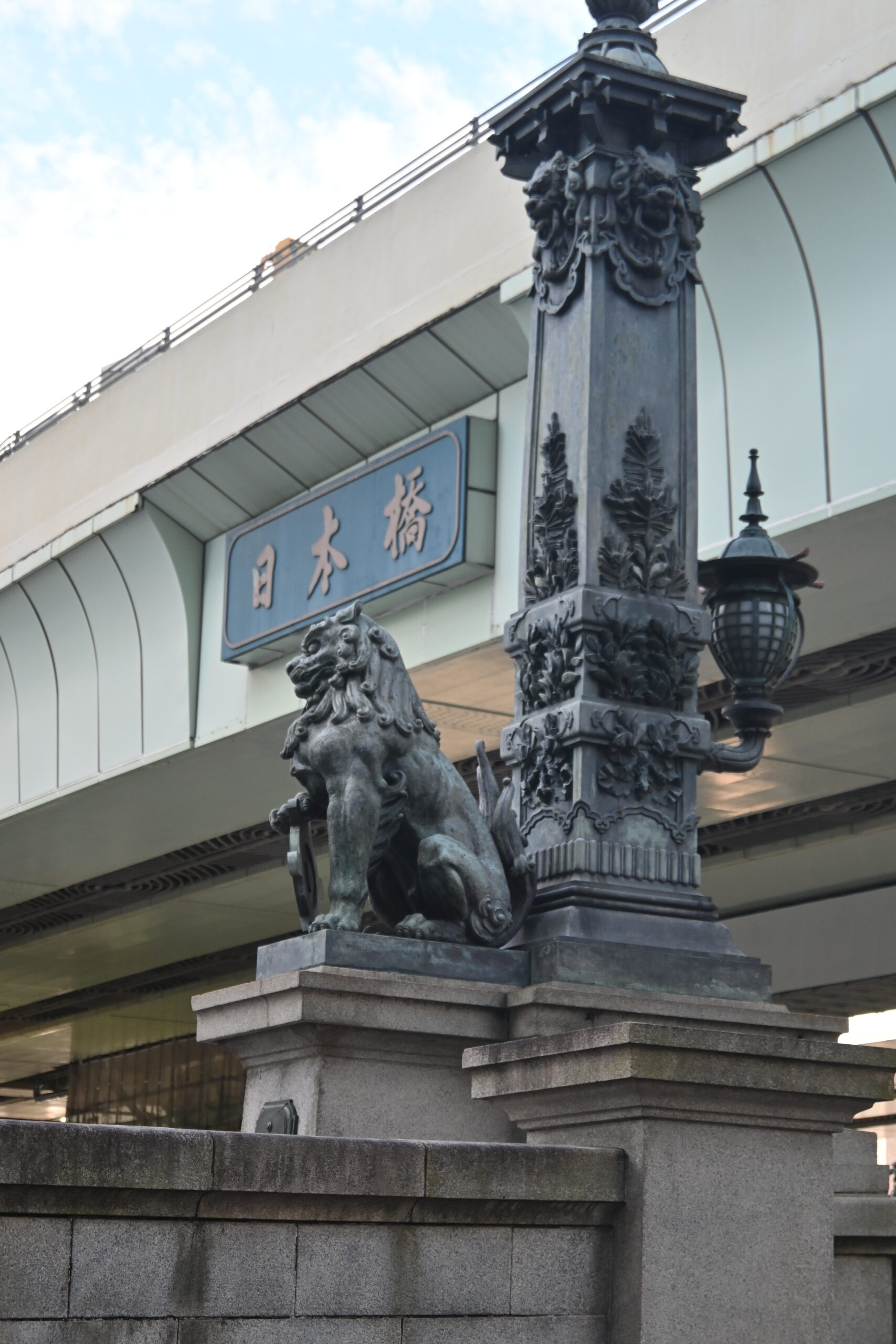
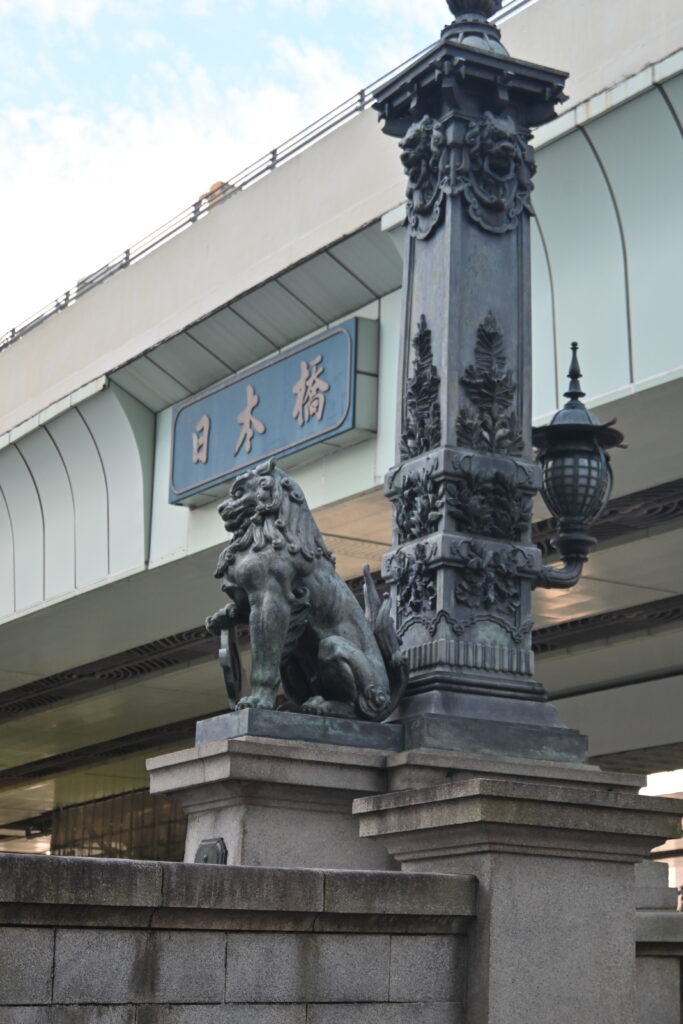
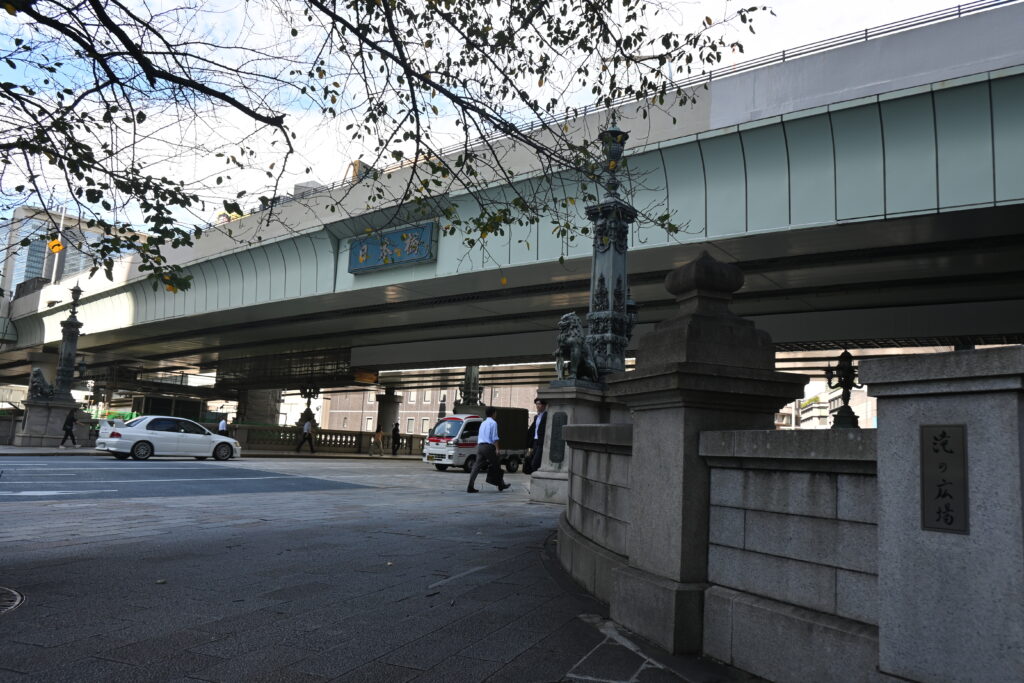
    The bronze decorations on the bridge are wonderful, so take your time. The lions hold the crest of the city of Tokyo. The creatures with wings are kirin, mythical animals. They are often said to have wings so that they can fly from the starting point of Japan’s roads to every corner of the country.

    Look at the name plates on the bridge posts. The characters “日本橋” were written by Tokugawa Yoshinobu, the last shogun. The same characters appear on the side of the expressway above, copied from the plates. Even the expressway pays its respects to the bridge.

    Scars from 1945

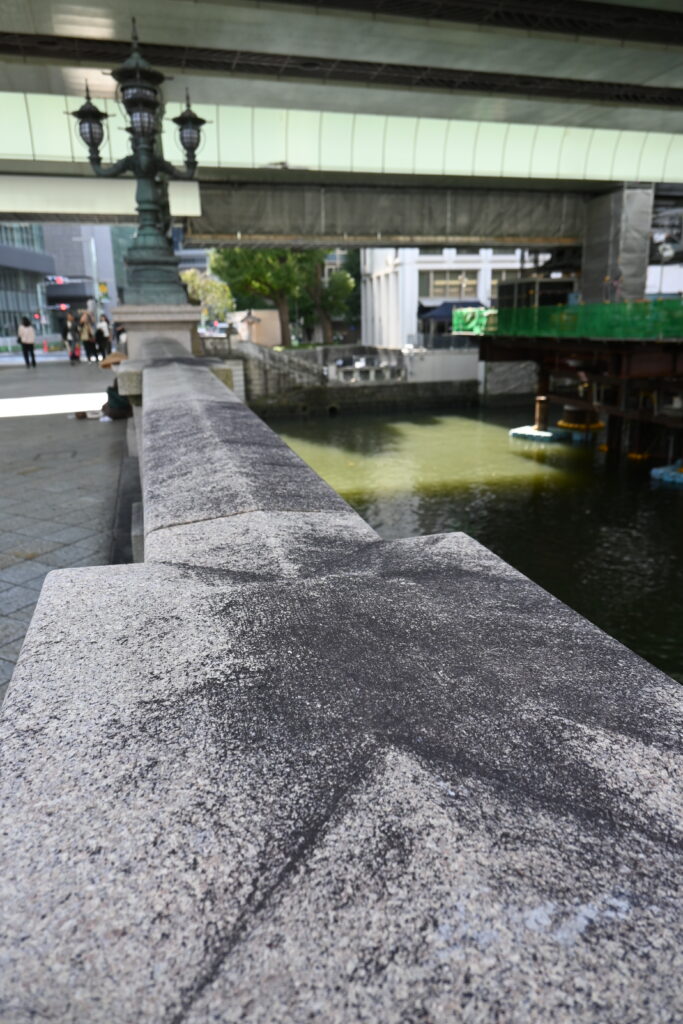
    Now look closely at the stone railings. The dark stains are burn marks, and a sign on the bridge explains that they were left by the Great Tokyo Air Raid of 1945. Incendiary bombs fell on the bridge and burned on the stone. Nobody painted over them.

    On the night of 10 March 1945, American bombers dropped incendiary bombs over the wooden neighborhoods of eastern Tokyo. The fires killed an estimated 100,000 people in a single night. Nihonbashi burned, and so did Asakusa: the main hall of Senso-ji was lost that night. If you followed this series from Part 2, you have already seen the ginkgo tree beside Senso-ji that still carries its burn scars. The stone bridge survived. The black marks are its scars, and a small piece of war history you can touch.

    Kilometer zero

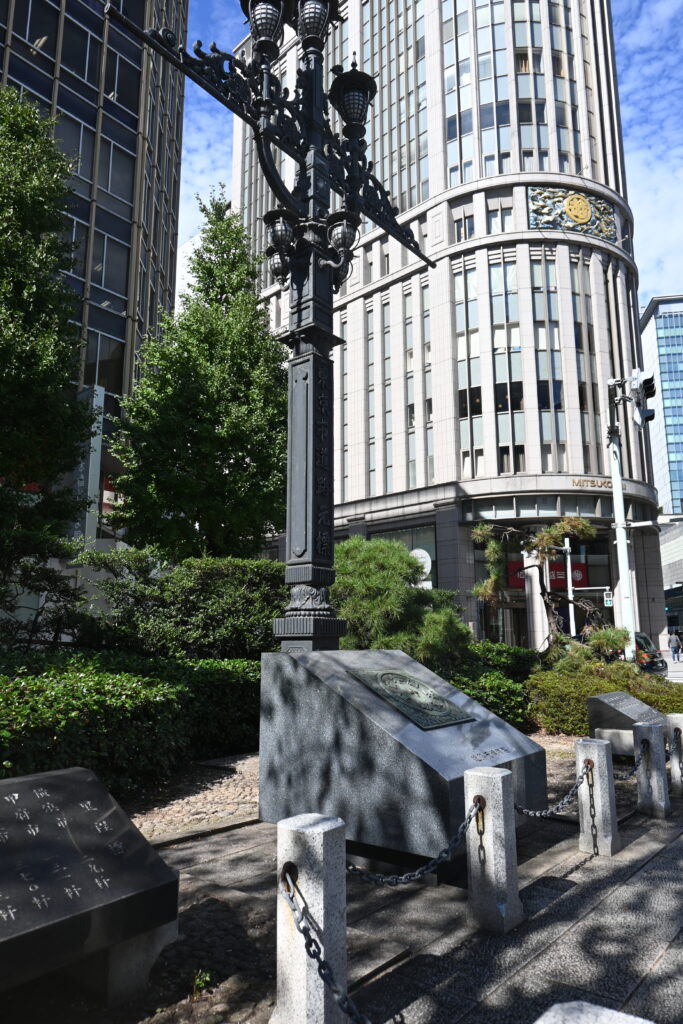
    In the middle of the road, between the two lanes, is the Japan Road Origin Marker. Distances on many national roads are still measured from here. You cannot walk into the traffic to see it, but there is a full-size replica at the north end of the bridge, beside the kirin.

    Then and now: Hiroshige’s Nihonbashi

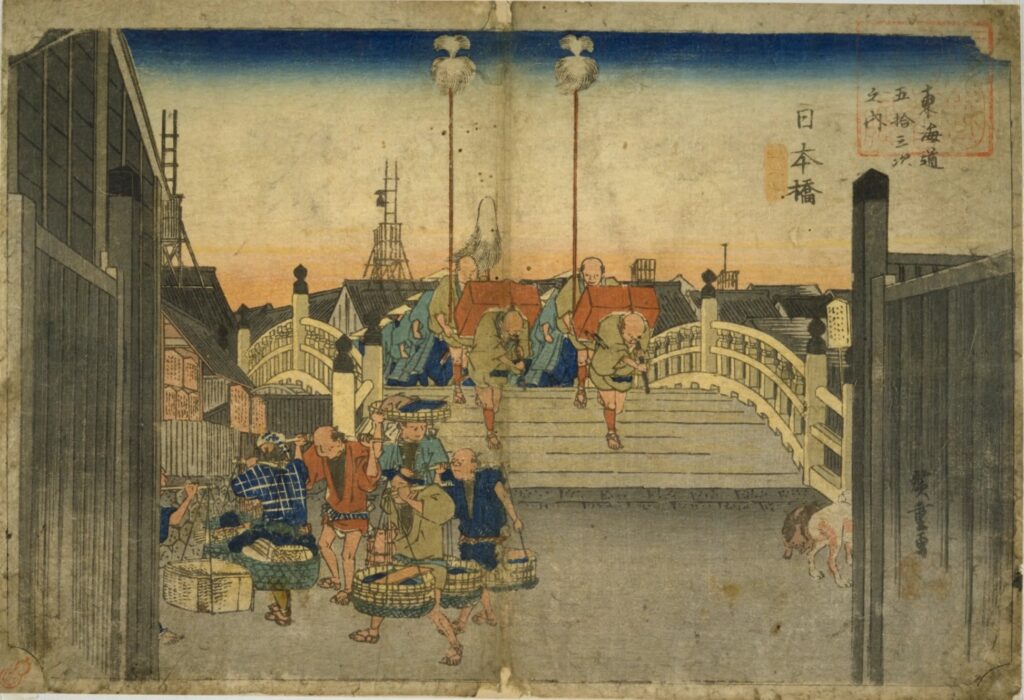
    The most famous picture of this bridge is the very first print in Utagawa Hiroshige’s series The Fifty-three Stations of the Tokaido, published in the 1830s. A daimyo procession is setting out across the arched wooden bridge at dawn, at the start of the long road to Kyoto.

    What stayed the same: the place and its role. The bridge still crosses the same river at the same spot, and it is still where Japan’s roads begin. Look at the bottom left of the print, too: men carrying baskets of fish. They are coming from the fish market at the foot of the bridge, which we will visit in a moment.

    What changed: almost everything you can see. The high wooden arch became twin stone arches, built low and flat for trams and cars. The wide sky in the print is now covered by the expressway, built in 1963 in a rush before the 1964 Tokyo Olympics, along the river because there was no land left to build on.

    And it will change again. The expressway above Nihonbashi is being moved underground. The tunnel is planned to open around 2035, and the elevated road is scheduled to be removed by around 2040. When it is gone, the bridge will see the sky again for the first time in more than 70 years. If you come now, you are seeing a view that will soon be history.

    Want to walk across the old wooden bridge from Hiroshige’s print? At the Edo-Tokyo Museum in Ryogoku, the northern half of the wooden Nihonbashi has been rebuilt at full size at the entrance to the permanent exhibition. The museum reopened in March 2026 after a major renovation, and it is the best place to learn more about the history of Edo and Tokyo.

    From the river: Nihonbashi Cruise

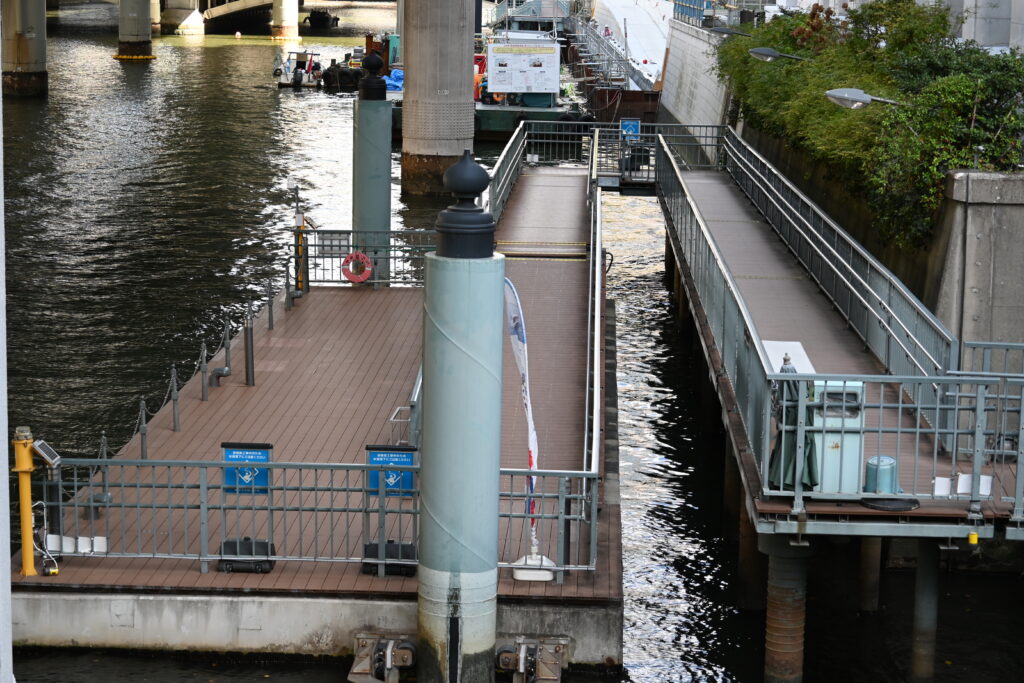
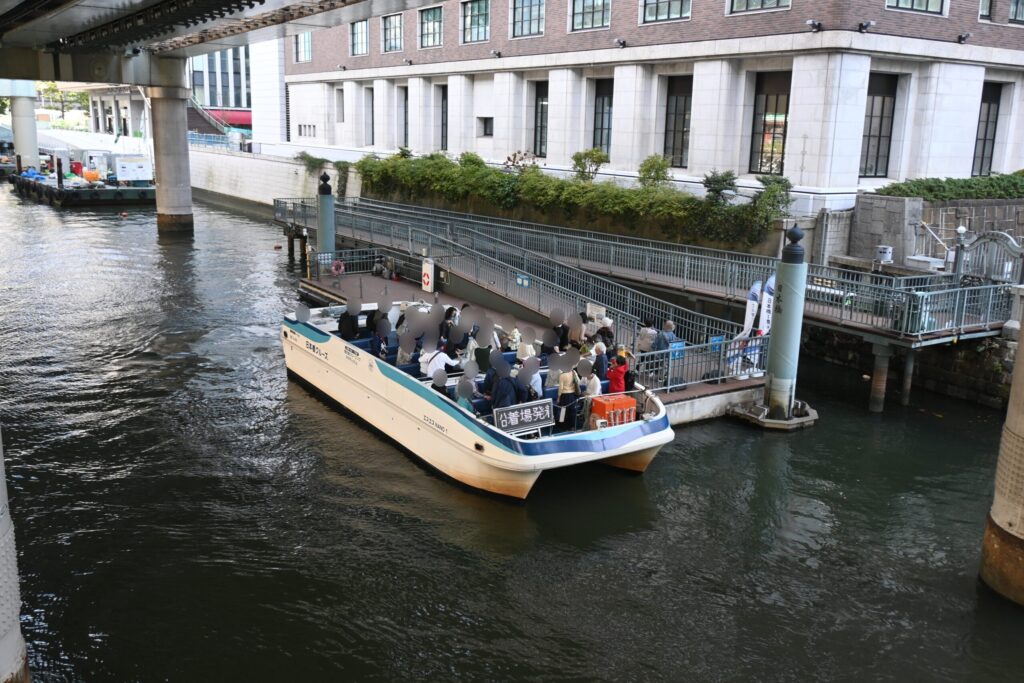
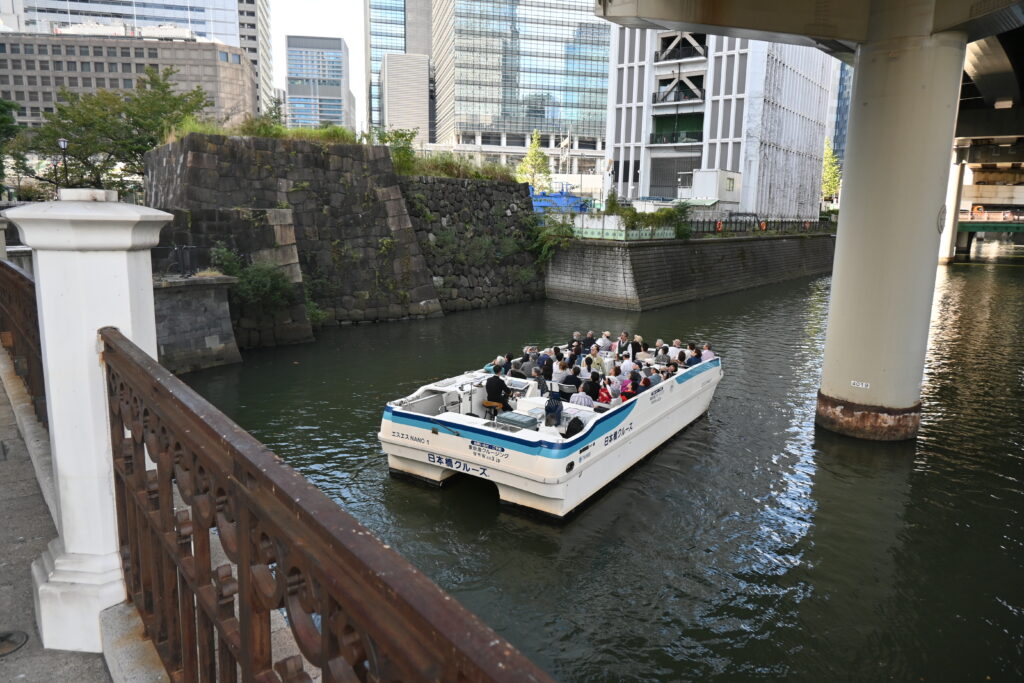
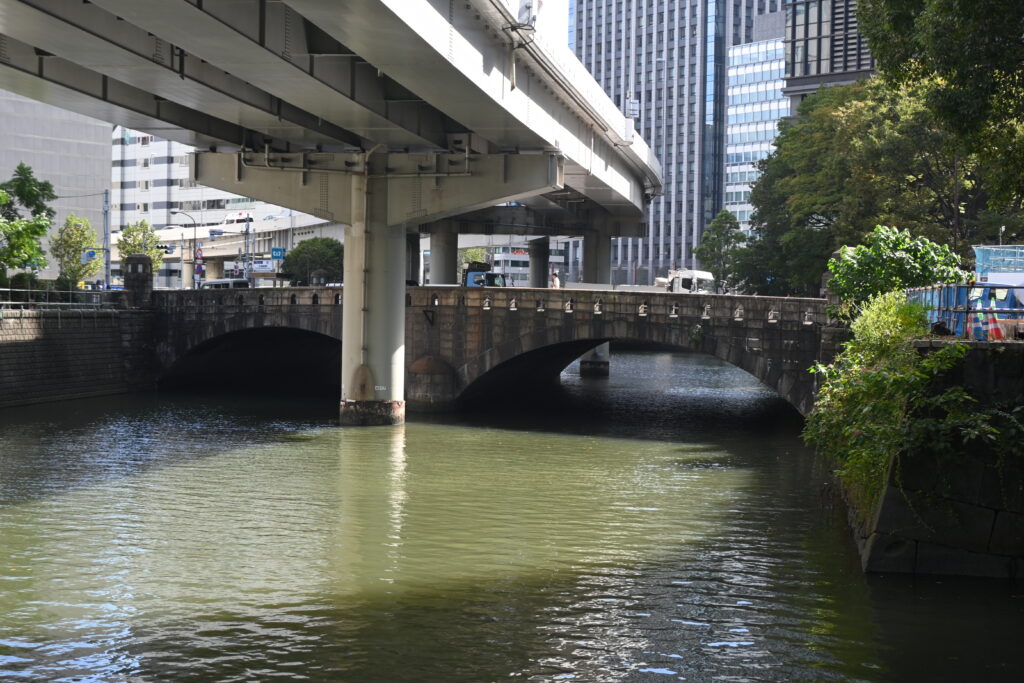
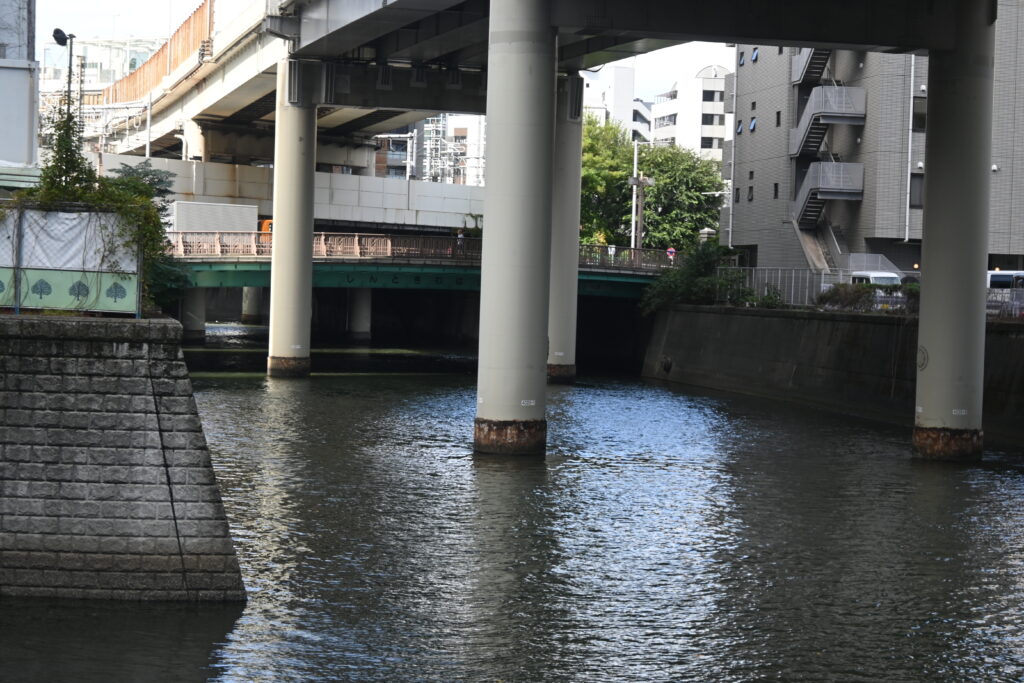
    Walk down to the river pier at the north end of the bridge. From under the bridge you can see the stone arches and the expressway pillars standing in the water.

    Small open boats run by Nihonbashi Cruise leave from here. The regular course goes around the old moats of Edo Castle along the Nihonbashi and Kanda rivers in about 90 minutes, from ¥2,500 for adults (as of October 2026). I didn’t ride it this time, but I watched the boats come and go, with the guide talking all the way. Note that the commentary is in Japanese. Check the official website for courses, times and booking.

    Where the fish market began

    Back up on the street, cross to the north-east corner of the bridge. A small monument with a statue of the sea princess Otohime marks the site of Tokyo’s first fish market, the uogashi.

    The market began in the early 1600s, when fishermen from Tsukuda village near Osaka, invited to Edo by Ieyasu, started selling the fish left over after supplying the shogun’s castle. Boats brought fresh fish straight up the river to the stalls along the bank. For about 300 years, this was the kitchen of Edo.

    The Great Kanto Earthquake of 1923 destroyed it, and the market moved to Tsukiji, then in 2018 to Toyosu. To be honest, nothing of the market is left. There is only the monument. But if you remember the fish carriers in Hiroshige’s print, the empty riverbank tells its own story.

    Mitsukoshi: from kimono shop to department store

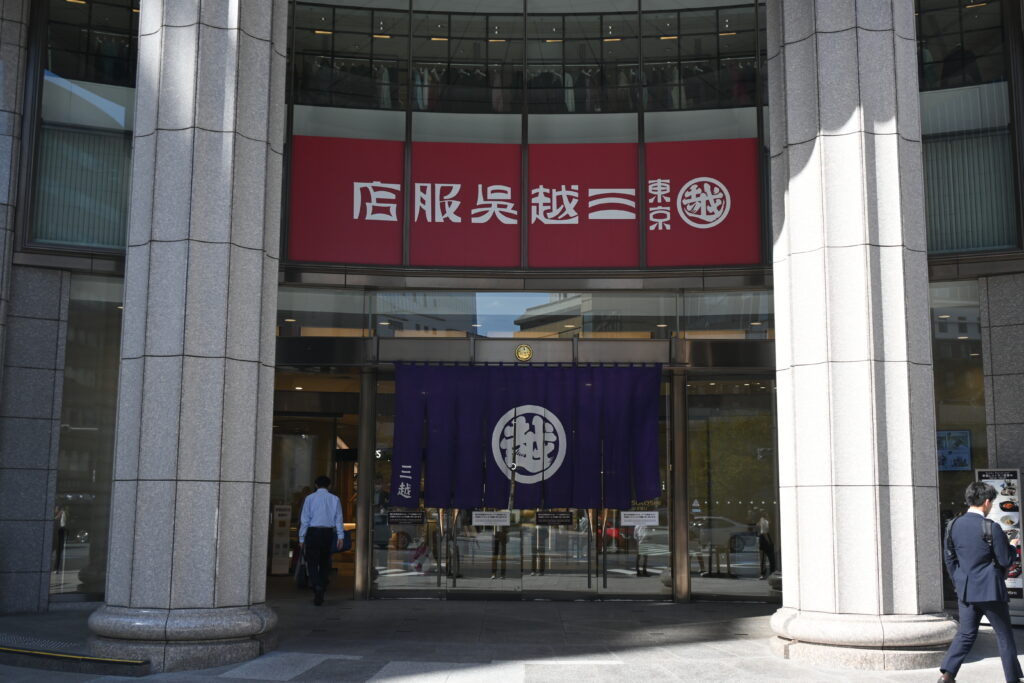
    Walk north on Chuo-dori to Mitsukoshi. Its roots go back to 1673, when the Mitsui family opened a kimono shop called Echigoya. Echigoya became famous for a new idea: fixed prices, paid in cash, displayed openly. At the time, most shops negotiated prices and sold on credit to rich customers. Echigoya sold to everyone at the same price, and it grew into one of the biggest stores in the world.

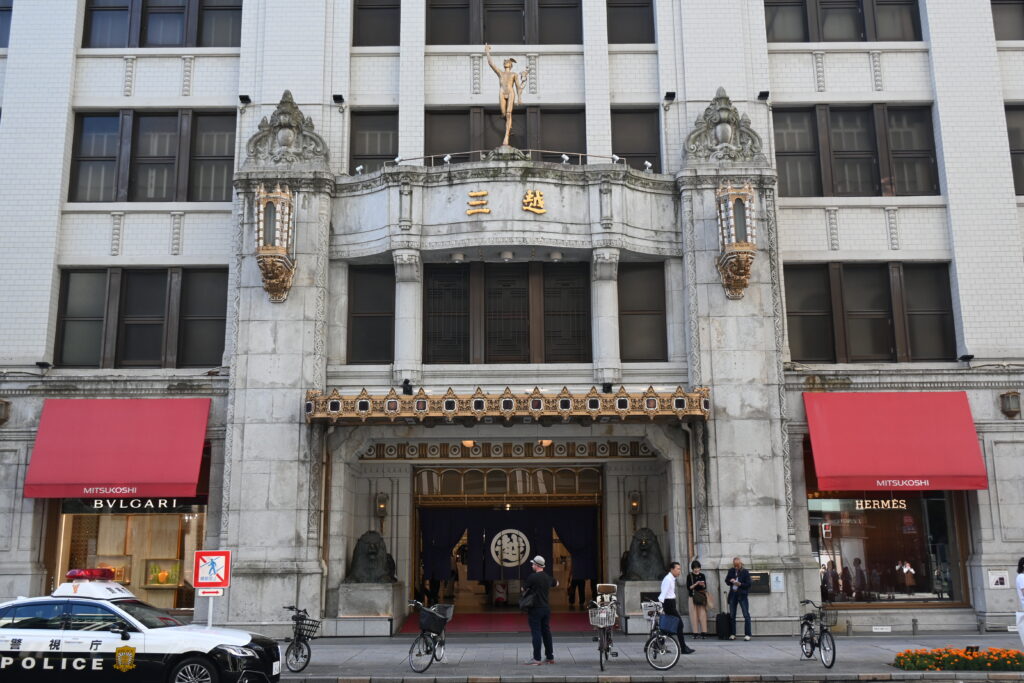
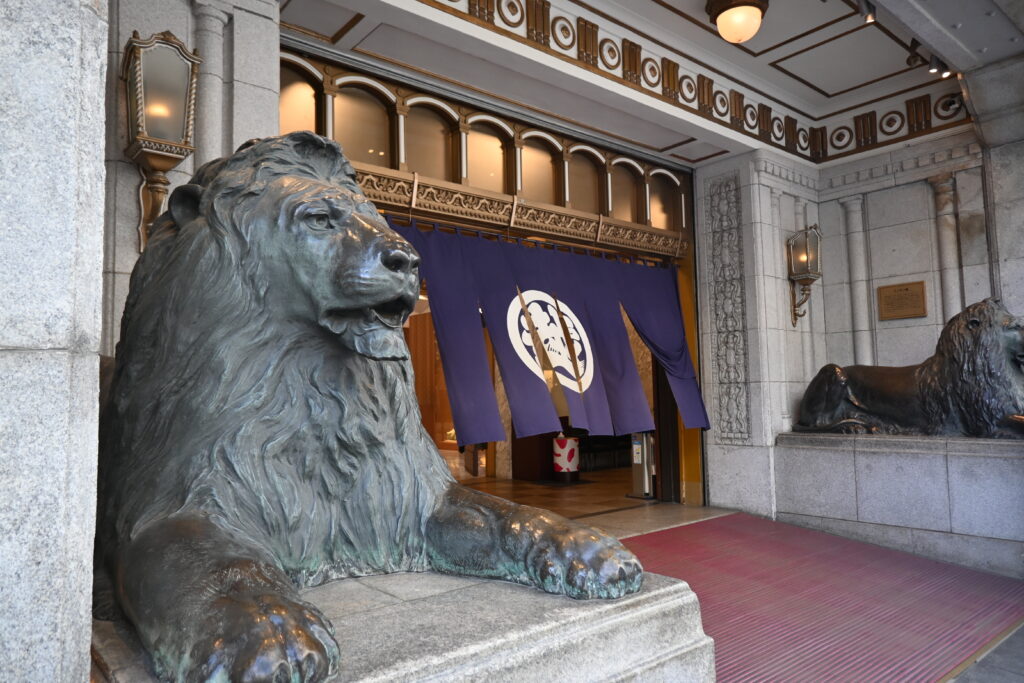
    In 1904 the store declared itself Japan’s first “department store”. Two bronze lions guard the main entrance. They were made in England in 1914, modeled on the lions of Trafalgar Square in London. If you are from Europe, they may look familiar.

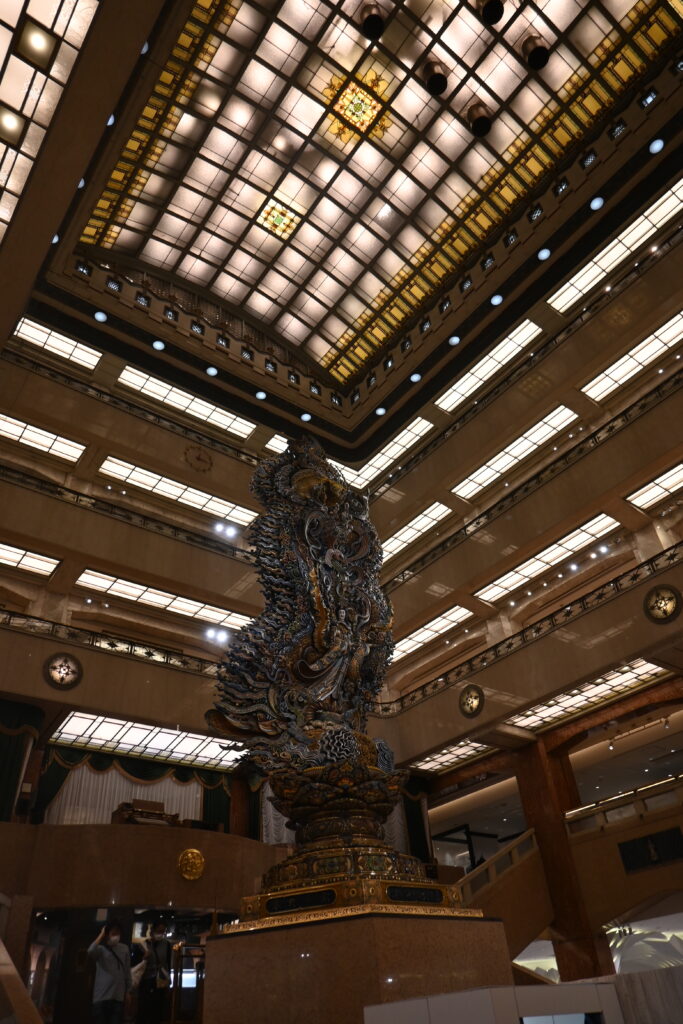
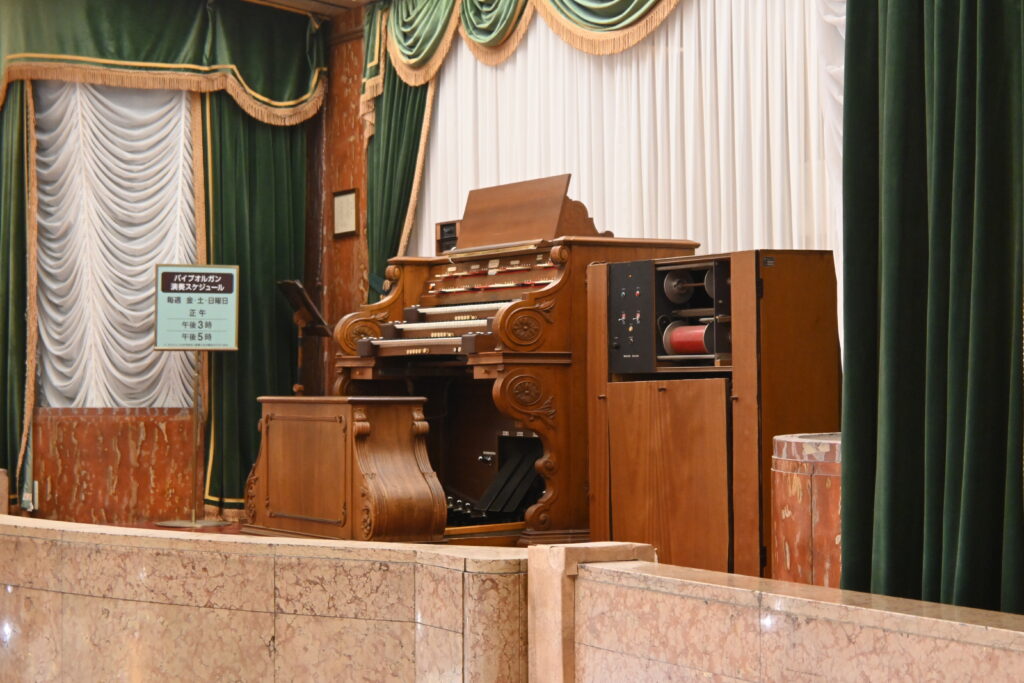
    Step inside. The central hall rises five floors, and in the middle stands a carved goddess, the Magokoro (Sincerity) statue, 10.9 meters tall, made by the sculptor Sato Gengen and installed in 1960. On the balcony above is a theater pipe organ, built by Wurlitzer in the United States and installed in 1930. It is still played on certain days, so check the store’s schedule if you want to hear it.

    COREDO Muromachi: old names, new buildings

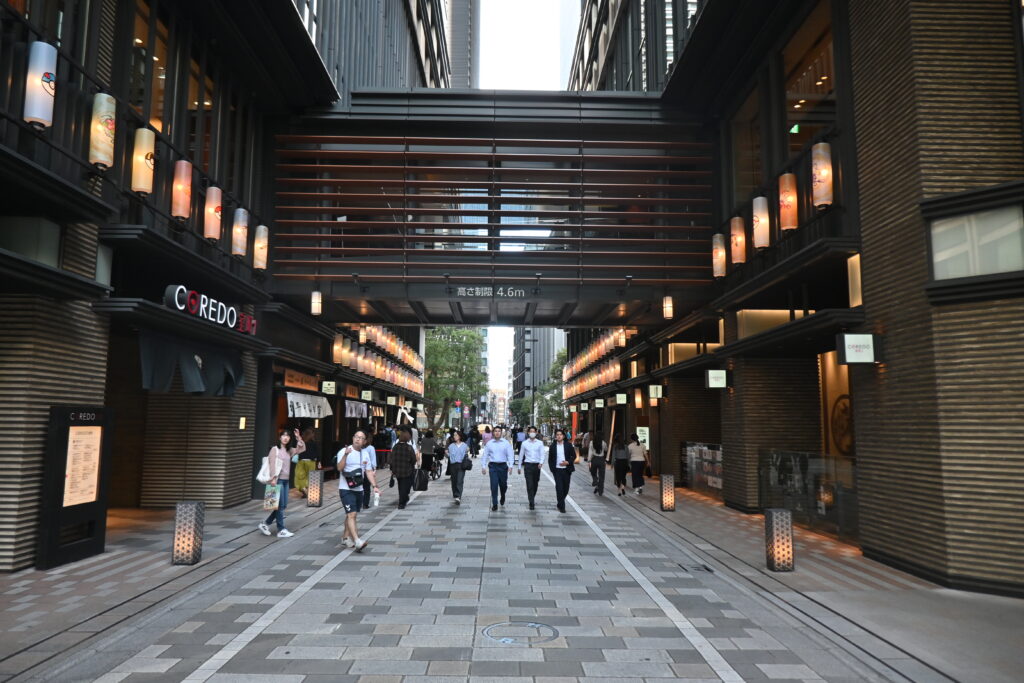
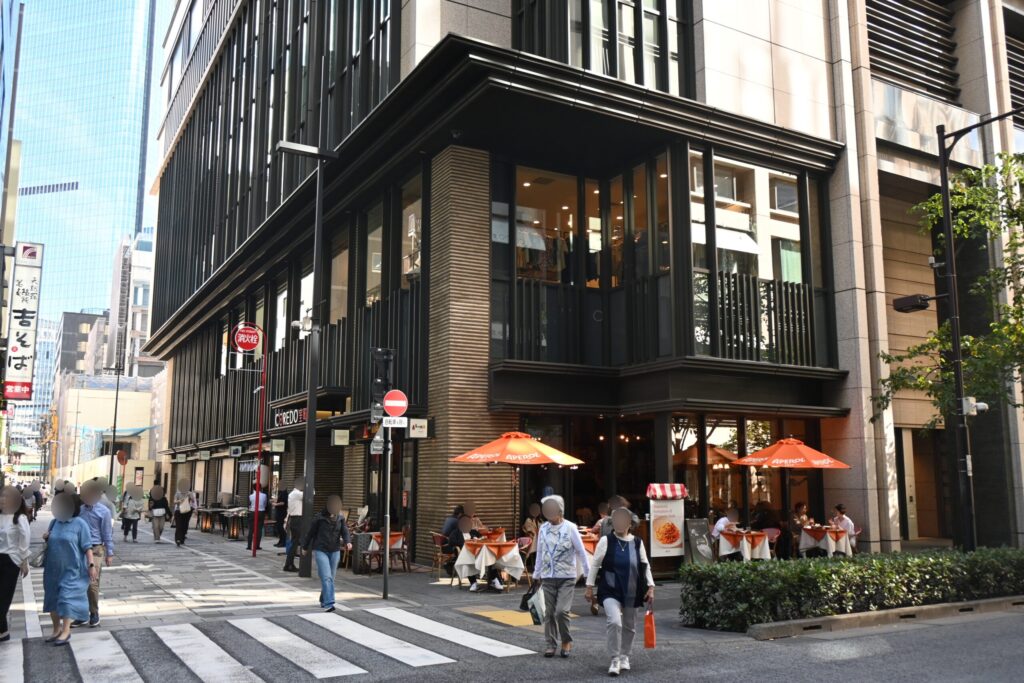
    Across the street, COREDO Muromachi is a group of new buildings designed to recall the old merchant town, with dark facades, shop curtains and lanterns. Inside are small shops of long-established Nihonbashi brands: knives, dried bonito, seaweed, Japanese paper. It is a good place for gifts and for lunch.

    Traveling with children? Nihonbashi is where the very first Pokémon Center opened in 1998. Today Pokémon Center Tokyo DX is on the 5th floor of the East Building of Nihonbashi Takashimaya S.C., a short walk south of the bridge (not in the main Takashimaya building).

    One more Hiroshige link: the street between Mitsukoshi and the Mitsui Main Building was once Surugacho, named because it pointed straight at Mount Fuji. Hiroshige painted it with Echigoya’s shop curtains on both sides and Fuji filling the end of the street. The street plan is still the same, but today you will not see Fuji through the buildings.

    The Bank of Japan, on the site of the gold mint

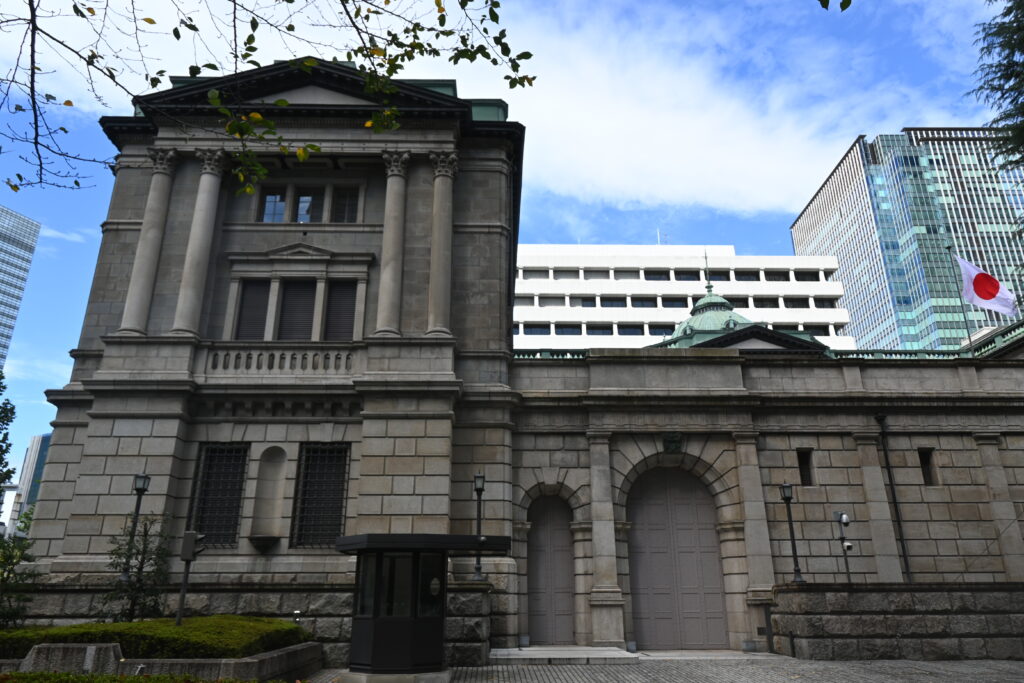
    A few minutes west is the Bank of Japan head office, completed in 1896 and designed by Tatsuno Kingo, the architect of Tokyo Station. The site was not chosen by chance: in the Edo period this was the Kinza, where the shogunate made its gold coins.

    You can join a free guided tour of the building, offered in English, if you book online in advance. Across the street, the Bank of Japan Currency Museum is free and shows Japanese money from ancient coins to modern notes (closed on Mondays).

    Three bridges called Tokiwabashi

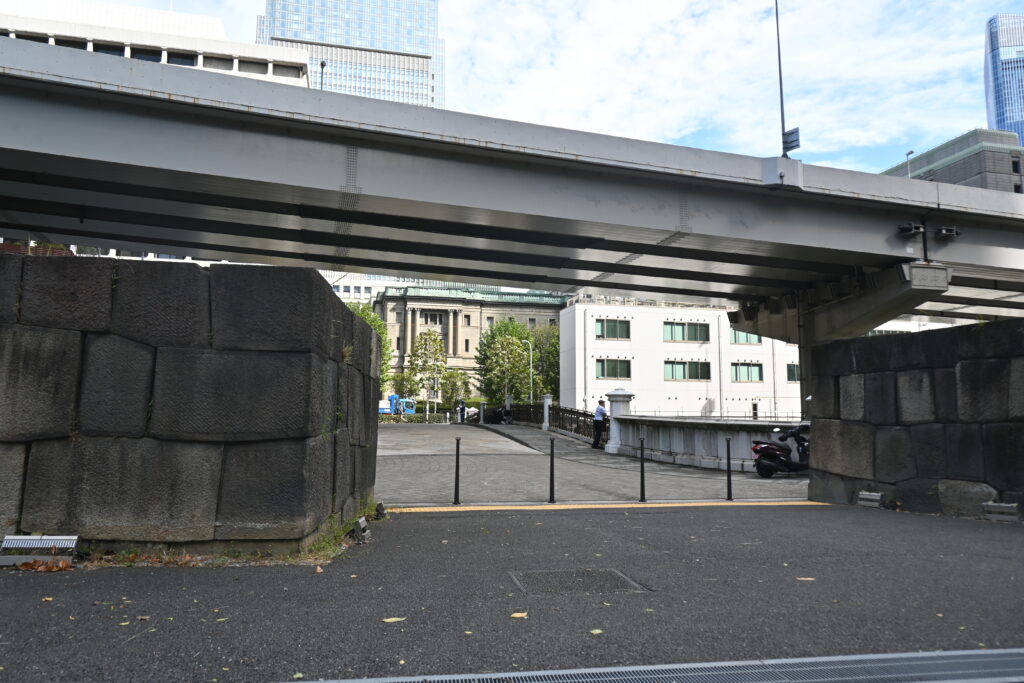
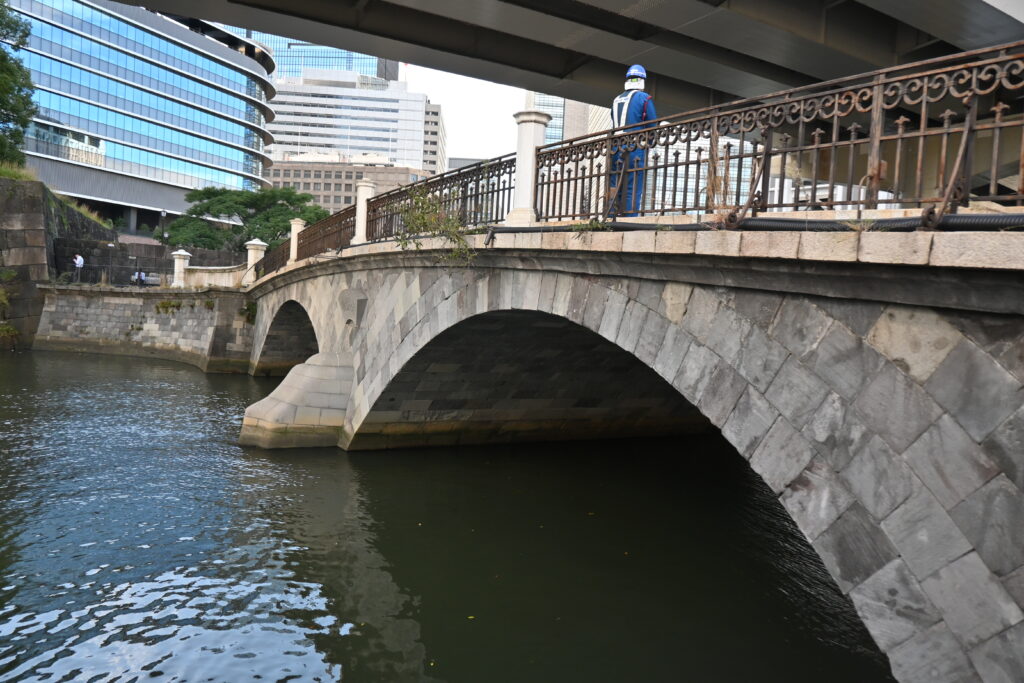
    Walk to the river behind the bank and you find something unusual: three bridges with the same name, Tokiwabashi, side by side.

    Here stood Tokiwabashi Gate, one of the main gates of Edo Castle. It was also called the Asakusa Gate, because the road from here led to Asakusa and on to northern Japan. So if you came from Asakusa today, you followed the old road into the castle. The gate was taken down in 1873, but its stone walls survive and are a national historic site.

    The middle bridge is the stone Tokiwabashi of 1877, made with stones from another demolished castle gate. It is one of the oldest stone bridges in Tokyo. Downstream is a bridge from 1926, and upstream is a modern one from 1988: Meiji, Taisho and Showa, one after another.

    A small puzzle for kanji fans: the old stone bridge is written 常磐橋 and the 1926 bridge 常盤橋. Both are read “Tokiwabashi”. One popular story says the character 盤 (which contains “dish”) was changed to 磐 (“rock”) for the stone bridge, because a dish breaks easily. Look at the name posts and find the difference.

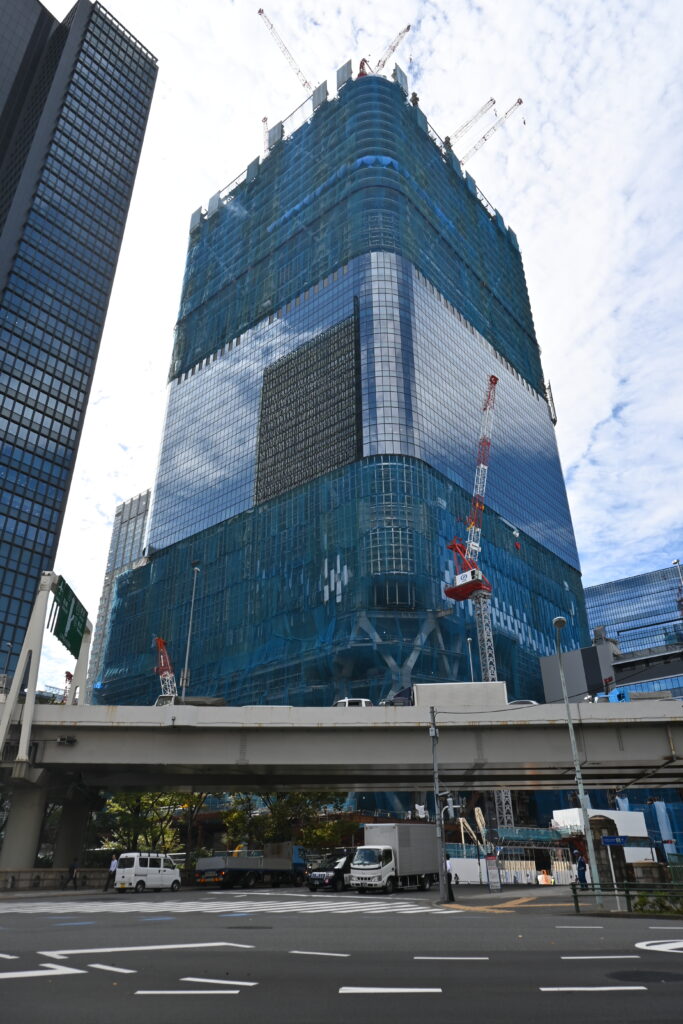
    Look up from the river, too. Right next door, in a new district that also houses the city’s sewage pumping station and office, a huge skyscraper is rising: Torch Tower, about 390 meters tall and planned to be the tallest building in Japan when it is completed in the late 2020s. From the stone walls of an Edo gate to Japan’s next tallest tower, all in one view: Tokyo is still rebuilding itself.

    Best time to go

    Weekday mornings are calm, and the light is good on the bridge before noon. Mitsukoshi opens at 10:00. If you want to tour the Bank of Japan, book a morning slot and do the walk around it.

    Good to know before you go

    • It is not a pretty postcard. The expressway makes the bridge dark and noisy. That is exactly the point of this walk, but do not expect a quiet old bridge.
    • Do not step into the road. The real road marker is in the traffic lanes. Even if the road looks empty, please do not cross to it for a closer look. Use the replica at the north end for photos.
    • The cruise is in Japanese. You can still enjoy the views, but you will not understand the commentary.
    • Plan the bank tour. The free Bank of Japan tours need an online reservation. The Currency Museum is closed on Mondays.
    • Toilets. Use Mitsukoshi or COREDO Muromachi.

    Getting there

    • From Shimbashi: Tokyo Metro Ginza Line to Nihonbashi, about 5 minutes, ¥180.
    • From Asakusa: Ginza Line directly to Mitsukoshimae or Nihonbashi, about 12 to 15 minutes, ¥180.
    • From Tokyo Station: walk about 10 minutes from the Nihonbashi Exit.

    Make a day of it

    Continue to Edo Castle with a guide

    Tokiwabashi Gate was the front door to Edo Castle, and the castle itself is only a short walk away. This two-hour walking tour with an English-speaking local guide explores the Imperial Palace grounds, the moats, gates and stone walls of Edo Castle and the story of the shoguns. It has very good reviews, many from European travelers, and free cancellation up to 24 hours before. Prices may change, so check the details and meeting point before you book.

    Where to stay

    Mandarin Oriental, Tokyo

    Why choose: A luxury hotel high in a tower a short walk from Mitsukoshi, with views over the city. You can step out of the lobby and start this walk at once.

    Mitsui Garden Hotel Nihonbashi Premier

    Why choose: A comfortable mid-range hotel within walking distance of the bridge, with easy Ginza Line access to Asakusa and Ginza.

    Next time

    Next time, we return to the Kengo Kuma series: a walk from Omotesando to Meiji Jingu, from the streets of Aoyama to the forest of the shrine.

    Photos: Aozora Walks unless otherwise noted. “Nihonbashi: Morning View” by Utagawa Hiroshige, from The Fifty-three Stations of the Tokaido: National Diet Library Digital Collections (public domain), https://dl.ndl.go.jp/pid/1309914.

  • Sakai, Ibaraki: A Kengo Kuma Town on the Tone River, One Bus Ride from Tokyo

    Sakai, Ibaraki: A Kengo Kuma Town on the Tone River, One Bus Ride from Tokyo

    This post contains affiliate links. If you book through them, I may earn a small commission at no extra cost to you.

    In Part 1, we watched kabuki inside Kengo Kuma’s Kabuki-za in Ginza. For Part 2, we leave Tokyo for a small town most visitors have never heard of: Sakai, in Ibaraki Prefecture. Kuma has designed seven or eight buildings here, and the main ones stand within a few minutes’ walk of each other. Few places in Japan let you see so many of his works in one stroll.

    As a geography teacher, I was curious about one question: why would a world-famous architect keep coming back to a quiet farming town on the Tone River? The answer, as so often in Japan, starts with a river.

    Quick facts

    WhatWalk between Kengo Kuma buildings in a small river town, with a dried sweet potato café and a lunch stop
    WhereSakai, Ibaraki Prefecture, on the Tone River
    CostHighway bus from Tokyo Station ¥1,800 one way. Town bus: free. Buildings: free to see from outside
    TimeHalf a day in town, plus about 1.5 hours each way from Tokyo
    From TokyoHighway bus from Tokyo Station (Yaesu South Exit) to Sakai Highway Bus Terminal, then the free town bus

    Find your way

    The buildings are in two groups, a short walk apart. Open these on your phone to find them:

    Why Kuma came to a small river town

    Sakai grew up as a kashi, a river port. In the Edo period, rice, soy sauce and other goods from northern Japan came down the Tone River to Sakai. Just across the water, at Sekiyado, the Edo River branches off and flows south to Tokyo Bay. So from Sakai, boats could carry cargo all the way to the city of Edo, today’s Tokyo. Katsushika Hokusai, the artist of the famous Great Wave, made a print of this river in the early 1830s: “The Tone River in Sōshū,” from his series A Thousand Pictures of the Sea, with fishermen casting their nets from small boats.

    If you rode the water bus down the Sumida River with us, you have already seen the other end of this old water network. You will still find the memory of the river port in Sakai today, in names like “Kashi-no-Eki” and “Sakai Kashi Restaurant.”

    When trains and trucks replaced boats, the town lost its role and, like many places in rural Japan, its center began to empty out. The turning point was a mix of local food and modern design. The town built S-Lab, one of Kuma’s buildings, as a lab for developing local products. A dried sweet potato (hoshiimo) created there became a hit as a thank-you gift in Japan’s furusato nozei program, a system where people donate to a town of their choice and receive local products in return. According to Japan’s Ministry of Finance, donations to Sakai rose from just ¥65,000 in fiscal 2013 to ¥4.85 billion in fiscal 2021. Here, architecture became part of how the town earns its living.

    Look closely and you will see that Kuma’s designs here borrow from local life: the bamboo blinds used to dry sweet potatoes, the fibers of the potato itself, the storehouses of the old river port. Most of them use wooden louvers, slats of timber set at angles, his signature.

    HOSHIIMONO100 Café: a building inspired by dried sweet potatoes

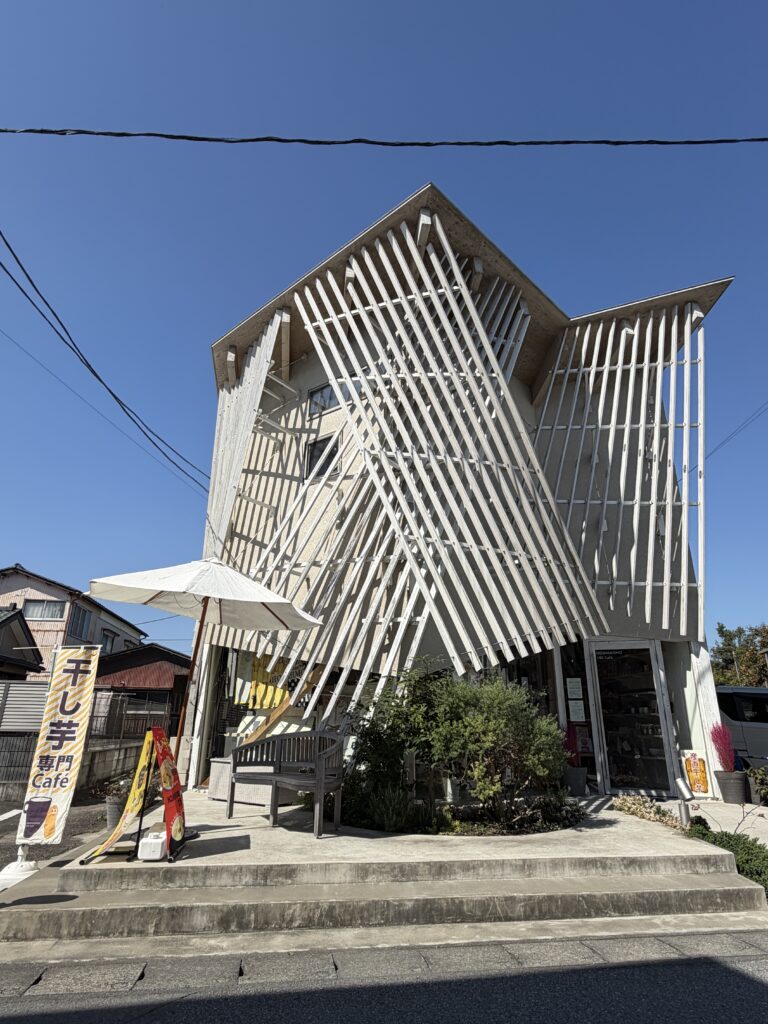
    Get off the town bus at Sakahana-cho and you will see it right away: a white building wrapped in slanted wooden louvers. They are said to echo the bamboo blinds used to dry sweet potatoes, and the fibers of the potato itself. As the sun moves, the louvers throw layers of light and shadow across the facade, so the building looks different every time you glance at it.

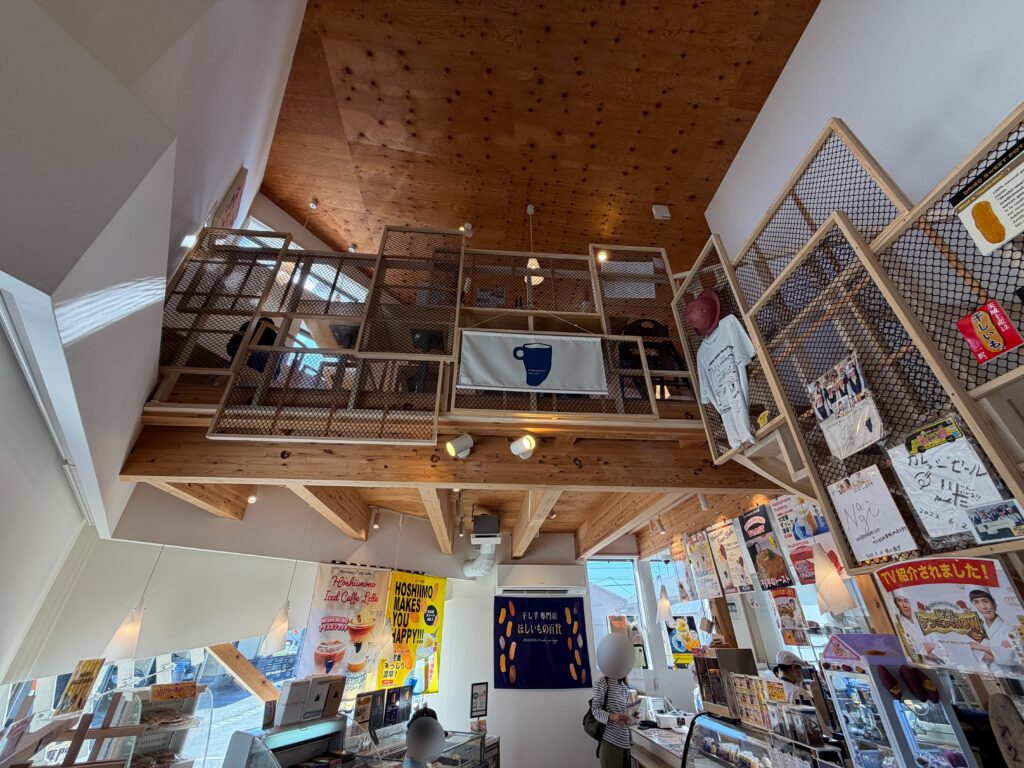
    This is the main shop of Hoshiimono Hyakka, a dried sweet potato specialist, with a café inside. Try the hoshiimo pudding, a cake or a café latte. The sweetness comes gently from the potato itself. With all that warm wood around you, it is a genuinely calming place to sit for a while, and a good spot to buy snacks for the trip home.

    S-Lab and S-Gallery: a lab you can look into

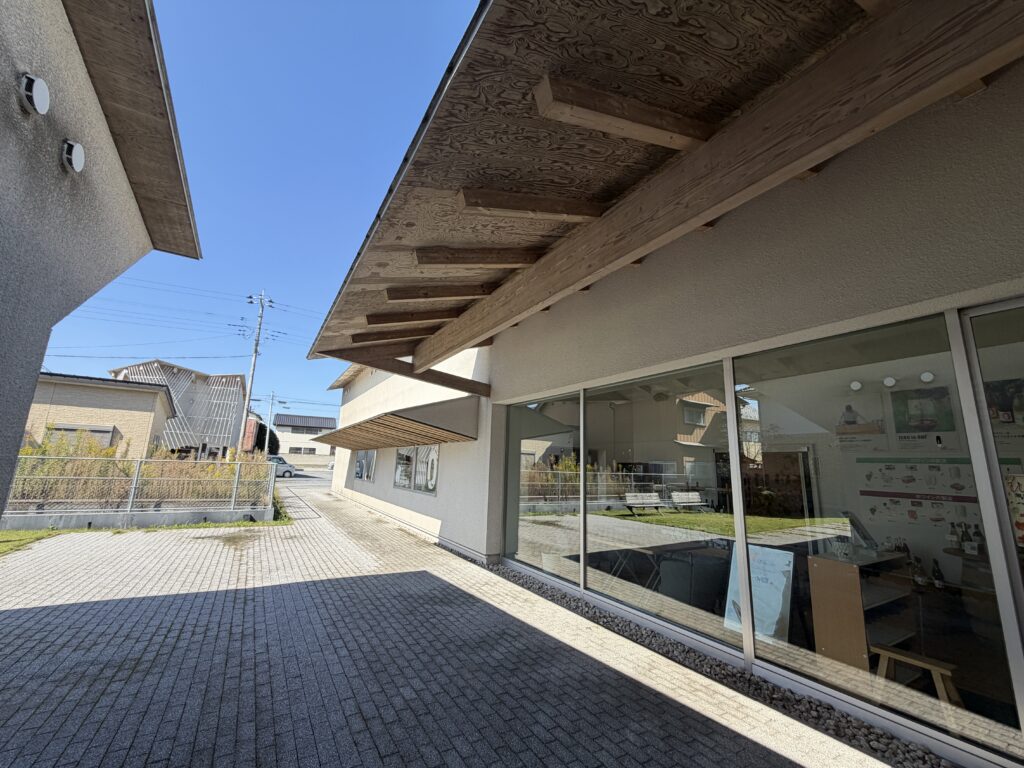
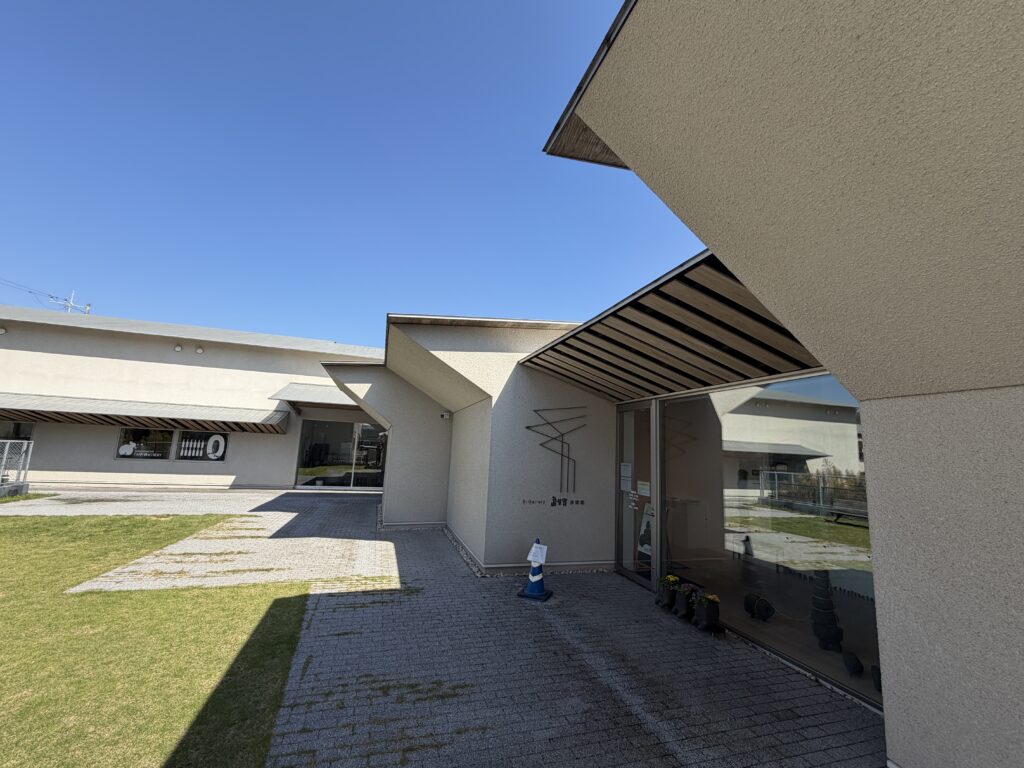
    Right next to the café is S-Lab, the research and development center where local products are created. Its walls are mostly large sheets of glass, so you can watch steps such as dried sweet potato processing and winemaking from outside. Look up at the deep eaves: their wooden underside is the building’s best feature. S-Lab is joined in an L shape to S-Gallery, a small museum for the painter Shukusanpō, who spent his later years in Sakai.

    Both were closed on the Sunday I visited, so I could only enjoy them from outside. S-Gallery is officially closed on Mondays and Tuesdays, but it may also close on other days, so check before you go if you want to step inside.

    Sakai Sand: where it all began

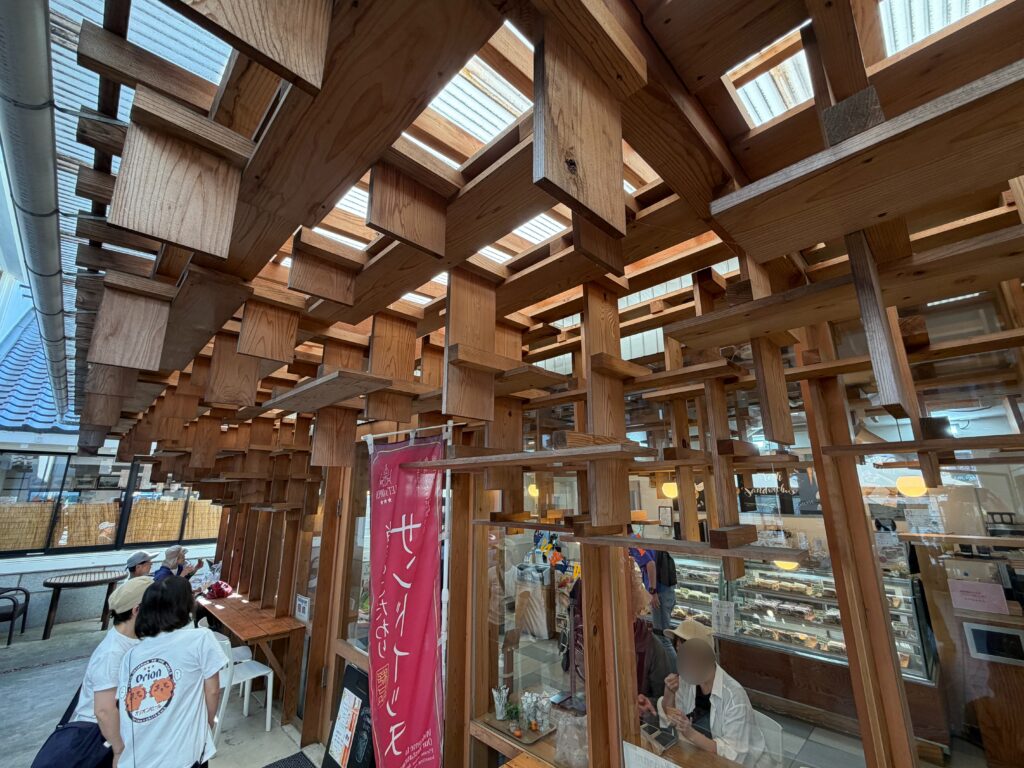
    From the café, walk south to Michi-no-Eki Sakai, the town’s roadside station with a farmers’ market and souvenir shop. Inside is Sakai Sand, a sandwich shop that opened in 2018 as the very first project between Kuma and the town. The sandwiches are filled with fresh local vegetables and fruit. What I loved most was the structure: boards of timber stacked and crossed overhead in a bold, almost playful way.

    Chakura: a storehouse with wings

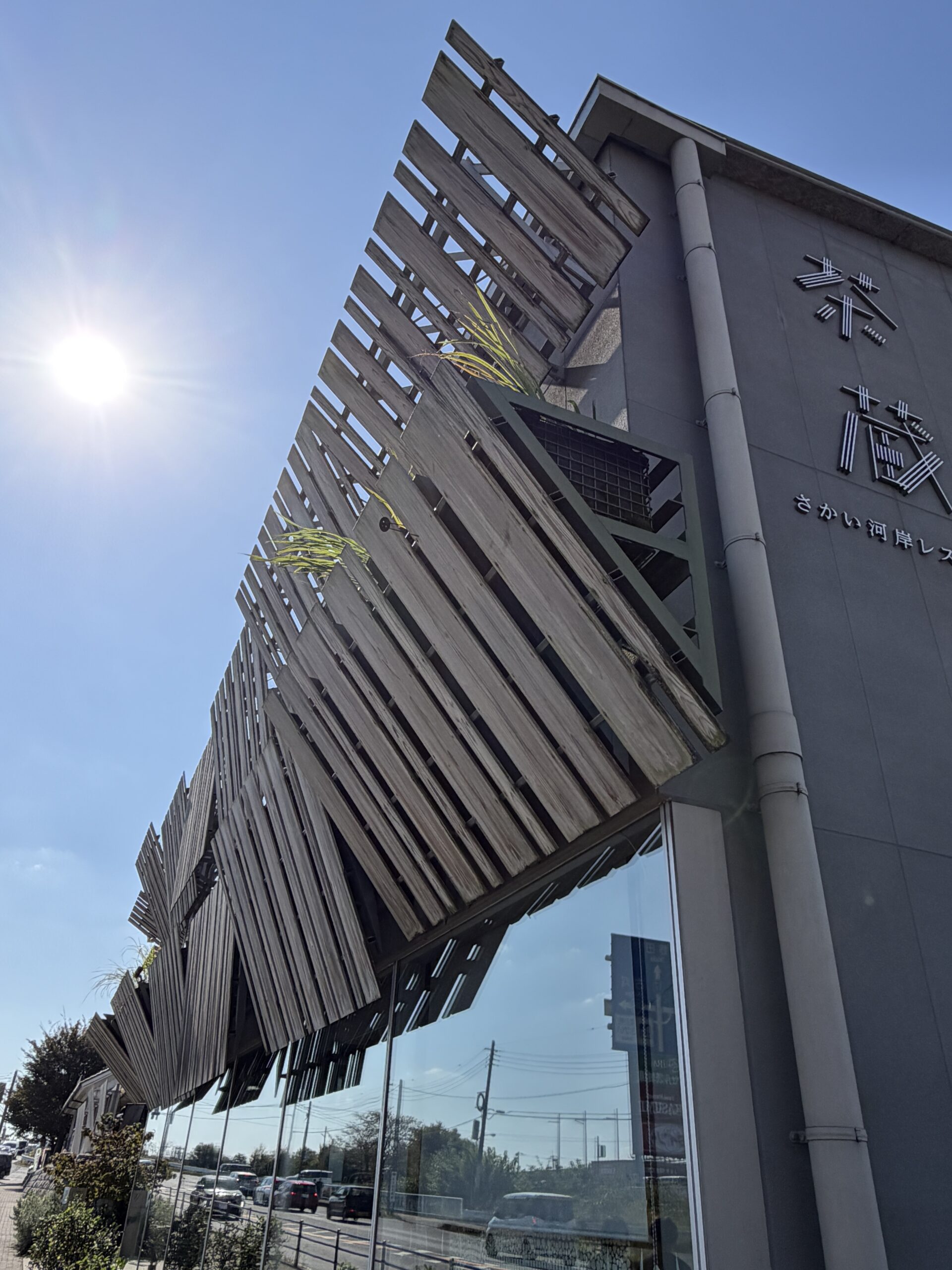
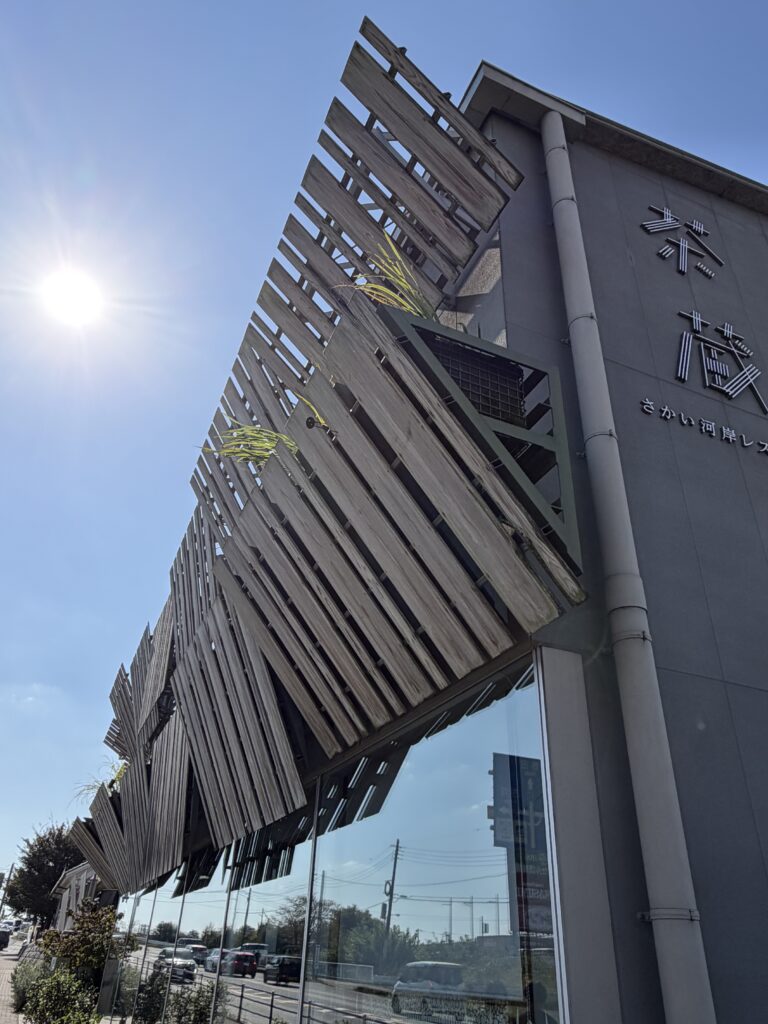
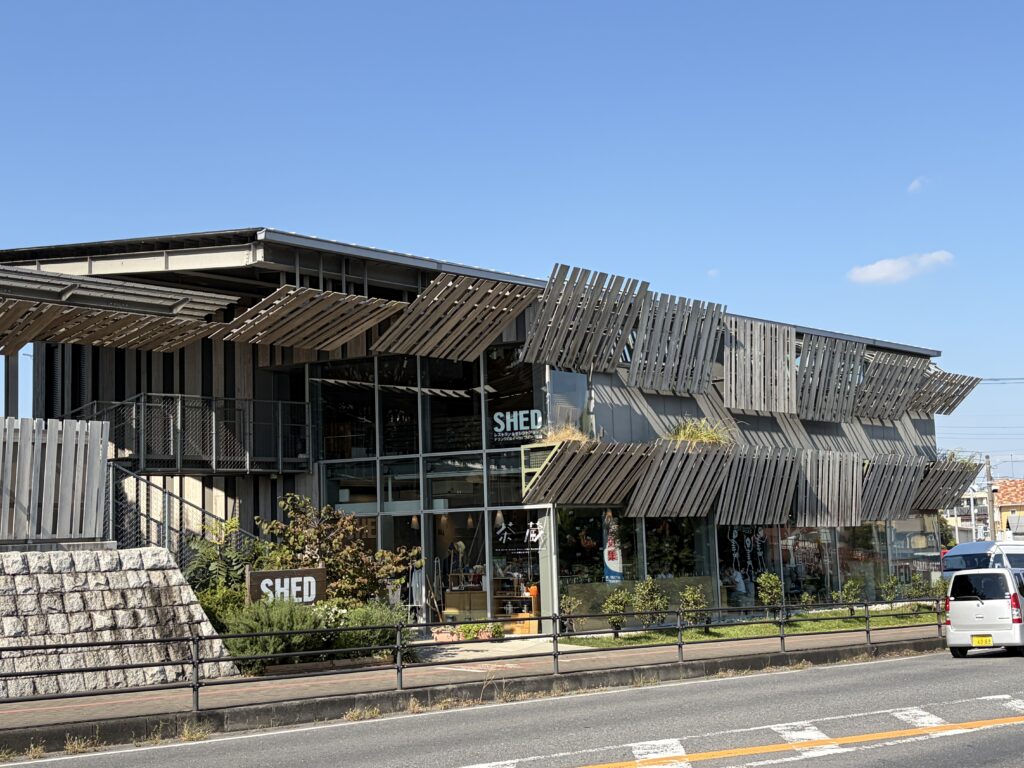
    Next door stands Chakura, the “Sakai Kashi Restaurant.” Its tall gray wall recalls the kura storehouses of the old river port, and on it hang huge wooden louvers that spread out like wings. Seen from below, it is breathtaking, one of the boldest designs in the town.

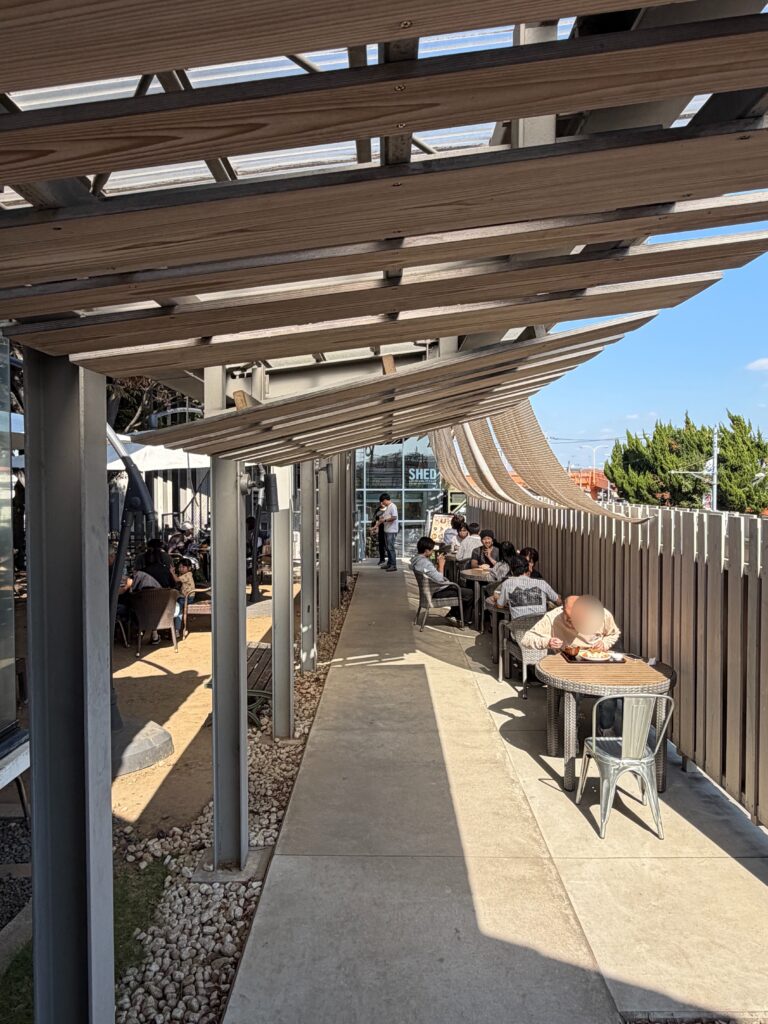
    Don’t let the storehouse look fool you: the restaurant inside is now SHED, a casual café-restaurant using local ingredients. The menu changes with the seasons and has included steak rice bowls, pasta, hamburg steak and bento boxes. Between the building and the roadside station runs a semi-outdoor walkway with tables, shaded by another wooden louver roof in Kuma’s typical style. On a fine day, it is a lovely, relaxed place for lunch.

    Across the road from the roadside station is a shopping area with a Kasumi supermarket, Don Quijote and Mister Donut, and Goroko-no-Yu, a large public bathhouse, if you would like to end your day with a soak. Just to the south flows the Tone River, crossed by the Sakai-Ōhashi Bridge to Sekiyado in Chiba Prefecture.

    The town bus (and the self-driving bus)

    Sakai is famous in Japan for another reason: in 2020, it became the first town in the country to run self-driving buses on public roads every day as regular public transport, using small electric buses made by the French company Navya. As of October 2026, however, the self-driving buses are out of service for long-term maintenance, and no restart date has been announced. A regular bus with a driver runs on the same route and timetable instead, and it is still free.

    For this walk, take the bus from Sakai Highway Bus Terminal to the Sakahana-cho stop, right in front of the café. After that, everything is within walking distance.

    Best time to go

    Thursday to Saturday. Each place has different closing days, so on Sunday to Wednesday, something will be closed: the café closes on Tuesdays and Wednesdays, S-Gallery on Mondays and Tuesdays, and S-Lab was closed on the Sunday I visited. Go on a sunny day if you can. The louvers look their best when the light throws strong shadows.

    Good to know before you go

    • Check the bus home first. Highway buses back to Tokyo are not frequent, so check the timetable before you set off.
    • Trains are slow here. Sakai has no train station. By train, you need a local bus from Tobu-Dobutsu-Koen or Koga Station, so the highway bus is much easier.
    • Not a big sightseeing spot. This is a quiet working town, not a tourist attraction. Come for the architecture, the food and the calm, not for crowds or souvenir streets.
    • Opening hours (as of October 2026): Michi-no-Eki Sakai and Sakai Sand, usually 9:30–17:00 (10:00–17:00 on weekends, hours vary by day). SHED, 10:00–17:00. HOSHIIMONO100 Café, 10:00–18:00 (last order 17:00), closed Tuesdays and Wednesdays. S-Gallery, 10:00–12:00 and 13:15–17:00, closed Mondays and Tuesdays, ¥330.

    Getting there

    • Highway bus (easiest): Tokyo Station, Yaesu South Exit, to Sakai Highway Bus Terminal, via Oji Station. About 1 hour 30 minutes, ¥1,800 (JR Bus Kanto and Kanto Railway). Then take the free town bus to Sakahana-cho.
    • By train and bus: Tobu Nikko Line to Tobu-Dobutsu-Koen Station, or JR Utsunomiya Line to Koga Station, then an Asahi Bus bound for “Sakai Shako.” Get off at “Sakai-machi Yakuba Iriguchi.”
    • By car: the buildings have parking.

    Book your trip

    Highway bus

    You can check timetables and reserve seats on the operator’s official site.

    Stay connected

    Out in the countryside, you will want mobile data for bus timetables and maps.

    Official websites

    Next time

    In Part 3, we return to Tokyo and walk from Aoyama to Harajuku, from the bamboo-lined approach of the Nezu Museum to the forest of Meiji Jingu, to see how Kuma brings wood and green into the heart of the city.

    Photos: Aozora Walks. Information as of October 2026. Sources: Ministry of Finance, Japan, “Finance” (December 2022); official websites of each facility.
  • Kabuki-za in Ginza: Watch One Act of Kabuki and Find the Upside-Down Phoenix

    Kabuki-za in Ginza: Watch One Act of Kabuki and Find the Upside-Down Phoenix

    This post contains affiliate links. If you book through them, I may earn a small commission at no extra cost to you.

    At the end of our water bus trip, I promised a closer look at the buildings of Kengo Kuma. We start with one of his best-loved works: Kabuki-za, the home of kabuki in Ginza.

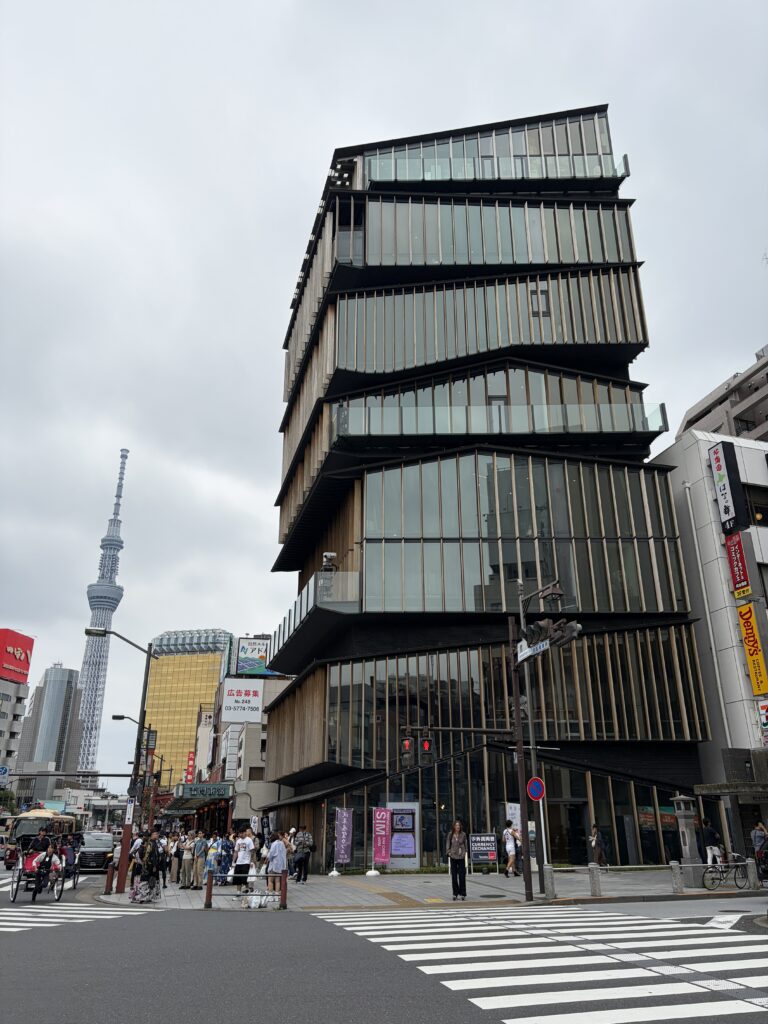
    Our journey begins in Asakusa, at another Kuma building, the Asakusa Culture Tourist Information Center across from Kaminarimon. From Asakusa, the Toei Asakusa Line takes you to Higashi-Ginza Station in about 15 minutes with no change of trains, and the station connects directly to Kabuki-za.

    Before you set off, step inside the ground-floor entrance and look up. The ceiling is made of layers of wooden slats and beams, so the building feels warm even though it is made of glass and steel. Bringing wood into modern buildings is one of Kuma’s trademarks, and you will see it again in Part 2.

    Quick facts

    WhatWatch one act of kabuki, then explore the free rooftop garden
    WhereKabuki-za, Ginza (Higashi-Ginza Station, Exit 3)
    CostVaries by act (I paid ¥3,000 for a 75-minute act). Rooftop garden: free
    Time30–90 minutes per act, plus about 30 minutes for the rooftop
    From AsakusaToei Asakusa Line, about 15 minutes, no transfer

    Arriving at Kabuki-za

    Exit 3 at Higashi-Ginza Station brings you straight into Kobikicho Hiroba, a basement floor with souvenir shops, a 7-Eleven and a Tully’s Coffee, so it is a good place to wait if you arrive early. It is named after Kobiki-cho, the old name of this area, where Kabuki-za first opened in 1889.

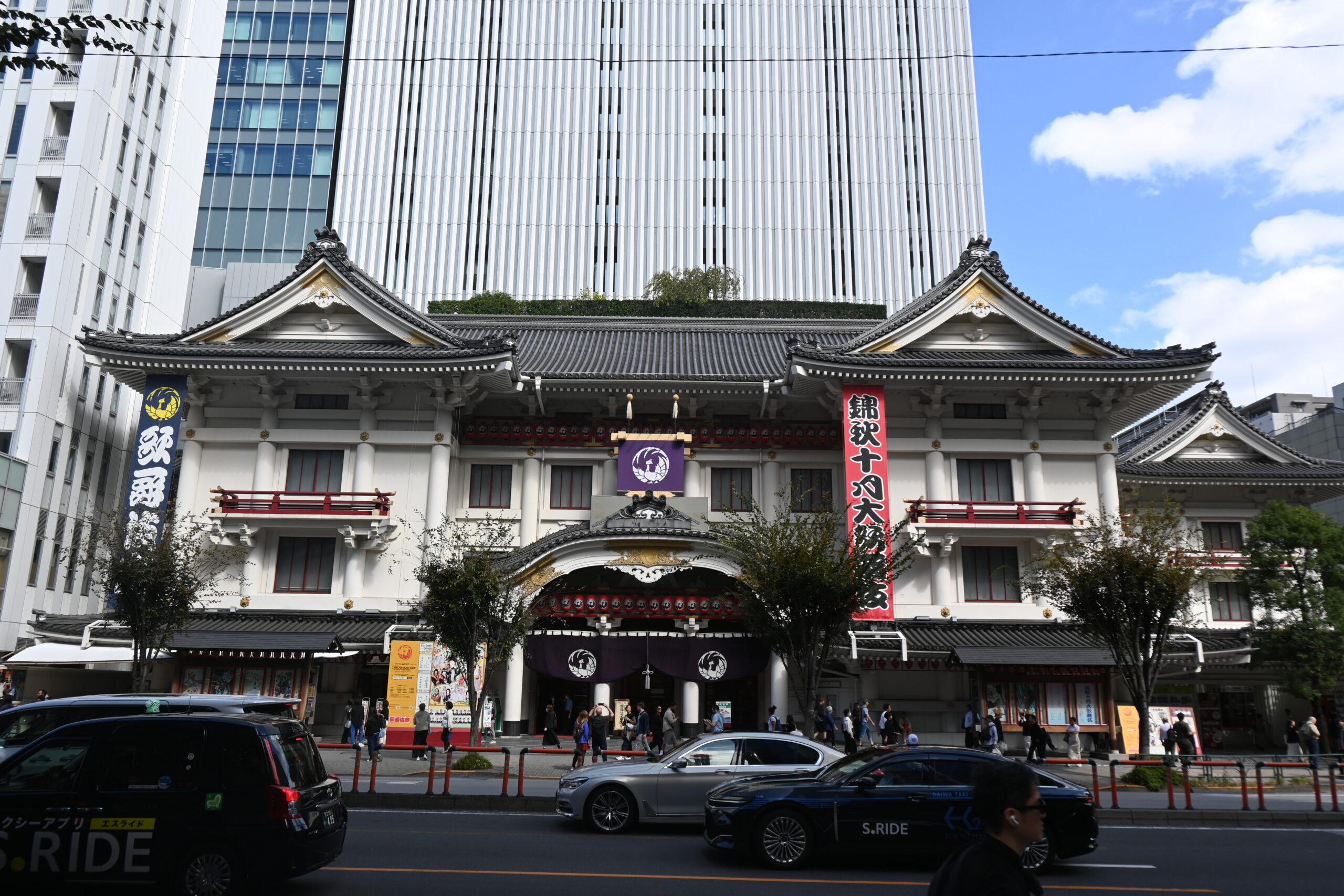
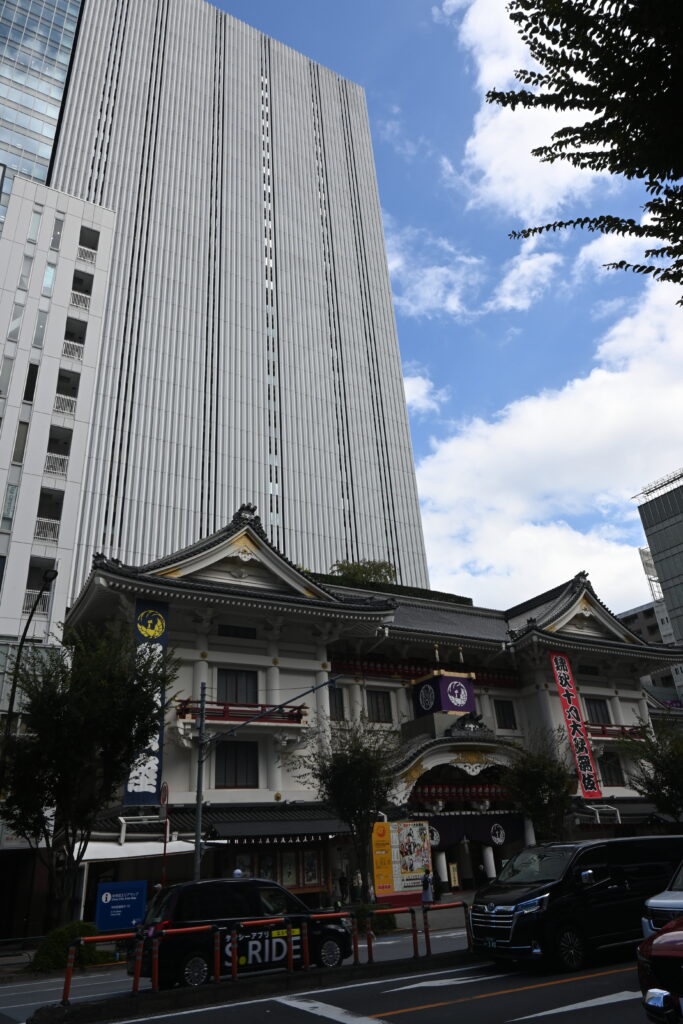
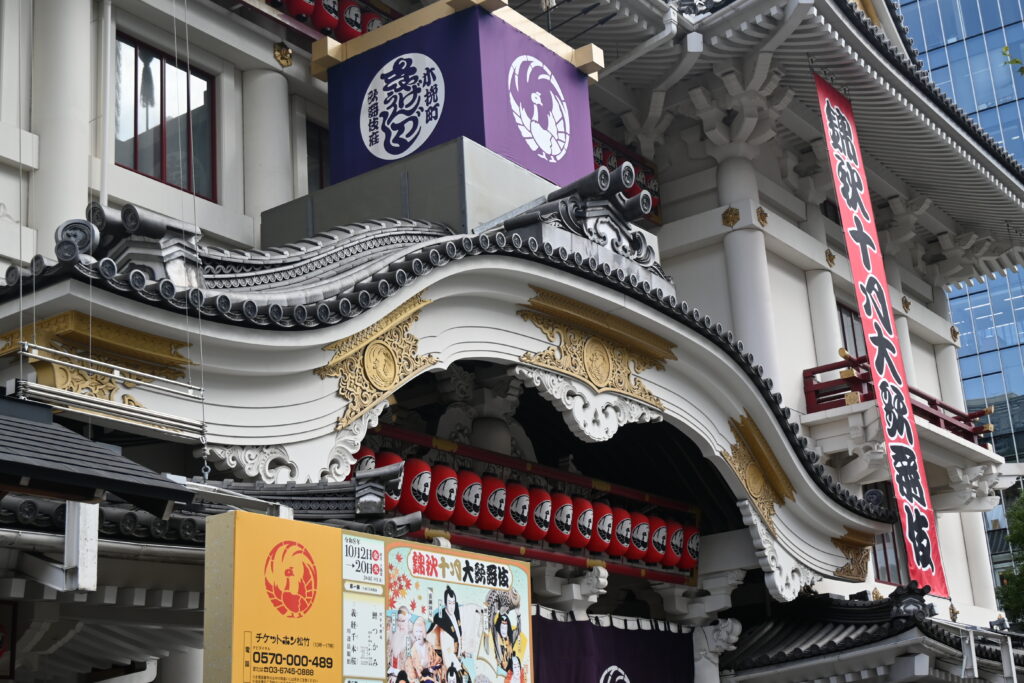
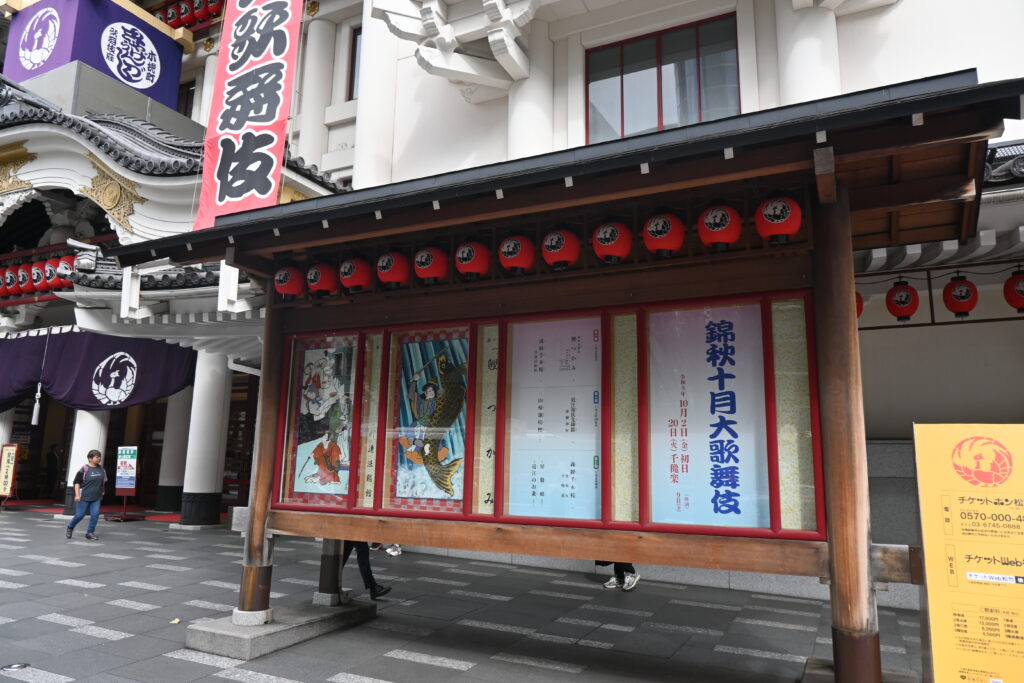
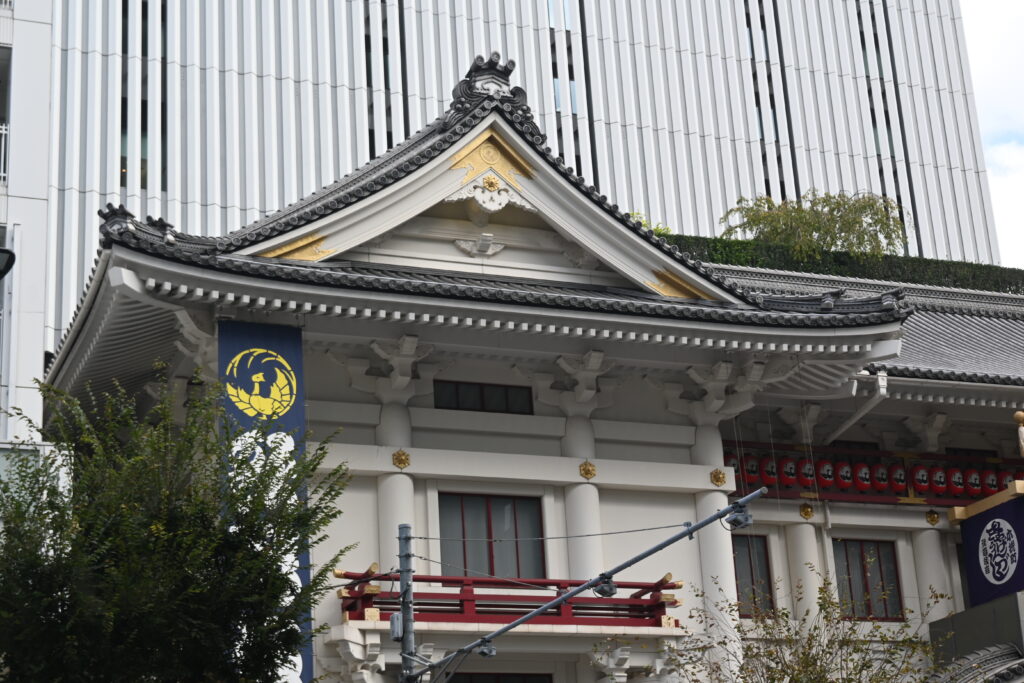
    Take the escalator up and cross Harumi-dori. From the other side of the street, you can see the whole facade: the curved roof and red lanterns of a traditional theater in front, and the modern Kabuki-za Tower rising behind. This is how Kuma rebuilt a beloved old theater without losing its face.

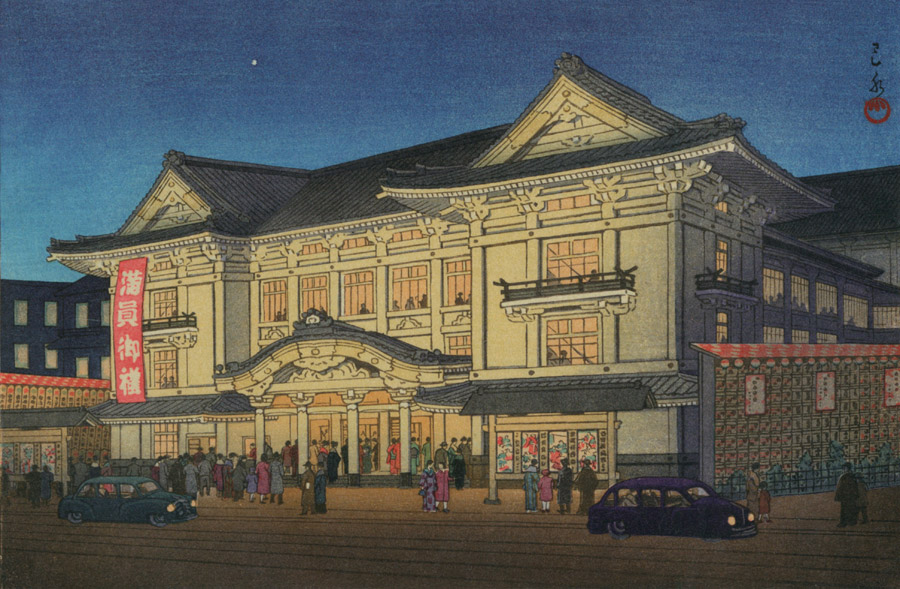
    The woodblock print below by Kawase Hasui shows Kabuki-za in 1951, the year it reopened after being burned in the war. Compare it with today’s facade: the curved gables and the tiled roofline live on.

    Watching kabuki for one act

    A full kabuki program lasts four hours or more. The Ichimakumi seats let you watch just one act, from about 30 to 90 minutes. Not too short, not too long, and easy on the wallet: for first-timers, it is the perfect way to try kabuki.

    • Online: reserved seats go on sale at noon the day before. You show a QR code on your phone at the entrance.
    • On the day: a small number of seats are sold from 10:00 at the window beside the main entrance. Popular acts sell out fast. On the day I went, some people were turned away.

    The Ichimakumi entrance is right next to the same-day ticket window, to the left of the main entrance. An elevator takes you straight up to the 4th floor, where there are restrooms and drink vending machines. Once you enter, you cannot go out and come back in.

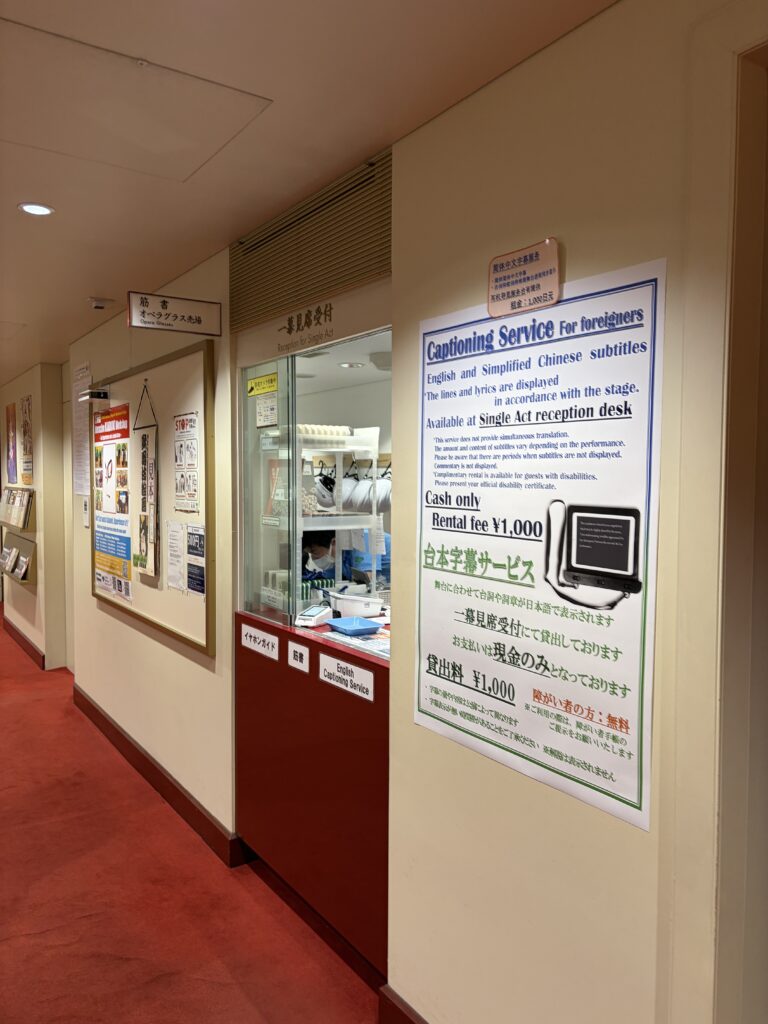
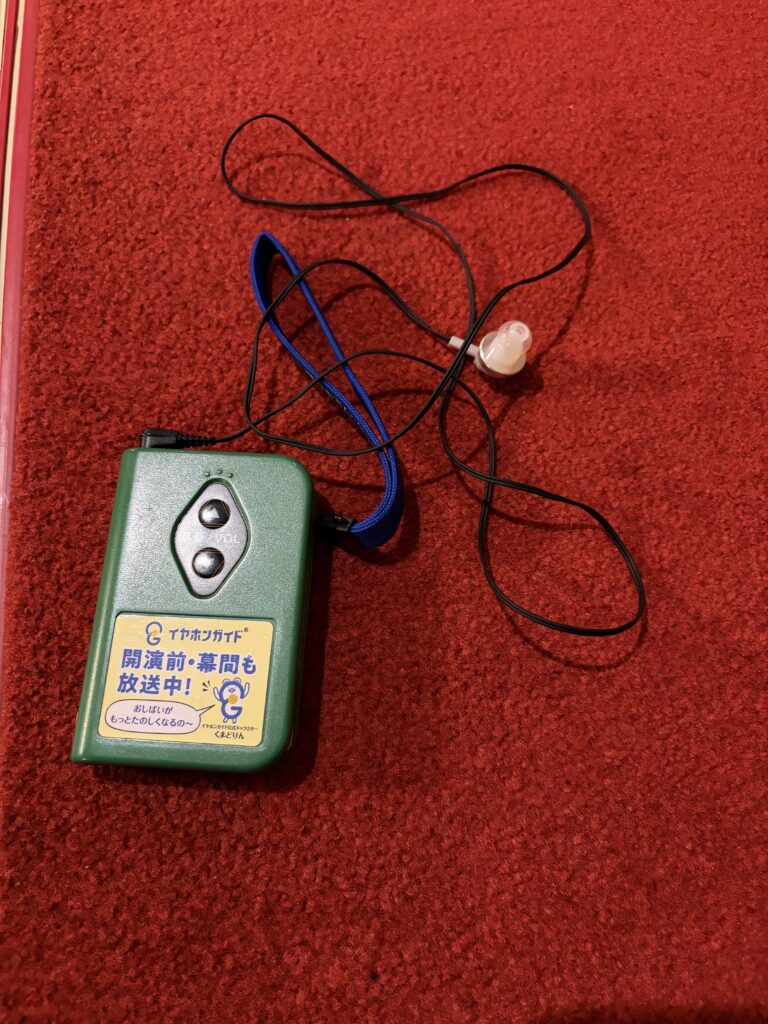
    Get the audio guide. You can rent it at the desk right in front of the elevator on the 4th floor. Kabuki’s way of speaking and storytelling is hard to follow even for many Japanese people. The guide explains the story, the meaning of lines and gestures, the costumes and the actors, always at just the right moment without getting in the way. At the Ichimakumi seats, the English version costs ¥1,000. A subtitle device that shows the lines in English or Simplified Chinese is also available at the same desk (¥1,000, cash only).

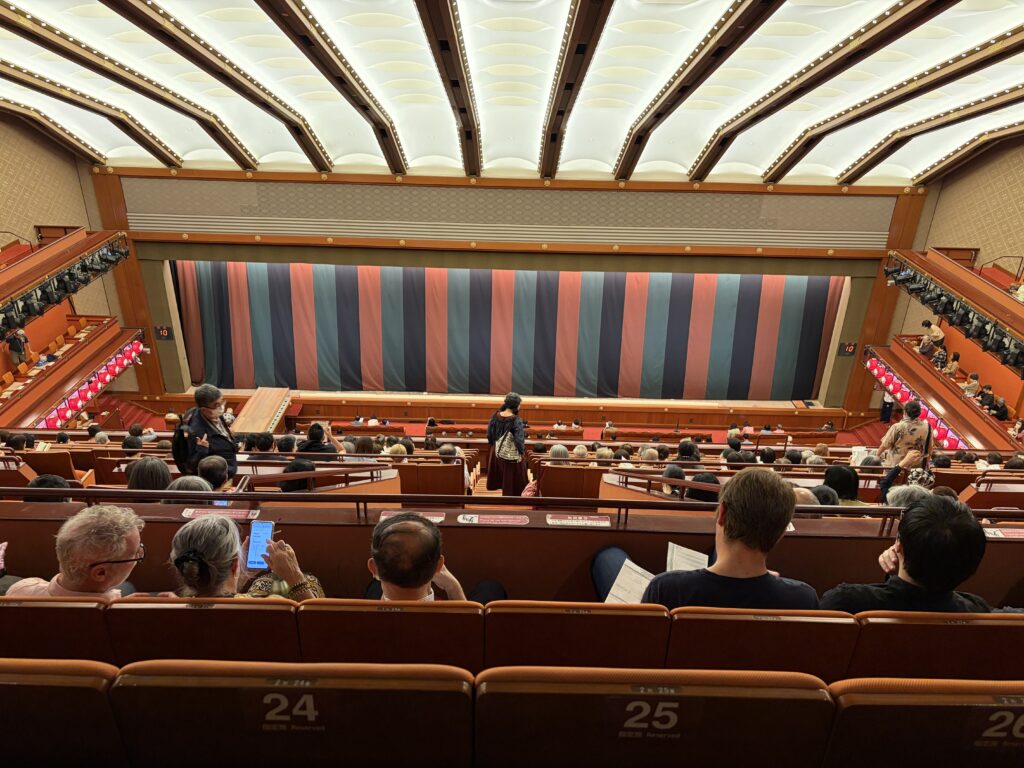
    The view. You look down on the stage from high up, and part of the hanamichi, the walkway actors use to make their entrances, is out of sight. Still, you get used to it quickly, and it is not very different from the 3rd-floor seats. Bring opera glasses if you want to see faces and costumes.

    What surprised me most was the atmosphere. Regular fans shout the actors’ stage names at key moments, and with the music and the rise and fall of the voices, you always know when the big moment is coming. Even without following every word, you can enjoy the skill of the performance.

    After the show: Goemon Stairs and the upside-down phoenix

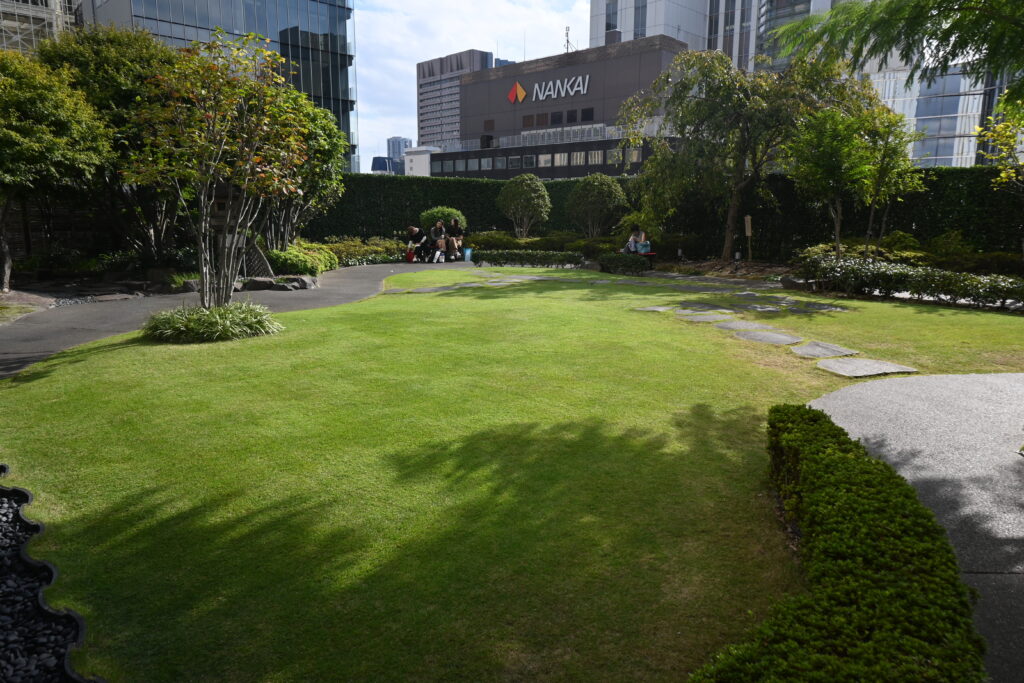
    After the act, go back down to the basement and take the elevator at the back of Kobikicho Hiroba to the 5th floor. The rooftop garden here is free and open to anyone during opening hours.

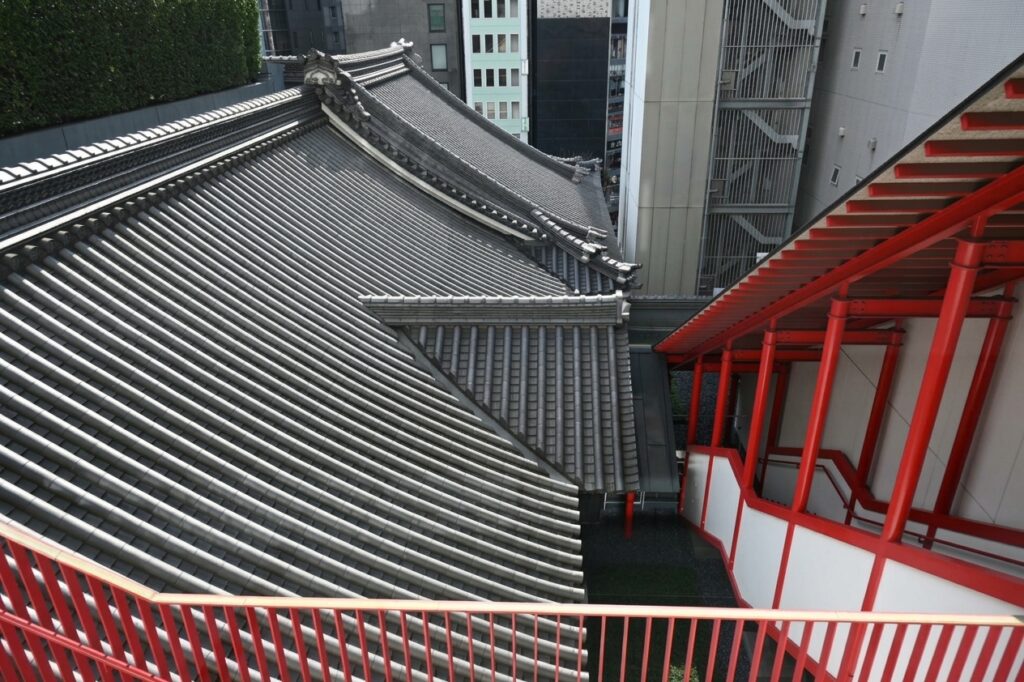
    From the garden, an outdoor staircase leads down to the 4th floor. It is called the Goemon Stairs, after a famous kabuki scene in which the thief Ishikawa Goemon looks out from a temple gate and cries, “What a magnificent view!” For me, these stairs are the best part of Kabuki-za, because they bring you closer than anywhere else to Kuma’s great roof.

    Look at the round tiles at the ends of the roof. Each bears a phoenix, the symbol of Kabuki-za. But one of them faces the other way. This “upside-down phoenix” is said to carry a message: nothing perfect lasts forever, so one part was left imperfect on purpose.

    Most people walk straight past it. I found it, but I won’t spoil the fun by showing you where. Look carefully from the Goemon Stairs and see if you can find it yourself.

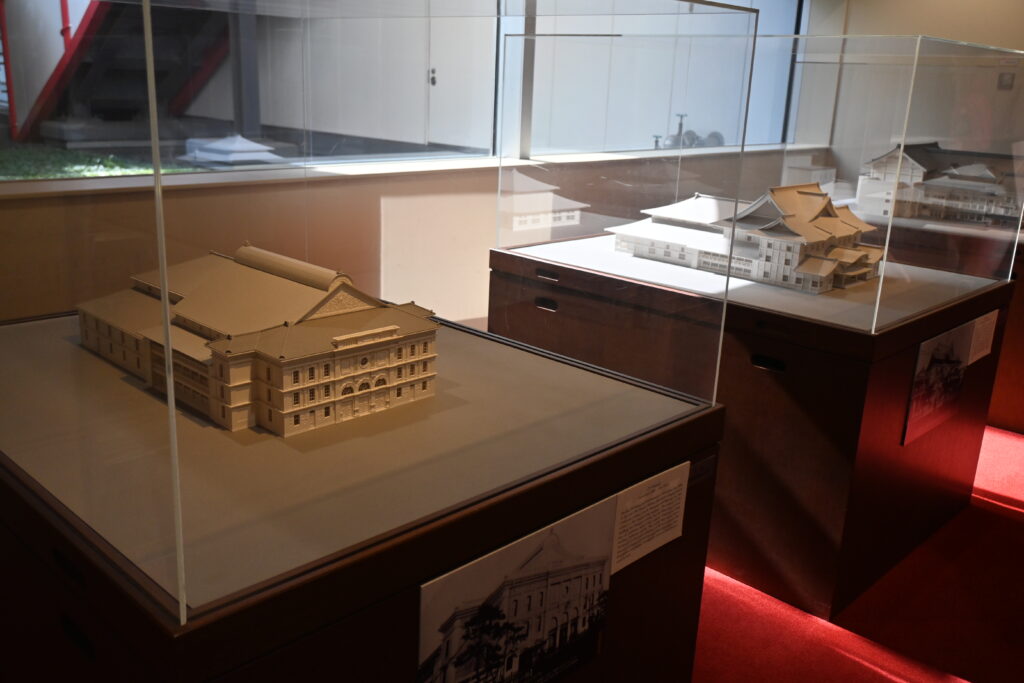
    At the bottom of the stairs, the 4th-floor corridor displays photos of great actors and models of the earlier theaters, a reminder that today’s Kabuki-za, joined to a modern tower, still carries the face of the old ones.

    Good to know before you go

    • Book online the day before if you can. Same-day tickets for popular acts sell out fast.
    • No re-entry. Buy drinks in Kobikicho Hiroba before you go up.
    • Prices vary by act. Watching several acts can cost more than one regular ticket.
    • Photos: never during a performance. Photos of the auditorium are allowed during intermissions, and the rooftop garden and Goemon Stairs are fine at any time.

    Getting there

    • Toei Asakusa Line or Tokyo Metro Hibiya Line, Higashi-Ginza Station, Exit 3 (direct connection)
    • From Asakusa: Toei Asakusa Line, about 15 minutes, no transfer

    Make a morning of it: Tsukiji

    Kabuki-za is only about a 10-minute walk from Tsukiji Outer Market along Harumi-dori, or one stop on the Hibiya Line from Higashi-Ginza to Tsukiji. A good plan is to have breakfast at the market, where the stalls are busiest in the morning, and then walk over to Kabuki-za in time for same-day tickets at 10:00. Many shops close in the early afternoon, and many are also closed on Sundays, public holidays and market holidays (mostly Wednesdays), so check before you go.

    Book your trip

    Single-act seats (Ichimakumi)

    These are sold only by Kabuki-za itself: online from noon the day before, or at the theater on the day. They are not available through tour or ticket websites.

    Full performances

    If you would like to see a whole program, Shochiku’s official multilingual ticket site sells all seat types at the regular price.

    You can also book through GetYourGuide, where Shochiku, the company that runs Kabuki-za, lists tickets itself. The ticket includes an English subtitle device, and you can cancel for free up to two days before. You cannot choose your seat, and the price may be higher than on the official site, so compare before you book. You will receive a voucher, which you exchange for a ticket at the box office on Basement Level 2 on the day.

    Ticket prices, seat types and sales rules change by program and season. The information here is as of October 2026, so please check the official site before you go.

    Stay connected

    You will need mobile data to show your QR ticket at the entrance.

    Where to stay

    Mitsui Garden Hotel Ginza Tsukiji

    Why choose: Opened in 2024, a 3-minute walk from Higashi-Ginza Station and close to Tsukiji Outer Market, so you can start the day with a market breakfast. Every room has a washer-dryer and a microwave, there is a cave-like guest bath in the basement, and the bath products are vegan-certified.

    Tokyu Stay Ginza

    Why choose: About a 1-minute walk from Higashi-Ginza Station, practically next door to Kabuki-za. Every room has a microwave and most have a washer-dryer, which makes it a practical base for a longer stay in central Tokyo.

    Hotel Grand Bach Tokyo Ginza

    Why choose: A quiet hotel 1 minute from Higashi-Ginza Station, built around the music of J.S. Bach and the idea of wellness. You can hear live piano in the lobby, and breakfast is a buffet focused on healthy, balanced food. Corner rooms look out over the lights of Ginza.

    Next time

    In Part 2, we leave Tokyo for Sakai in Ibaraki Prefecture, an old river-port town on the Tone River where Kuma has designed a whole group of wooden buildings, just one bus ride from Tokyo Station.

    Photos: Aozora Walks. Information as of October 2026.