
This post contains affiliate links. If you book through them, I may earn a small commission at no extra cost to you.
In the Asakusa episodes of Demon Slayer, one building rises above everything else on the skyline: a tall, slender tower glowing over a pond. That tower was real. It was called Ryounkaku, and for more than thirty years it was the symbol of Asakusa. Today it is gone, and most visitors walk past the spot where it stood without noticing.
In Part 1, we stood at Kaminarimon. In Part 2, I take you west into Rokku, Asakusa’s old entertainment district, to find where the tower stood, and then back to Senso-ji to see what the disasters of the 20th century left behind.
Quick facts
| The scene | Season 1 (Tanjiro Kamado, Unwavering Resolution Arc), Episode 7, at around 16:20 |
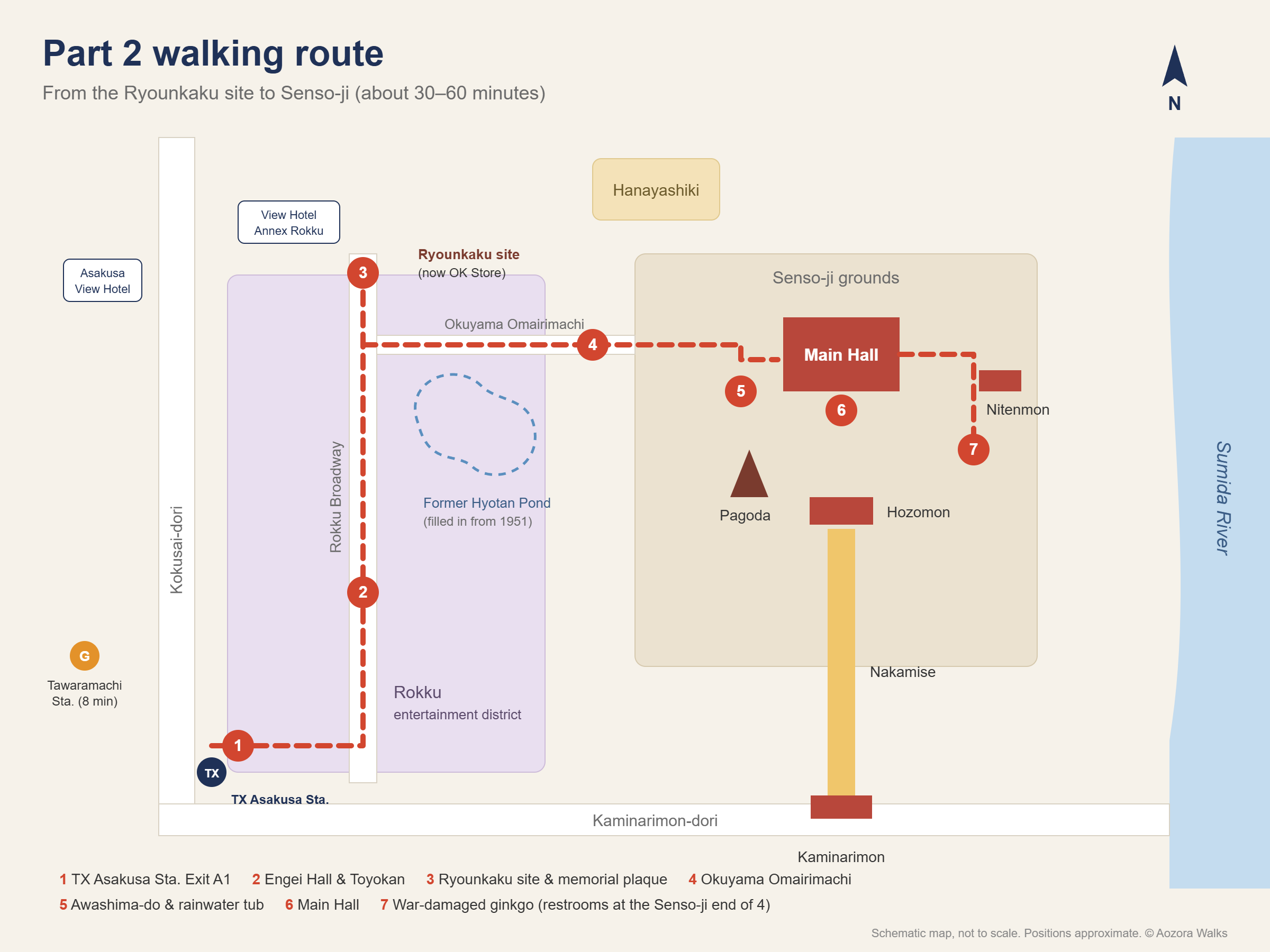
| Route | Rokku Broadway → Ryounkaku site → Okuyama Omairimachi → Senso-ji |
| Cost | Free (all outdoor or temple grounds) |
| Time needed | 30 minutes to 1 hour |
| Nearest station | Tsukuba Express Asakusa Station, Exit A1 (2 min walk to the start) |
Ryounkaku: Tokyo’s first skyscraper
Ryounkaku, nicknamed “Asakusa Juni-kai” (the Twelve Storeys), opened in 1890. It was about 52 meters tall, at a time when almost nothing in Tokyo stood higher than two or three floors, so it could be seen from all over the city. Visitors paid admission to climb to the top and look out over Tokyo.
It also had Japan’s first electric elevator. The elevator, however, broke down so often that it was shut down within a year of opening, and most visitors climbed the stairs.

On September 1, 1923, the Great Kanto Earthquake struck. The tower broke apart above the 8th floor, and the remaining structure was demolished by army engineers later that month. This gives us a useful clue about the anime: if Ryounkaku is still standing, the story must take place before September 1923. And because a streetcar still runs in front of the temple (see Part 1), it is also before the Ginza Line subway opened in 1927.
Anime vs. history: the tower over the pond
The anime shows Ryounkaku rising behind Hyotan Pond, a gourd-shaped pond that once sat in the middle of Rokku. Compare it with a photograph taken from almost the same angle in the 1890s:
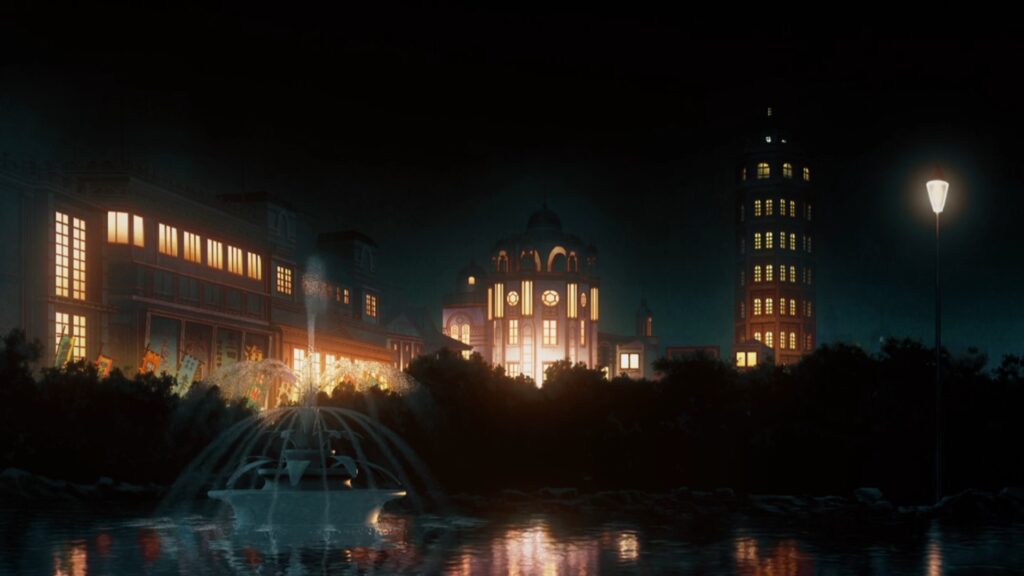
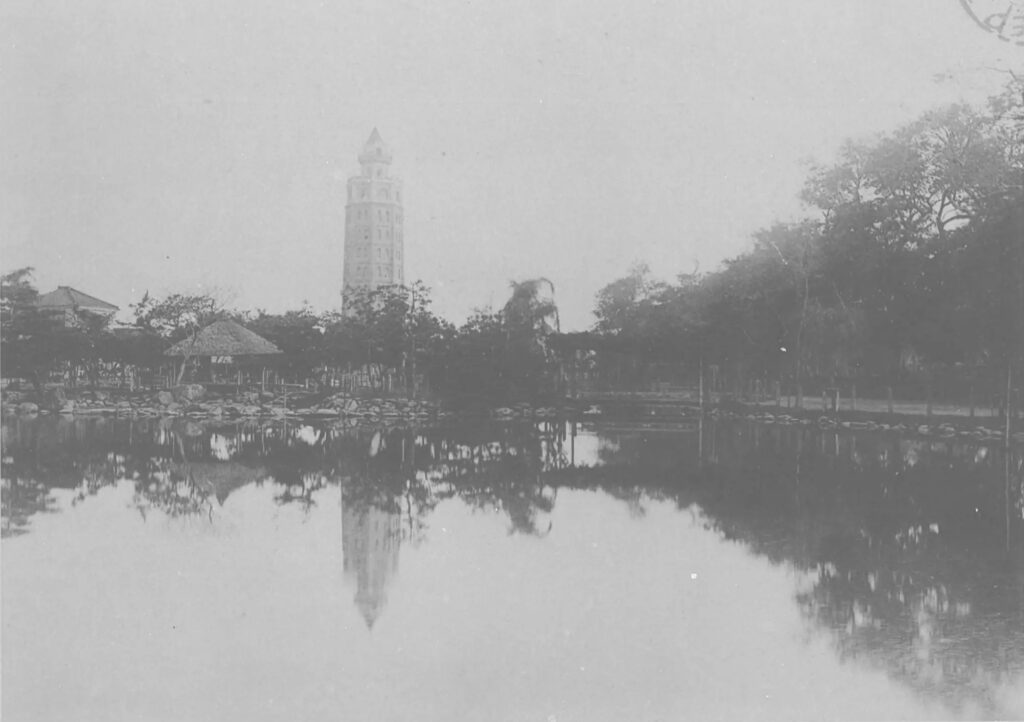
What matches: the composition. In both, the pond fills the foreground, low trees and buildings line the far bank, and the tower stands alone above them, reflected in the water. The animators clearly worked from views like this one, which appeared again and again on postcards of the time.
What the anime adds: night and light. The real Rokku was famous for its electric lights and theaters, and the anime turns that into a glowing fantasy scene. The pond itself no longer exists. It was filled in from 1951, and the land was sold partly to help pay for rebuilding Senso-ji’s main hall after the war. Buildings and streets of Rokku now cover the site.
Walk to where the tower stood
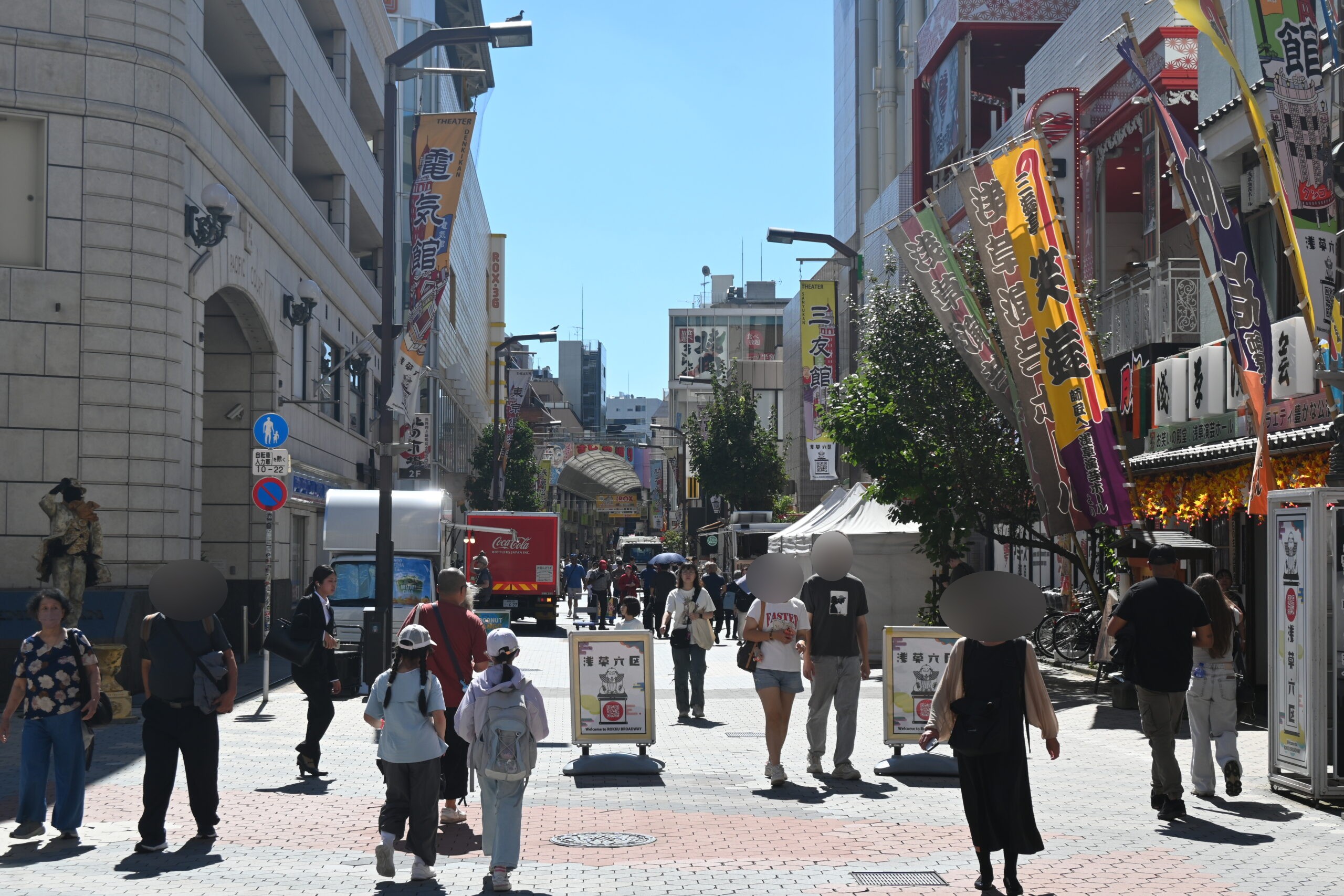
From Tsukuba Express Asakusa Station, take Exit A1 and you come out on Rokku Broadway. Walk straight north along this street.
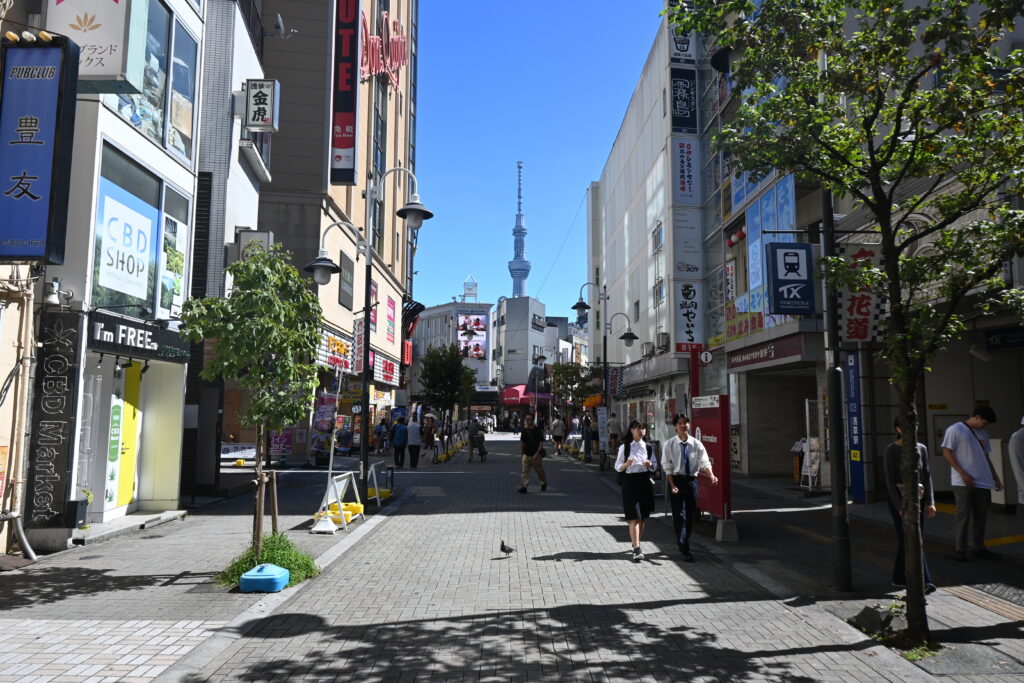
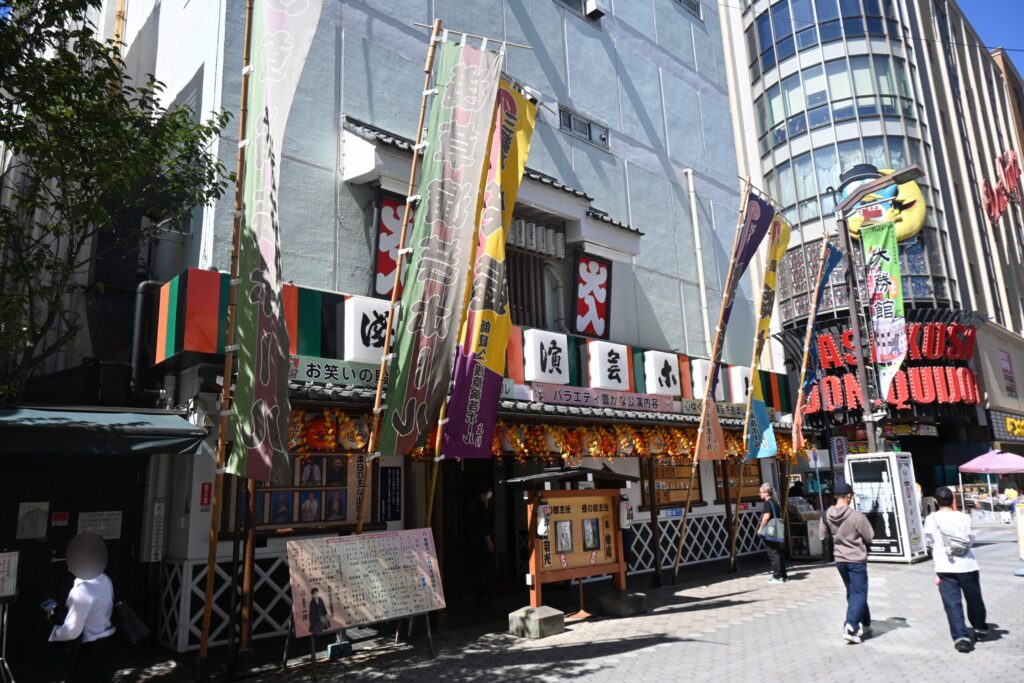
On your left, look for the building that houses Asakusa Engei Hall and Asakusa France-za Engeijo Toyokan, two theaters for rakugo storytelling and comedy. The colorful banners lining the street in front of them are one of the places where you can still feel the Asakusa of the anime. As Tanjiro walks through the crowds of Asakusa, the street he passes appears to be around here.
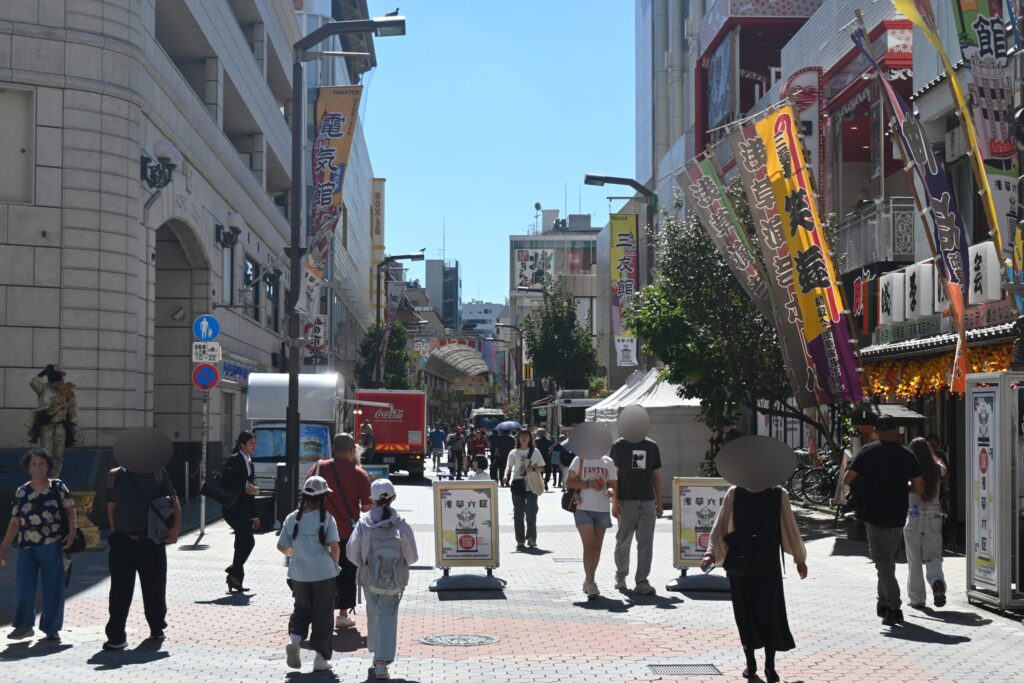
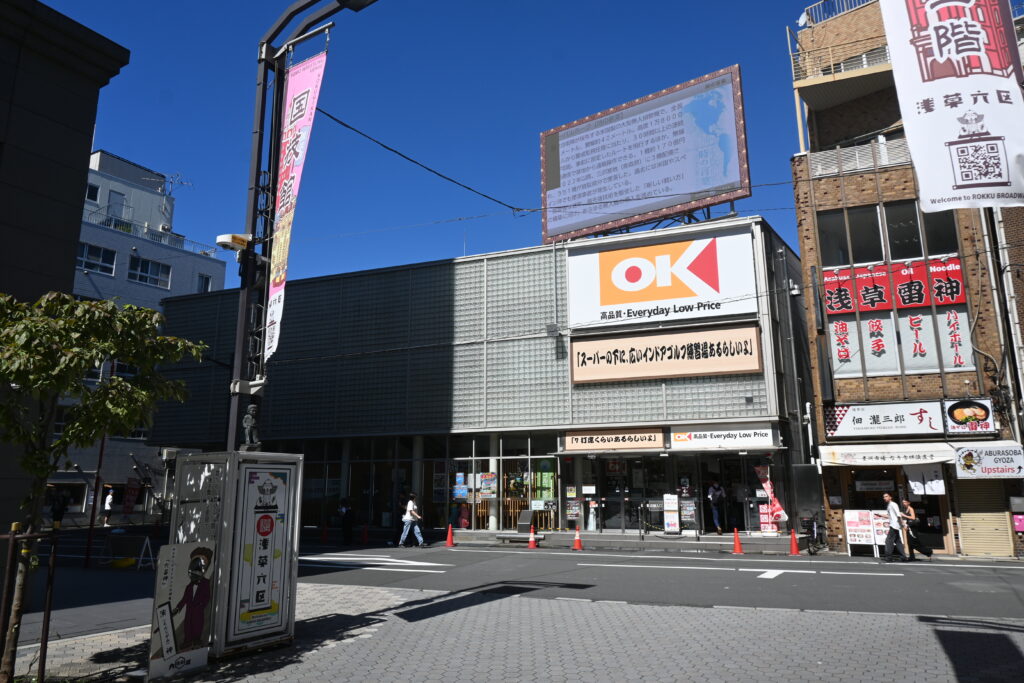
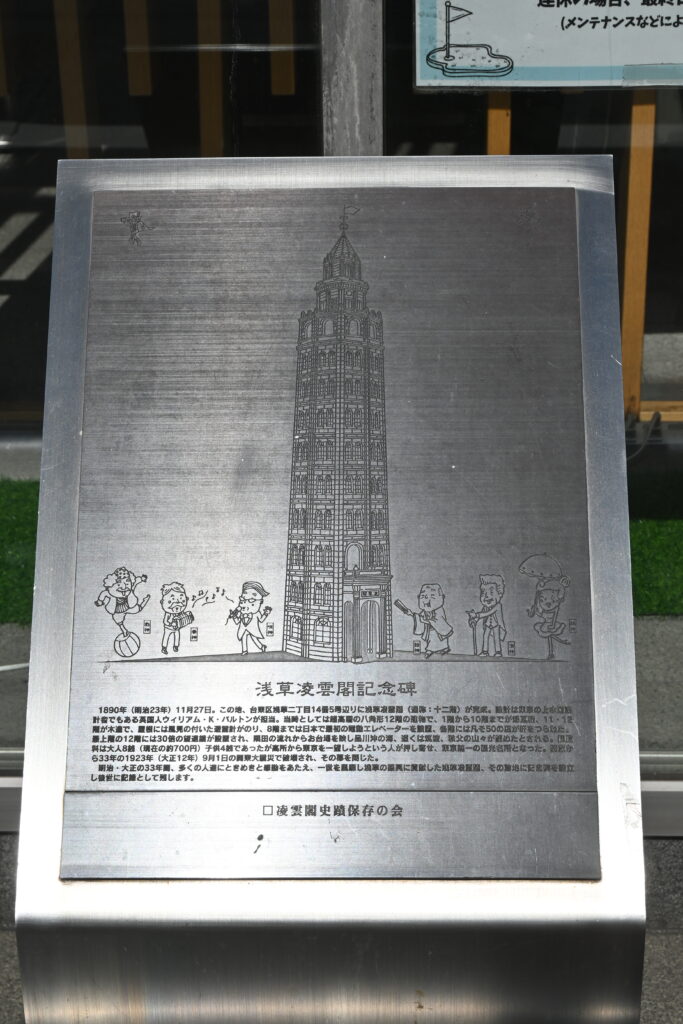
At the north end of the street, you reach an OK Store supermarket (2-14-5 Asakusa). This is where Ryounkaku stood. In front of the store is a small memorial plaque engraved with the tower. Stand here and look up: for over thirty years, one of the tallest buildings in Tokyo rose from this spot.
The shortcut to Senso-ji
From the tower site, most visitors would walk around to Kaminarimon. Don’t. The shortcut is Okuyama Omairimachi, a small shopping street that leads straight to the west side of the temple grounds. Enter from the end near UNIQLO.
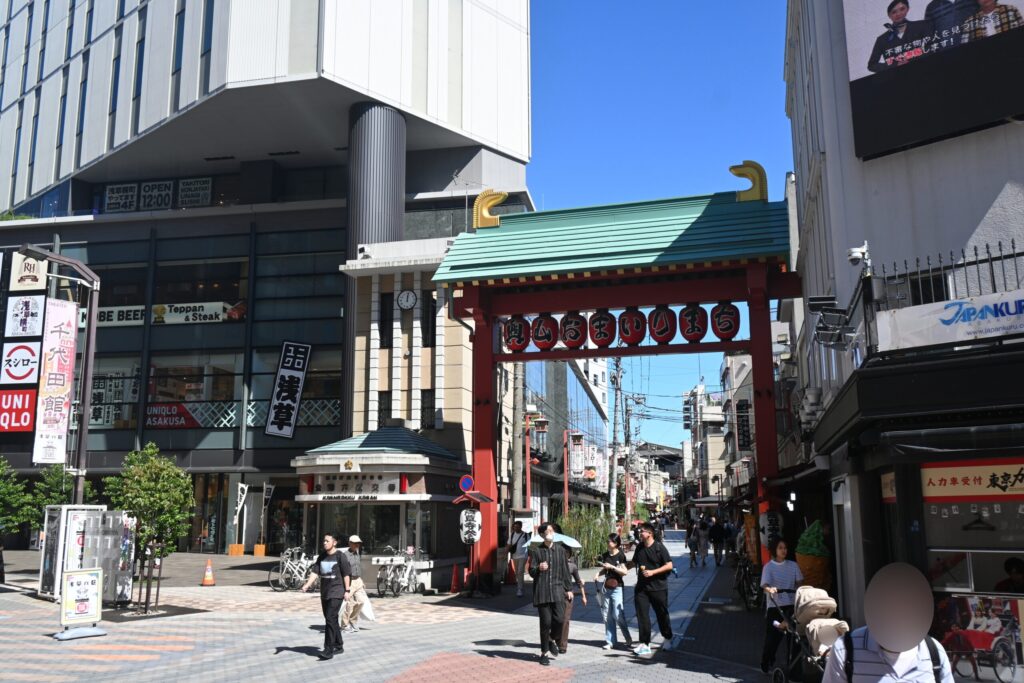
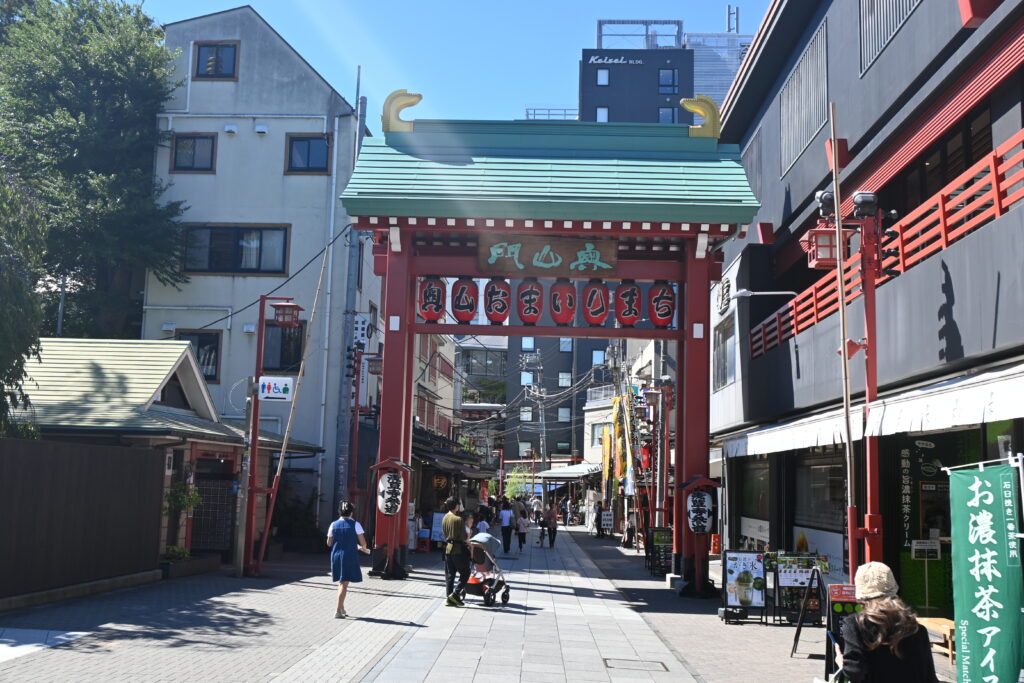
Bonus: there are public restrooms right by the exit on the Senso-ji side, which are not easy to find in crowded Asakusa.
What the disasters left behind
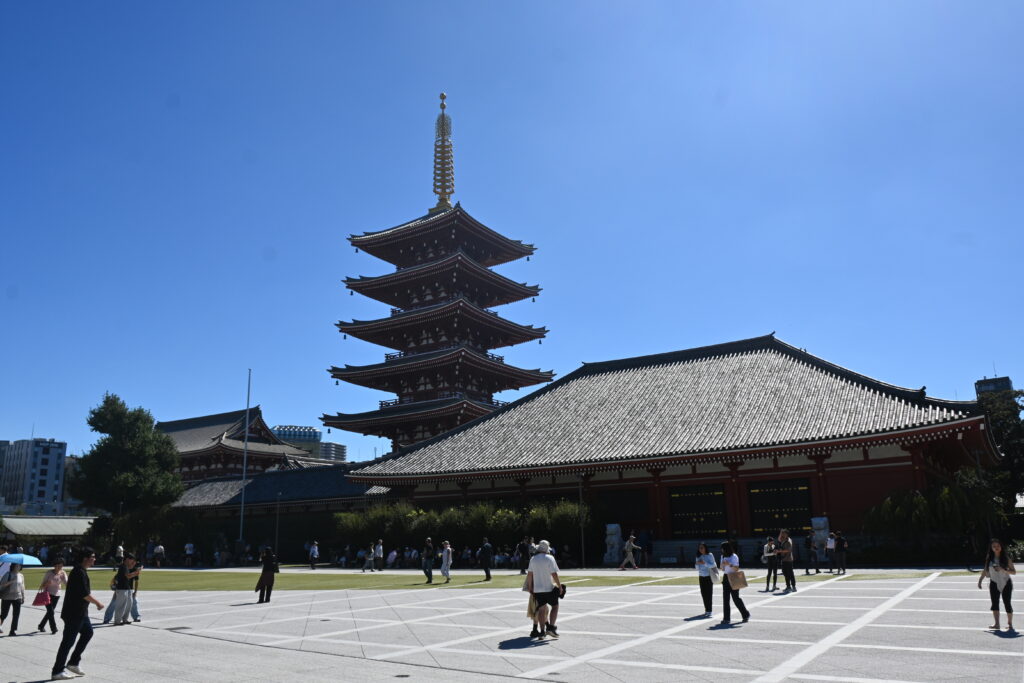
The Great Kanto Earthquake did more than bring down Ryounkaku. Fires spread across the city, and in Asakusa Ward more than 90 percent of households lost their homes. In that sea of fire, Senso-ji’s main hall and five-storey pagoda survived, almost miraculously. But their luck ran out 22 years later. On March 10, 1945, the Tokyo air raids burned both. The main hall you see today was rebuilt in 1958, and the pagoda was also rebuilt after the war.
Three stops inside the temple grounds show this history.
1. The tub that saved the temple’s treasure
Just before the main hall, on the west side, is Awashima-do, a small hall. In front of it stands a large metal rainwater tub made in 1770.
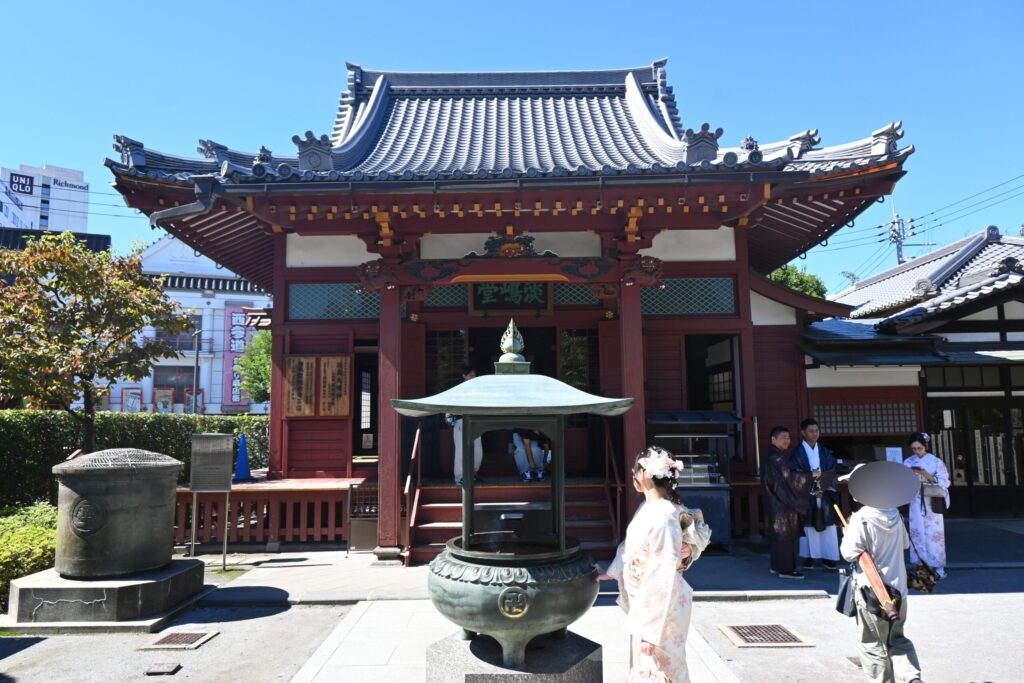
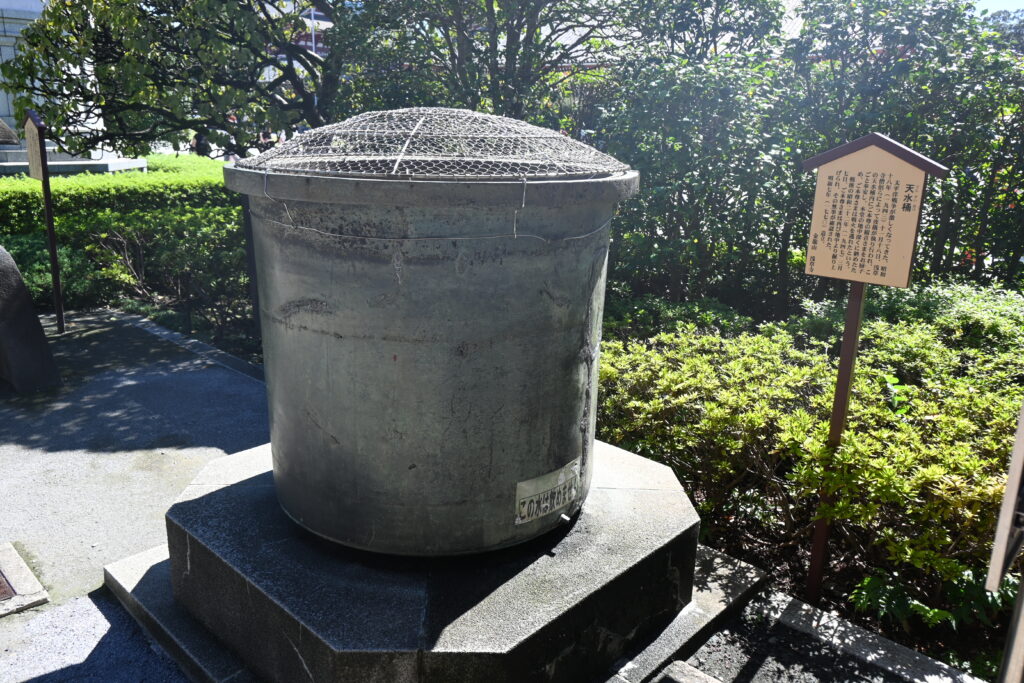
During the war, the temple feared that Tokyo would burn. On November 18, 1943, the monks placed Senso-ji’s sacred main image, a statue of the bodhisattva Kannon, inside this tub, and buried it deep under the main hall. The hall burned in 1945, but the statue survived underground. It was dug up safely on March 7, 1947.
2. The main hall
The main hall burned in the 1945 air raids and was rebuilt in concrete in 1958. Look closely and you will see how faithfully it follows the old design.


3. The ginkgo that still carries the scars
Walk to the southeast side of the main hall, near Nitenmon Gate. Here stands a huge ginkgo, said to be about 800 years old. It was hit during the 1945 air raids, and the inside of its trunk is still blackened by fire several meters up. It is one of the few things in Asakusa that saw both the Asakusa of the anime and the Asakusa of today.

Asakusa can feel like a place where time stopped in the Taisho era. In fact, it was destroyed twice in just over twenty years and rebuilt each time. What you see is not a survivor, but a city that kept rebuilding itself on the same ground plan.
Best time to go
Go early in the morning or at night. Staying at a hotel nearby makes this easy.
- The temple grounds are open 24 hours, so you can see everything on this route at any time of day.
- The main hall itself is open 6:00–17:00 (from 6:30 between October and March). At night you can view it from outside but not enter.
- Every evening from sunset until about 23:00, the main hall, five-storey pagoda, Hozomon Gate and Kaminarimon are lit up.
- Early mornings are quiet, cool and clear. Many locals and hotel guests jog through the temple grounds before the crowds arrive.

Good to know before you go
- Ryounkaku itself is gone. The site is now a supermarket, with only a memorial plaque. Come for the story, not for a building.
- This route enters Senso-ji from the west, the opposite of the classic approach. You miss the build-up of walking through Kaminarimon and up Nakamise to the main hall. If this is your first visit to Asakusa, consider doing Part 1’s route as well.
- Kaminarimon is a long detour from the tower site, so start from Tsukuba Express or the Rokku side.
Getting there
- Tsukuba Express, Asakusa Station, Exit A1: about 2 minutes on foot to Rokku Broadway (closest)
- Tokyo Metro Ginza Line, Tawaramachi Station: about 8 minutes
See the classic side with a guide
This route enters Senso-ji from the west, so it skips the classic approach through Kaminarimon and Nakamise. If you would like to see that side too, with someone to tell you the stories behind it, this two-hour walking tour with an English-speaking guide starts beside Kaminarimon and takes you along Nakamise Street to Senso-ji and into the back streets, with some street food along the way. Prices may change, so check the details before you book.
Dress up in Taisho style
The Taisho era was a time of “haikara” fashion, when Japanese and Western styles mixed freely. The anime’s costumes are simplified for animation, but real Taisho fashion was full of stylish details. Several shops in Asakusa rent Taisho-romance style kimono, with dressing and hairstyling included. Kimono rental shops are mostly open during the day, so plan your kimono walk for daytime.
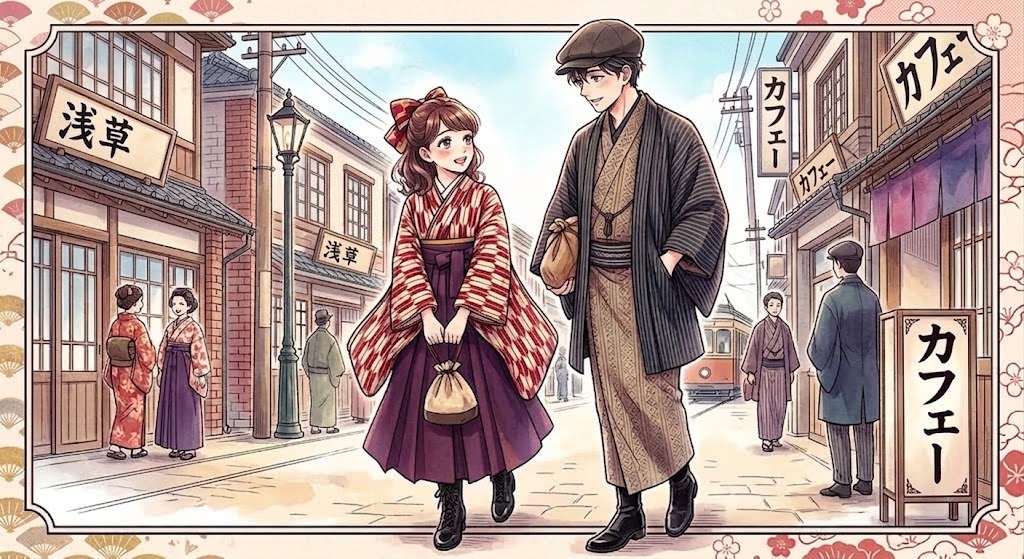
Once you are dressed up, why not see Asakusa from a rickshaw? Jidaiya, the same company that rents Taisho-romance kimono, also runs rickshaw rides of 30 minutes to an hour, with pullers who can guide you in English.
Where to stay in Asakusa
To walk this route early in the morning or at night, stay close by.
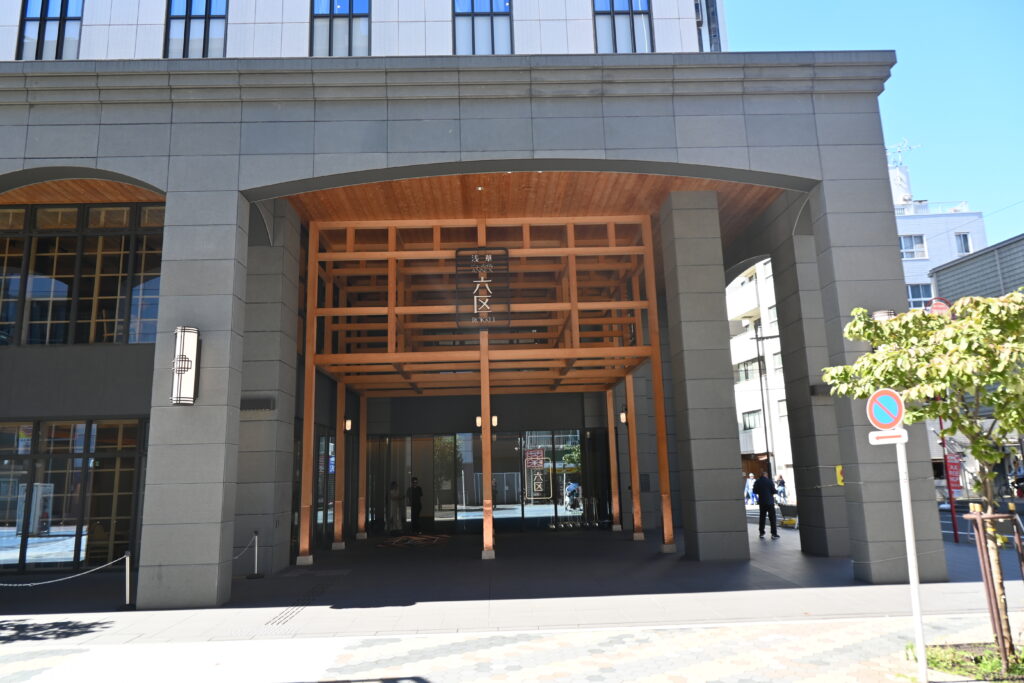
Asakusa View Hotel Annex Rokku
Why choose: Right in front of the Ryounkaku site, and steps from Tsukuba Express. Ideal for an early-morning walk.
Asakusa View Hotel
Why choose: A large hotel about one minute’s walk west of the tower site, with views over the Asakusa rooftops toward Tokyo Skytree.

Next time
In Part 3, we leave the temple behind and follow the Sumida River by water bus from Asakusa to Odaiba.
Aozora Walks is a fan-made travel guide and is not affiliated with the official Demon Slayer franchise. Demon Slayer: Kimetsu no Yaiba © Koyoharu Gotouge / SHUEISHA, Aniplex, ufotable. Historical photographs: National Diet Library Digital Collections (public domain).