
This post contains affiliate links. If you book through them, I may earn a small commission at no extra cost to you.
Most visitors come to Ueno Park for its museums. But the park itself is the best museum in Tokyo, if you know how to read it. Over its long history, this hill has been the edge of an ancient sea, the holiest temple ground of the shoguns, a battlefield, and a racecourse where the Emperor watched horses gallop around a lotus pond.
There is so much to see that I have split Ueno into two walks. This is Part 1, the south side of the park: the Edo-period temples, the Battle of Ueno and Shinobazu Pond. In Part 2 we will walk the north side, where the burned temple grounds became Japan’s museum quarter, with Le Corbusier’s only building in the country. As a geography teacher, I will also show you old woodblock prints from the 1850s, so you can compare them with the same places today.
Quick facts
| Route | Keisei Ueno / JR Ueno (Shinobazu Exit) → Saigo statue and Shogitai grave → Kiyomizu Kannon-do → Bell of Time → Ueno Daibutsu → Ueno Toshogu → Shinobazu Pond and Benten-do → racecourse curve |
| Distance | About 2 km, with some stairs and slopes |
| Time | 1.5 to 2 hours |
| Cost | The park, temples and Benten-do are free. Ueno Toshogu charges a small fee to enter the inner precinct |
| Best for | History lovers, and anyone who wants Edo-period Tokyo without the crowds of Asakusa |
| Nearest stations | Keisei Ueno (Keisei Line, Skyliner from Narita Airport) or JR Ueno, Shinobazu Exit |
Start at the edge of an ancient sea
Walk out of Keisei Ueno Station or the Shinobazu Exit of JR Ueno and look up. In front of you, a steep green slope rises above the traffic. That slope is the edge of the Ueno Plateau, the eastern tip of the Musashino Plateau that covers much of western Tokyo. Everything around the station, and everything east toward Asakusa, is the flat Tokyo Lowland.
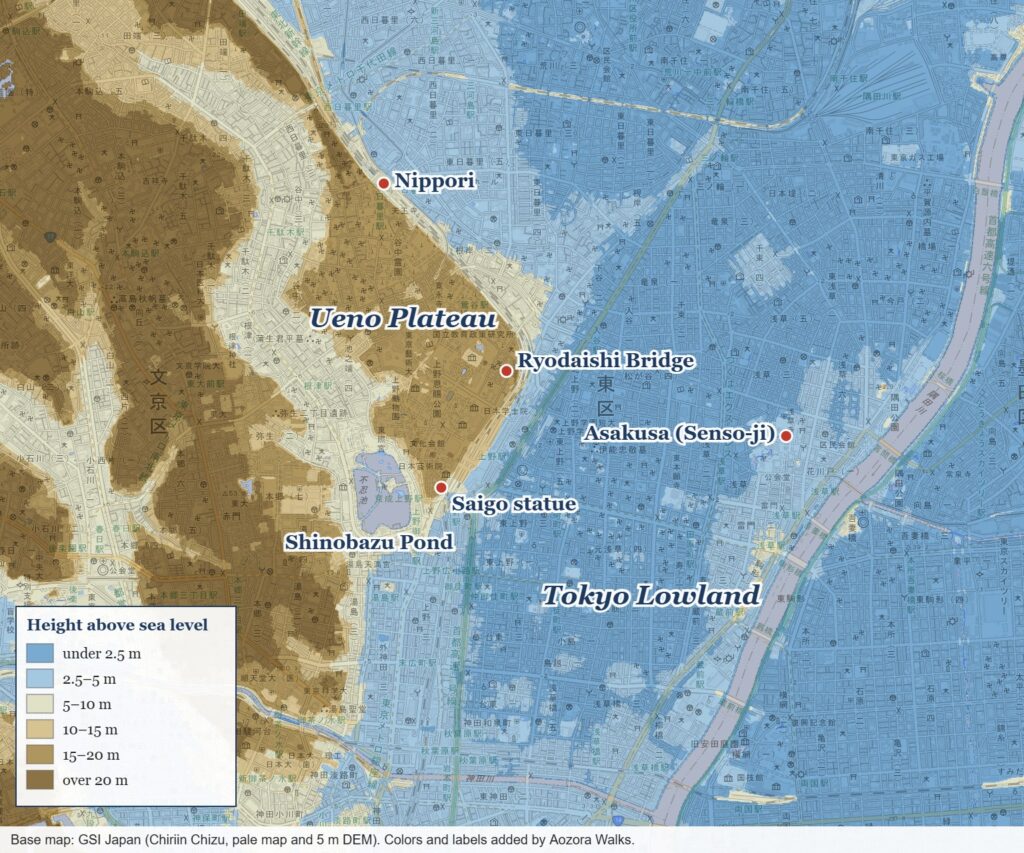
The difference is not just a few stairs. After the last Ice Age ended, the sea rose quickly. At its peak, around 7,000 to 6,000 years ago, the sea level was 2 to 3 meters higher than today. Geologists call this the Jomon transgression, after the Jomon people who lived here then. The sea pushed deep inland and formed a long bay, and the Ueno Plateau stood above the water like a headland. The low ground where the trains now run was the seashore, and the valley on the west side, where Shinobazu Pond lies, was also filled with water.
How do we know? The Jomon people left their shells. Just north of here, below the temple of Enmei-in near Nippori Station, workers digging soil in 1888 found a shell mound, a Jomon rubbish heap of shells. It faced the valley on the west side of the plateau. In Part 2 we will meet an even bigger one on the east side. Ueno Park itself also hides traces of the ancient past: Suribachiyama, the small round hill near the Tokyo Bunka Kaikan, is believed to be an ancient burial mound.
By the Edo period the sea had long gone, and the foot of the hill had become one of the busiest shopping streets in the city. Hiroshige drew it in 1858: the dark green hill on the left, a big shop on the right, and crowds of people with umbrellas in between.
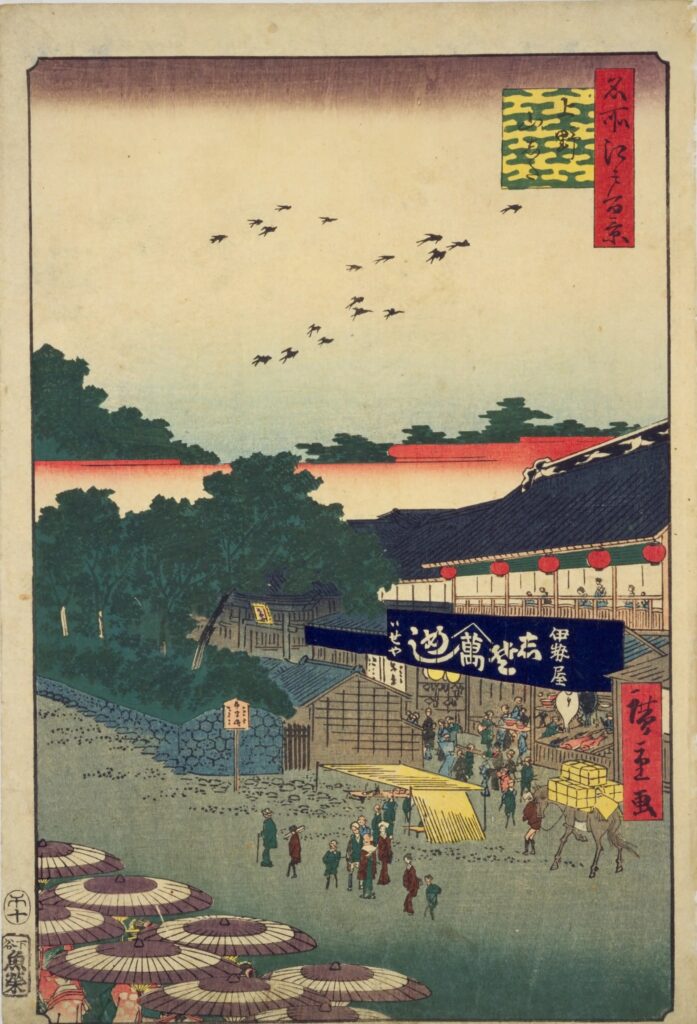
The same idea is still true. Ueno grew up at the place where the hill meets the lowland, and where travelers arrived from the north. Today the trains do the same job.
A temple city guarding Edo
In 1625, the monk Tenkai founded Kan’ei-ji on this hill for the Tokugawa shoguns. It was built in the northeast of Edo Castle, the direction from which bad luck was believed to come, to protect the city. The whole hill was its temple ground, with dozens of halls, and six shoguns were later buried here.
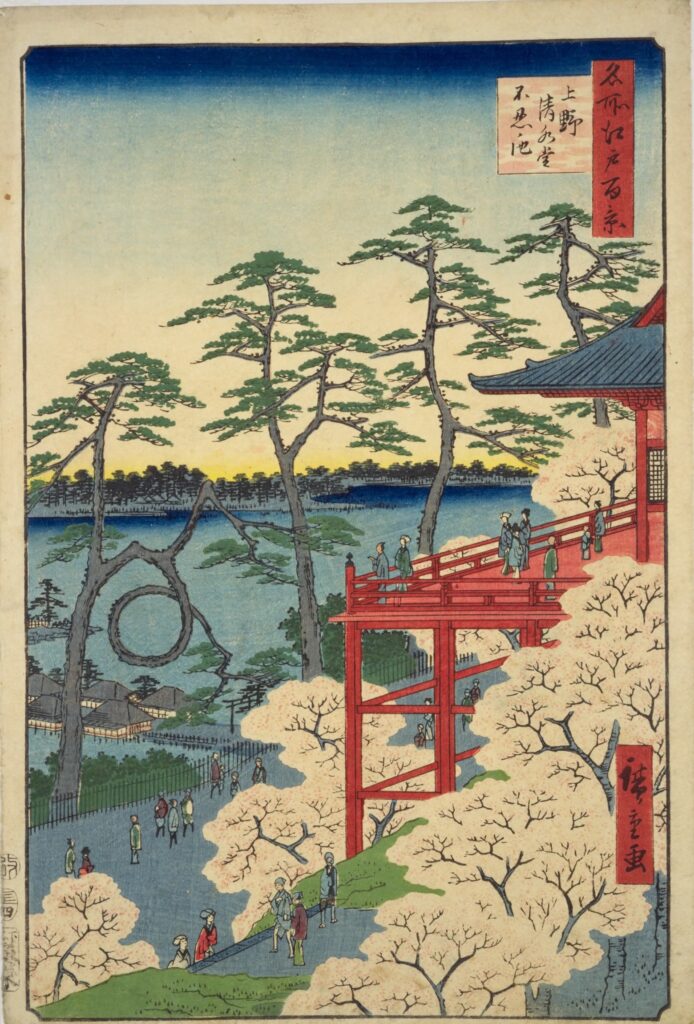
Tenkai wanted Edo to have everything Kyoto had. Kyoto has Mount Hiei, the great temple mountain in the northeast of the city, so he named this hill Toeizan, “the Hiei of the East”. Shinobazu Pond became a small Lake Biwa, and a copy of Kyoto’s Kiyomizu-dera was built on the slope. Hiroshige’s bird’s-eye view shows how grand it was: halls and pagodas floating among the pines and clouds.
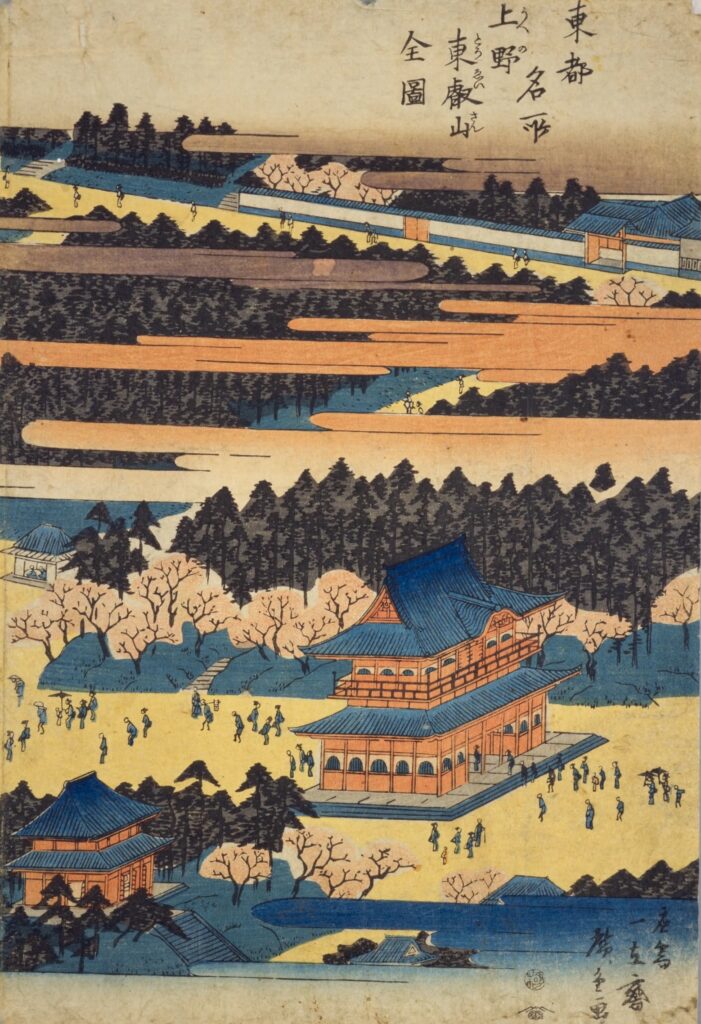
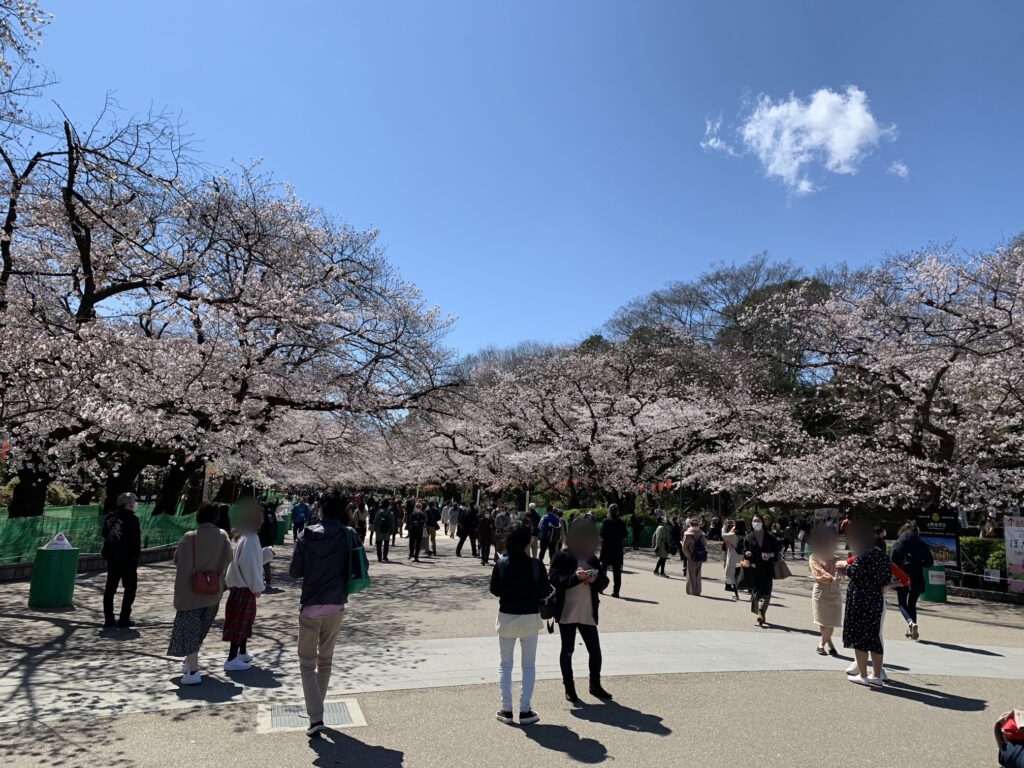
What stayed the same: every spring, crowds still come to walk under the cherry trees, just like the people Hiroshige drew in front of the great hall. What changed: the hall itself burned in 1868. Its site is now the fountain square, which we will visit in Part 2.
How did it all burn down in a single day? Let’s climb the stairs to the first stop.
Saigo Takamori and the Battle of Ueno
At the top of the stairs stands Tokyo’s most famous statue: Saigo Takamori in a simple kimono, with his dog at his side. Saigo was one of the leaders of the new Meiji government’s army that ended the rule of the shoguns.
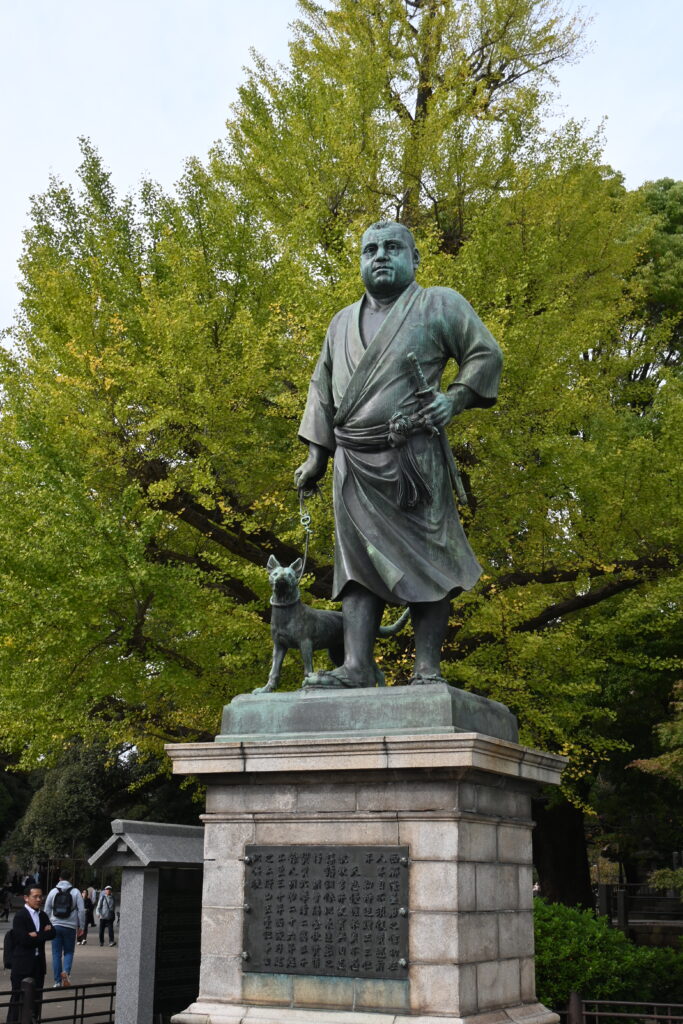
In 1868, the last shogun had already surrendered Edo Castle without a fight. But a group of his loyal samurai, the Shogitai, refused to give up. They barricaded themselves on this hill inside Kan’ei-ji. On 4 July 1868, the government army attacked. The battle lasted only one day. The Shogitai were defeated, and fire destroyed most of the great temple.
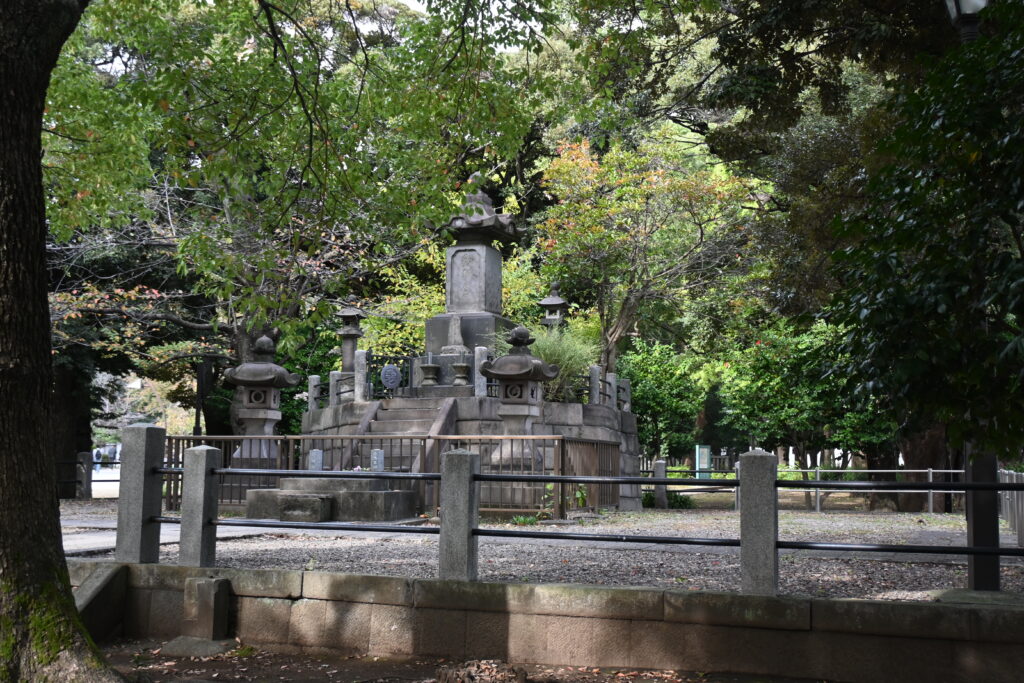
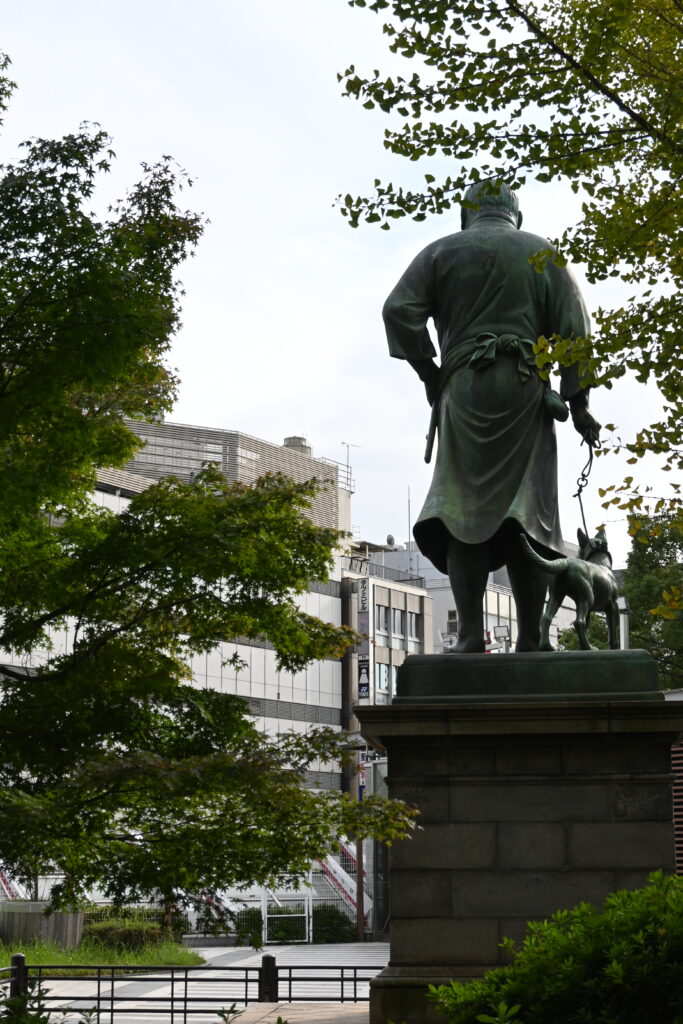
Now walk around to the back of the statue. Hidden among the trees, just behind Saigo, are the graves of the Shogitai, the men his army defeated. The winner looks out over the city, and the losers rest behind his back. I find this one of the most moving corners of Tokyo.
“My husband was not like this!”
The statue was made by the sculptor Takamura Koun and unveiled in 1898. There is a famous problem with it: no photograph of Saigo is known to exist, so the sculptor worked from portraits drawn after his death. At the unveiling ceremony, Saigo’s widow, Ito, is said to have blurted out, “My husband was not a man like this!” People still argue about what she meant. Some say the face did not look like him. Others say she was upset that he was shown in casual clothes in public. This scene opens the first episode of the 2018 NHK drama Segodon, about Saigo’s life.
Remember this story. In Part 2, we will meet another statue in Ueno Park with an even stranger face problem.
Kiyomizu Kannon-do: Kyoto’s stage on a Tokyo hill
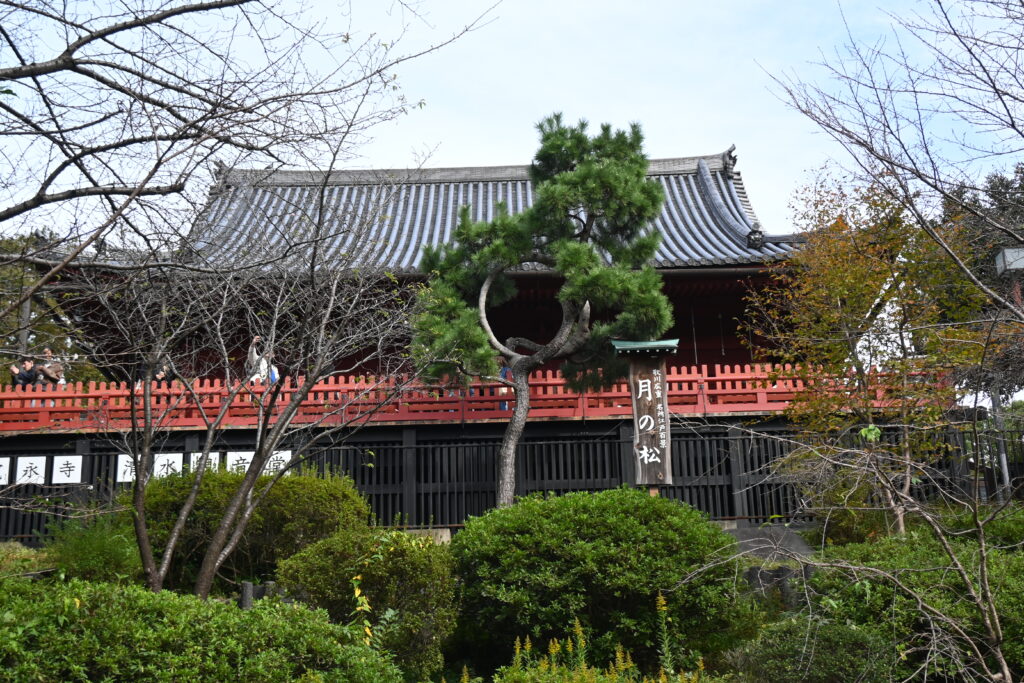
A few steps away is Kiyomizu Kannon-do, built in 1631 as a copy of Kyoto’s Kiyomizu-dera. Like the original, it stands on a wooden stage built out over the slope. It is one of the oldest buildings in the park, survived the Battle of Ueno, and is now an Important Cultural Property.
Then and now: the Moon Pine
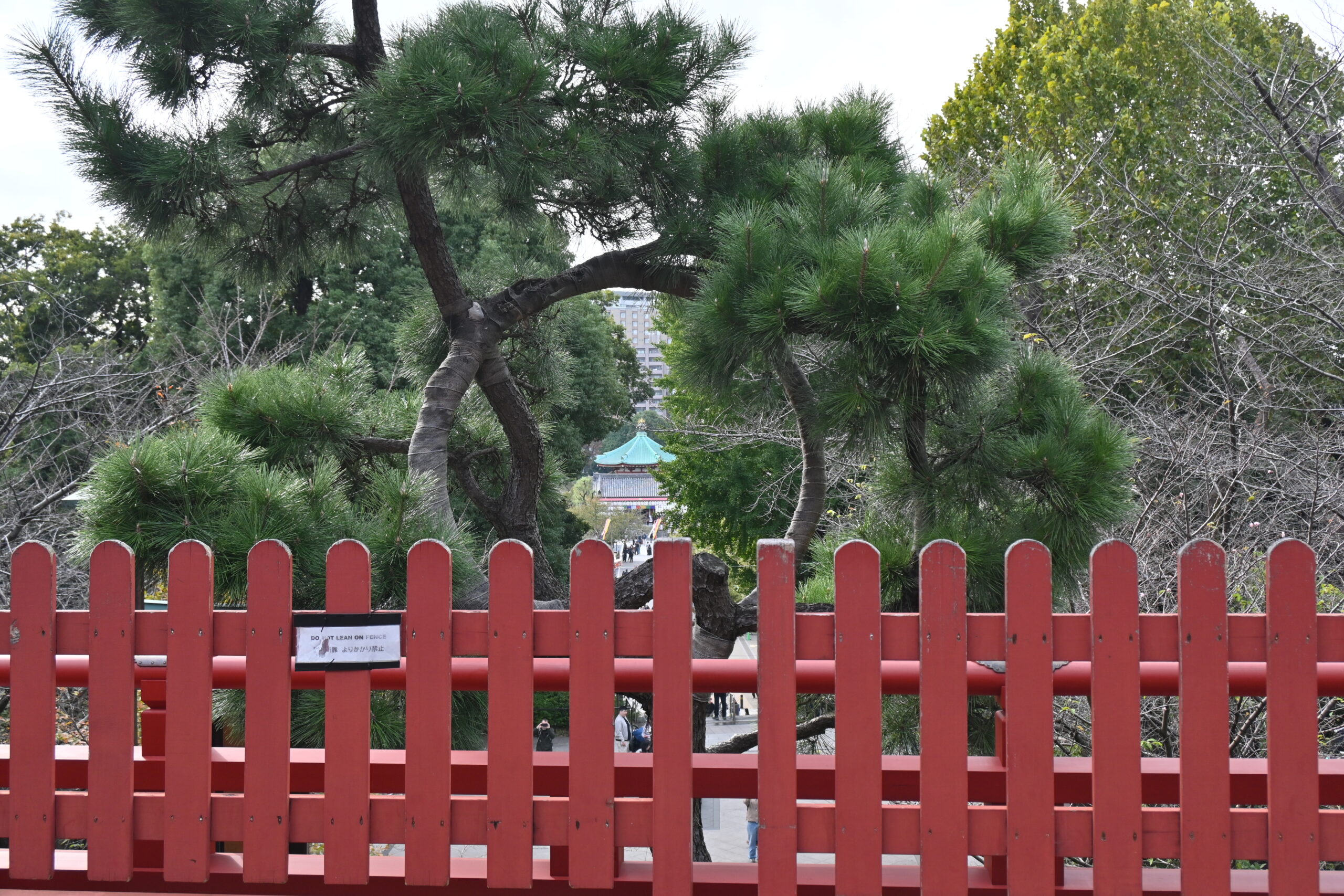
Look at the left side of Hiroshige’s print. A pine tree has a branch that loops into a perfect circle. This is the Moon Pine (Tsuki no Matsu). Hiroshige liked it so much that he gave it a print of its own, with Shinobazu Pond and the temple island framed inside the ring.
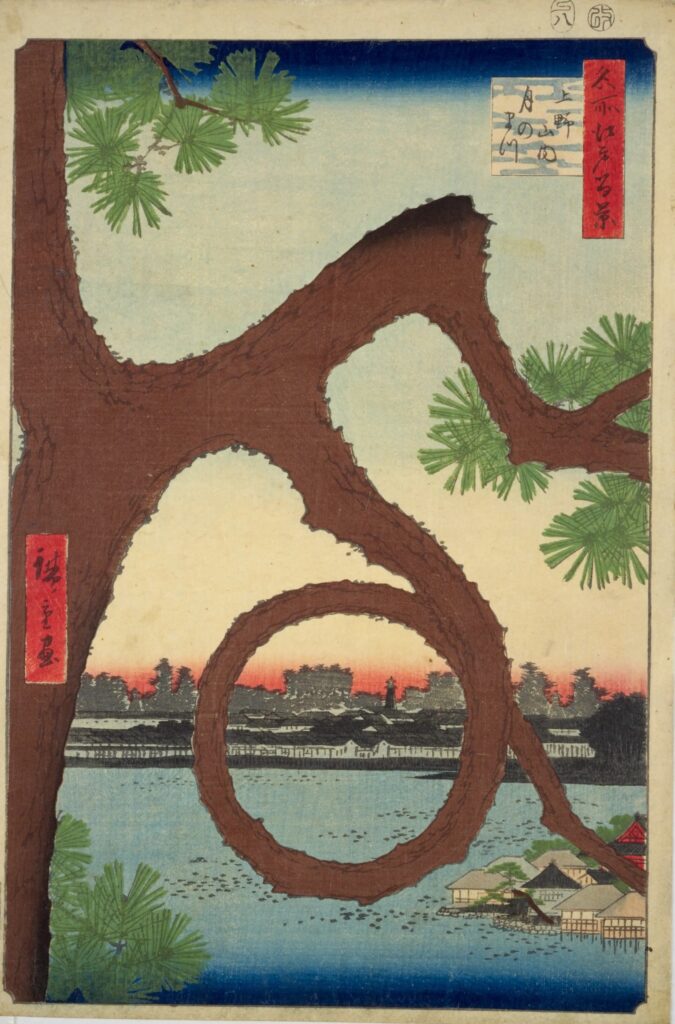
The original pine was lost in a typhoon in the early Meiji period. In 2012, about 150 years later, a new Moon Pine was trained into a ring and planted in front of the stage.
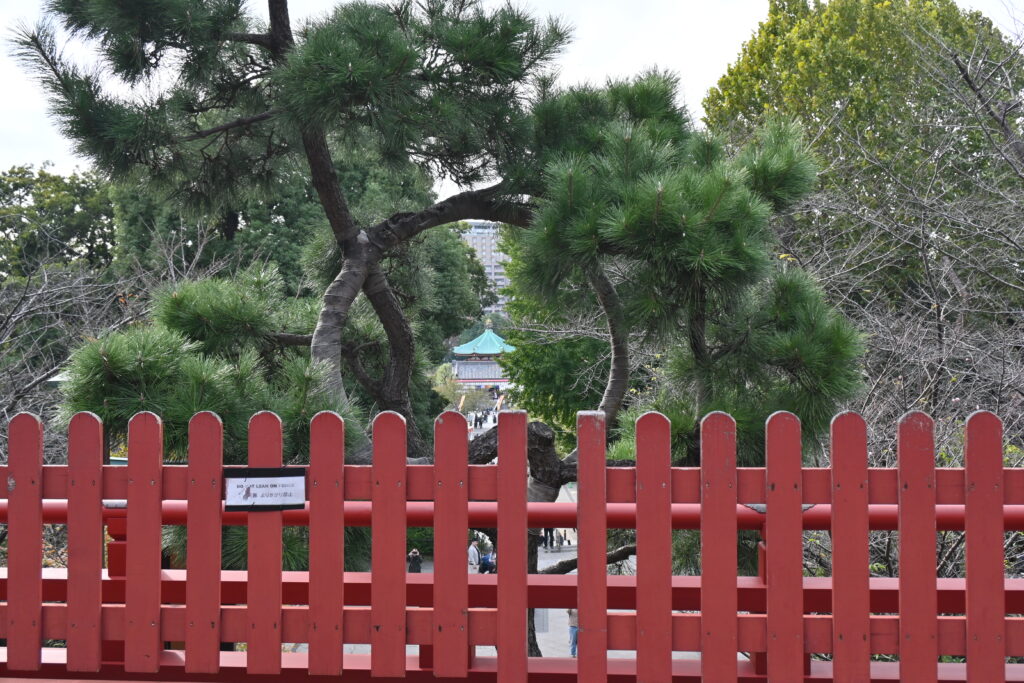
What stayed the same: the stage, the temple and the idea of a pine framing the view. What changed: the trees around the pond have grown so tall that today you can hardly see the water through the ring. You can still spot the temple on the island, though.
Shells from the battle
Step inside the hall and look up to the right. A large painting of the Battle of Ueno hangs there, and fixed to the right side of its frame are two shells said to have been fired during the battle. The government army had modern Armstrong guns, and it is said that they fired across Shinobazu Pond from the Kaga domain’s estate on the opposite hill, where the University of Tokyo stands today. Quiet as it is now, this hall stood in the middle of the fighting.

The Bell of Time
Walk north along the path toward the Seiyoken restaurant. On a small mound stands the Bell of Time (Toki no Kane). In the Edo period, nine bells around the city rang out the hours, and this is the only one still in use. The bell itself was recast in 1787. It still rings three times a day, at 6:00, noon and 18:00, so time your walk to hear it.
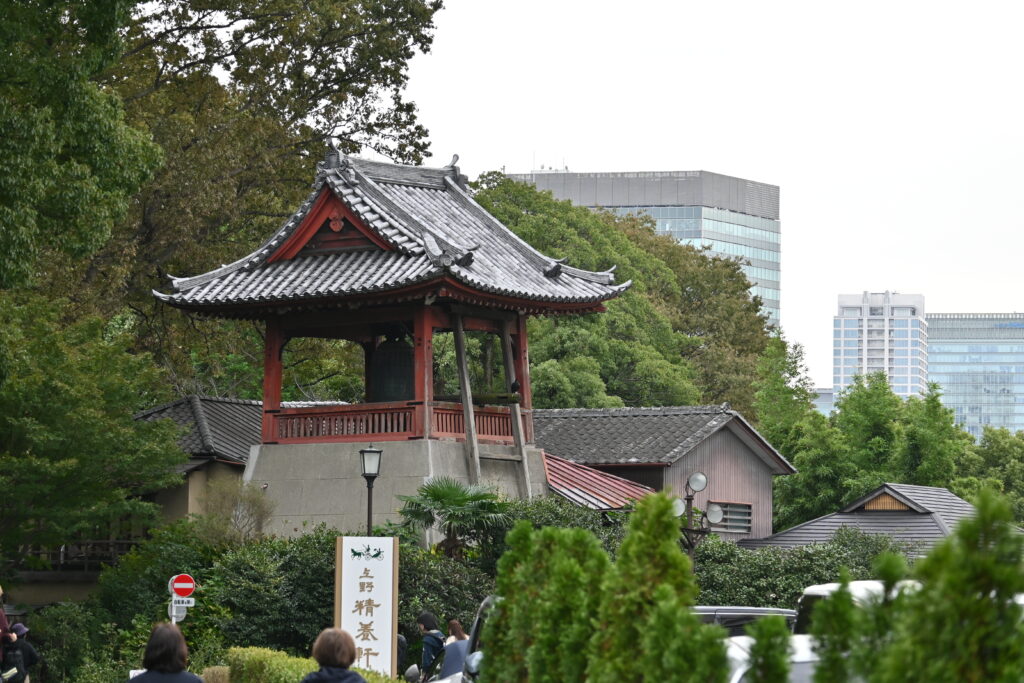
How did the Edo people tell time? They divided daytime, from sunrise to sunset, into six equal “hours”, and night into six more. So a daytime hour was longer in summer and shorter in winter. Before the bell rang the hour, it rang three warning strokes, so people knew to start counting.
The Great Buddha who cannot fall any further
Just behind the bell is one of the strangest sights in Tokyo: a giant Buddha’s face, set into a wall, with no body. The Ueno Daibutsu was first made in 1631 and recast in 1843. In the Great Kanto Earthquake of 1923 its head fell off. The body was kept by the temple, but in 1940 it was taken away to be melted down for metal during the war. Only the face survived. Since 1972 it has been displayed here, next to a small pagoda.

Because it has already lost everything and “cannot fall any further”, Japanese students now come here to pray to pass their entrance exams. (In Japanese, failing an exam is “falling”.) You will see many wooden prayer plaques with students’ wishes.
Ueno Toshogu: a shrine that escaped the fires
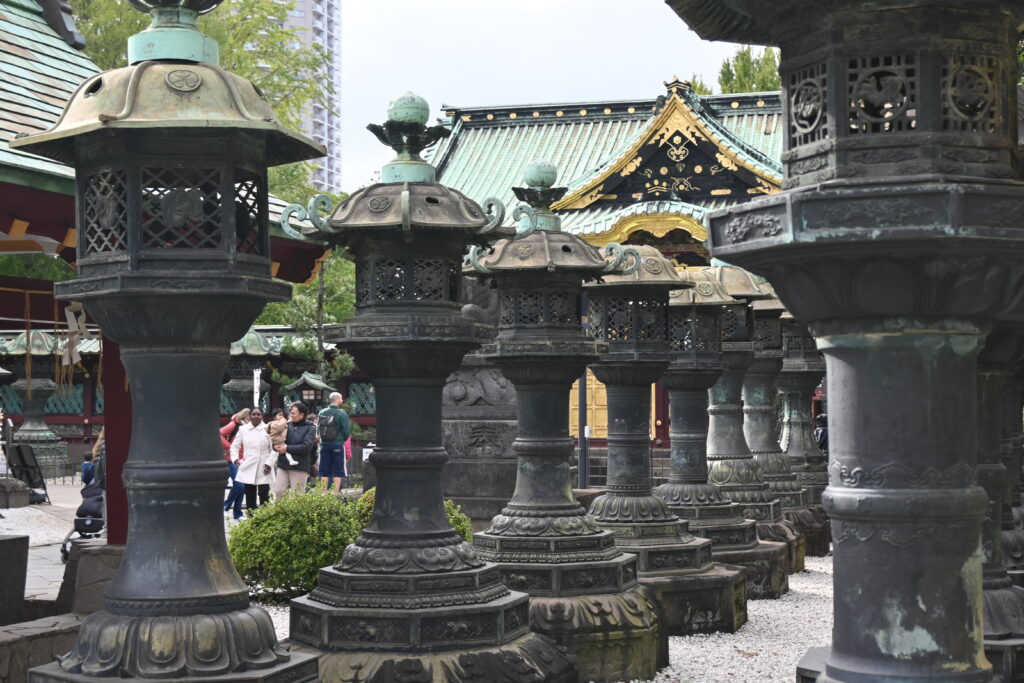
Continue along the stone lantern path to Ueno Toshogu, a shrine to Tokugawa Ieyasu, the first shogun. It was founded in 1627, and the present gold-covered hall dates from 1651. It survived the Battle of Ueno, the 1923 earthquake and the air raids of 1945, which makes it one of the few early Edo buildings left in Tokyo. The hall, its gate and the bronze lanterns are Important Cultural Properties.
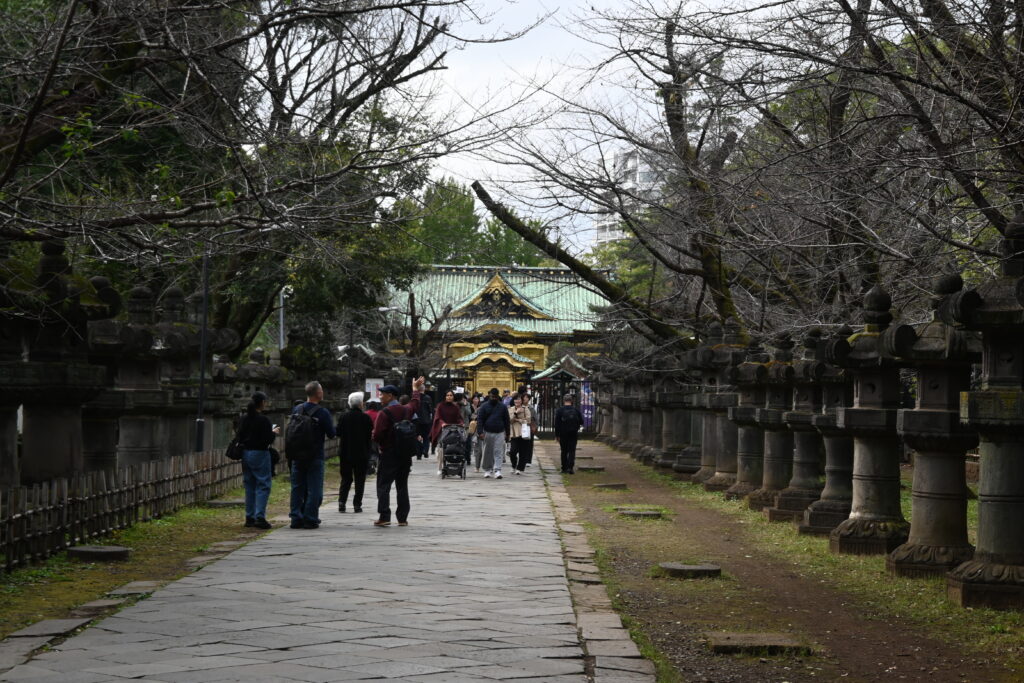
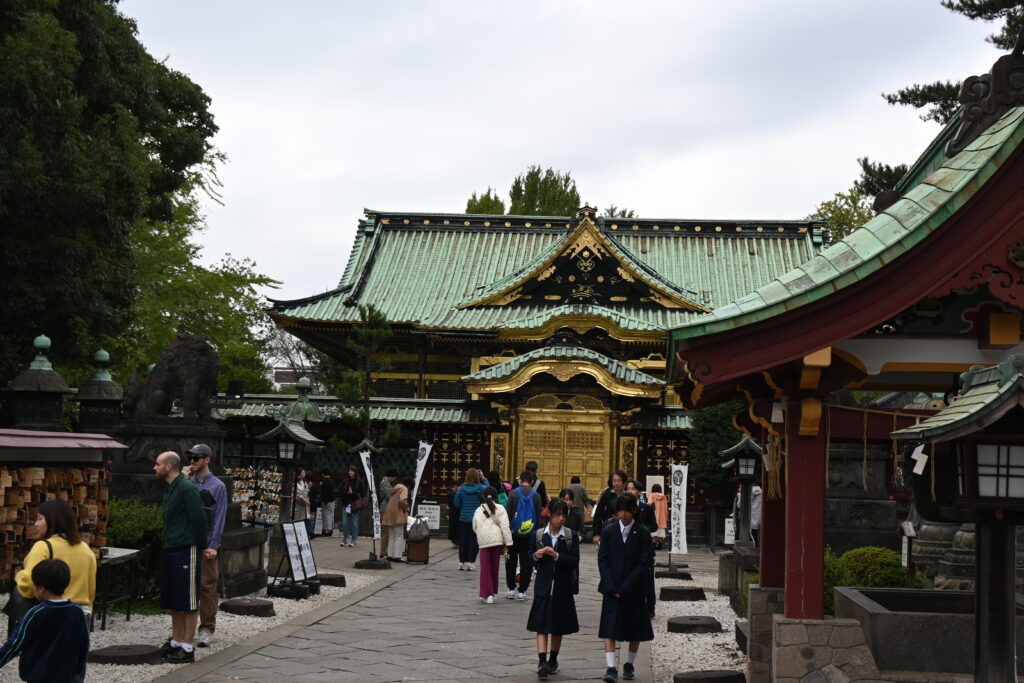
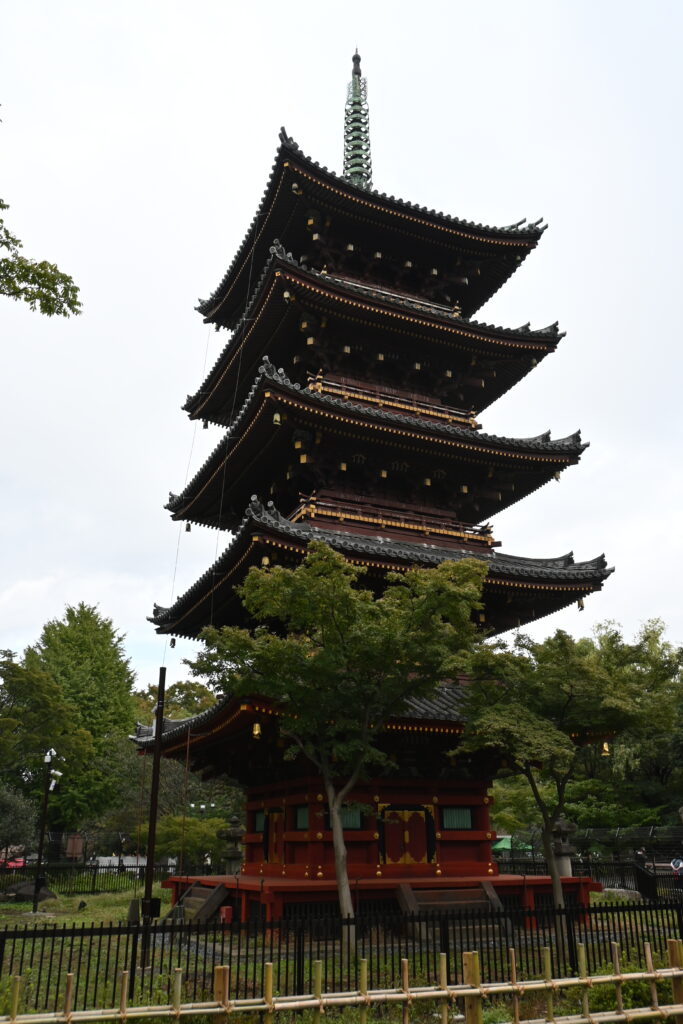
Near the shrine you can see the top of a five-story pagoda. It belonged to the shrine, but after the Meiji government ordered Shinto and Buddhism to be separated in 1868, Buddhist buildings at shrines were in danger of being pulled down. The priest saved the pagoda by declaring that it belonged to Kan’ei-ji, the temple. Today it stands inside Ueno Zoo.
Shinobazu Pond: a temple island and a racecourse
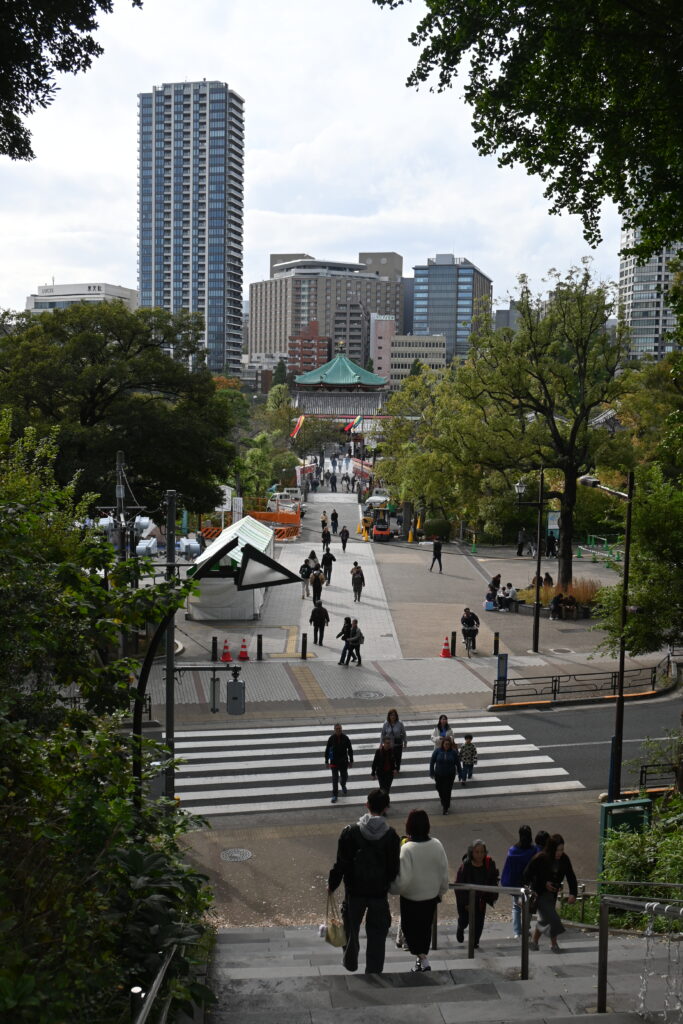
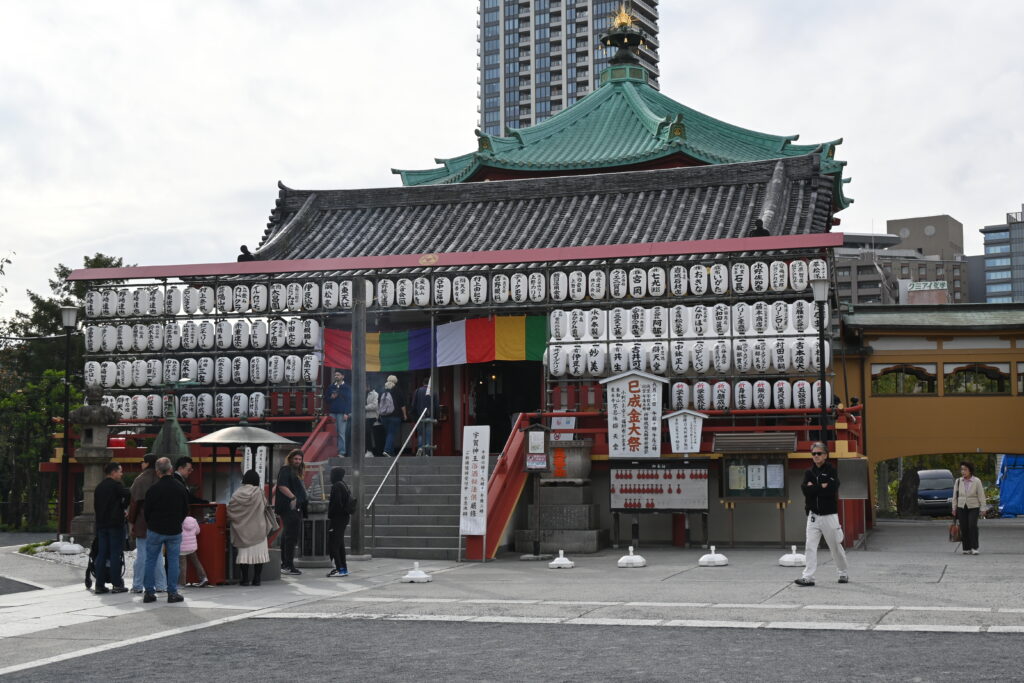
Walk down the slope to Shinobazu Pond. A causeway leads to Benten-do, an eight-sided temple to Benzaiten, the goddess of water, music and wealth, on an island in the pond. This is the island you saw through Hiroshige’s Moon Pine.
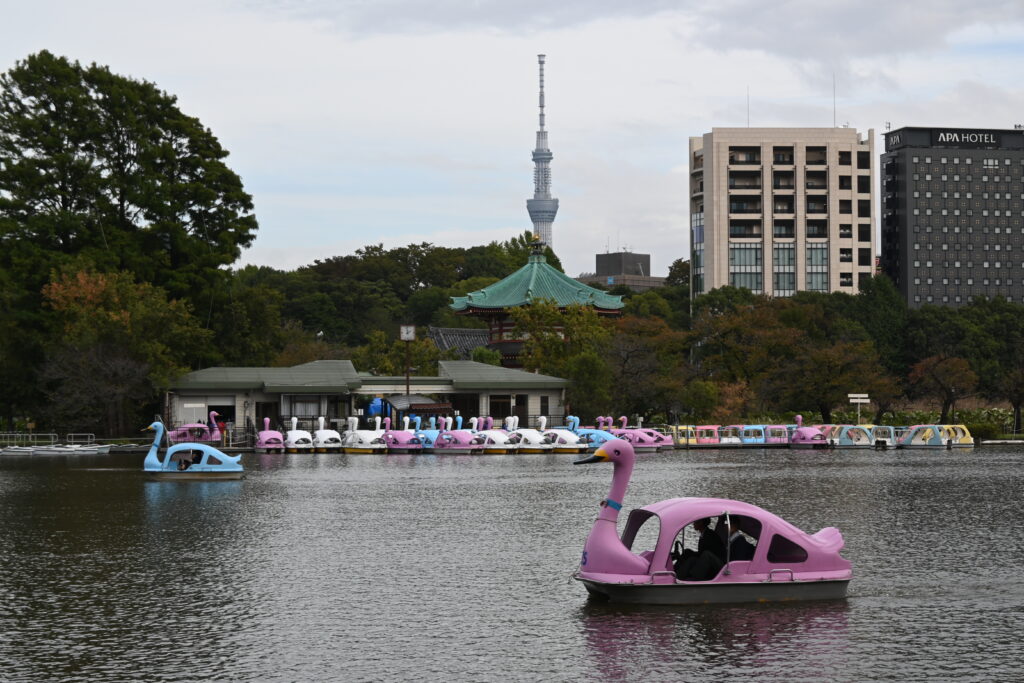
On the west side of the island you can rent rowing boats, cycle boats and swan boats, popular with families and couples. From the water you get a fine view back to the temple, with Tokyo Skytree in the distance.
Then and now: horses around the pond
Here is my favorite secret of Ueno. From 1884 to 1892, there was a horse racecourse around Shinobazu Pond. The first races, on 1 November 1884, were watched by Emperor Meiji himself. Horse racing was part of the government’s plan to make Japan look modern and Western, and woodblock artists rushed to print the scene.
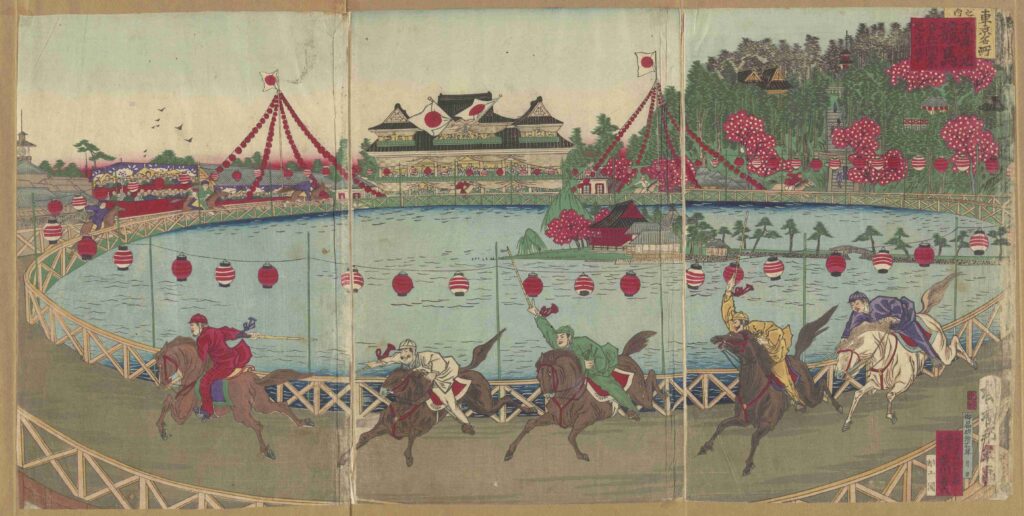
This print, made the year the racecourse opened, shows the jockeys galloping along the edge of the pond, with the hill of Ueno behind. Using prints like this, I found what I believe is one of the old corners of the track: the gentle curve of the path in front of the Shitamachi Museum, at the south end of the pond. The rest of the course continued into what is now Ueno Zoo, so you cannot walk the full lap.

What stayed the same: the pond, the island temple and the hill behind. What changed: the horses and the crowds have gone, and the track is now a quiet path for joggers and strollers.
If you have time, the small Shitamachi Museum beside the curve recreates the streets and homes of old downtown Tokyo, and you can step inside the houses (¥300, closed on Mondays).
Best time to go
Morning is best, when the temples are quiet. Plan to reach the Bell of Time at noon to hear it ring. Late March to early April is cherry blossom season and Ueno Park becomes one of the most crowded places in Tokyo, which is beautiful but slow. In July and August, Shinobazu Pond is covered with huge lotus leaves and flowers, best early in the morning.
Good to know before you go
- Stairs and slopes. There are stairs from the station up to the Saigo statue, and from Kiyomizu Kannon-do down to the pond. With a wheelchair or stroller, use the gentle slope from the Keisei Ueno side and the road around the pond.
- The Shogitai grave is easy to miss. It is in the trees directly behind the Saigo statue.
- The view through the Moon Pine is partly blocked by trees today. Look for the temple on the island.
- Ueno Toshogu is free to visit from outside the fence. Entering the inner area around the gold hall costs a small fee.
- Boats are rented by the half hour. The boat house closes on Wednesdays from December to February.
- Respect the temples. Kiyomizu Kannon-do and Benten-do are places of prayer. Keep your voice low inside the halls.
Getting there
- From Narita Airport: the Keisei Skyliner runs straight to Keisei Ueno Station, the start of this walk, in under an hour.
- From Asakusa: Tokyo Metro Ginza Line to Ueno, about 5 minutes. Take the exit for JR Ueno Station’s Shinobazu side.
- Going on: Ameyoko market is right across the road from the start, and Part 2 of this walk begins at the Park Exit of JR Ueno Station.
Make a day of it
Walk Ueno with a local guide
If you would like a guide, this three-hour small-group tour in English starts at the Shinobazu Exit of JR Ueno Station and covers Kiyomizu Kannon-do, Shinobazu Pond and Benten-do, the Tokyo National Museum and the Ameyoko market. It is still quite new, with only a few reviews so far, though they are good. The museum ticket (¥1,000) is not included. Free cancellation up to 24 hours before. Prices may change, so check the details before you book.
Where to stay
Ueno is a smart base: the Skyliner from Narita arrives here, the Ginza Line takes you to Asakusa in 5 minutes, and the JR Yamanote Line goes around the whole city.
Mitsui Garden Hotel Ueno
Why choose: A comfortable, reliable hotel a short walk from JR Ueno and Keisei Ueno stations. Very convenient if you arrive from Narita Airport with luggage.
Nohga Hotel Ueno Tokyo
Why choose: A stylish small hotel that works with local craftspeople, in a quieter street east of Ueno Station. A good choice if you like design and want a local neighborhood feel.
Official websites
- Keisei Skyliner (from Narita Airport)
- Ueno Park (GO TOKYO, official Tokyo travel guide)
- Ueno Toshogu (Japanese)
Next time
Next time, in Part 2, we climb back up the hill to the north side of Ueno Park. After the battle, the burned temple grounds were almost turned into a hospital, until a Dutch doctor stepped in. We will see what grew there instead: the Tokyo National Museum, Le Corbusier’s National Museum of Western Art, a ghost station, and a bridge where children can watch a dozen kinds of trains pass beneath their feet.
Photos: Aozora Walks unless otherwise noted. Woodblock prints: National Diet Library Digital Collections (public domain): Hiroshige, “Foot of Ueno Hill”, https://dl.ndl.go.jp/pid/1312248; Hiroshige, “Complete View of Toeizan Temple at Ueno”, https://dl.ndl.go.jp/pid/1302538; Hiroshige, “Kiyomizu Hall and Shinobazu Pond at Ueno”, https://dl.ndl.go.jp/pid/1312247; Hiroshige, “The Moon Pine, Ueno”, https://dl.ndl.go.jp/pid/1312325. Utagawa Kunitoshi, “Opening of the Shinobazu Pond Racecourse” (1884): collection of the Tokyo Metropolitan Central Library (public domain), TOKYO Archive, call number 5892-C5. Elevation map made from GSI Japan’s Chiriin Chizu (pale map and 5 m DEM), with colors and labels added by Aozora Walks. Information as of October 2026.