This post contains affiliate links. If you book through them, I may earn a small commission at no extra cost to you.
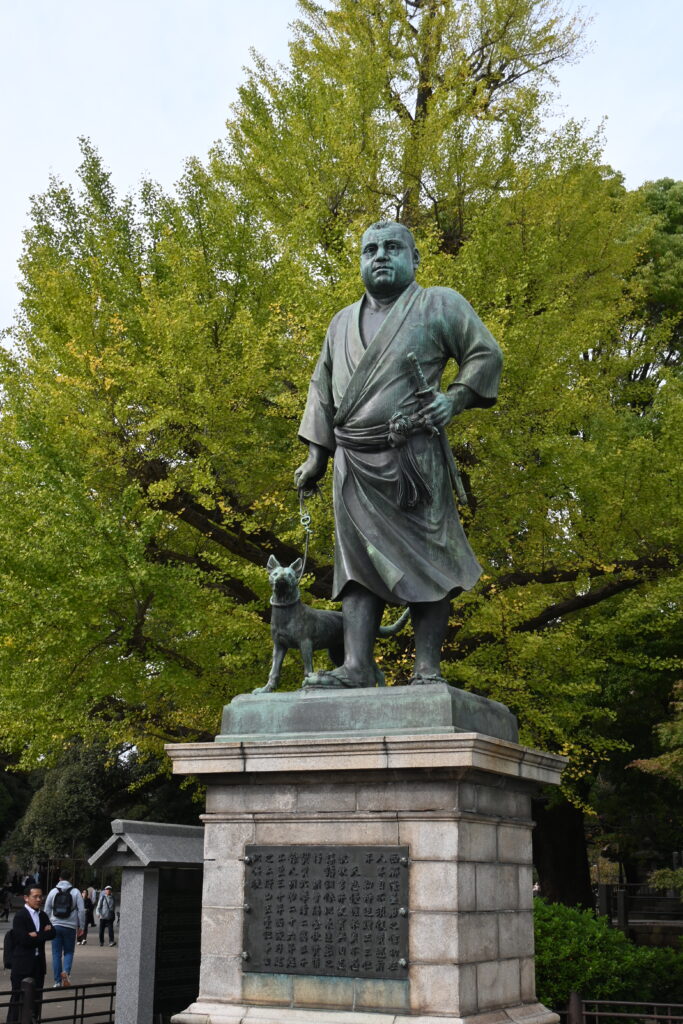
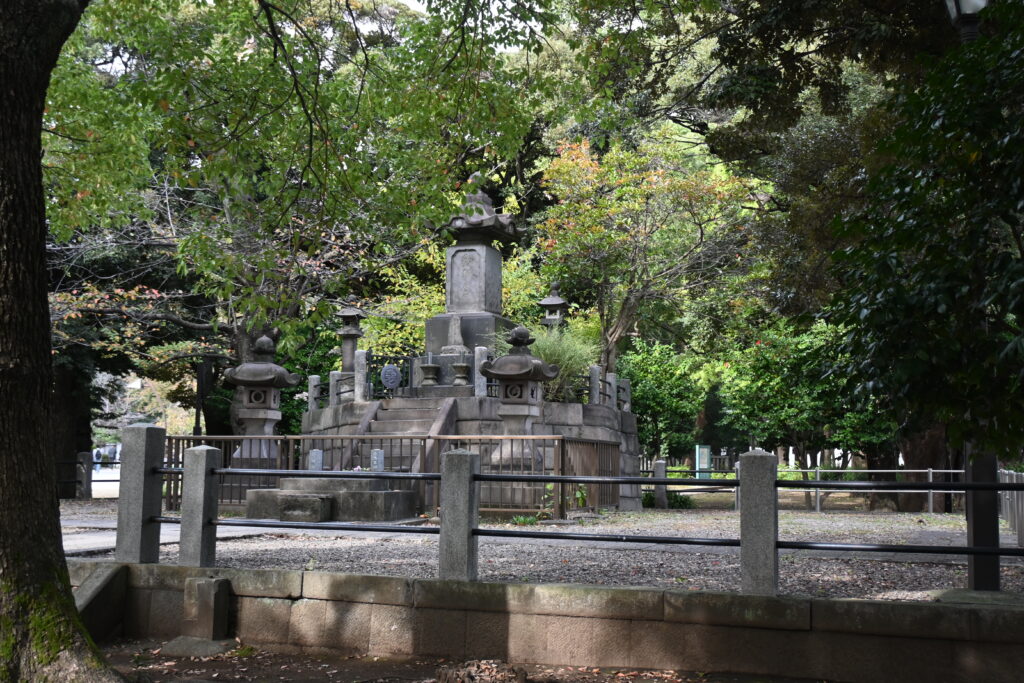
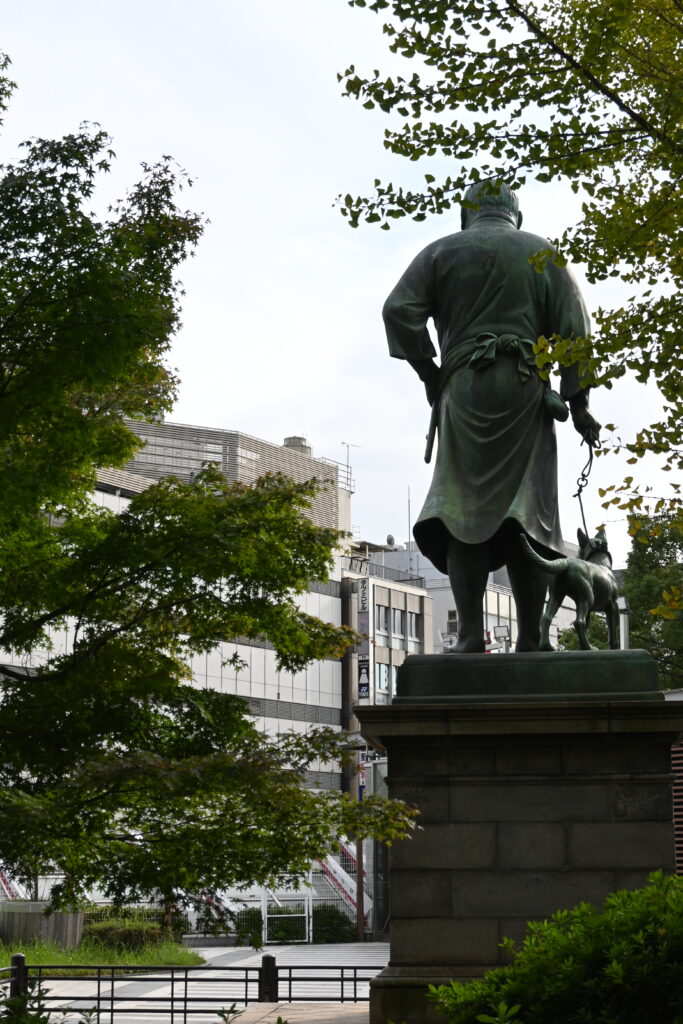
In Part 1 we walked the south side of Ueno Park: the shoguns’ temple of Kan’ei-ji, the Battle of Ueno in 1868, and the racecourse around Shinobazu Pond. We ended with a question. The battle left most of the hilltop in ashes, so what happened to all that empty land?
The answer is all around you on the north side of the park. In about 150 years, the burned temple grounds became Japan’s greatest museum quarter: the Tokyo National Museum, the National Museum of Nature and Science, and the National Museum of Western Art, Le Corbusier’s only building in Japan. Along the way we will meet a Dutch doctor with the wrong face, a ghost station built with the Emperor’s permission, and, at the end, a bridge where the ancient seashore meets Tokyo’s busiest railway lines.
Quick facts
| Route | JR Ueno (Park Exit) → Tokyo Bunka Kaikan → National Museum of Western Art → National Museum of Nature and Science → Bauduin statue → fountain square → Tokyo National Museum → old Hakubutsukan-Dobutsuen Station and Sogakudo → Kan’ei-ji main hall → Ryodaishi Bridge |
| Distance | About 2 km, mostly flat |
| Time | 1.5 hours outside only, or a full half day with one museum |
| Cost | Walking is free, and so are the Rodin sculptures outside the National Museum of Western Art. Tokyo National Museum collection: ¥1,000. Western Art permanent collection: ¥500 (¥1,000 from 20 March 2027) |
| Avoid | Mondays: the main museums are closed |
| Nearest stations | Start: JR Ueno, Park Exit. Finish: JR Ueno or JR Uguisudani |
Start: the Park Exit
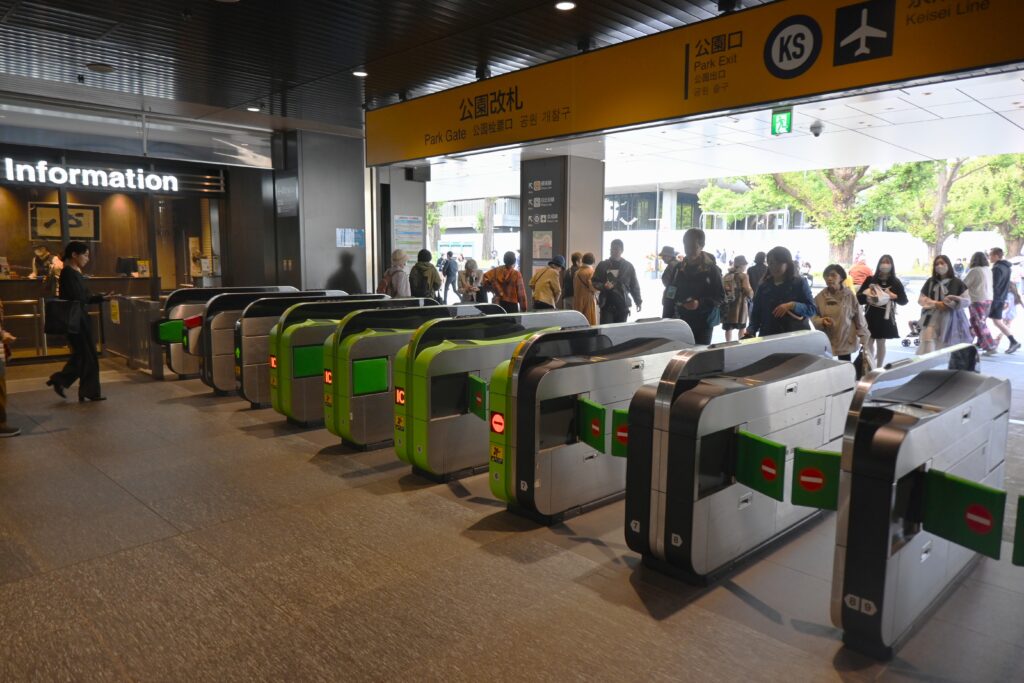
JR Ueno Station’s Park Exit (Koen-guchi) is the front door of the museum quarter. As soon as you walk out of the ticket gates, the National Museum of Western Art is on your left and the Tokyo Bunka Kaikan concert hall on your right, with the zoo and the museums beyond.
The Tokyo Bunka Kaikan, opened in 1961, is the work of Kunio Maekawa, one of Le Corbusier’s Japanese students. It faces his teacher’s museum across the square, which is a nice way to begin. Note that the hall is closed for major renovation from May 2026 until some time in fiscal 2028, so for now you can only see it from outside.
Le Corbusier’s museum: the National Museum of Western Art
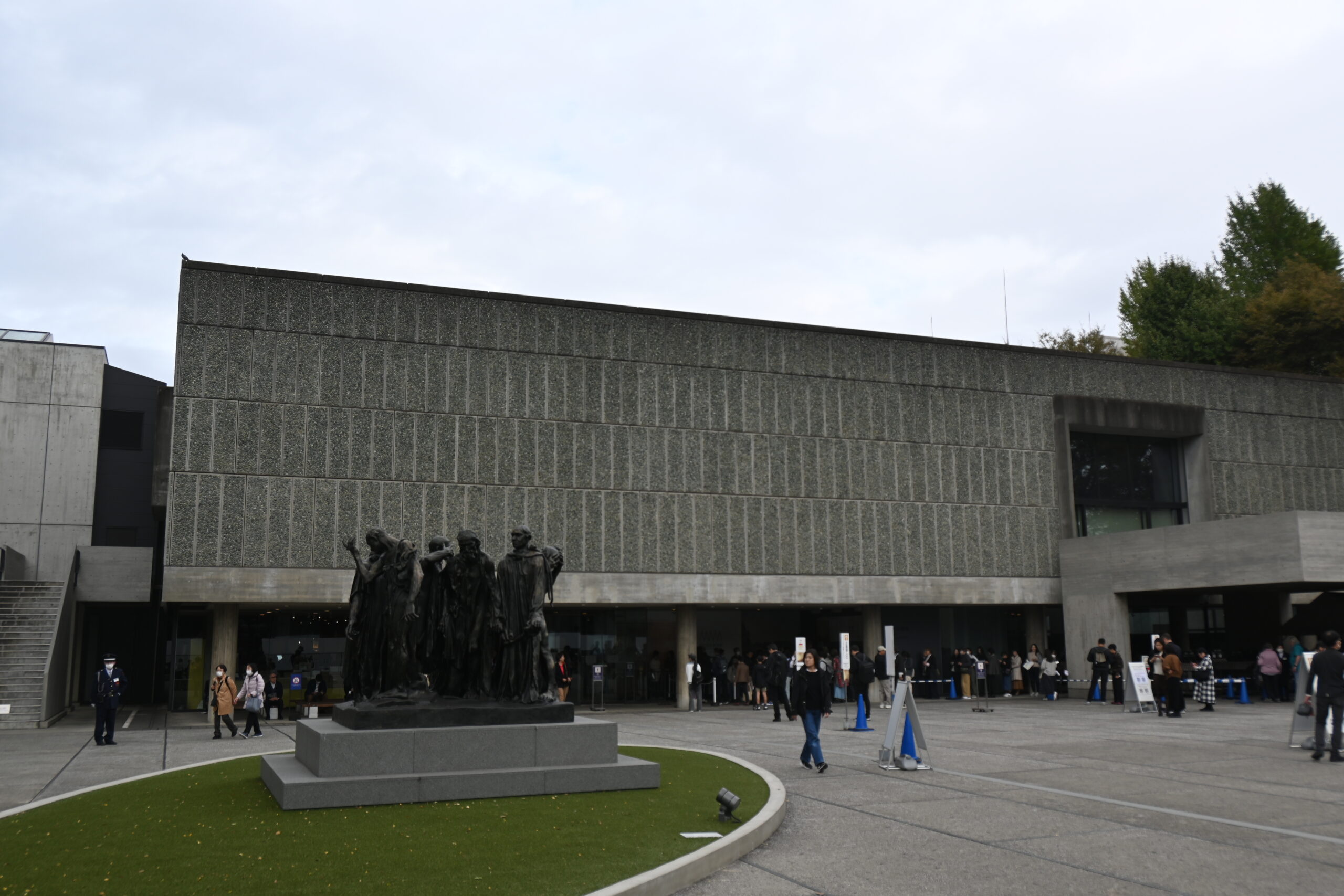
The National Museum of Western Art opened in 1959. Its story begins with a businessman, Matsukata Kojiro, who collected thousands of European paintings and sculptures in the early 20th century. Part of his collection stayed in France and was held by the French government after the Second World War. When France agreed to return many of the works to Japan, Japan promised to build a museum for them, and Le Corbusier was chosen to design it. His Japanese students, Maekawa Kunio, Sakakura Junzo and Yoshizaka Takamasa, finished the drawings and supervised the work.
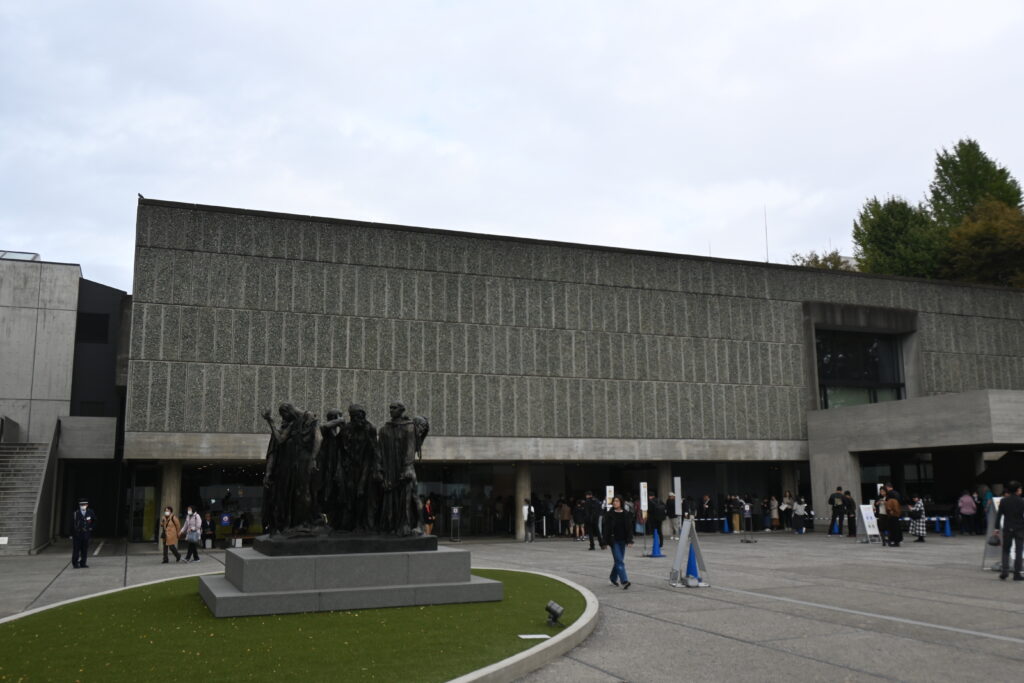
At first sight it is a plain box. But look at how it stands. The ground floor is lifted on columns, with open space underneath: Le Corbusier called these columns pilotis. Inside, the galleries wind around a central hall in a square spiral. His idea was a “museum of unlimited growth”, which could keep expanding outward like a snail shell as the collection grew. In 2016 the building became a UNESCO World Heritage Site, as one of 17 works by Le Corbusier in seven countries listed together.
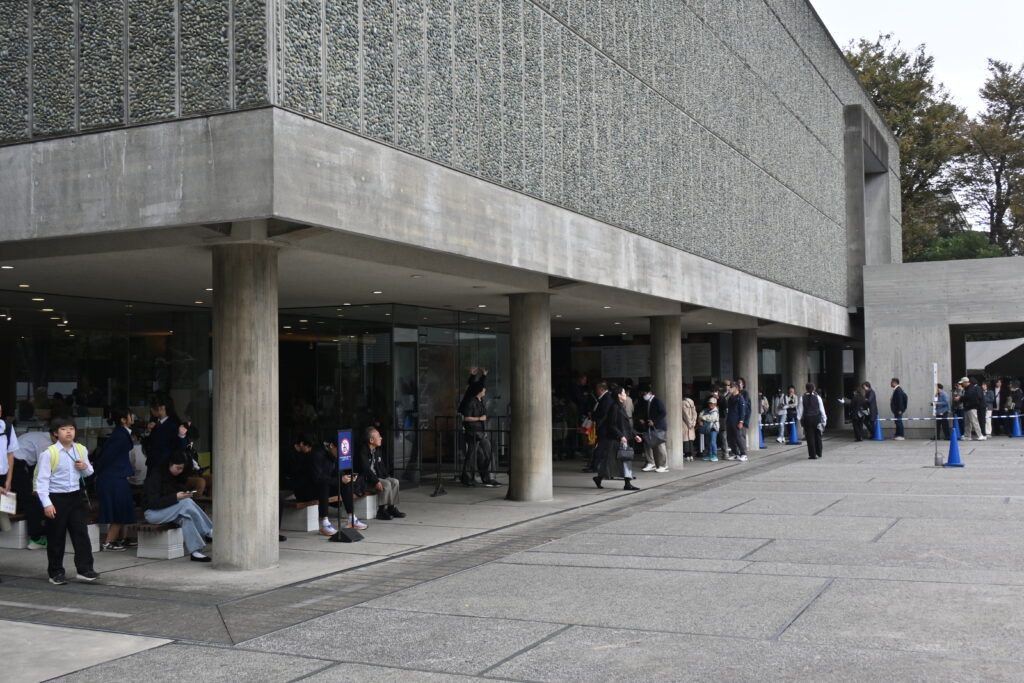
On my visit, the special exhibition was so crowded that I could not get in. Many visitors seemed to have come for the World Heritage building as much as the art. But I have been here many times before, and I can say this: the permanent collection is wonderful, and a bargain. Look for El Greco, Monet and Renoir. Adults pay ¥500, university students ¥250, and high school students and younger are free. From 20 March 2027 the price for adults rises to ¥1,000 and for students to ¥500, still very reasonable.
Rodin in the front garden, free
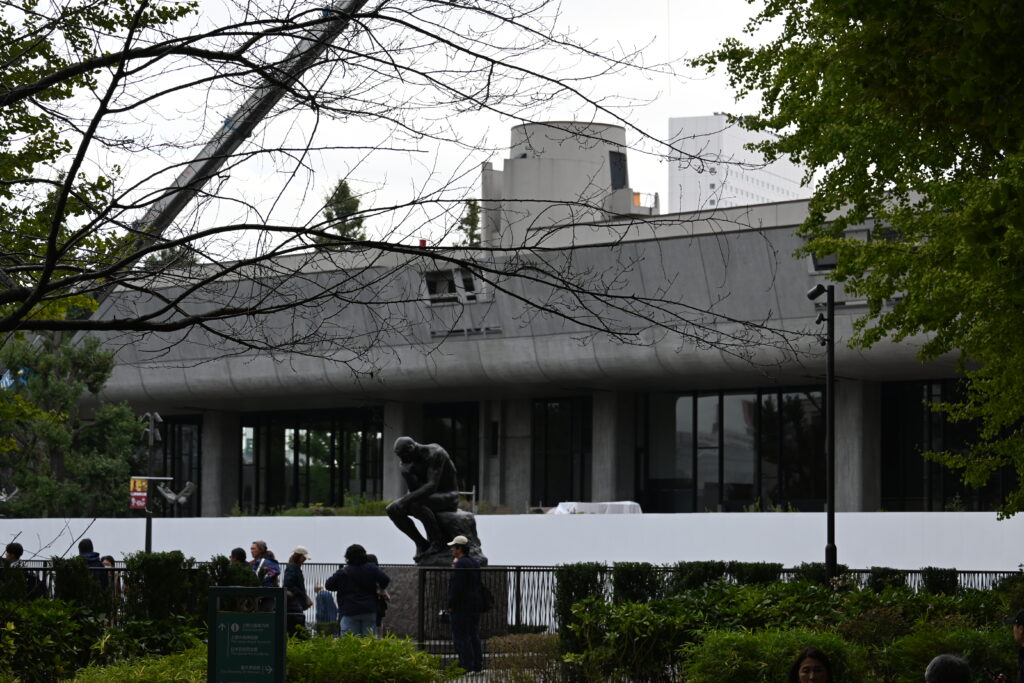
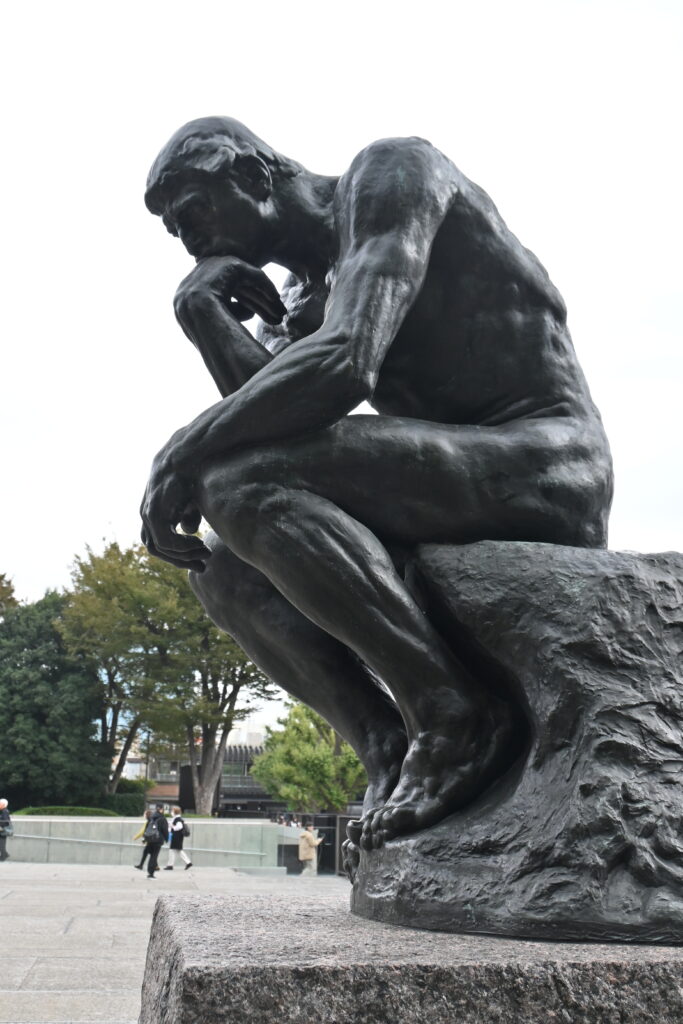
You do not need a ticket for the best-known works. In the front garden stand Rodin’s The Gates of Hell and The Thinker.
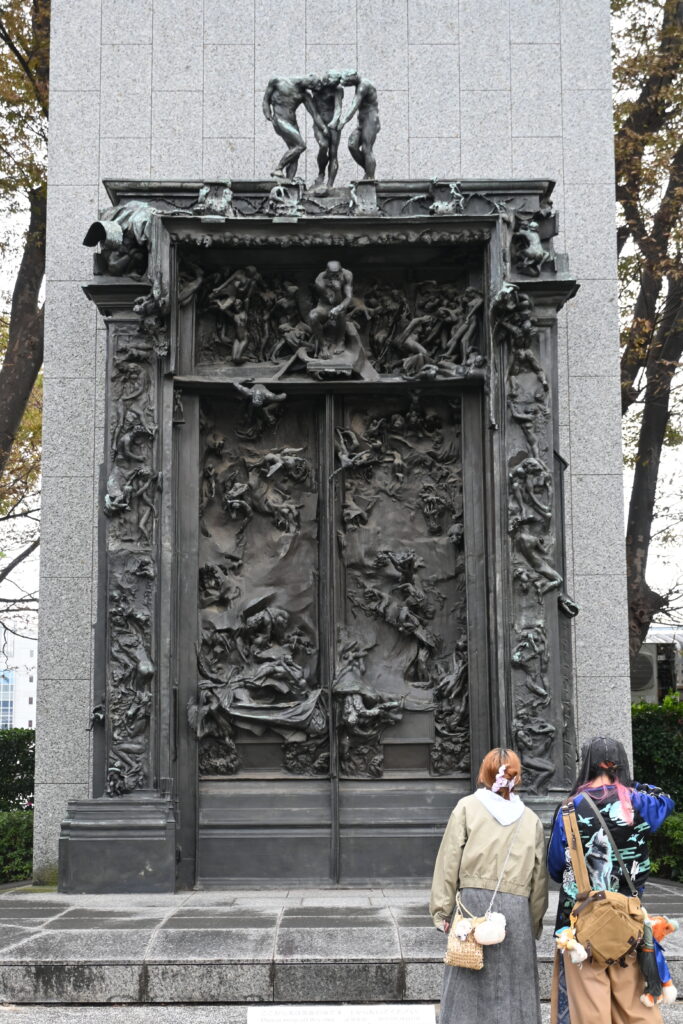
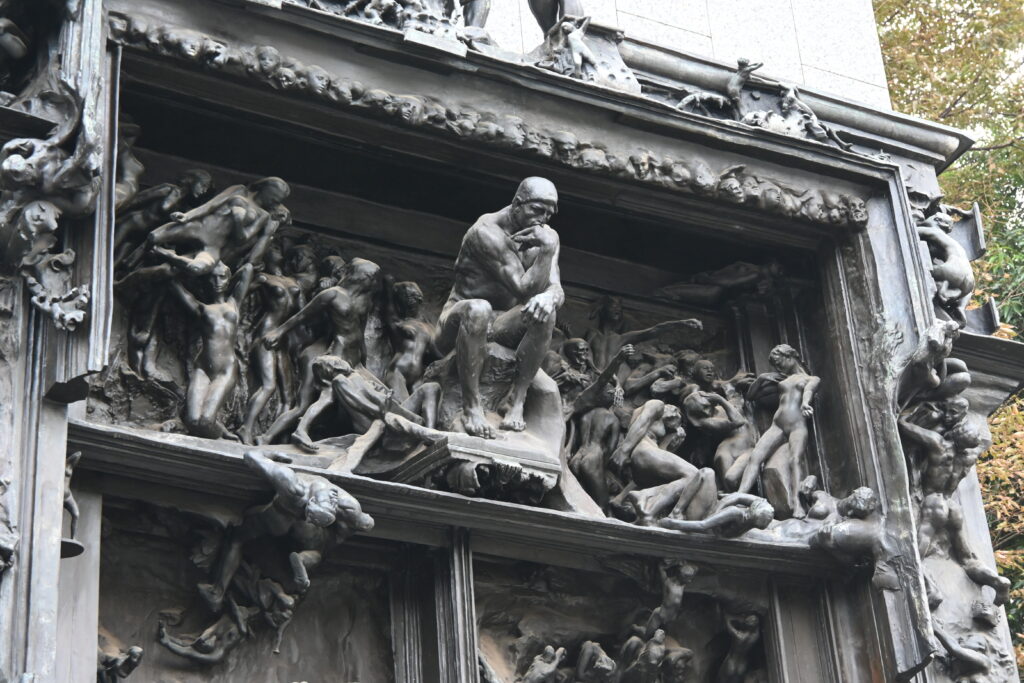
Find the small seated figure above the doors. Rodin first made The Thinker as part of this gate, looking down on the souls below, before he enlarged it as a separate statue. Then walk over to the big Thinker, which you can see from very close. Look carefully at his pose: he rests his right elbow on his left thigh. Try it yourself. It is surprisingly uncomfortable! Then look at his feet. His toes are curled and gripping the stone, as if his whole body is working, not only his head.
A whale and a rocket launcher: the National Museum of Nature and Science
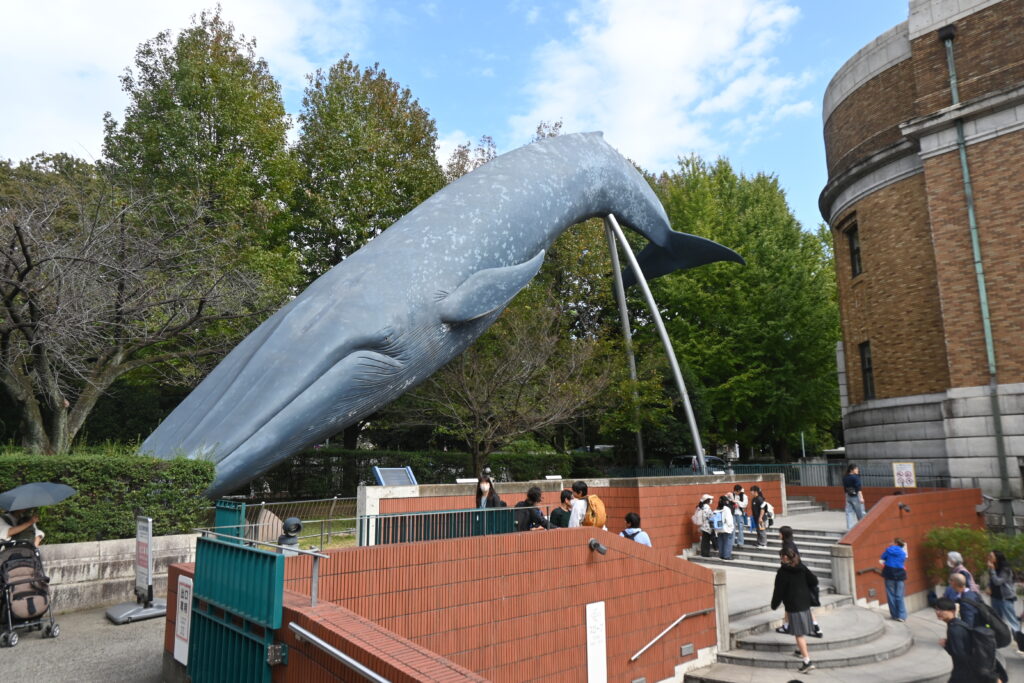
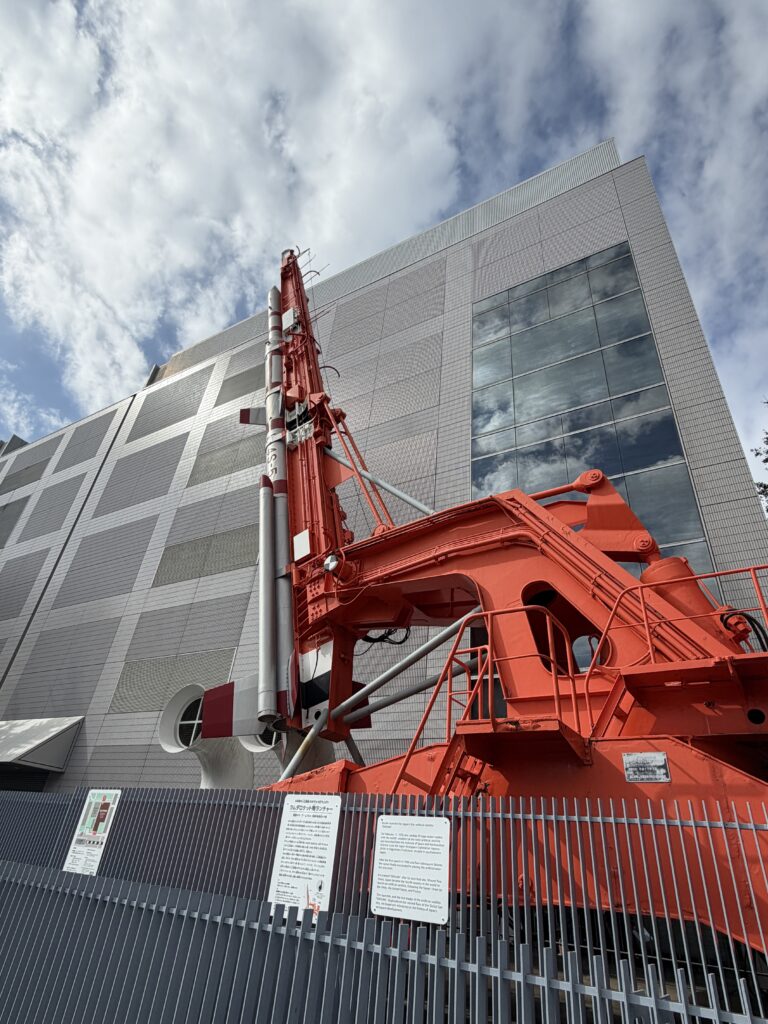
Next door is the National Museum of Nature and Science, founded in 1877, Japan’s main museum of natural history and science. Even from outside there are two things to see. One is a life-size model of a blue whale, about 30 meters long, diving beside the entrance. The other is a big red launcher. It is not a rocket, but the real launch rail used for the Lambda rocket that put Japan’s first satellite, Ohsumi, into orbit in 1970, from Uchinoura in Kagoshima Prefecture.
Why is this a park? Thank a Dutch doctor
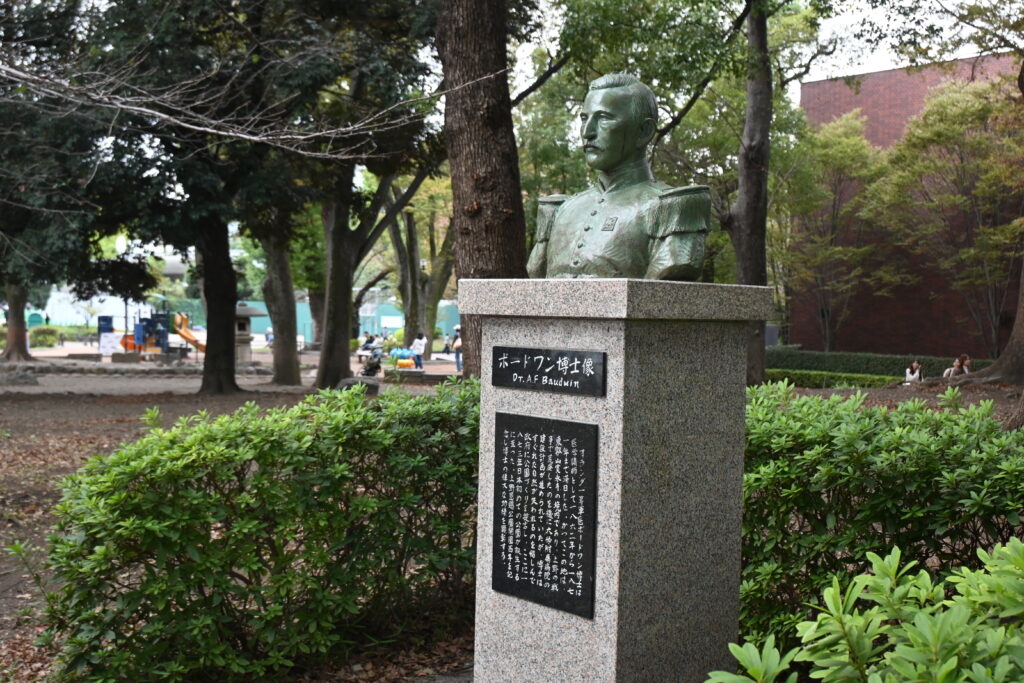
Walk on toward the fountain. Past the Starbucks, at the back on the right, stands a small bust that most visitors walk straight past. This man is the reason Ueno Park exists.
After the Battle of Ueno, the new government planned to build a medical school and hospital on the burned hilltop, and work had already started. In 1870, the Dutch army doctor Anthonius Bauduin, who was teaching medicine in Japan, was shown the site. He told the Japanese officials that it would be a waste to cut down the trees, and that Ueno should become a park, like the great parks of European cities. The medical school was moved to Hongo instead, and became the University of Tokyo. In 1873 Ueno was named one of Japan’s first public parks, together with Asakusa, Shiba, Fukagawa and Asukayama, and it opened officially in 1876. Without Dr. Bauduin, Ueno might be a university campus today.
The wrong face, again
Remember Saigo Takamori’s statue in Part 1, whose widow said, “My husband was not like this”? Ueno has a second face problem. When Bauduin’s bust was first put up in 1973, the family had supplied a photograph of the wrong man, his younger brother, who had been the Dutch consul in Japan. Nobody noticed for decades. In 2006 the bust was finally replaced with the right face. So if you want to see the real Dr. Bauduin, you are just in time.
The fountain square: a temple, then a world fair
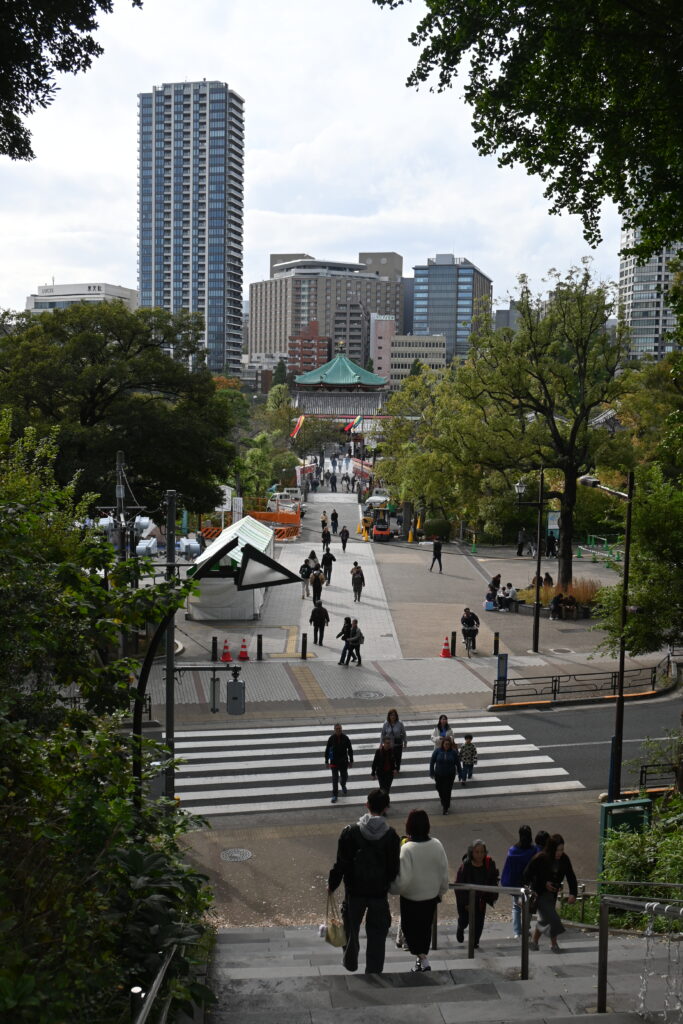
The big fountain square is the heart of the park. Look back at Hiroshige’s view of Kan’ei-ji in Part 1: the great main hall of the temple stood right here. After the battle, this empty ground became the stage for modern Japan.
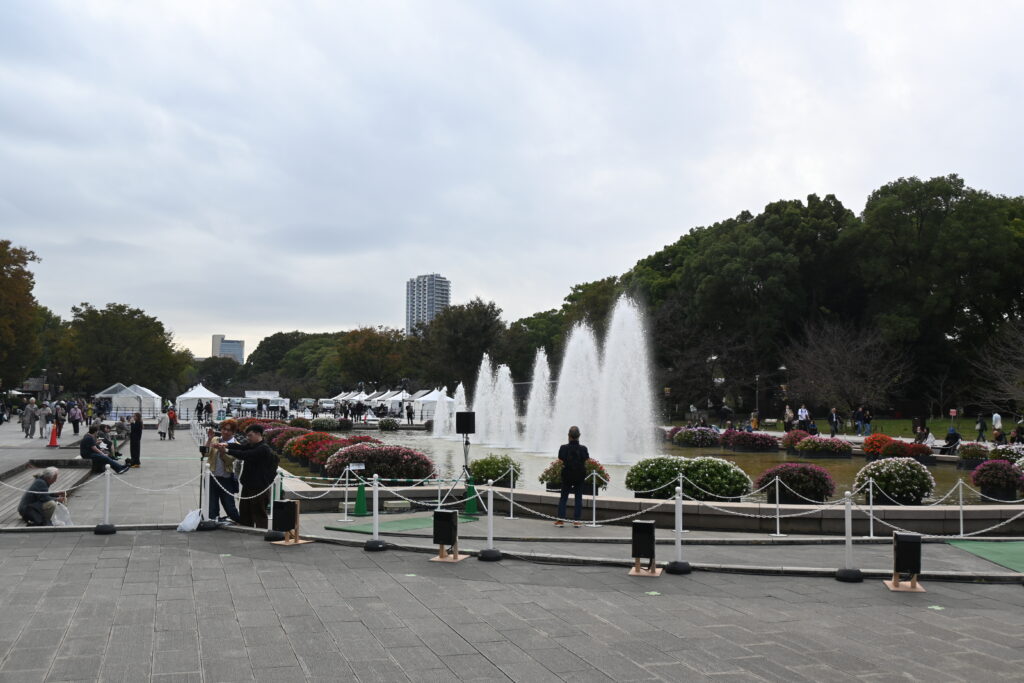
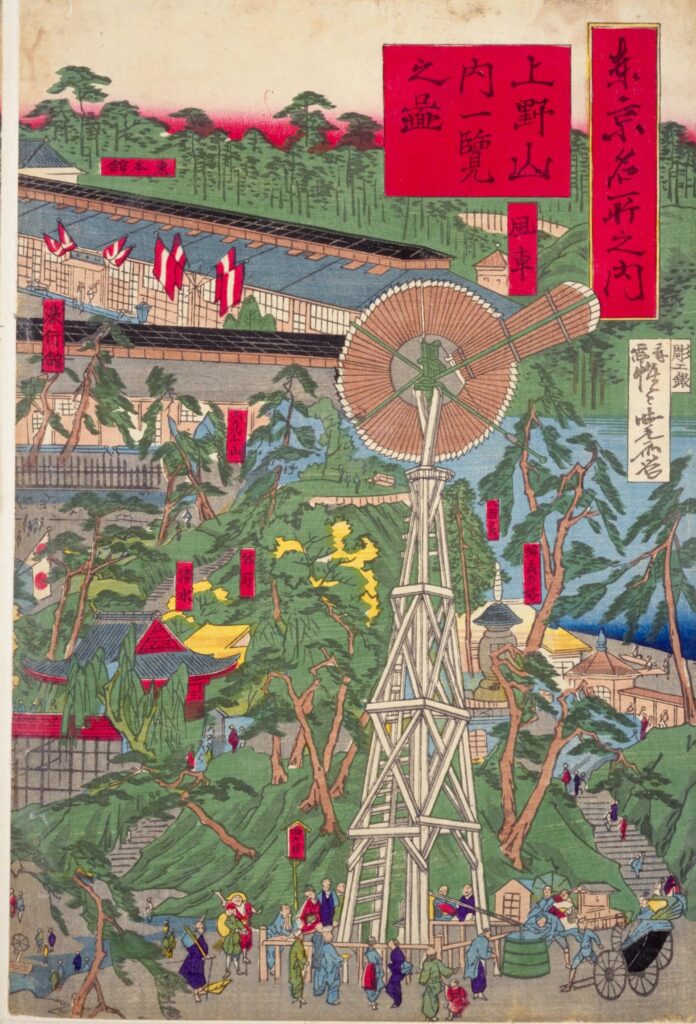
In 1877 the government held the First National Industrial Exhibition here, a Japanese world fair to show off new machines, crafts and products. Kawanabe Kyosai’s print from that year shows Ueno full of flags, halls and visitors, with a tall windmill turning above the pines. Only ten years earlier this was a temple ground where the shoguns came to pray.
Exhibitions kept coming back to Ueno, and the museums grew out of them. That is why so many museums stand side by side here today.
The Tokyo National Museum
At the end of the fountain square stands the Tokyo National Museum, Japan’s oldest museum, founded in 1872. Its collection of Japanese and Asian art is one of the largest in the world, with many National Treasures.
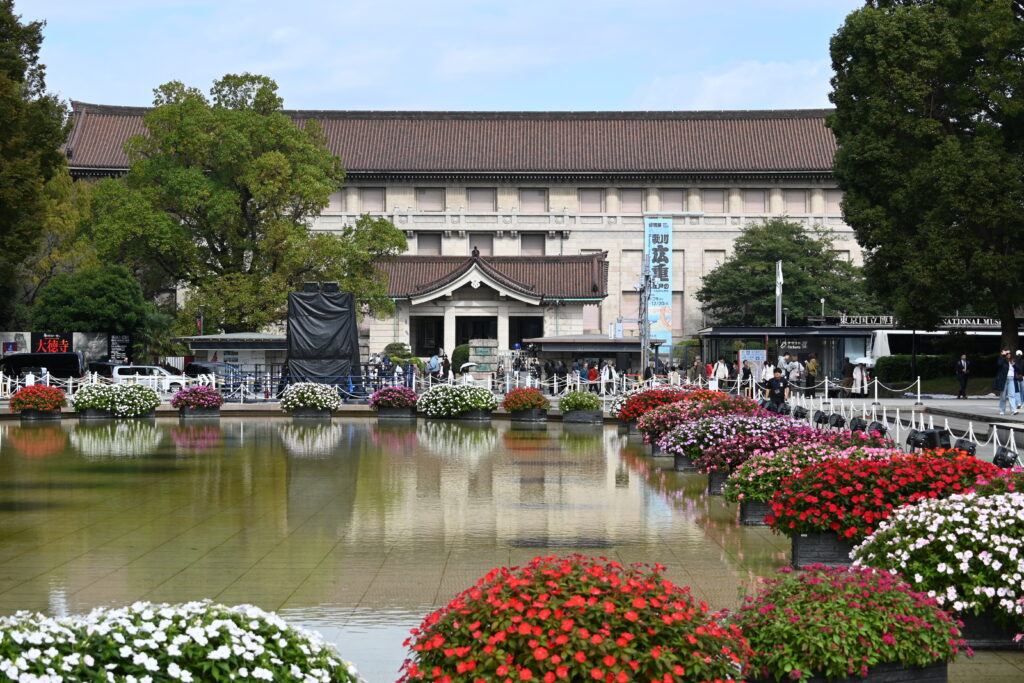
Then and now: two main buildings
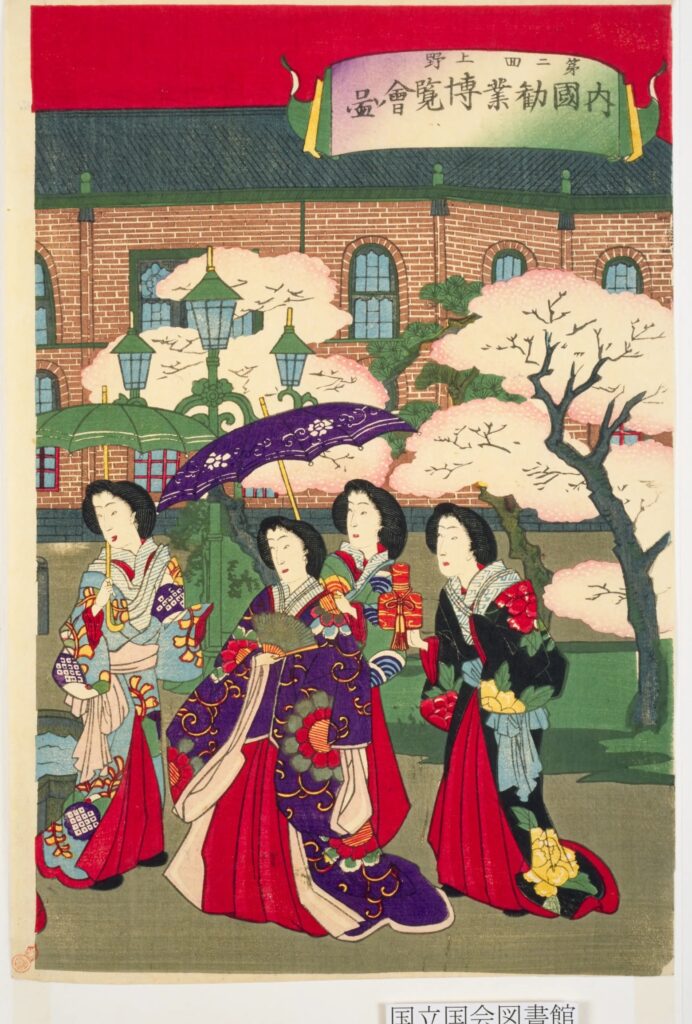
The building you see today is not the first. In 1881 the British architect Josiah Conder, the “father of modern Japanese architecture”, designed a red-brick gallery for the Second National Industrial Exhibition. When the exhibition closed, it became the museum’s main building. Yoshu Chikanobu printed it in 1881, with fashionable ladies strolling in front. That brick hall was badly damaged in the Great Kanto Earthquake of 1923.
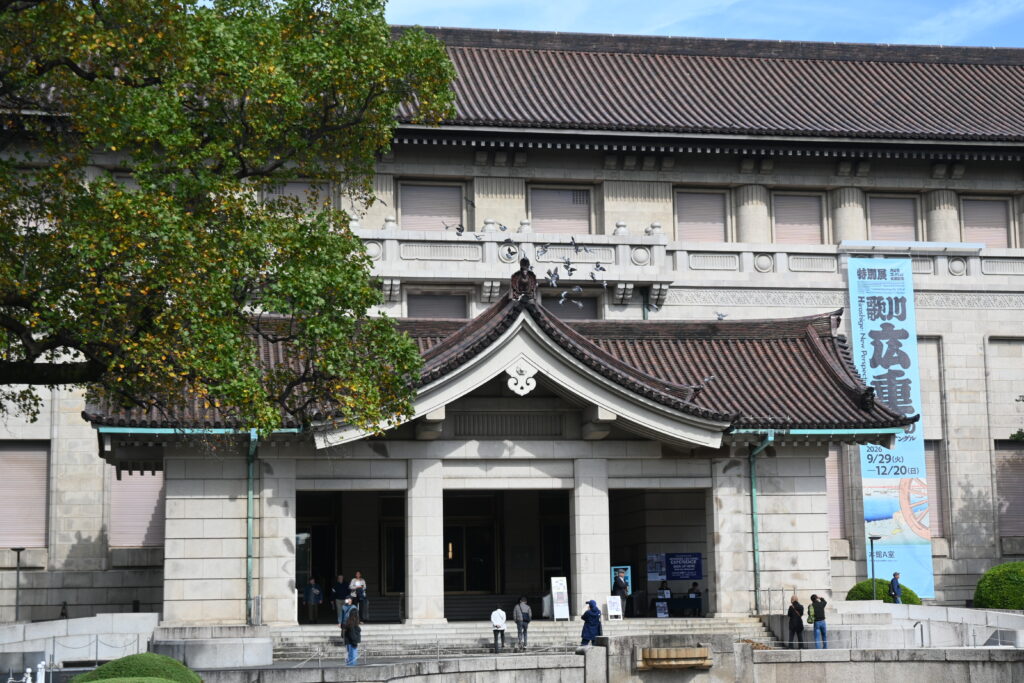
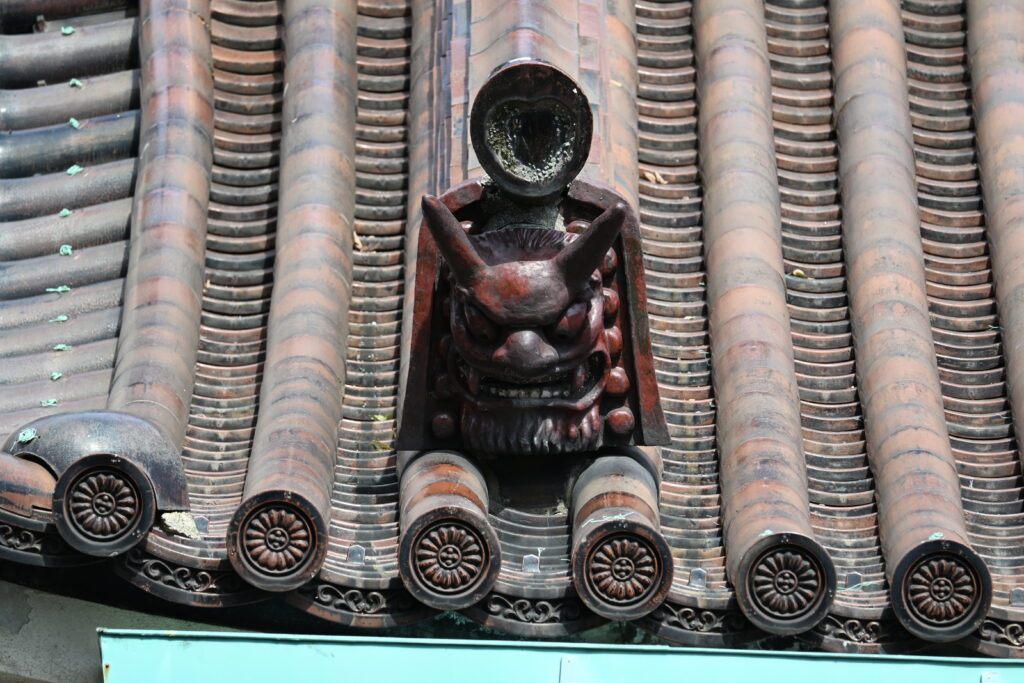
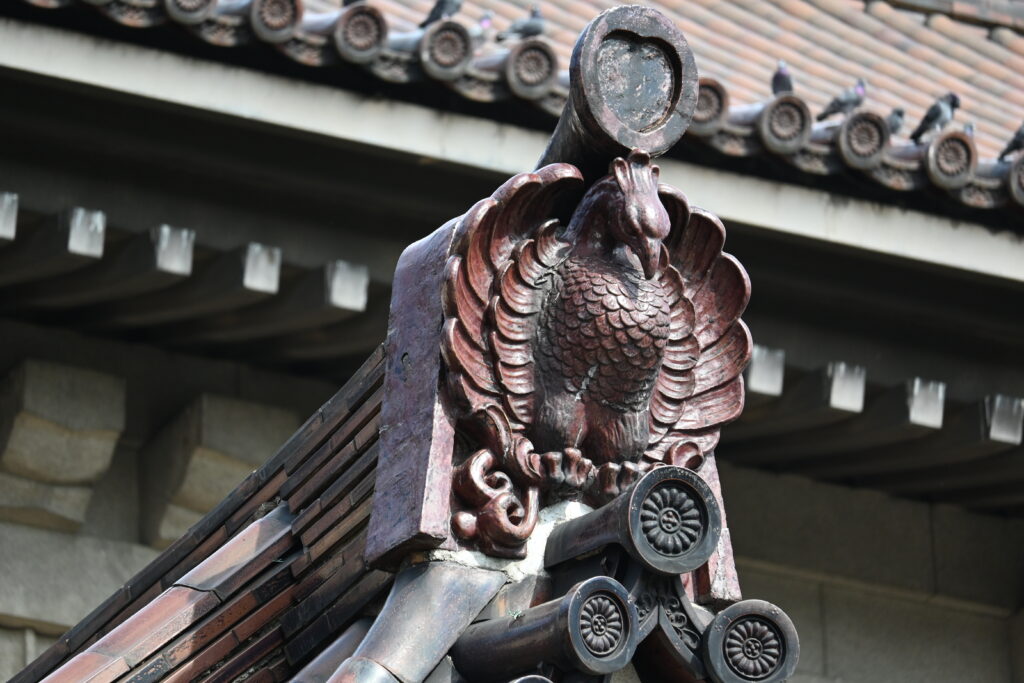
What stayed the same: the place, and the idea of a grand building to show Japan’s treasures. What changed: the style. The present main building, completed in 1938, is a Western-style concrete building wearing a heavy Japanese tiled roof, a style popular in 1930s Japan. Look up at the roof: you will find onigawara demon tiles and phoenix ornaments, traditionally meant to keep away evil and bring good fortune.
Inside the main building
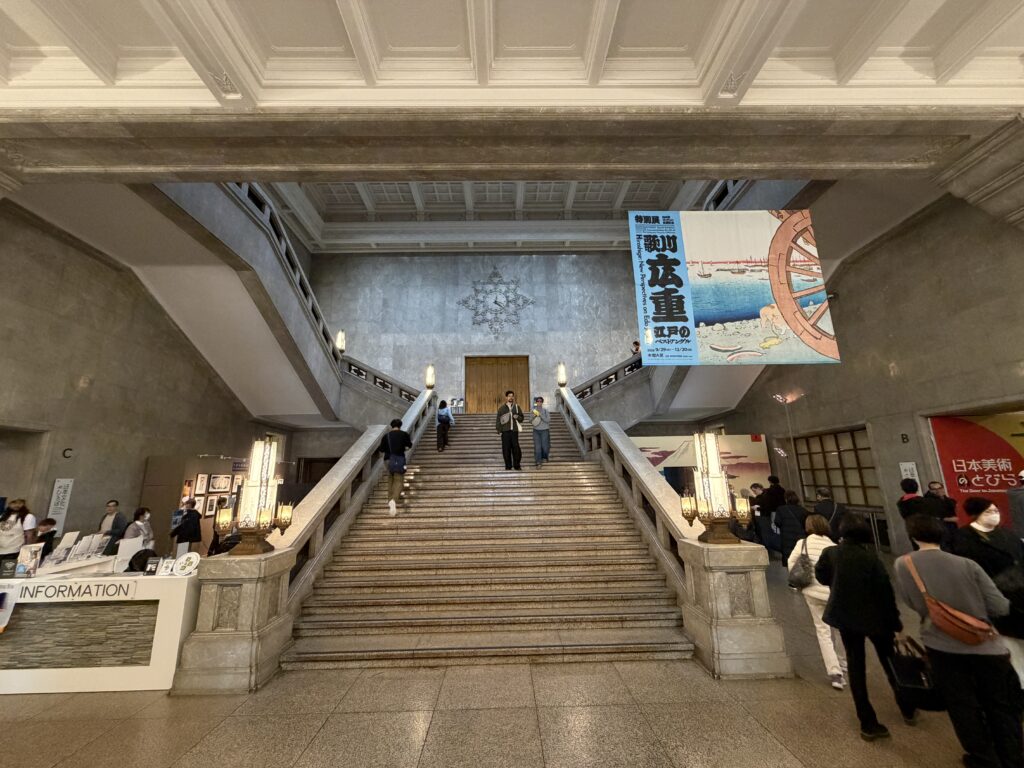
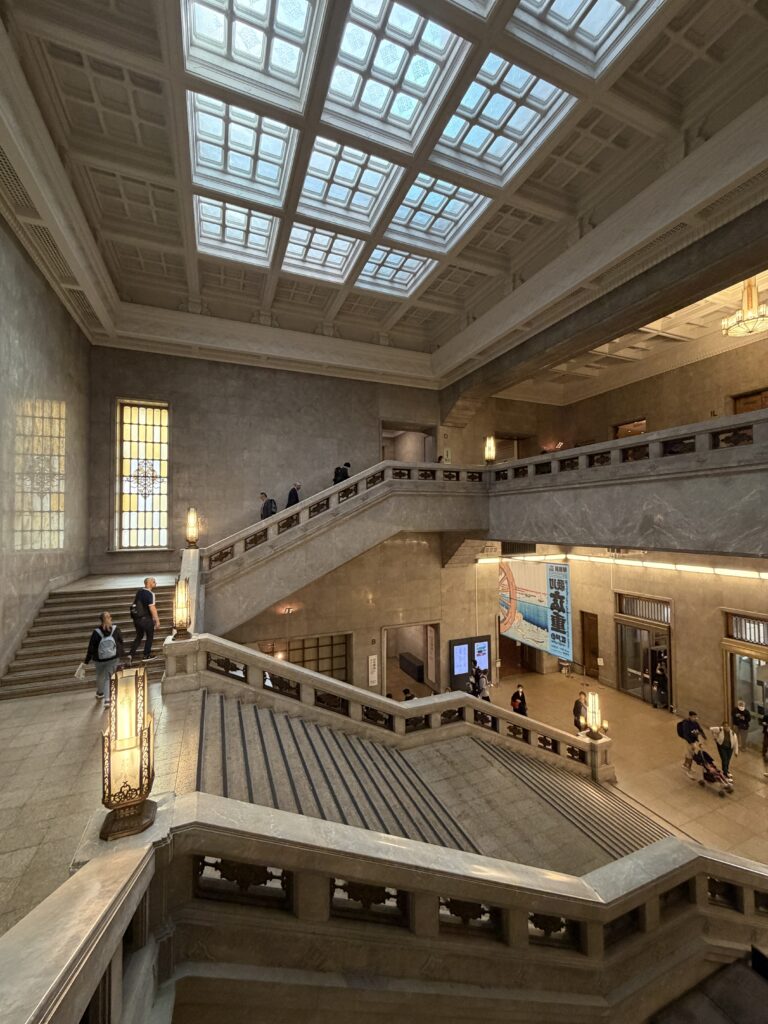
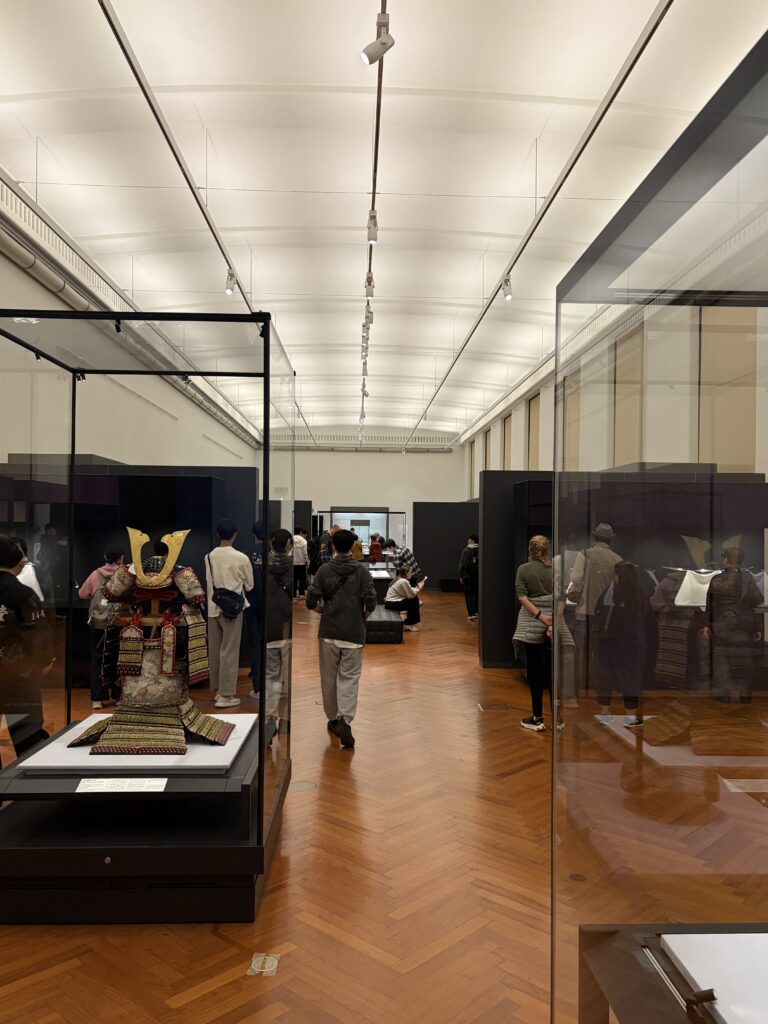
Inside the entrance hall, a grand staircase rises under a coffered ceiling. You may recognize it: it often appears in Japanese TV dramas. The main building is huge, on two floors, and seeing the whole collection properly takes several hours. Visitors from abroad especially love the tea bowls used in the tea ceremony, the samurai armor and the Japanese swords.
Make your own ukiyo-e print
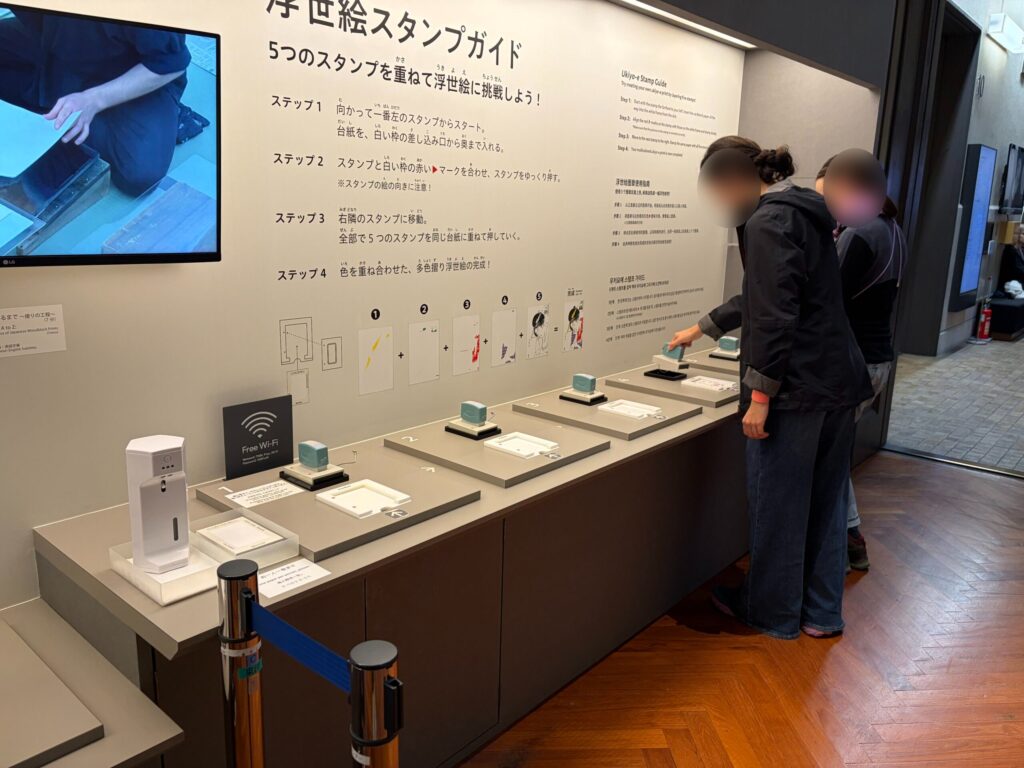
My favorite corner is near the entrance of the main building: a hands-on ukiyo-e corner, at no extra charge. You press five color stamps, one after another, onto the same card, lining each one up with a guide mark. Color by color, a woodblock-style picture appears, and you take home your own ukiyo-e postcard. Real ukiyo-e used many more blocks, and the panels explain how the professionals did it. It makes a lovely souvenir.
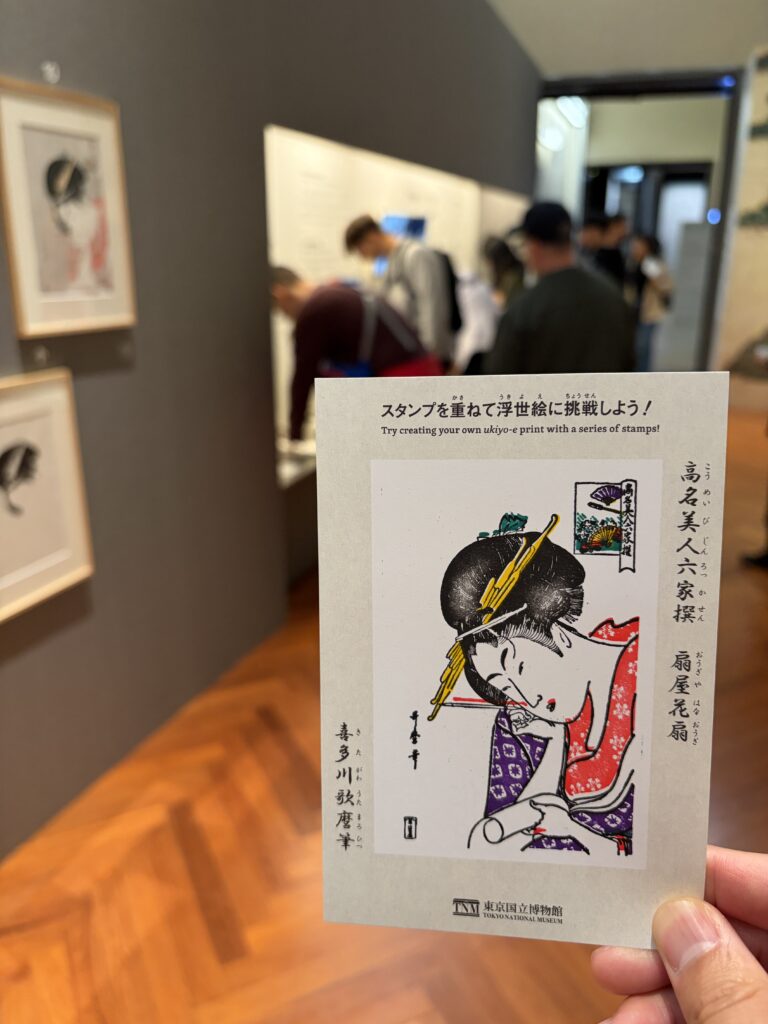
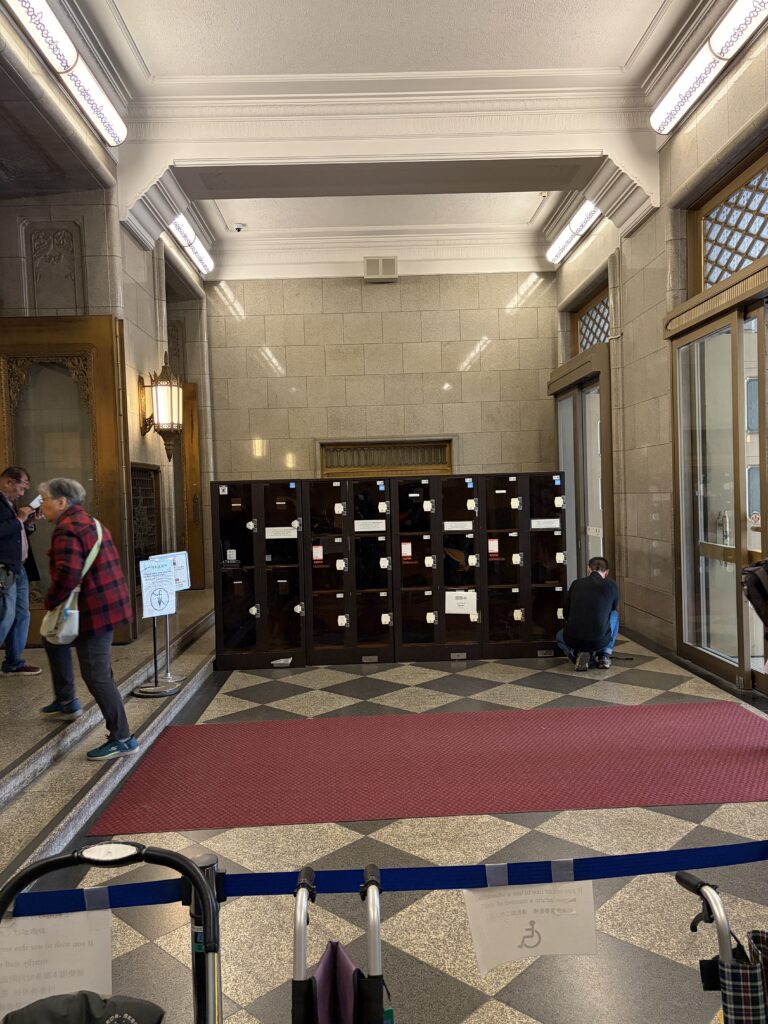
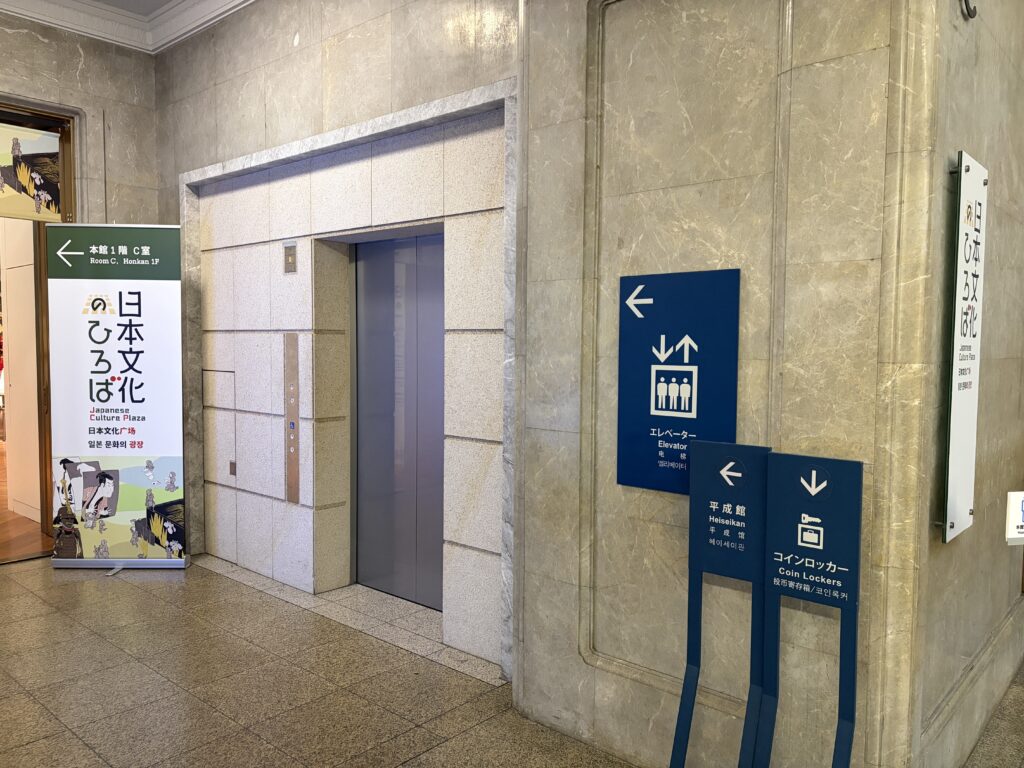
When I visited, a special Hiroshige exhibition was on, and the museum was busy. There are plenty of sofas to rest on, coin lockers, and elevators as well as stairs.
Two more buildings for two imperial weddings
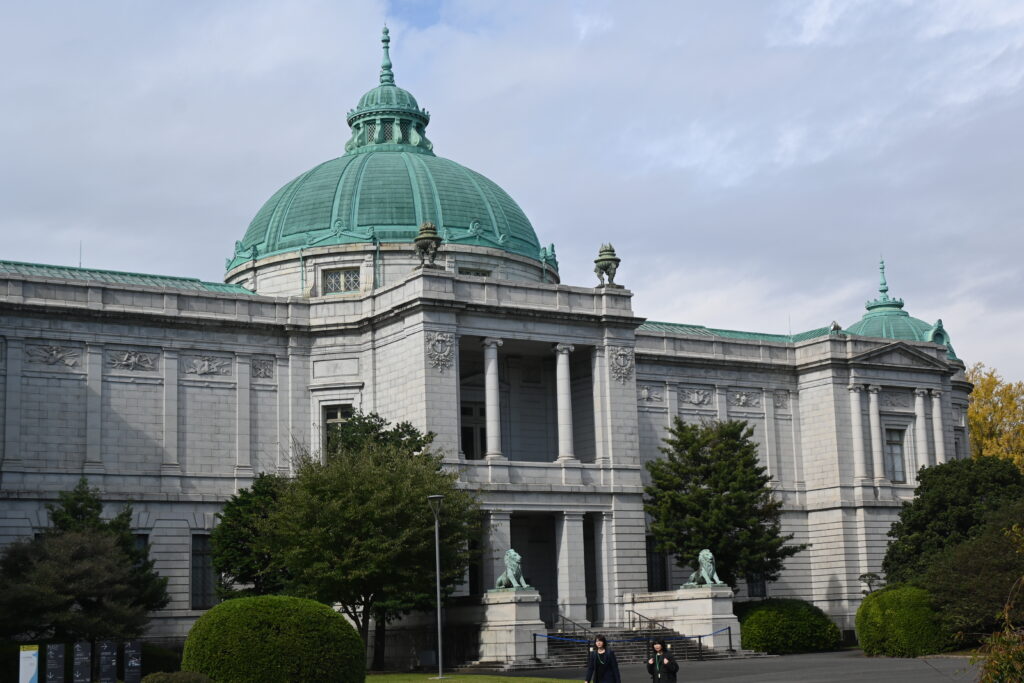
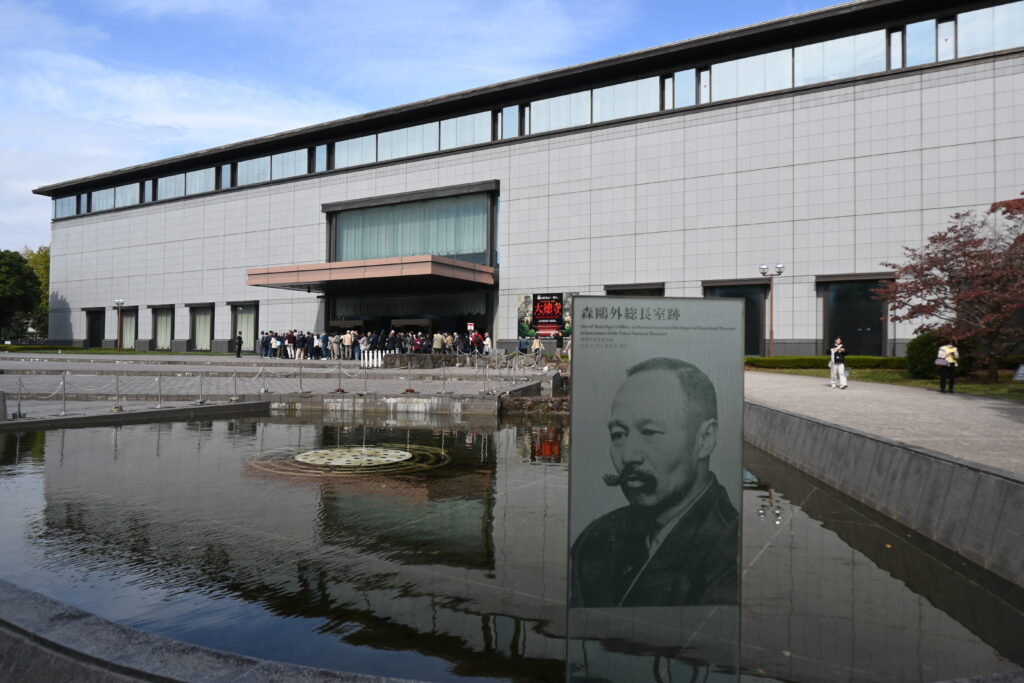
To the left of the main building is the Hyokeikan, a domed palace in the Western style completed in 1908 to celebrate the wedding of the Crown Prince, later Emperor Taisho. It was designed by Katayama Tokuma, a student of Josiah Conder, and it is an Important Cultural Property. It was closed on my visit. Behind it, the modern Heiseikan opened in 1999 to mark the wedding of the then Crown Prince, today’s Emperor. It shows archaeology, including clay haniwa figures and Jomon dogu, and hosts the big special exhibitions.
A ghost station and Japan’s oldest concert hall
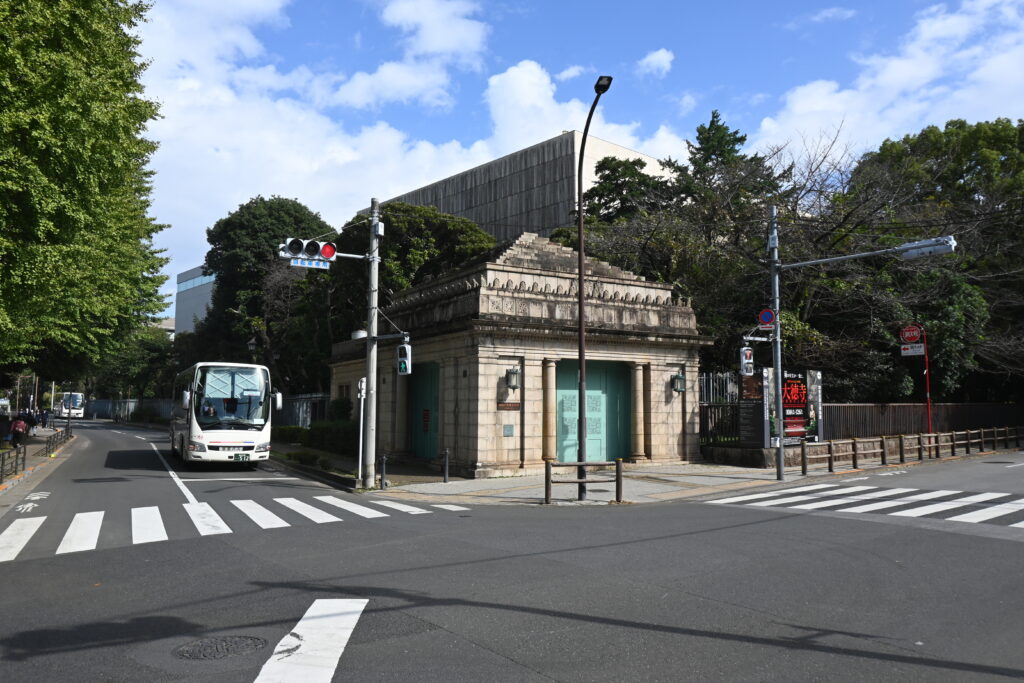
Leave the museum and walk west along the road beside it. Opposite the Kuroda Memorial Hall stands a small stone building: the old Hakubutsukan-Dobutsuen Station, “Museum and Zoo Station”, on the Keisei Line. It opened in 1933. The land belonged to the Imperial family, so building a station here needed the approval of the Emperor himself, and the railway was told the building must be dignified enough for the site. That is why a small station looks like a little temple of classical architecture. Trains stopped calling in 1997, and the station was closed for good in 2004. It is opened to the public only for special events, so check the Keisei website.
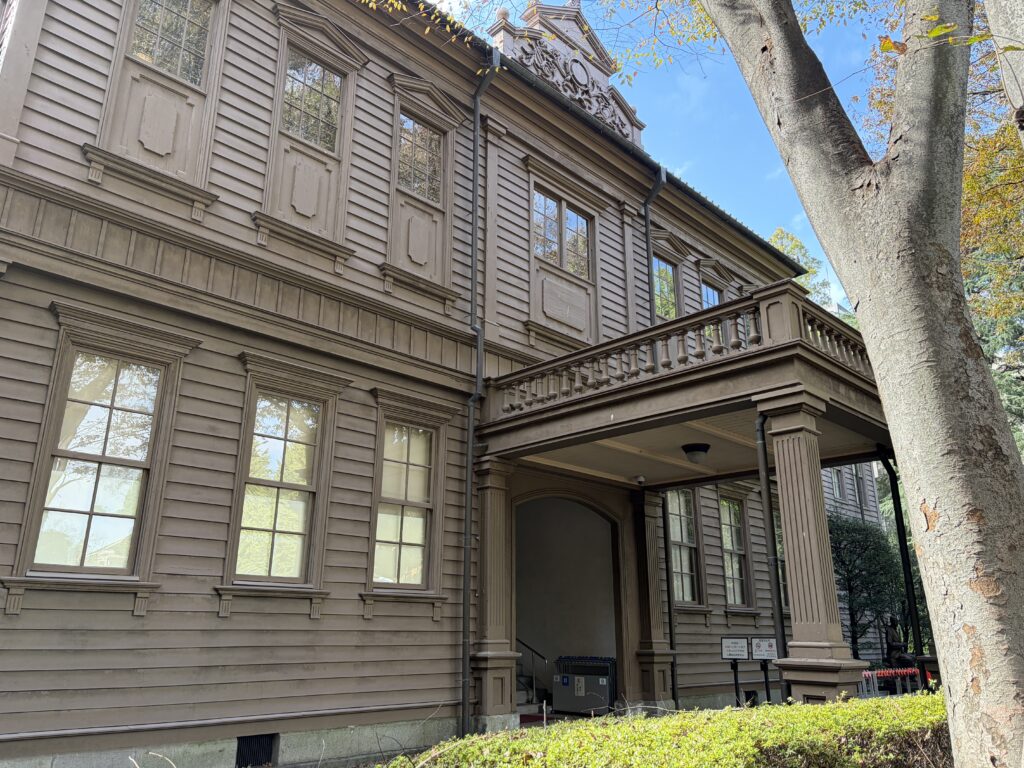
Across the road stands the Sogakudo, built in 1890 for the Tokyo Music School, the forerunner of today’s Tokyo University of the Arts. It is the oldest Western-style concert hall in Japan and an Important Cultural Property. It is open to visitors on certain days, and there are often concerts.
My favorite coffee break
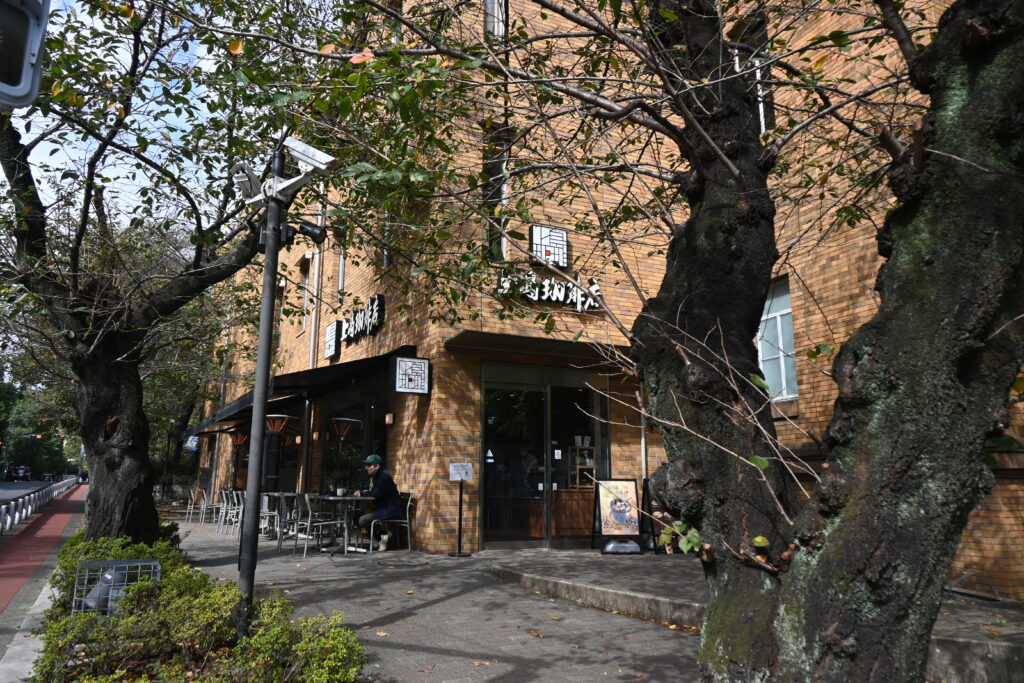
On the corner opposite the old station is Ueshima Coffee House, at the Kuroda Memorial Hall. It is one of my favorite cafés in Ueno: it is usually less crowded than the cafés in the middle of the park, and from the window you can sit and look out at the old station and the Sogakudo. The perfect place to rest your legs before the last stretch.
Kan’ei-ji today: a temple hall from Kawagoe
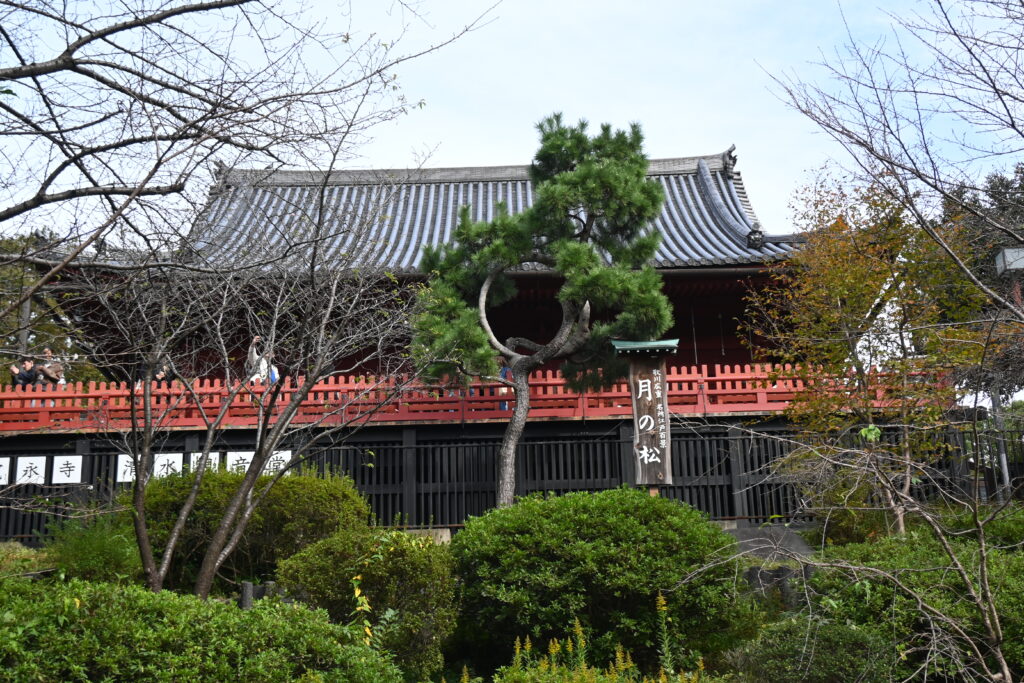
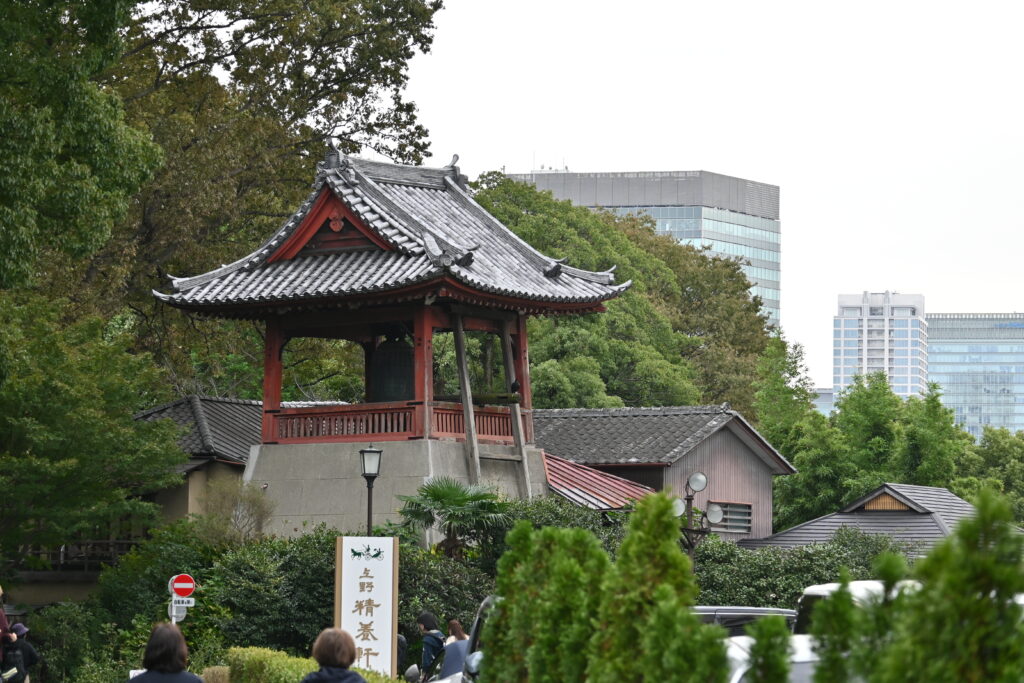
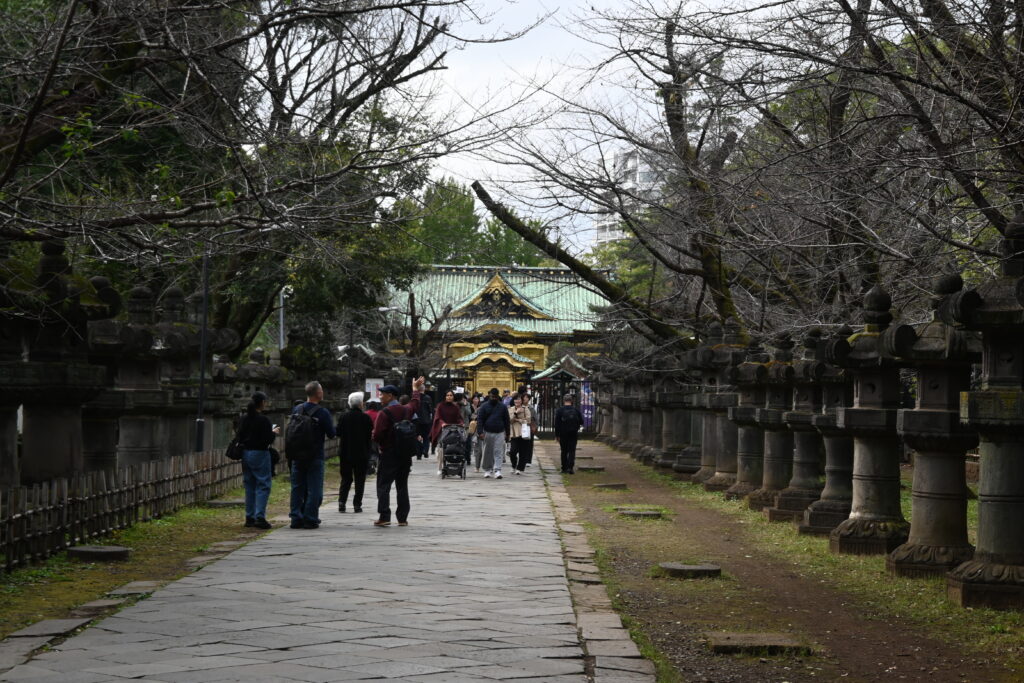
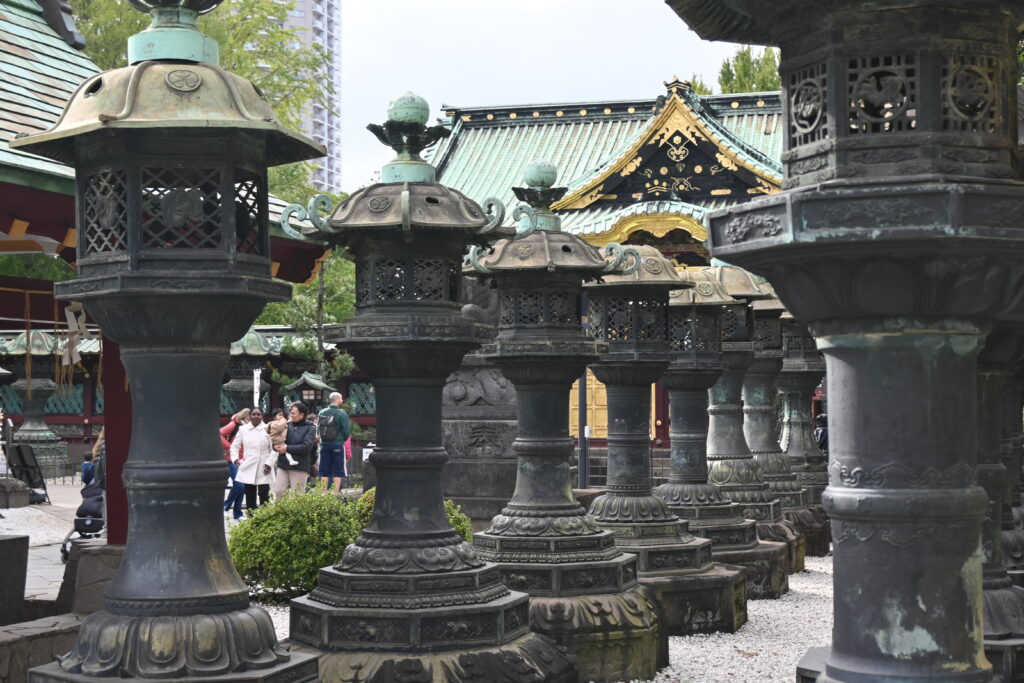
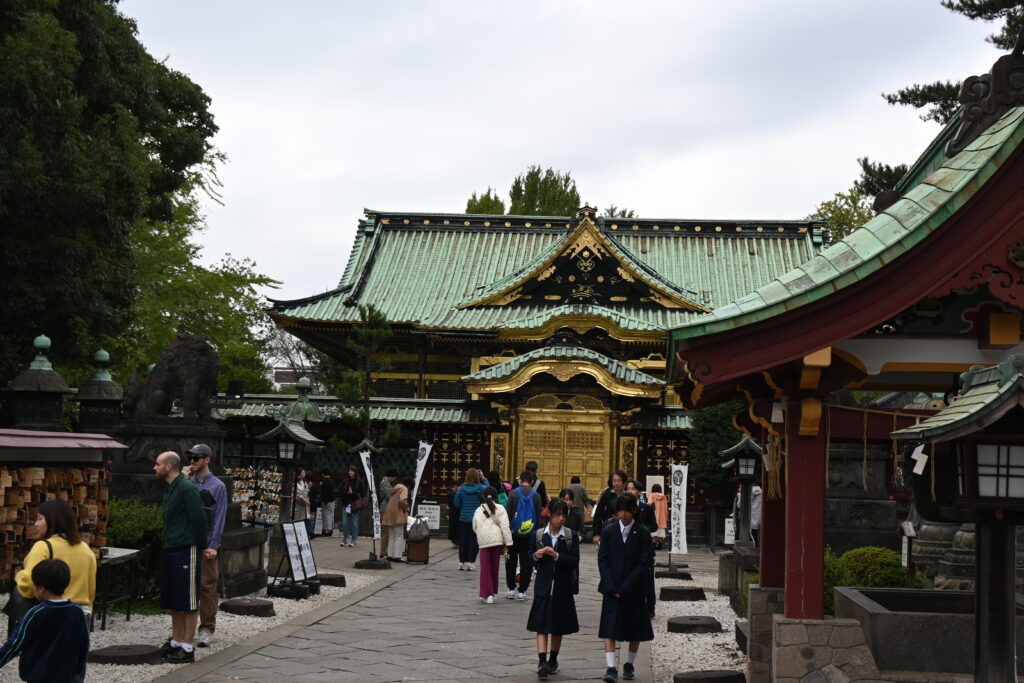
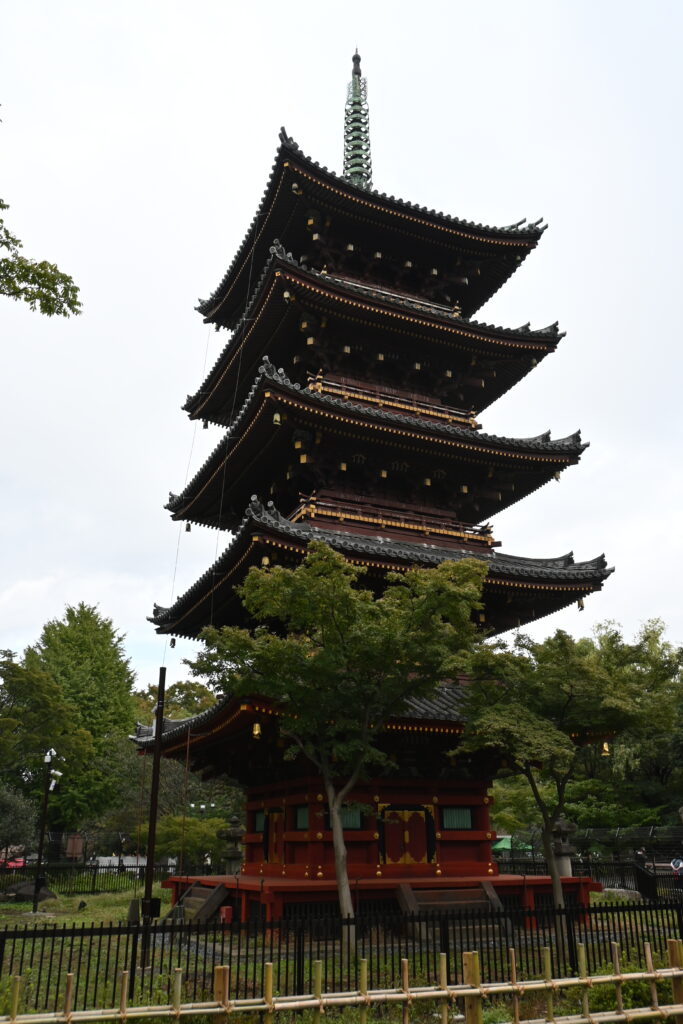
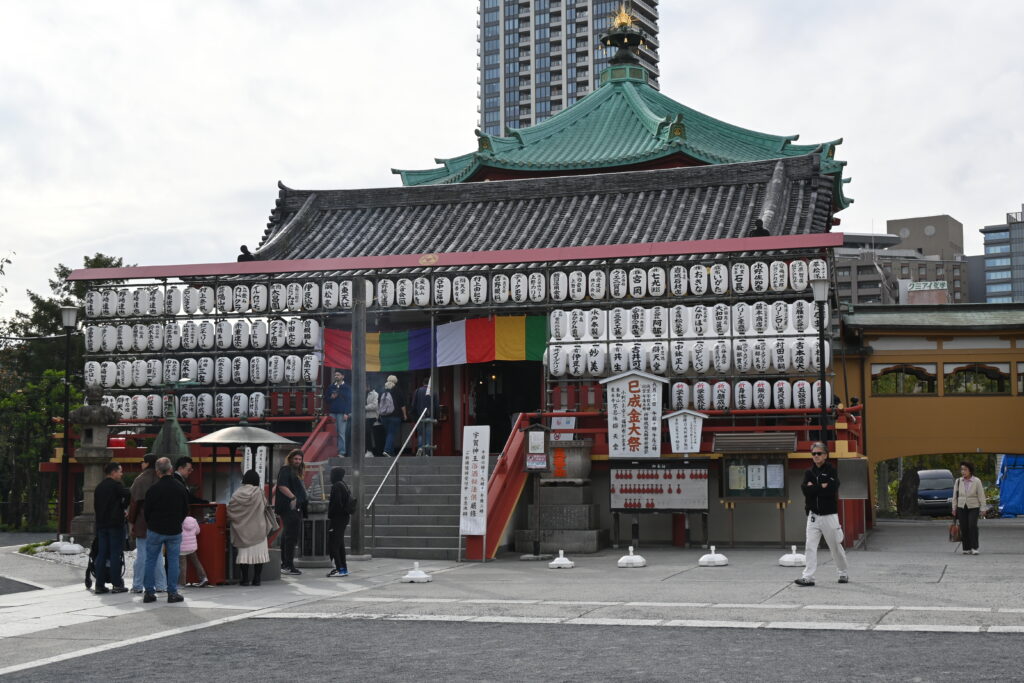
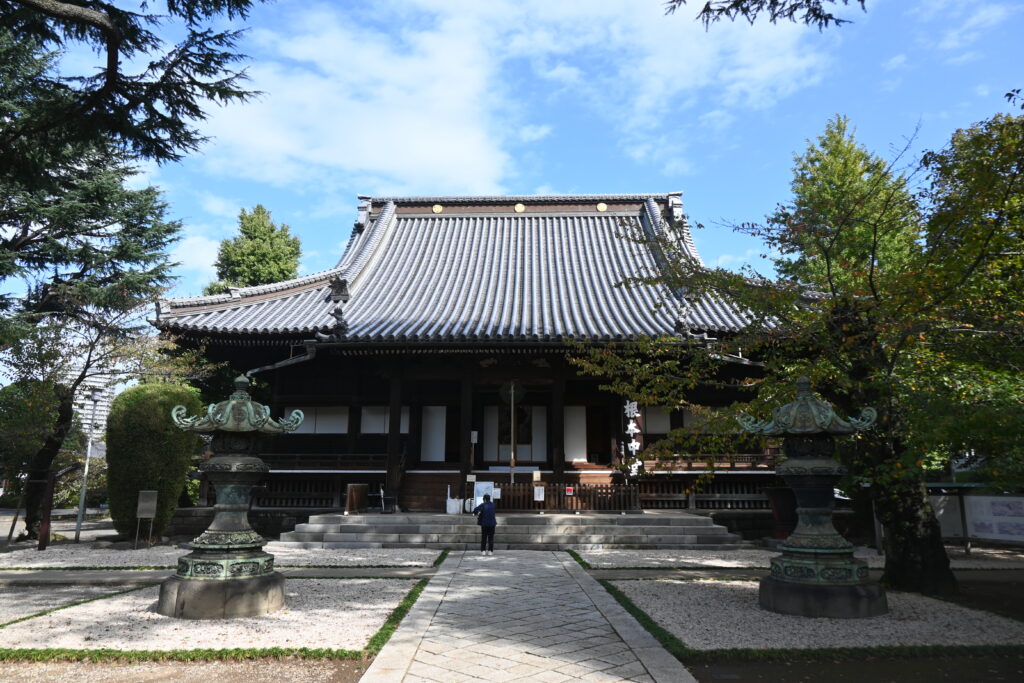
Walk north along the road to find what remains of Kan’ei-ji. After the battle, the temple had lost almost everything, including its great main hall on today’s fountain square. In 1879 the monks brought a hall from Kitain, a temple in Kawagoe with deep ties to Kan’ei-ji’s founder Tenkai. It had been built there in 1638. The hall was taken apart, carried to Tokyo by boat, and rebuilt here as the new main hall. So the shoguns’ great temple, which once covered the whole hill, now lives quietly in a corner at the north end of the park.
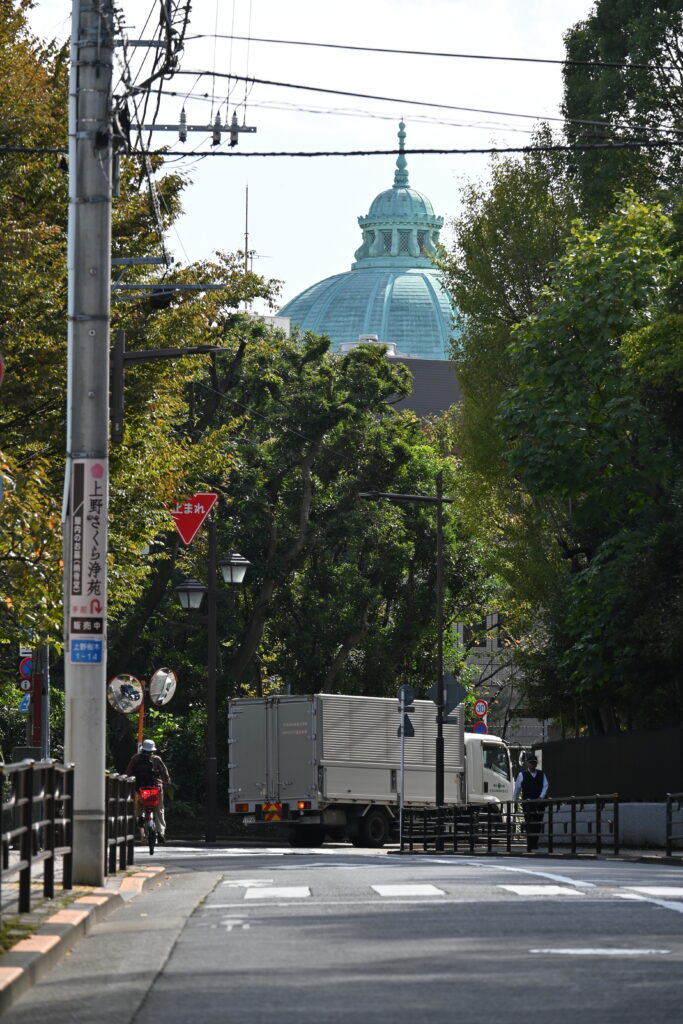
From the road in front of the temple, look back: you can see the green dome of the Hyokeikan above the trees.
Finish: Ryodaishi Bridge, on the ancient shore
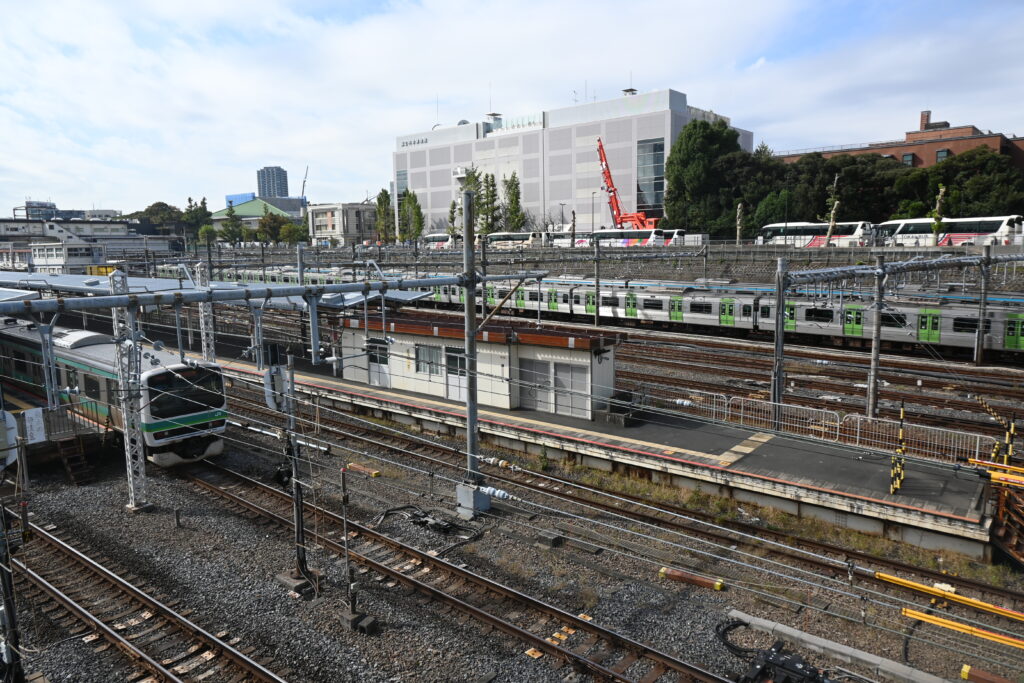
End the walk at Ryodaishi Bridge, just north of Ueno Station, which crosses the railway from the hilltop. Its name comes from Ryodaishi, a temple of Kan’ei-ji nearby. From here you look down on a river of tracks: the Yamanote and Keihin-Tohoku Lines, the Utsunomiya, Takasaki and Joban Lines, and limited express trains such as the Hitachi. Because the trains are just leaving or entering Ueno Station, they move slowly, so you can watch them properly. Stay ten minutes and you will see many kinds of trains, sometimes three or four at once. Children love it, and so do I.
Why the trains run along the foot of the hill
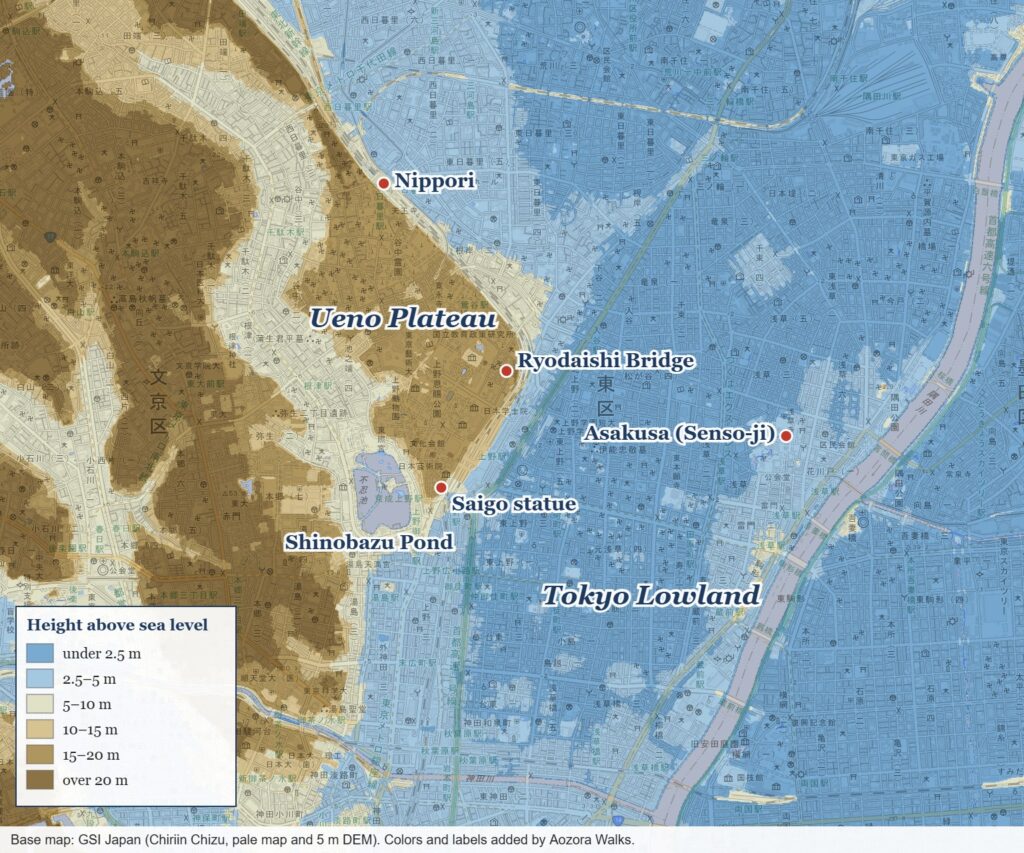
Remember the elevation map in Part 1? The railway runs exactly along the foot of the Ueno Plateau, on the flat lowland. About 6,000 years ago, when the sea was higher than today, this lowland was the seashore.
The proof lies a little farther north. At Kami-Nakazato in Kita City, at the foot of the same plateau, the Jomon people left the Nakazato shell mound, a heap of shells about 1 kilometer long and up to 4.5 meters deep, made about 4,600 to 3,900 years ago. It sits on what was then a sandy beach, and archaeologists think it was a kind of seafood factory, where people heated and dried shellfish to trade inland. Today the shell mound, now a National Historic Site, lies between two railway depots, the Tokyo Shinkansen depot and the Oku train depot. The Jomon beach has become a parking lot for trains.
Trains and shell mounds have met before. In 1877 the American zoologist Edward Morse was riding the train from Yokohama to Shinbashi when he spotted layers of shells in a cliff near Omori. Because the railway runs along the foot of the plateau, the cliff was right beside his window. His dig at the Omori shell mound is remembered as the start of modern archaeology in Japan. So as you watch the trains from Ryodaishi Bridge, remember: you are standing on the edge of an ancient sea.
Best time to go
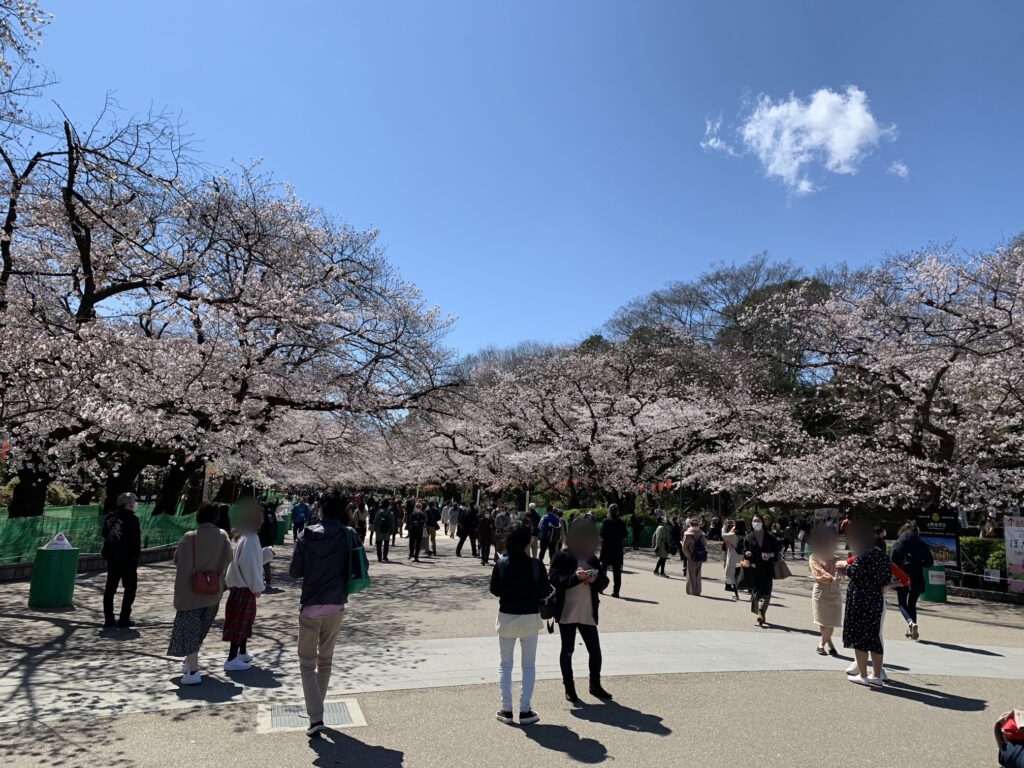
Come on a weekday morning, Tuesday to Friday, when the museums open (9:30). The Tokyo National Museum and the National Museum of Western Art stay open until 20:00 on Fridays and Saturdays, which is a quieter time to visit. In late March and early April, the cherry blossoms make the walk beautiful, but very crowded.
Good to know before you go
- Mondays: the Tokyo National Museum and the National Museum of Western Art are closed (except on public holidays).
- Tokyo Bunka Kaikan is closed for renovation until some time in fiscal 2028. You can only see the outside.
- The National Museum of Western Art can be very crowded during special exhibitions. The Rodin sculptures outside are free.
- Prices change: the permanent collection of the National Museum of Western Art will cost ¥1,000 for adults from 20 March 2027.
- Give the Tokyo National Museum time. The main building alone can take several hours.
- The old station is open only during special events, and the Sogakudo only on certain days. Check before you go.
Getting there
- Start: JR Ueno Station, Park Exit. From Asakusa, take the Ginza Line to Ueno (about 5 minutes) and walk through the station to the Park Exit.
- From Narita Airport: Keisei Skyliner to Keisei Ueno, then walk up through the park (or start with Part 1).
- Finish: from Ryodaishi Bridge, walk back to JR Ueno Station (about 5 minutes), or north to JR Uguisudani Station.
Make a day of it
See Ueno with a local guide
This three-hour small-group tour in English covers Ueno Park, the Tokyo National Museum and the Ameyoko market. It is still new, with only a few reviews so far, though they are good. The museum ticket (¥1,000) is not included. Free cancellation up to 24 hours before. Prices may change, so check the details before you book.
Where to stay
Mitsui Garden Hotel Ueno
Why choose: Right by JR Ueno and Keisei Ueno stations, so you can walk to the museums in minutes, and the Skyliner to Narita Airport is on your doorstep.
Nohga Hotel Ueno Tokyo
Why choose: A stylish small hotel that works with local craftspeople, in a quieter street east of Ueno Station. Good for design lovers.
Official websites
- Tokyo National Museum
- National Museum of Western Art
- National Museum of Nature and Science
- Sogakudo (Japanese)
- Old Hakubutsukan-Dobutsuen Station (Keisei, Japanese)
Next time
Next time, we keep walking north from Kan’ei-ji into Yanaka and Nippori: quiet temple streets, the old-fashioned Yanaka Ginza shopping street, and the edge of the plateau where the Jomon people once lived beside the sea.
Photos: Aozora Walks unless otherwise noted. Woodblock prints: National Diet Library Digital Collections (public domain): Kawanabe Kyosai, “Panorama of Ueno” (Famous Places of Tokyo, 1877), https://dl.ndl.go.jp/pid/1305644; Yoshu Chikanobu, “The Second National Industrial Exhibition at Ueno” (1881), https://dl.ndl.go.jp/pid/1307421. Elevation map made from GSI Japan’s Chiriin Chizu (pale map and 5 m DEM), with colors and labels added by Aozora Walks. Information as of October 2026.