
This post contains affiliate links. If you book through them, I may earn a small commission at no extra cost to you.
In Part 1, we walked along the top of a narrow ridge from Nishi-Nippori to Nippori, and finished at the top of a short flight of steps called Yuyake Dandan. Now we go down those steps into the valley below.
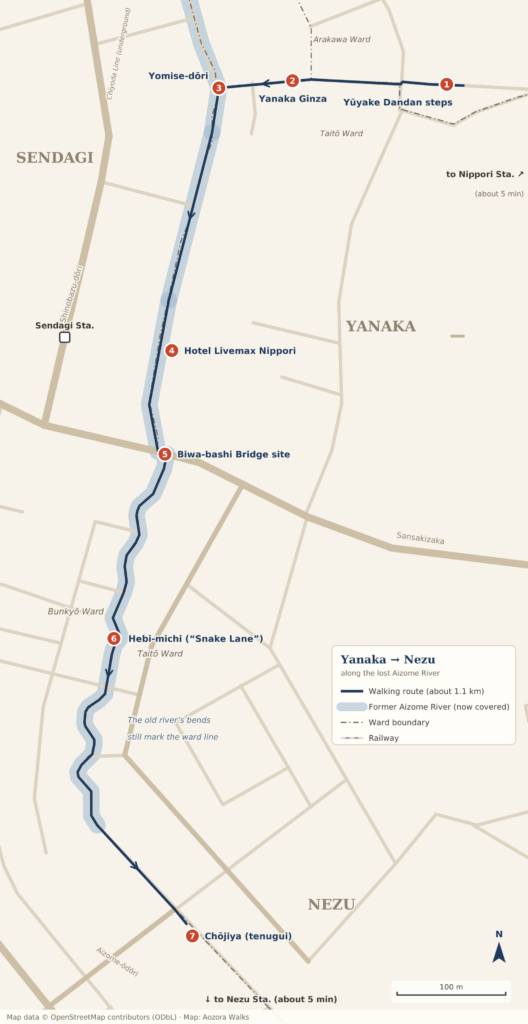
Down here, Tokyo feels completely different: a lively old shopping street, cats painted on every other sign, and quiet lanes where people hang their laundry. But there is something hidden here too. A river once flowed along the bottom of this valley. It disappeared underground long ago, yet it still decides where the streets bend and even where one ward ends and the next begins. In this walk, we will follow that lost river from Yanaka Ginza to Nezu.
Quick facts
| Route | Top of the Yuyake Dandan steps → Yanaka Ginza → Yomise-dori → site of the Biwa-bashi Bridge → Hebi-michi (“Snake Road”) → Chojiya tenugui shop in Nezu |
| Distance | About 1.1 km to Chojiya (Hebi-michi itself is about 380 m), or about 1.5 km to Nezu Station |
| Time | 1.5 to 2 hours, depending on how much you eat and shop |
| Cost | Free to walk. Bring cash and a little extra for street food |
| Best for | Food lovers, cat lovers, readers of Natsume Soseki, and anyone who likes to walk with a map in hand |
| Nearest stations | Start: Nippori (West Exit, about 5 minutes). Finish: Nezu or Sendagi (Tokyo Metro Chiyoda Line) |
Yuyake Dandan and Yanaka Ginza
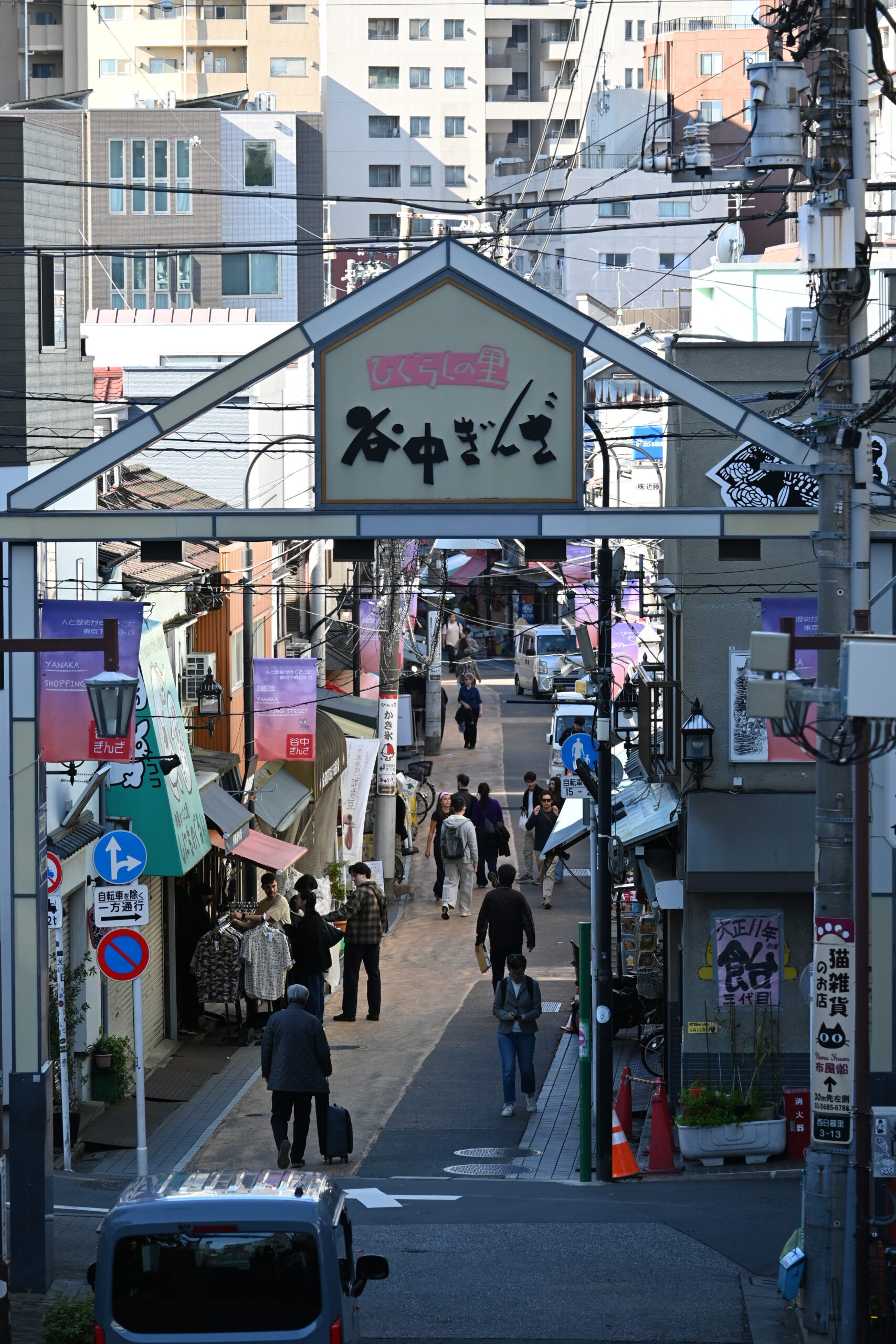
From the top of the Yuyake Dandan (“sunset steps”), you look straight down the length of Yanaka Ginza. Across Japan, hundreds of shopping streets are called “something Ginza”, borrowing the name of Tokyo’s most famous shopping district. This one grew up naturally around 1945, just after the Second World War, as a place where local people bought their food and everyday goods.
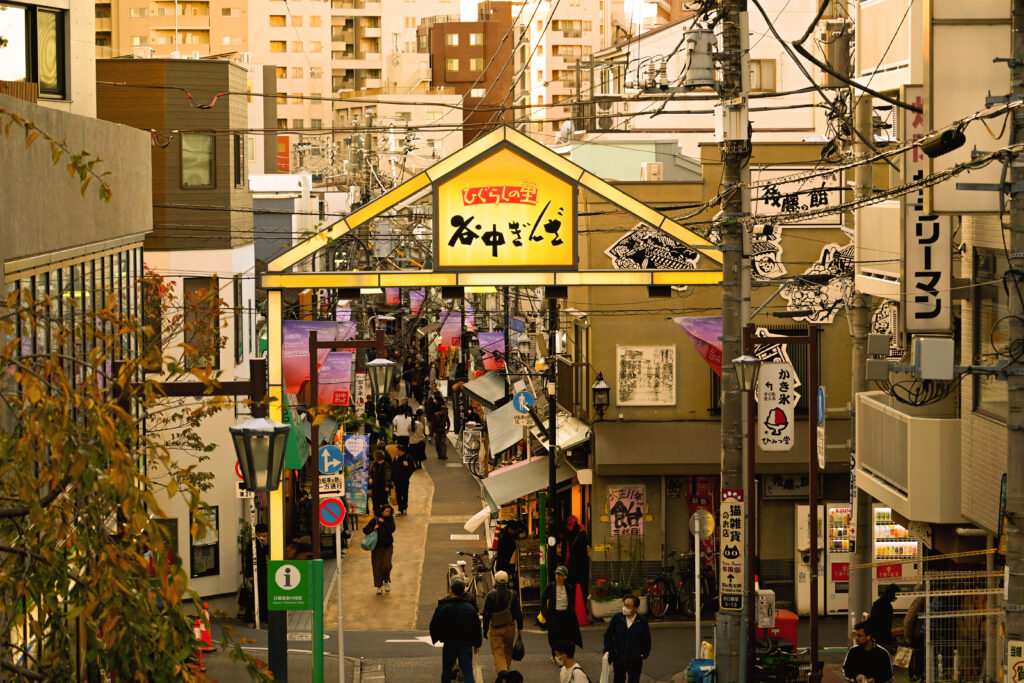
As big shopping centers spread across Japan, many old-style shopping streets disappeared. Yanaka Ginza survived. From around the 1990s, it became popular for its retro, Showa-era atmosphere, and together with nearby Nezu and Sendagi, the area became known as Yanesen, one of the places where old downtown Tokyo still lives. In the last ten years, more shops for visitors have opened, but there are still greengrocers, clothing shops and family-run delis serving the neighborhood. The new cafes and souvenir shops are lovely, but do stop at the old shops too.
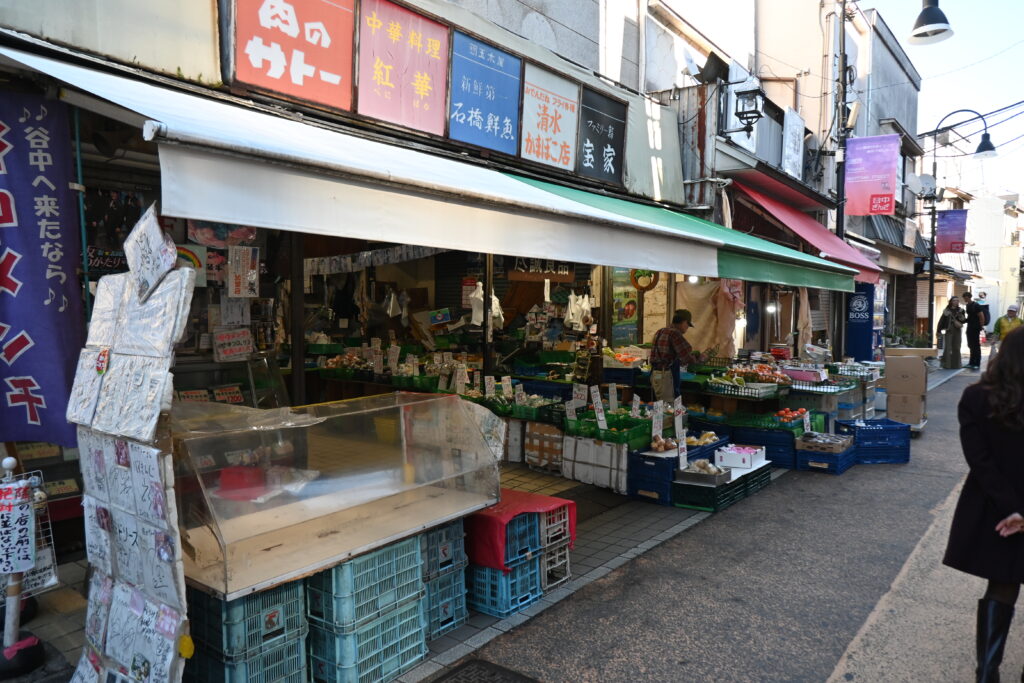
Suzuki vs. Sato: the Yanaka menchi-katsu
No one seems to know exactly when it started, but Yanaka Ginza became famous for menchi-katsu, a deep-fried patty of minced meat in crispy breadcrumbs. The center of the menchi world here is two butcher shops facing each other across the street: Niku no Suzuki and Niku no Sato. Suzuki and Sato are the two most common family names in Japan, so having them face each other is a little joke that every Japanese visitor notices.
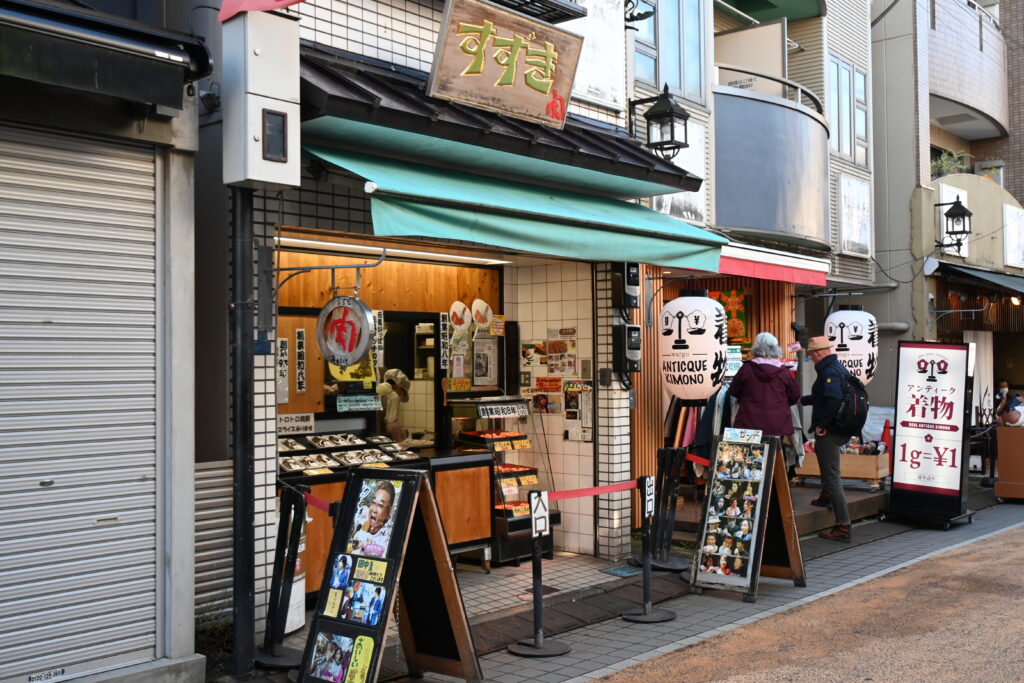

Both are real butcher shops, but most visitors come for the hot croquettes and menchi-katsu fried for eating on the spot. Try one from each and decide for yourself.
Two newer favorites
Among the shops that have opened in recent years, two are my favorites.
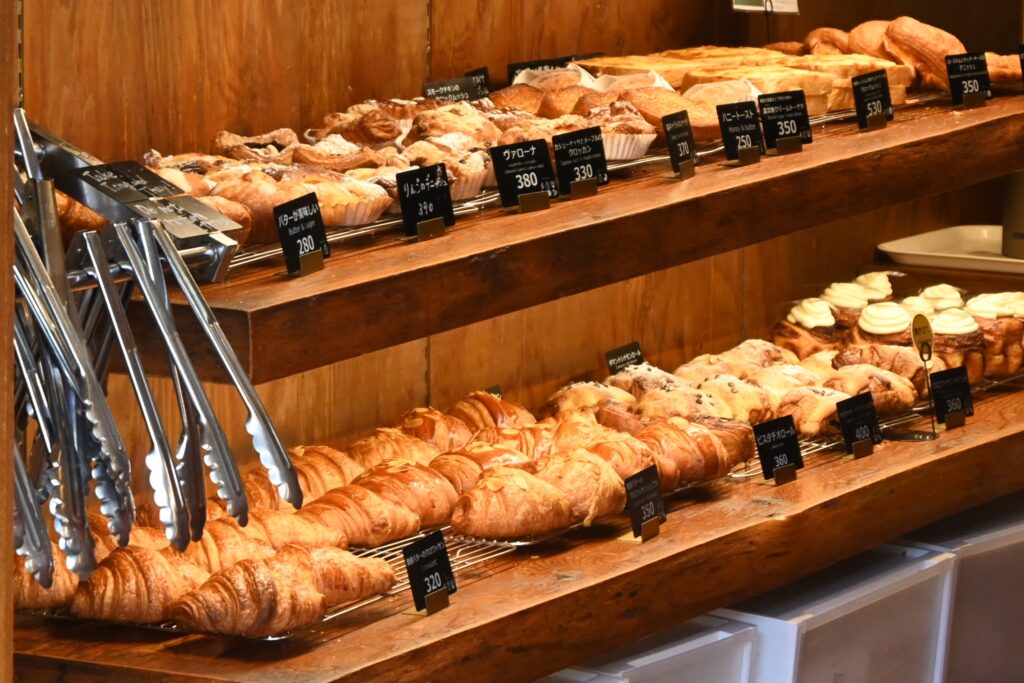
Bakery Hitotema sells the soft, filled breads that every Japanese bakery has, as well as simple loaves and croissants. They bake with Japanese wheat and butter, and without shortening, margarine or additives. The shop is tiny but always busy, and it opens early (6:00 to 19:00, every day, at the time of writing).

Capsule Rakkyoku is not what it looks like. Its name is a pun: yakkyoku means pharmacy, and rakkyoku means something like “the fun shop”. Inside are rows of gachagacha (capsule toy machines). Put in your coins, turn the handle, and a plastic capsule with a random figure or tiny model drops out. They used to be for children, but the quality today is so high that adults collect them too, and they are a big hit with visitors. The staff wear white coats like pharmacists, and they will help if you are not sure how the machines work.

Yanaka, the town of cats
Yanaka is also known as a town of cats. You will find them everywhere: painted on signs, carved in wood, sitting on roofs. Here are some I found. There are many more, so look up and around as you walk.
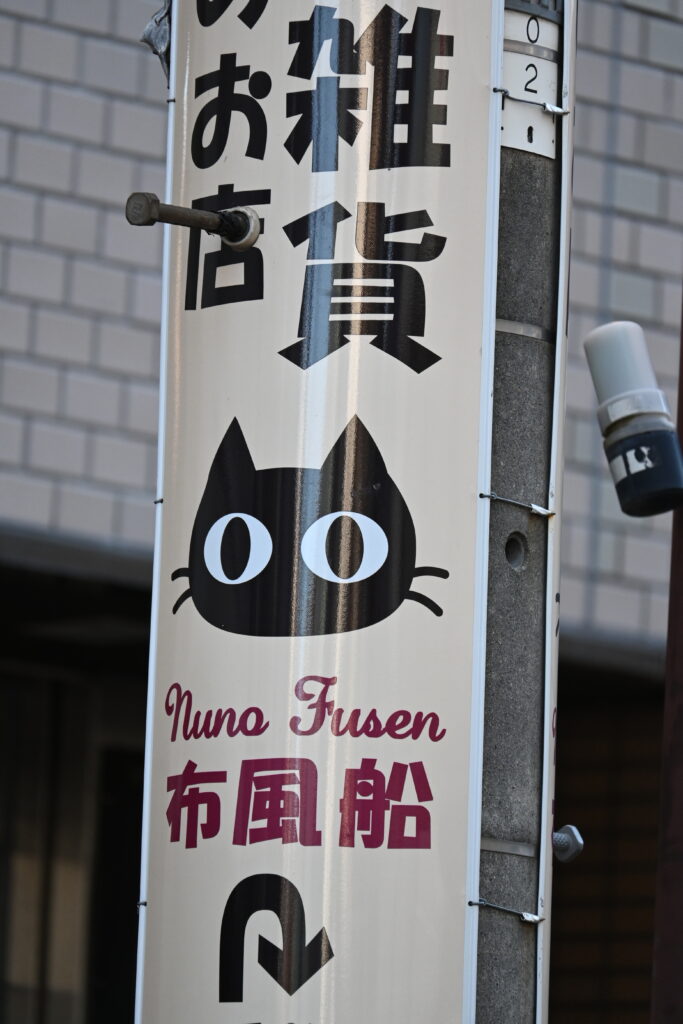
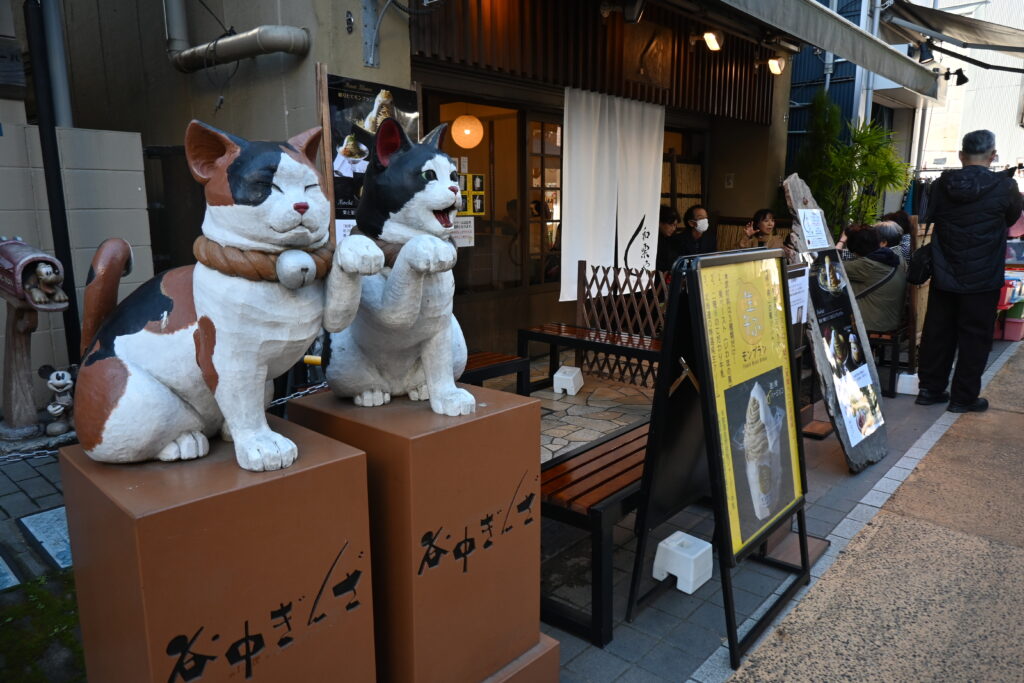
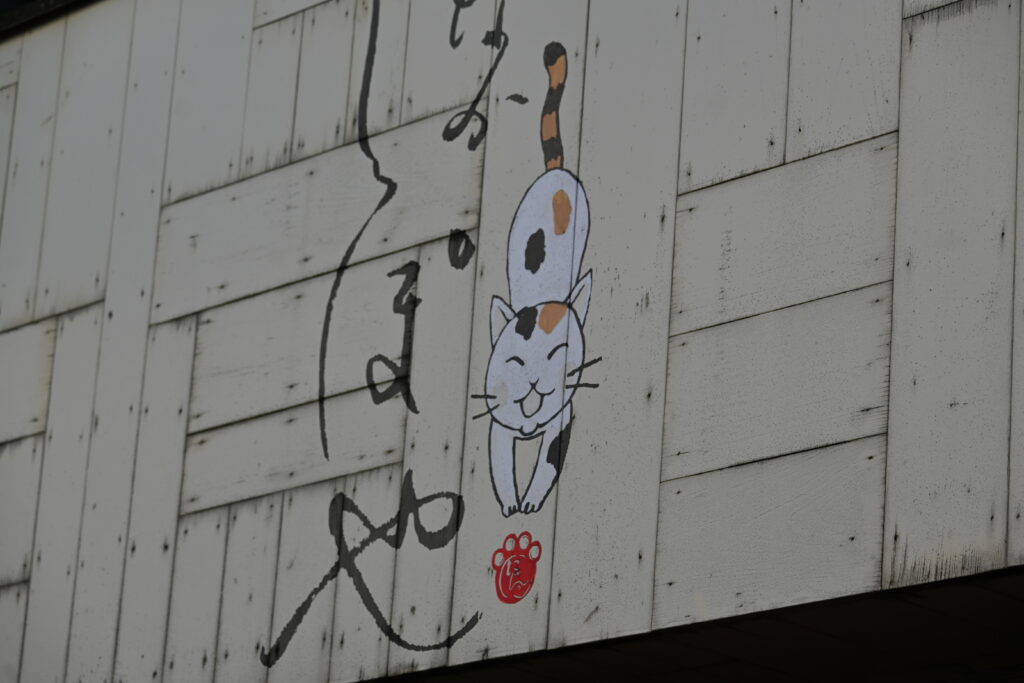
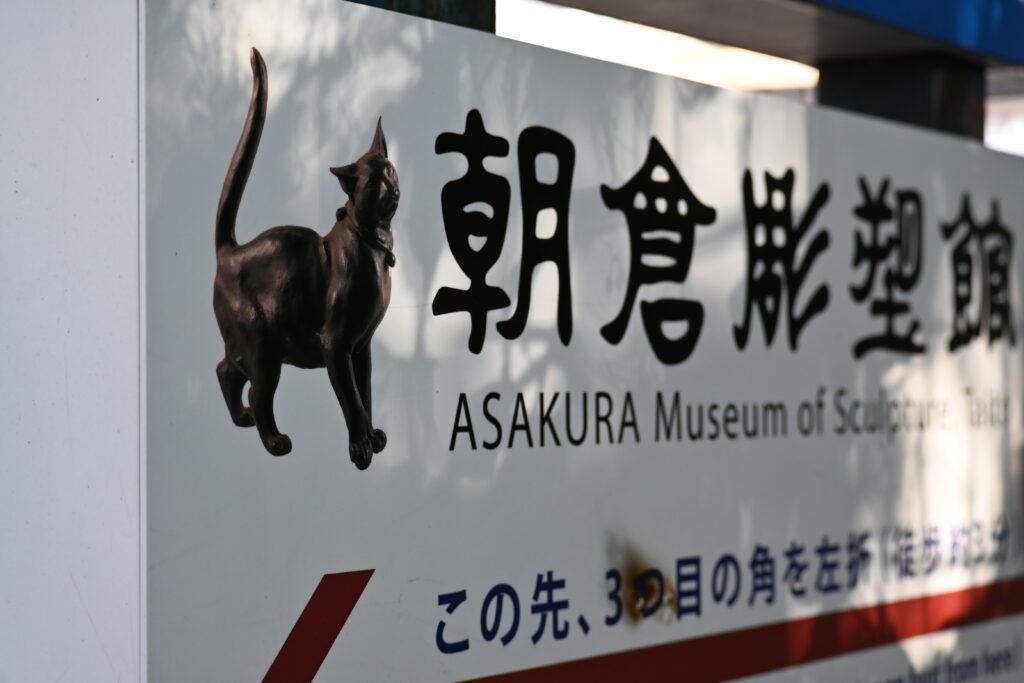
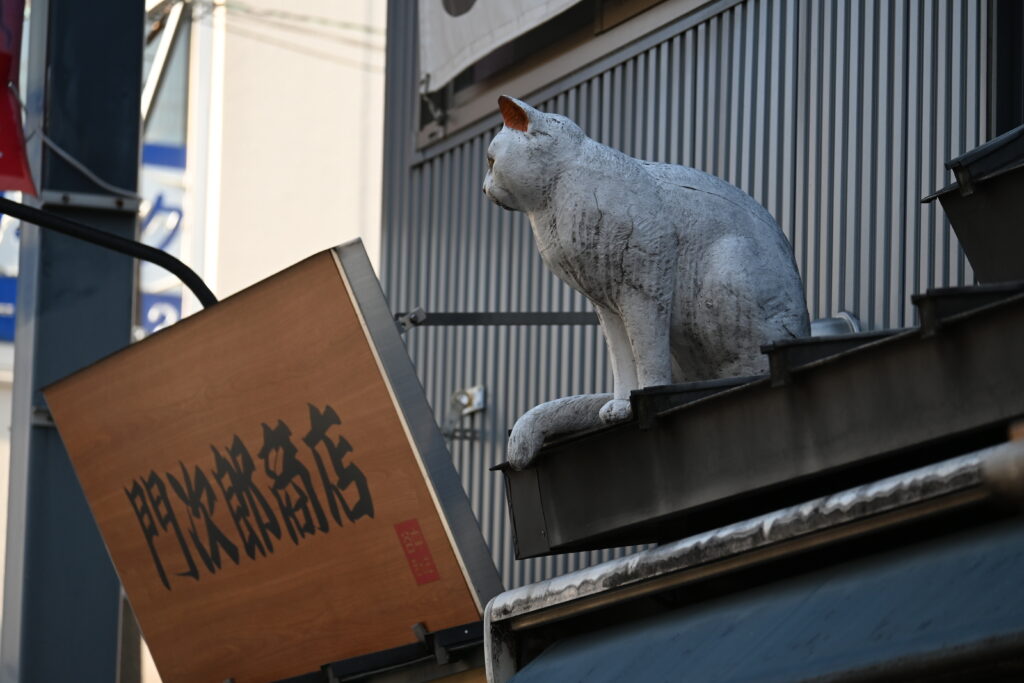
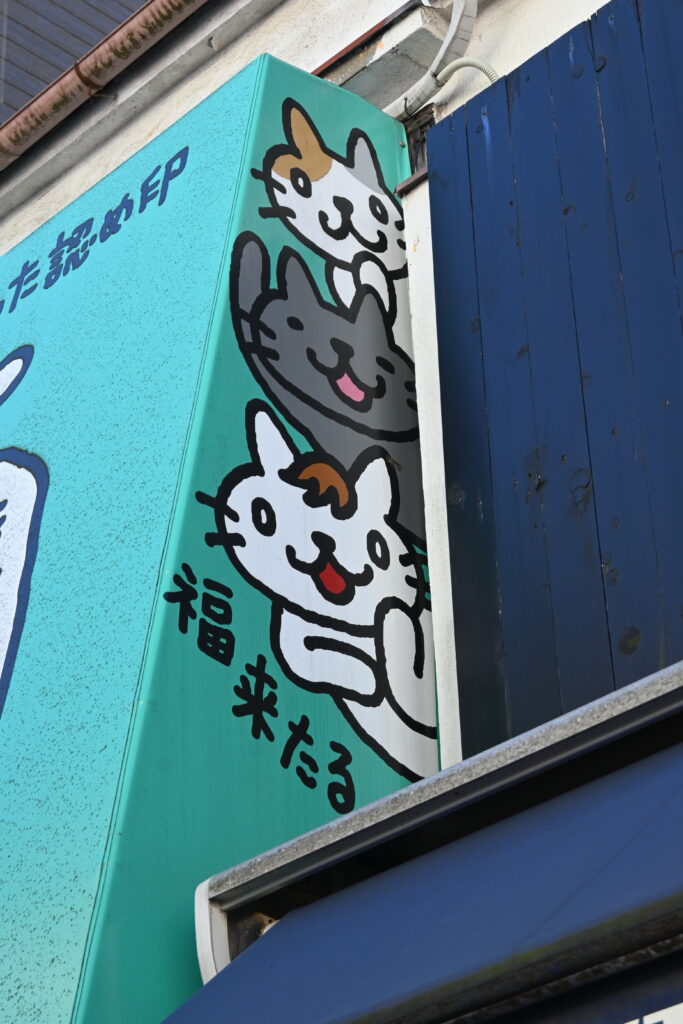
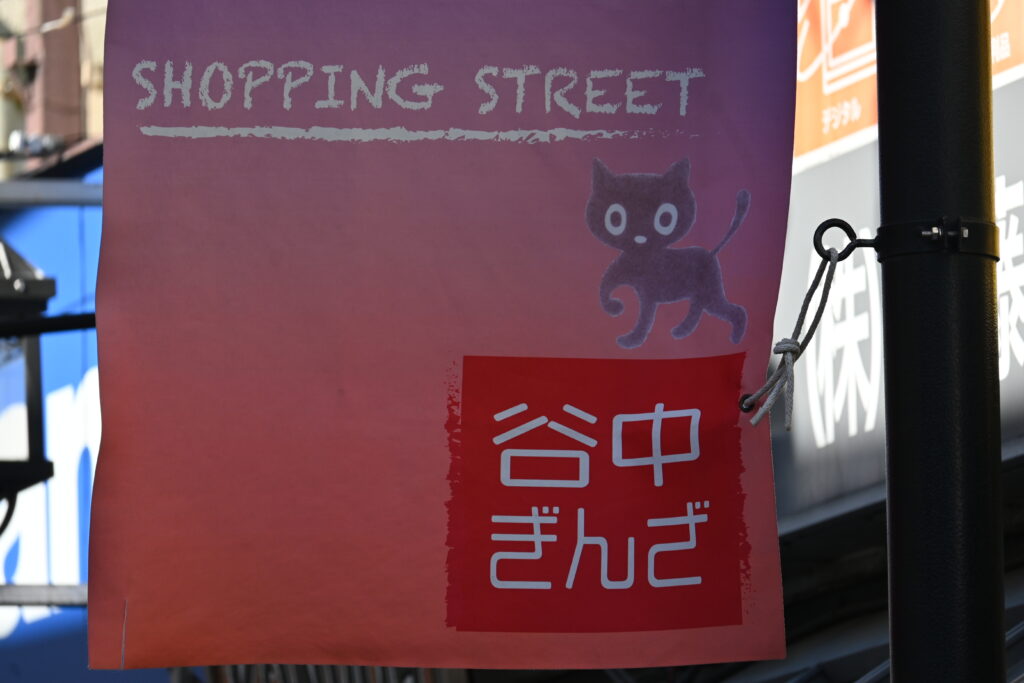
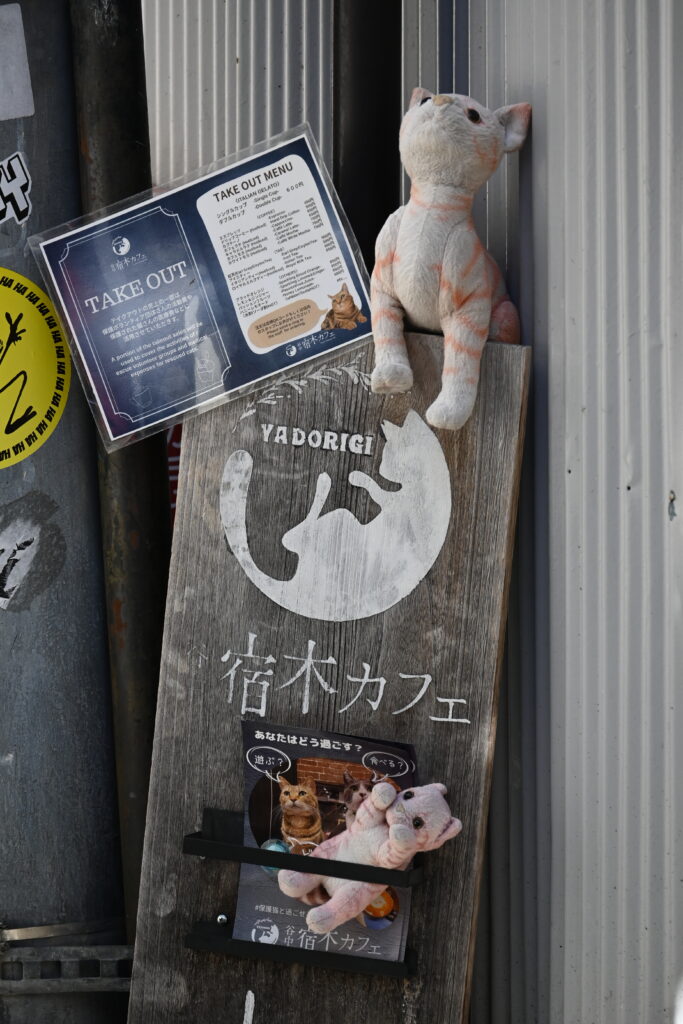
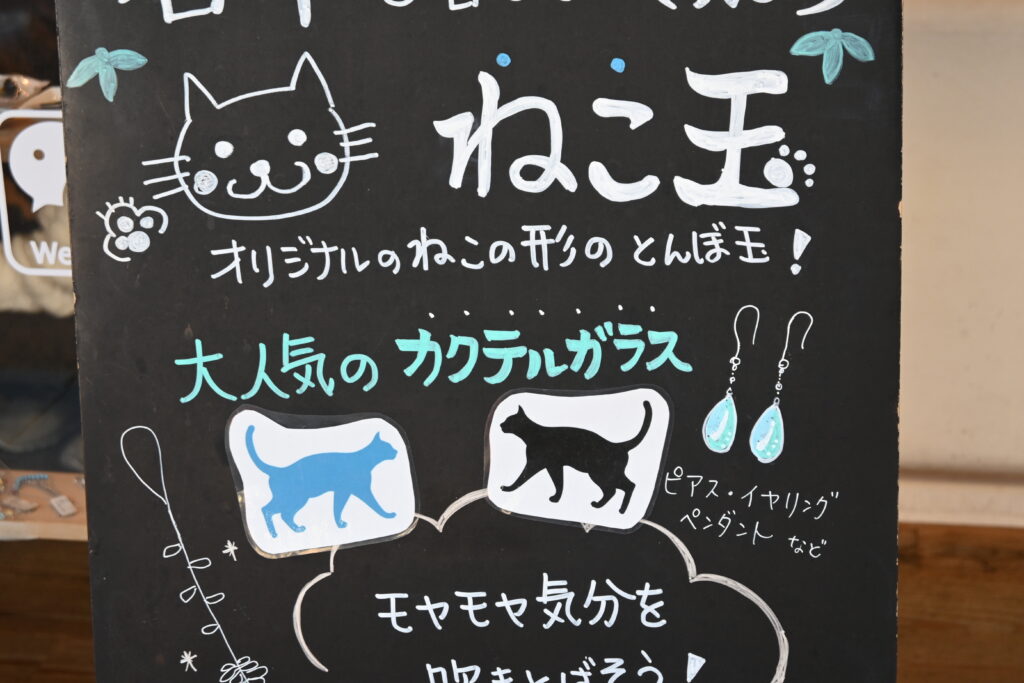
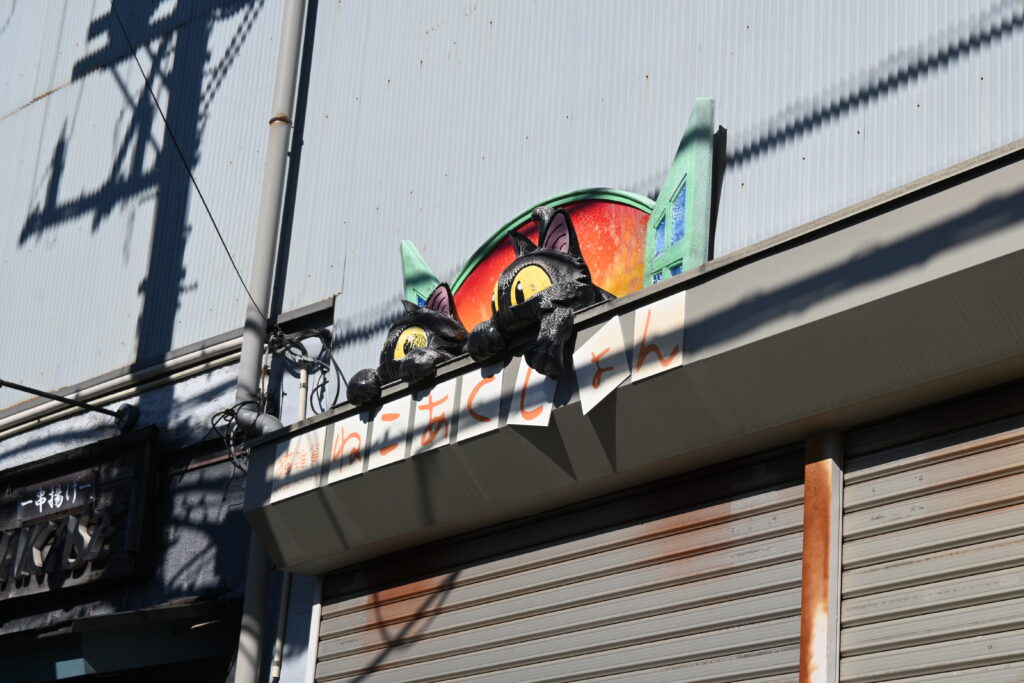
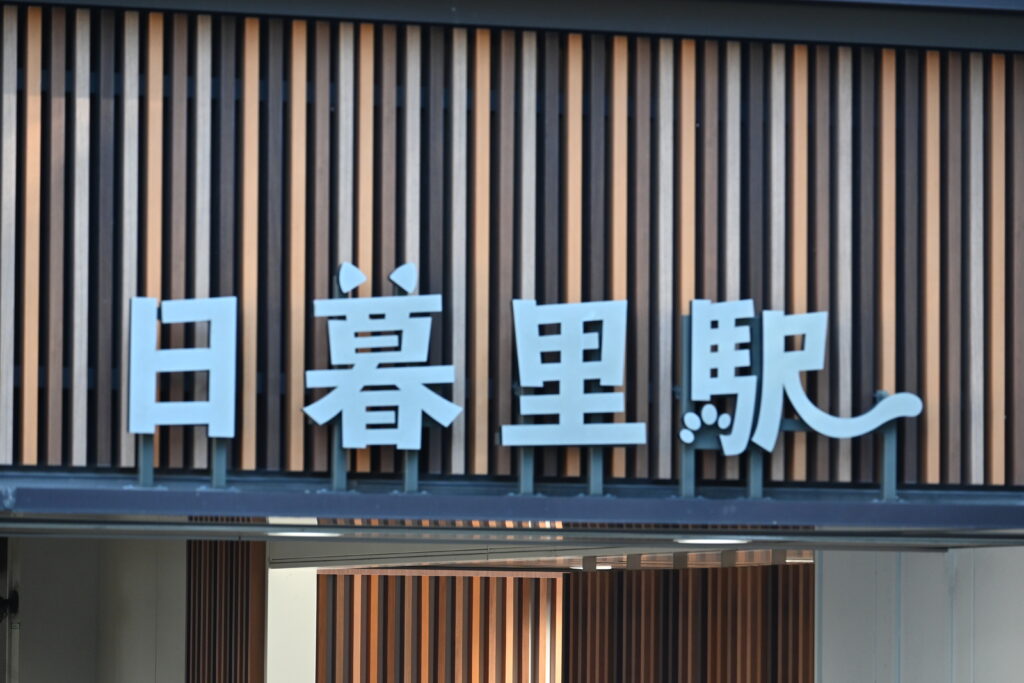
Funnily enough, you will not see many real cats. Few people know why Yanaka became a cat town. I once asked a shopkeeper who has been here for a long time, and this is what I heard. When the shopping street grew up after the war, stray cats gathered around the food shops, and some people fed them. In those days the street was not as neat as it is now, and there were small empty lots and gaps between the shops where the cats could live. As the area became popular and tidier, and more and more people came, the cats slowly disappeared. The cats on the signs are what remains.
Yomise-dori: a street that was once a river
At the far end of Yanaka Ginza, you come out onto another shopping street running across it: Yomise-dori. Look at the map again. This street is the boundary between Bunkyo Ward and Taito Ward, and it curves gently in a way that straight city streets usually do not. That is because Yomise-dori was built over a river.
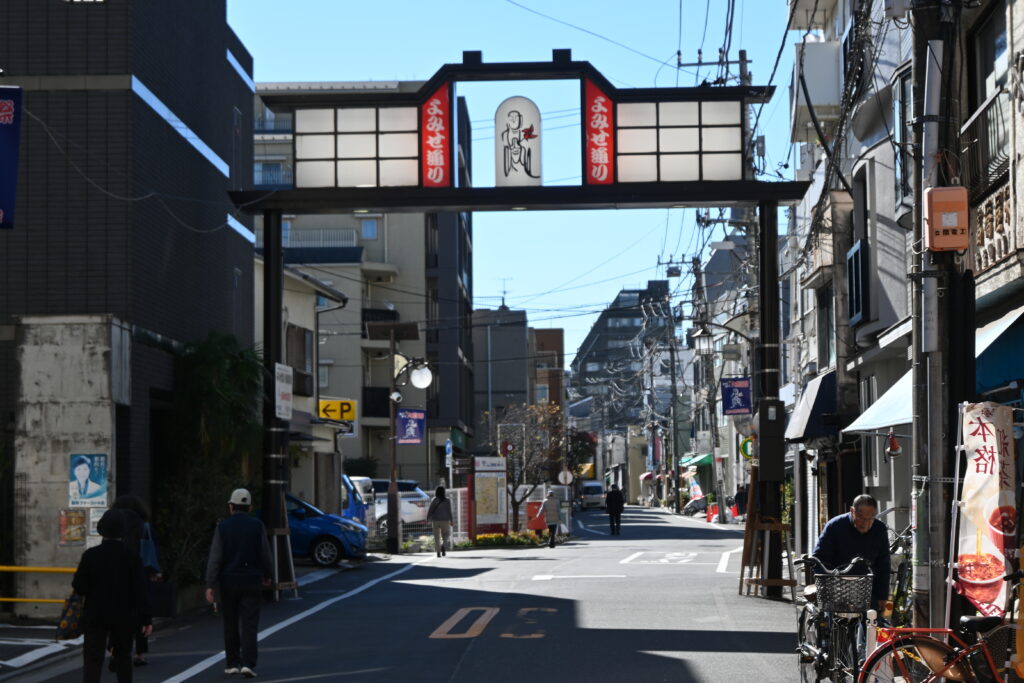
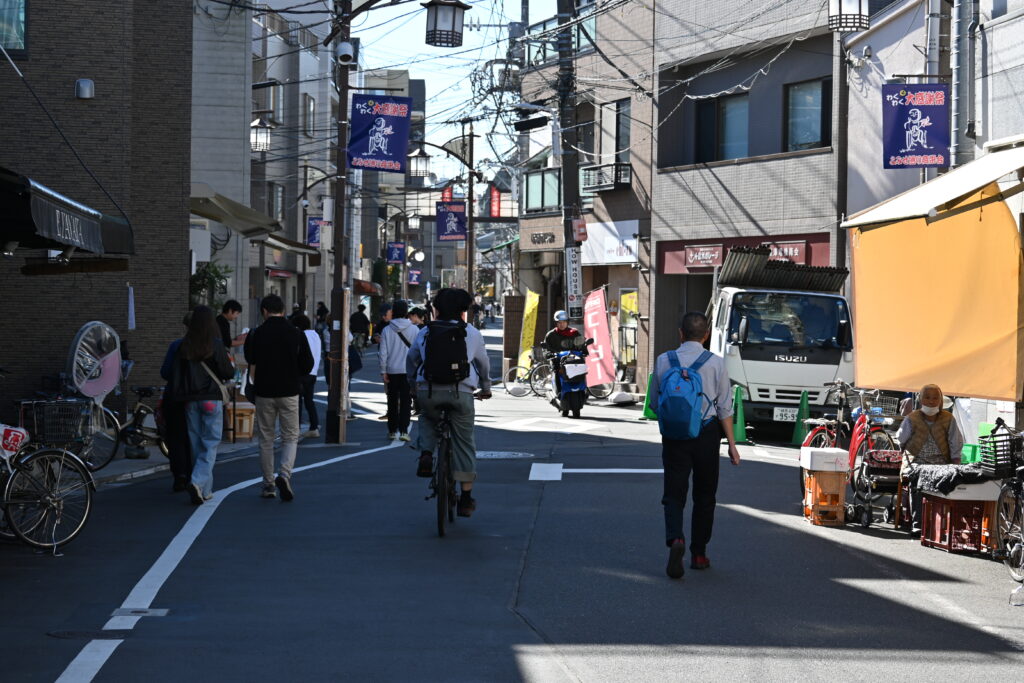
The Aizome River (also called the Yata River) started near Komagome, to the north, and flowed down this valley into Shinobazu Pond in Ueno. It is the same valley we looked into from Fujimizaka in Part 1. Today the river is hidden under the road, but the valley, the curves and the ward boundary are all still here.
The Biwa-bashi Bridge and a “stray sheep”
Walk south along Yomise-dori toward Ueno. At a small crossing you will find a sign for the site of the Biwa-bashi Bridge (also called Aizome-bashi). There is no bridge anymore, of course, but the name tells you that here people once crossed the water.

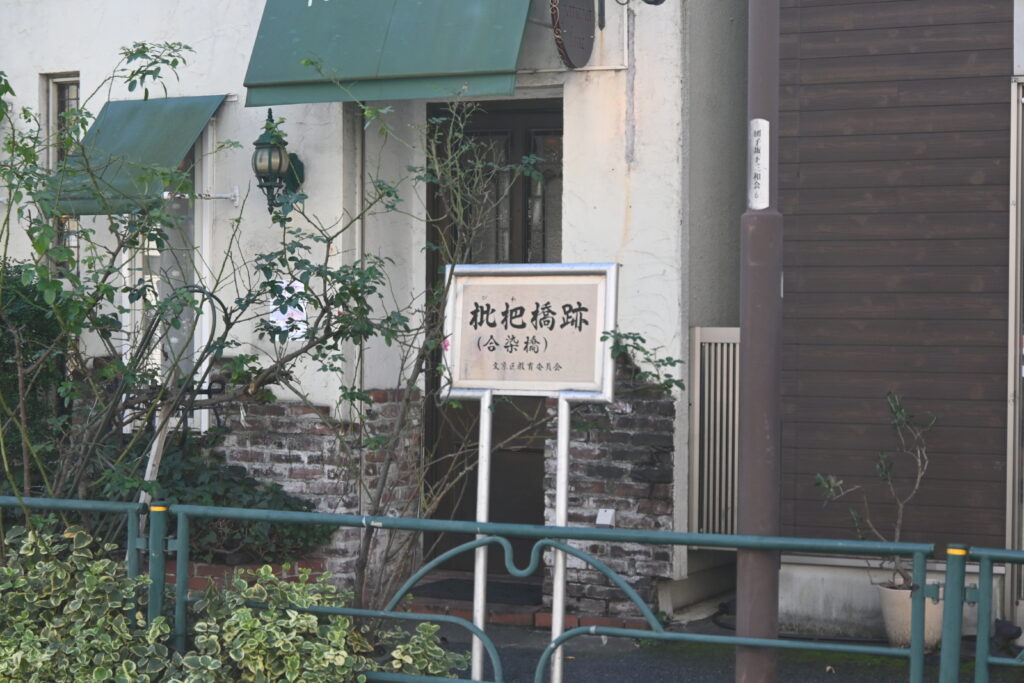
This little river appears in one of the most famous Japanese novels, Sanshiro (1908) by Natsume Soseki. Sanshiro, a young student from the countryside, and Mineko, a clever young woman from Tokyo, visit the chrysanthemum dolls at Dangozaka, a slope just four or five minutes from here. They leave the crowds and sit by a small stream, the Aizome River. There, Mineko suddenly asks him a question:
「迷子の英訳を知っていらしって」
“Do you know the English for maigo, a lost child?”
Sanshiro has no answer, so Mineko answers herself: 「迷える子(ストレイ・シープ)――わかって?」 “Stray sheep. Do you understand?” The phrase “stray sheep” echoes through the rest of the novel. It is a nice thought that this famous scene took place beside a river that you can no longer see.
Hebi-michi: the Snake Road
A little further on, a narrow lane leaves the main street and starts to twist and turn between the houses. This is Hebi-michi, the “Snake Road”, well known among people who love walking in Tokyo. It takes about ten minutes to walk.
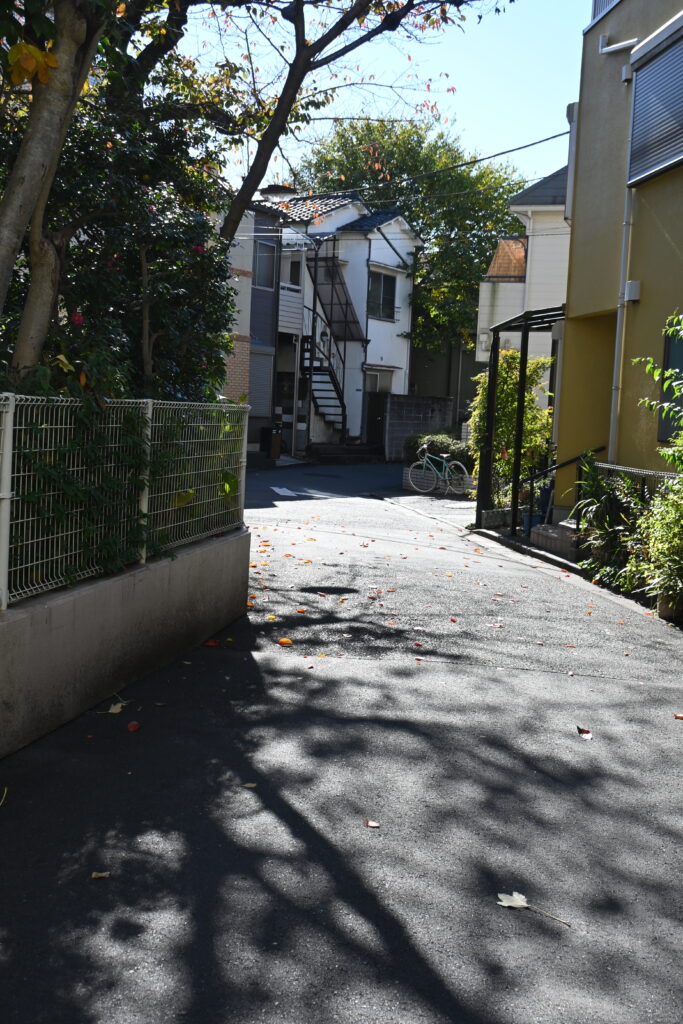
Why does it bend so much? Because the road follows the old river exactly. The Aizome River meandered along the valley floor, and when it was covered over, the lane simply kept its shape. And look at the map once more: the ward boundary between Bunkyo and Taito runs exactly along the Snake Road, bend after bend. The boundary was drawn along the river, and the river is gone, but the line is still there.
Compare it with this old photograph of the Aizome River. The water ran in a narrow channel between the houses, just where the lane runs today.

What stayed the same: the line of the river, which you can still trace with your feet. What changed: the water has gone underground, and the riverbank is now a quiet lane of homes, with a few small cafes and shops. Hebi-michi is mostly a residential street, so please walk quietly.
Chojiya: an old dyer in the town of indigo
At the end of the Snake Road, you come out onto a straight street near Nezu. Here stands Chojiya, a dyer’s shop founded in 1895, now famous for its tenugui, thin cotton hand towels printed with beautiful patterns. They make light, practical souvenirs.
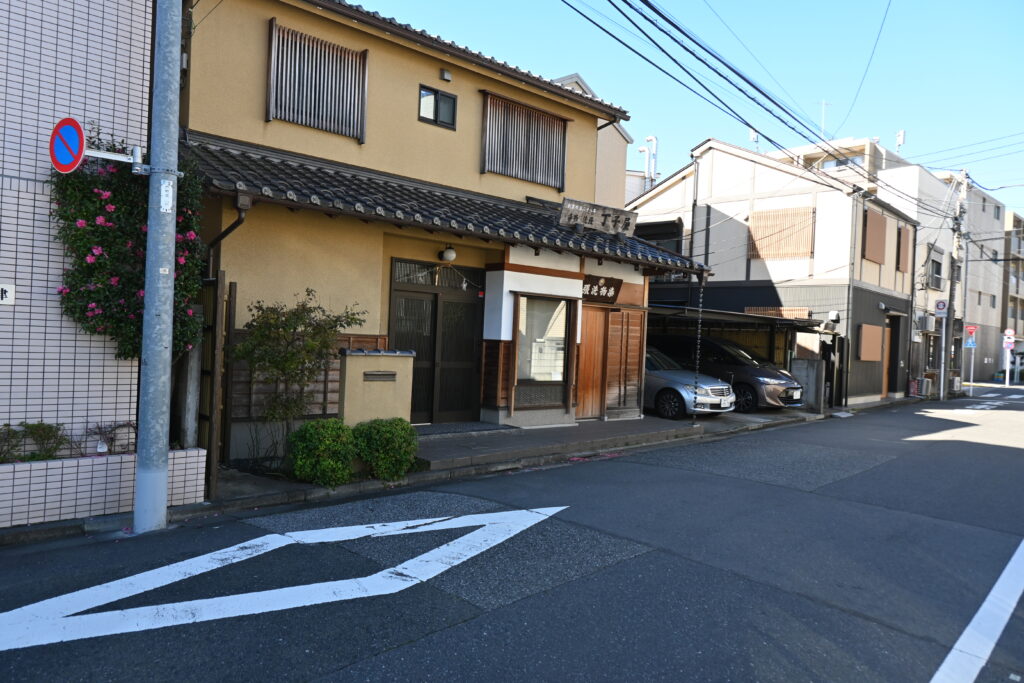
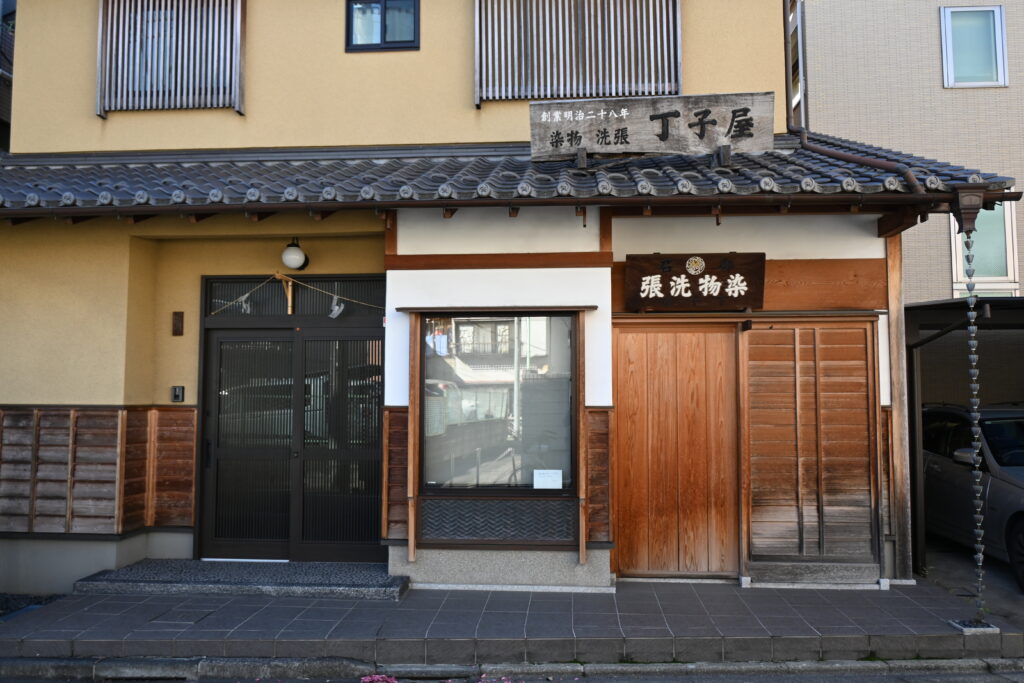
The river’s name, Aizome, means “indigo dyeing”. There is a well-known story that it got this name because many indigo dyers and dyeing shops worked along its banks, and the river seems to have been called Aizome already in the Edo period. In 1872 the town here was named Aizome-cho after the river, and the name lives on today in the local neighborhood association and in Aizome-odori street. Chojiya itself is younger than the river’s name, but it carries on the dyeing tradition of this neighborhood.
Best time to go
Yanaka Ginza is liveliest in the afternoon, especially on weekends, when it can be very crowded. For a calmer walk, come on a weekday morning, when the bakery is already open and the shops are setting up. Hebi-michi is pleasant at any time, but remember that people live there. If you want to watch the sunset from Yuyake Dandan, check the time of sunset and the weather before you go.
Good to know before you go
- Crowds. Yanaka Ginza is a narrow street and gets very busy on weekends. Walk on the left and keep moving.
- Eating on the go. Please eat your street food in front of the shop where you bought it, and take your rubbish with you. There are few trash bins on the street.
- Cash. Many small shops accept cards or IC cards now, but some still prefer cash.
- Few real cats. Come for the cat art, not to meet cats.
- Hebi-michi is a residential lane. Keep your voice low, do not block the road and do not take photos of people’s homes.
- Opening hours. Shops keep their own hours and closing days. Check before you go if you want to visit a particular shop.
Getting there
- From Asakusa: Tokyo Metro Ginza Line to Ueno (about 5 minutes), then the JR Yamanote or Keihin-Tohoku Line to Nippori (about 3 minutes). Take the West Exit and walk about 5 minutes to the top of Yuyake Dandan.
- From Narita Airport: the Keisei Skyliner stops at Nippori.
- Going home: Nezu Station and Sendagi Station (Tokyo Metro Chiyoda Line) are both near the end of the walk. Nezu Shrine, with its tunnel of red torii gates, is also close by.
Make a day of it
Walk the Snake Road with a local guide
If you would like a guide, this small-group walking tour (fewer than seven people) starts at Nezu Station and includes Nezu Shrine, Hebi-michi, the Yanaka area and a stop at an old house cafe, where you can paint your own maneki-neko (beckoning cat). It has more than a hundred reviews. Prices may change, so check the details before you book.
Where to stay
If you want to stay right in the old town, there is a simple hotel on Yomise-dori, just along this walk.
Hotel Livemax Nippori
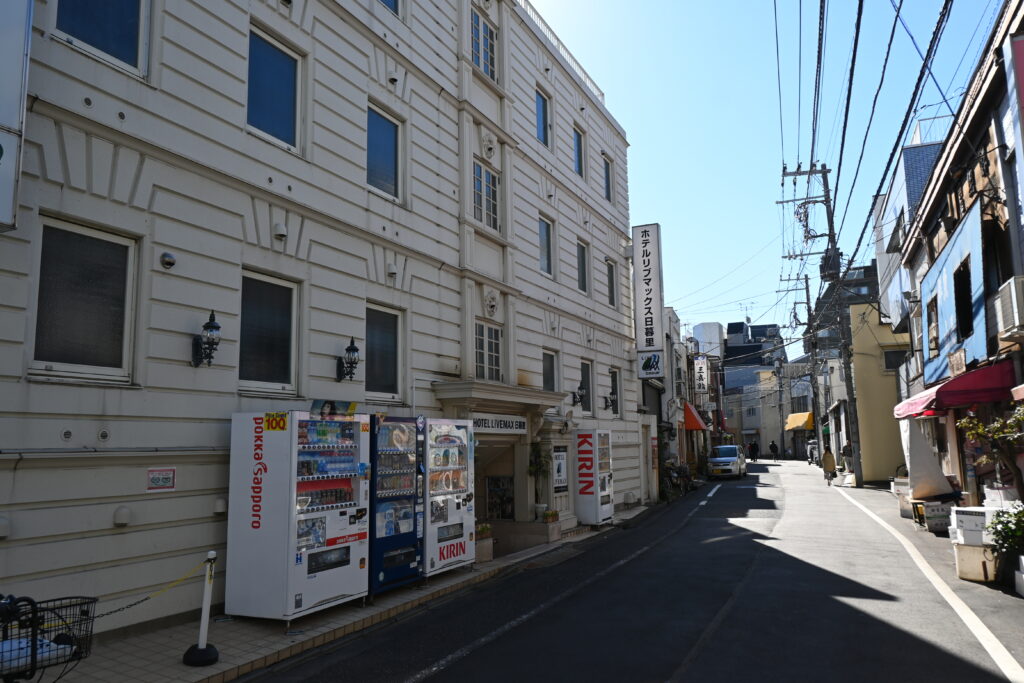
Why choose: A simple, budget business hotel about a minute from Sendagi Station, on Yomise-dori. The rooms are small and plain, so it is best for travelers who just need a clean place to sleep and want to walk around Yanesen early in the morning or in the evening. Check the reception hours before you arrive.
Official websites
- Yanaka and Nezu (GO TOKYO, official Tokyo travel guide)
- Bakery Hitotema (Instagram)
Next time
Next time: coming soon. More walks from Asakusa and around Tokyo are on the way.
Photos: Aozora Walks unless otherwise noted. Old photograph of the Aizome River: photographed at Bunkyo Furusato History Museum (文京ふるさと歴史館にて撮影). Map data © OpenStreetMap contributors (ODbL), map made by Aozora Walks. The quotation from Natsume Soseki’s Sanshiro (1908) is in the public domain; the English translation is our own. Information as of November 2026.