Category: Odaiba & Tokyo Bay

Odaiba and the Tokyo Bay waterfront: getting there from Asakusa, Rainbow Bridge, and the history of the land reclaimed from the sea.

  • Riding the Yurikamome Over Rainbow Bridge: Odaiba to Shimbashi on Tokyo’s Driverless Train

    Riding the Yurikamome Over Rainbow Bridge: Odaiba to Shimbashi on Tokyo’s Driverless Train

    This post contains affiliate links. If you book through them, I may earn a small commission at no extra cost to you.

    A train with no driver, running on rubber tires, climbing in a loop and gliding across Rainbow Bridge between an expressway and the sea. It sounds like a theme-park ride, but it is an ordinary commuter line: the Yurikamome.

    In Part 3, we sailed down the Sumida River from Asakusa to Odaiba by water bus. This time we take the other way home. As a geography teacher, I love this 15-minute ride because it shows how Tokyo built a whole new district on reclaimed land in the bay, and then had to squeeze a railway into it.

    Quick facts

    RouteOdaiba-kaihinkoen → Rainbow Bridge → Shibaura-futo → Shiodome → Shimbashi
    TimeAbout 13 minutes
    Fare¥325 with an IC card / ¥330 ticket (adults)
    PaymentSuica, PASMO and other IC cards, or contactless credit cards and phones
    Best seatThe very front, or the very back for photos

    A driverless train on rubber tires

    The Yurikamome is not a normal train. It is a “new transit system”: small, computer-controlled cars that run on rubber tires along a concrete guideway, with no driver and no conductor on board. The whole line runs on an elevated track, so you are above the streets for the entire ride.
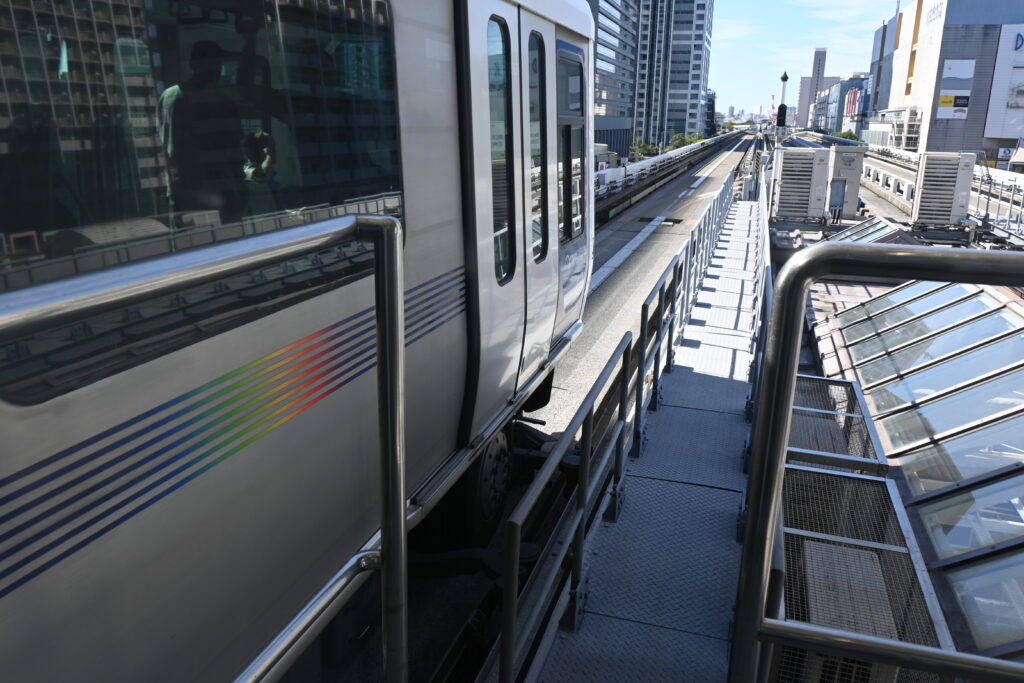
    Rubber tires grip better than steel wheels on rails, so the Yurikamome can handle steep slopes and sharp curves. That matters here. The line was built after the roads and expressways around it, so it had to weave over, under and between them. The result is a ride with surprising climbs, drops and turns that you will not find on most railways.

    There is a story behind it, too. The line opened in November 1995, planned for the World City Expo that Tokyo was to host on this waterfront in 1996. The expo was cancelled during construction, and for a while the new trains ran through almost empty reclaimed land. In Odaiba, the railway came before the city.

    Then and now: Odaiba was once the sea

    Where did the name “Odaiba” come from? In 1853, American warships under Commodore Perry sailed into Edo Bay, and the shogunate hurried to build a line of small island forts, called daiba, in the sea off Shinagawa to defend the city. Only two of them survive today: No. 3, now Daiba Park, and No. 6, an overgrown island you can see from the bridge. The whole Odaiba district, and the name itself, grew from these forts.
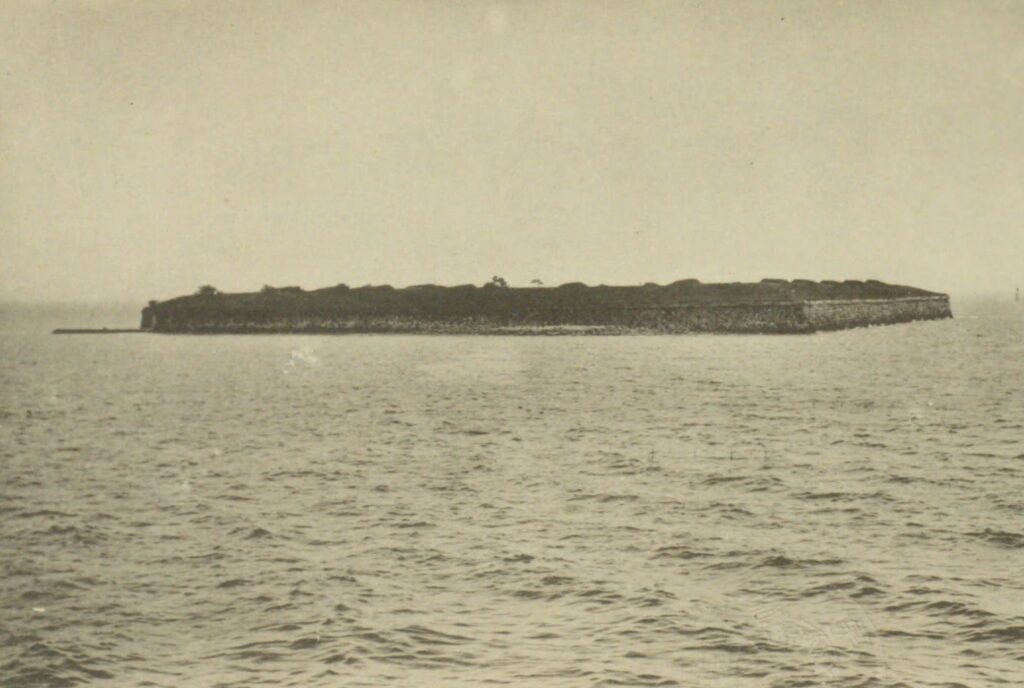
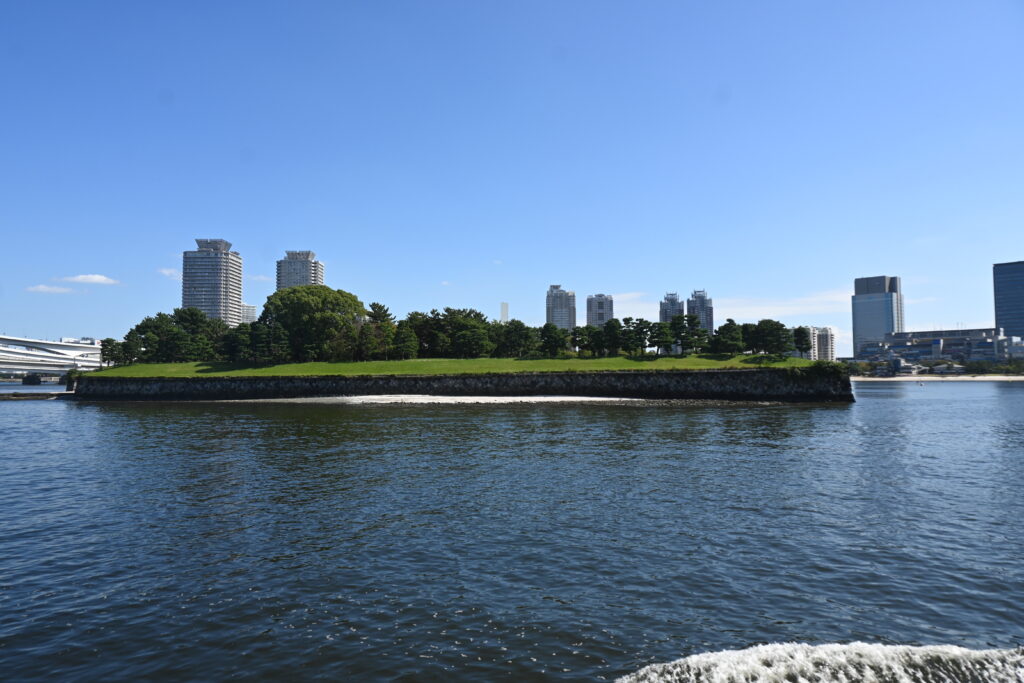
    What stayed the same: the stone walls. The low, angled walls of the fort are the same ones you can see in the 1927 photograph, built more than 170 years ago.

    What changed: everything around them. In 1927 the fort sat alone in open water, with nothing but sea and sky behind it. Today pine trees and grass cover the top, a sandy beach runs beside it, and the high-rises of Odaiba stand where there was once only sea. The Yurikamome you are about to ride runs across land that did not exist a century ago.

    Daiba Park, on top of the No. 3 fort, is free and open at all times, about a 20-minute walk along the beach from Odaiba-kaihinkoen Station. If you have time before your train, walk along the old stone walls.

    Starting at Odaiba-kaihinkoen

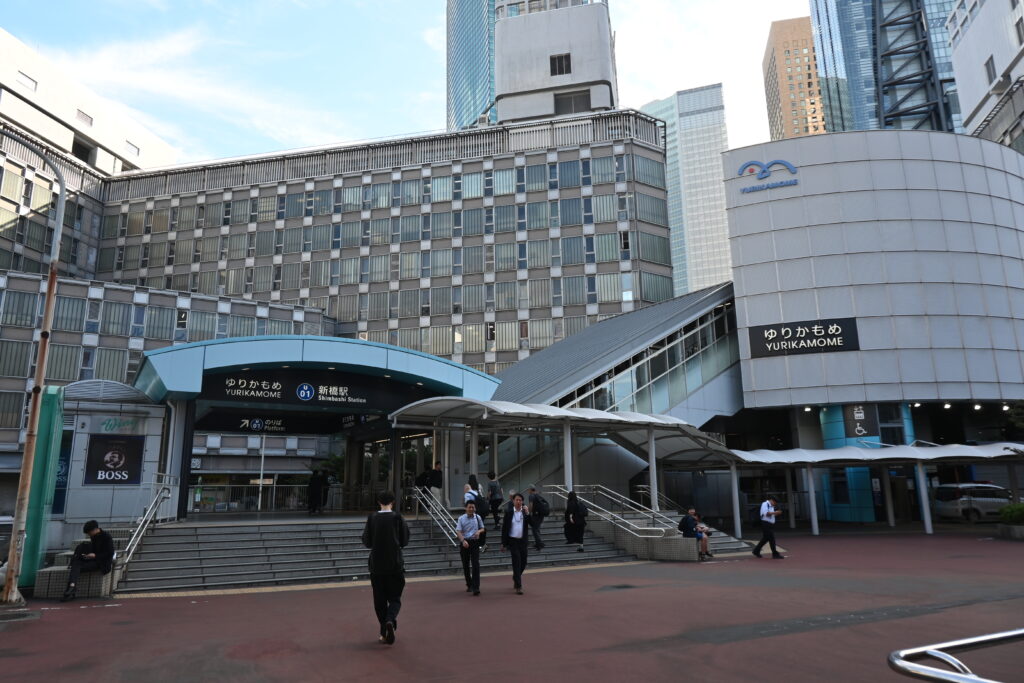
    If you arrived by water bus, walk inland from the pier to Odaiba-kaihinkoen Station. There are coin lockers by the ticket gates, handy if you are carrying shopping bags or luggage.
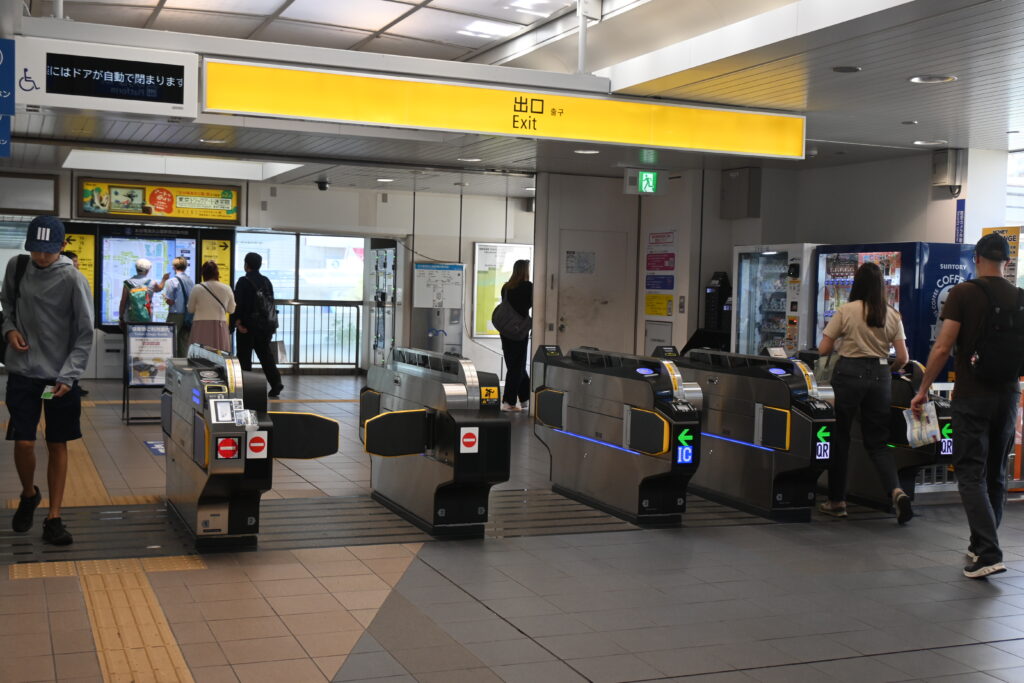
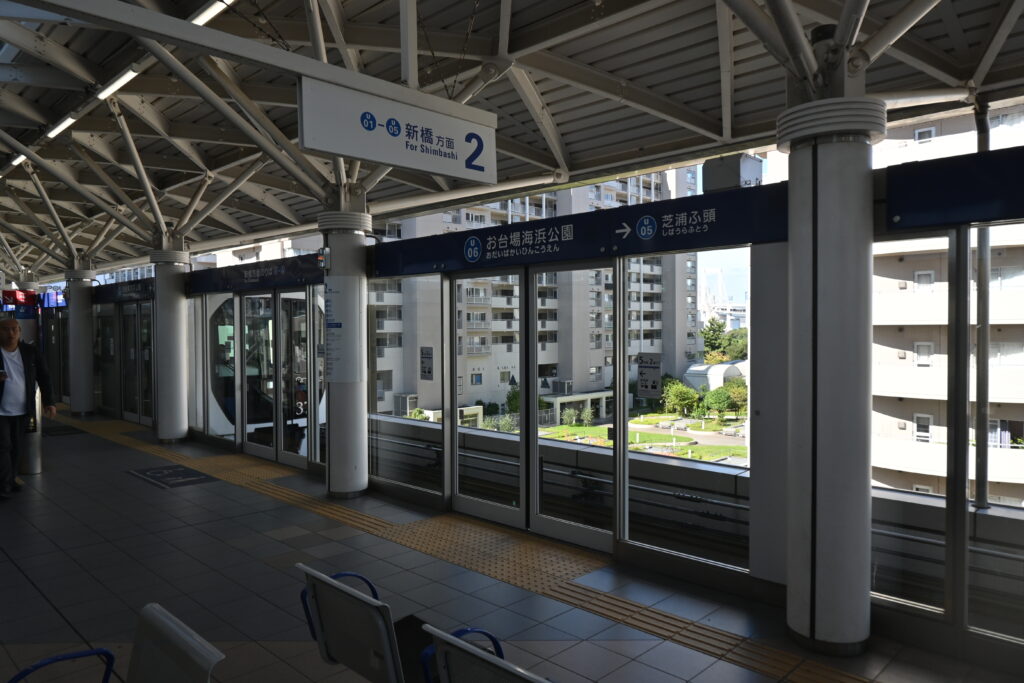
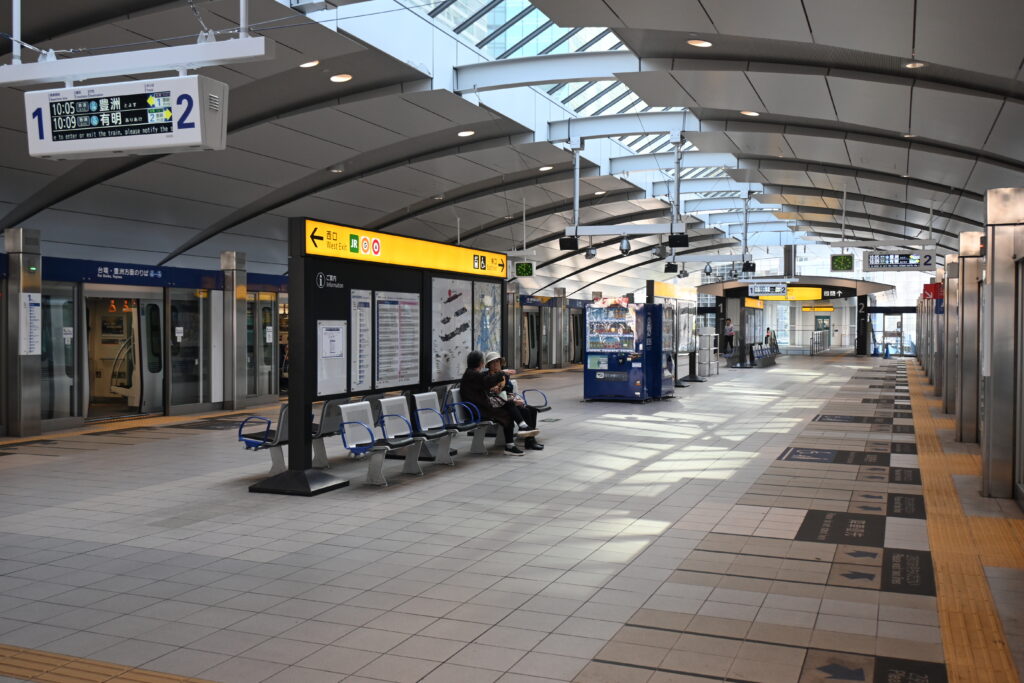
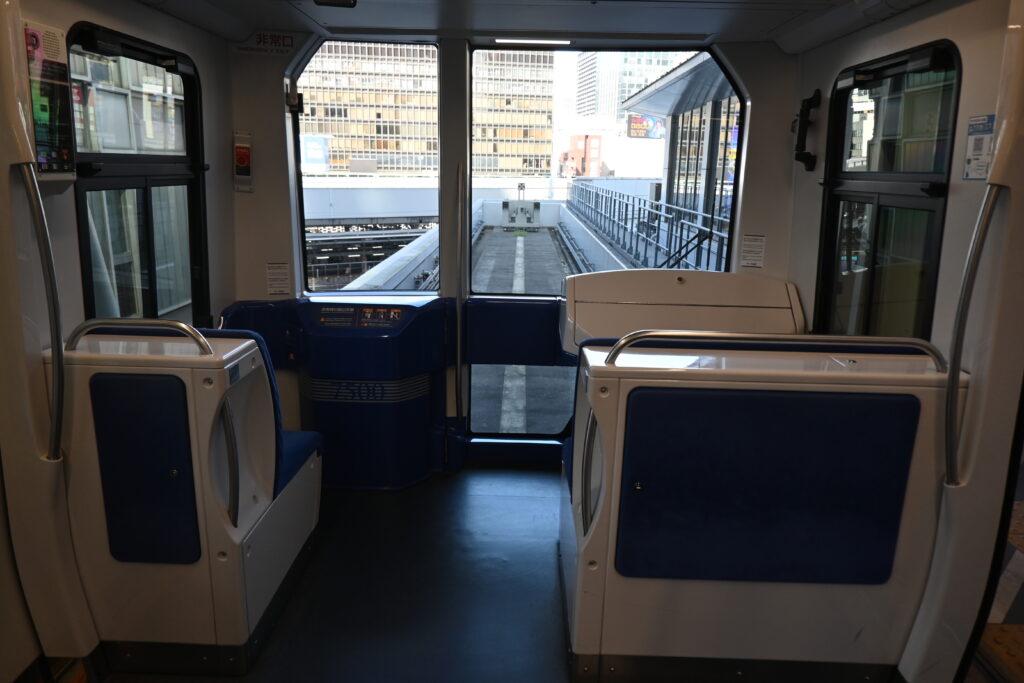
    Platforms have screen doors, and trains come every few minutes. Here is the fun part: with no driver’s cab, the front of the train is just a big window with seats behind it.
    Crossing Rainbow Bridge

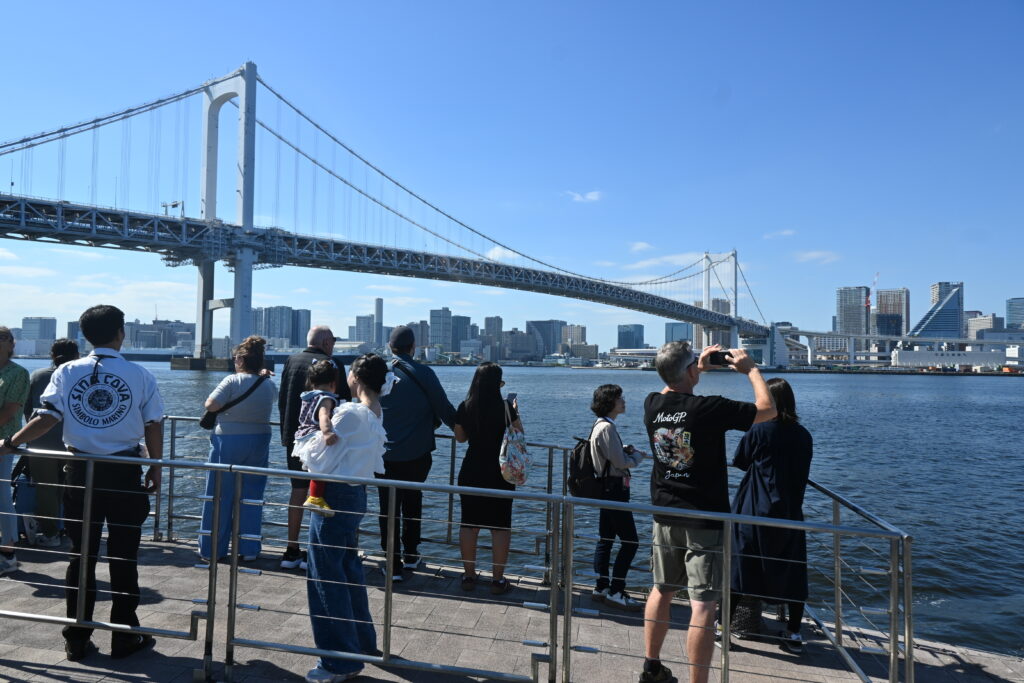
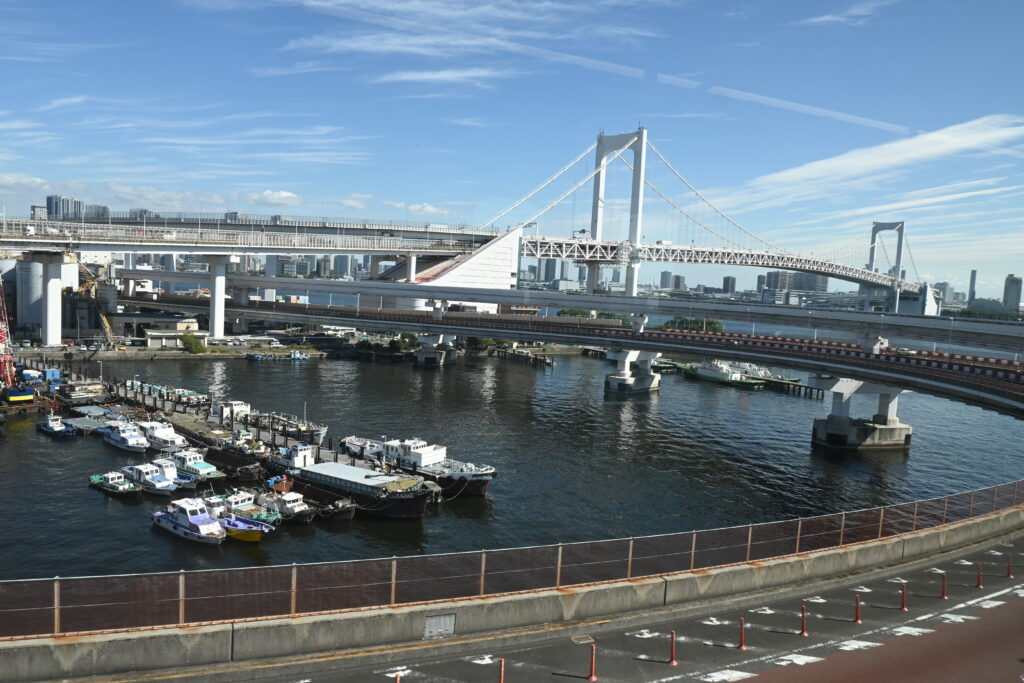
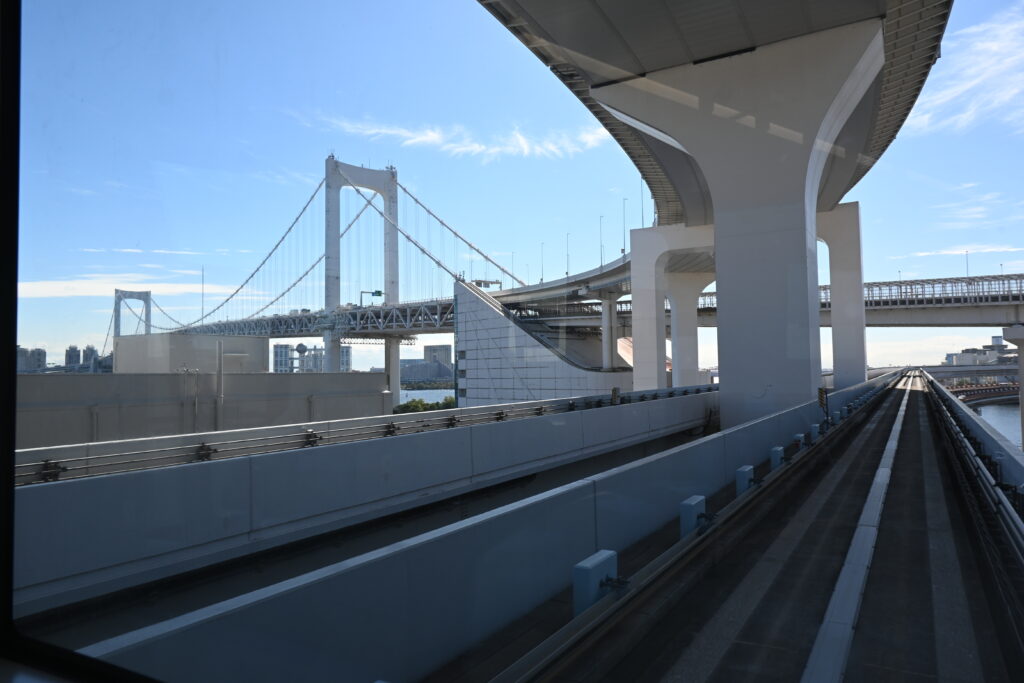
    Soon after leaving Odaiba-kaihinkoen, the train heads onto Rainbow Bridge. This is a two-level bridge. The Yurikamome runs down the middle of the lower deck, with the Shuto Expressway directly above you and ordinary road lanes on both sides at the same level. The track is wrapped in mesh, so it feels like riding through a tube in a science-fiction film. On a clear day, the white towers stand out sharply against the blue sky.

    At the Shibaura end, the train swings around a big loop. The bridge deck is high above the water so that ships can pass underneath, and the loop is how the track and the road climb up to it, and back down, in the little space available on the shore.
    You can walk across it, too!

    Rainbow Bridge has free walkways, the Rainbow Promenade, on the outer edges of the lower deck. The walk is about 1.7 km and takes around 30 minutes between the Shibaura side and the Odaiba side. You choose the north route (views of Tokyo Tower, Tokyo Skytree and the city) or the south route (views of Odaiba and the old Daiba fort) at the entrance, and you cannot switch halfway. One fun plan: walk across one way and ride the Yurikamome back.

    • Open 9:00–21:00 from April to October, and 10:00–18:00 from November to March. Last entry 30 minutes before closing.
    • Closed on the third Monday of each month (the next day if it is a holiday).
    • No cycling, no tripods. Pets and folding bikes are allowed only if carried in a bag.
    • The Shibaura entrance is about 5 minutes from Shibaura-futo Station; the Odaiba side is about 10 minutes from Odaiba-kaihinkoen Station.

    Between the skyscrapers

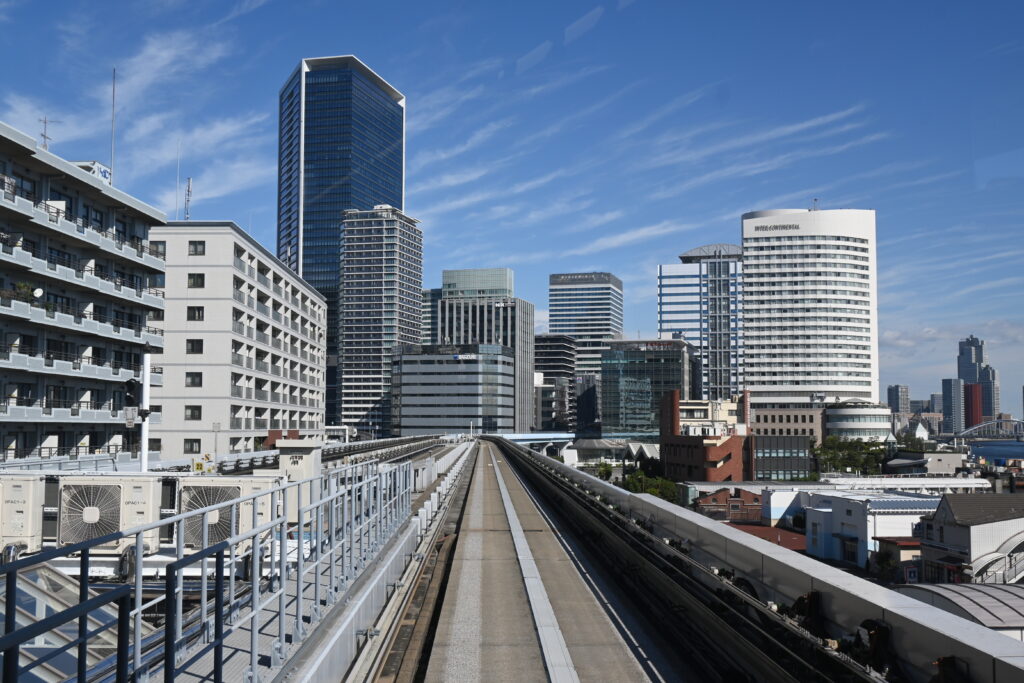
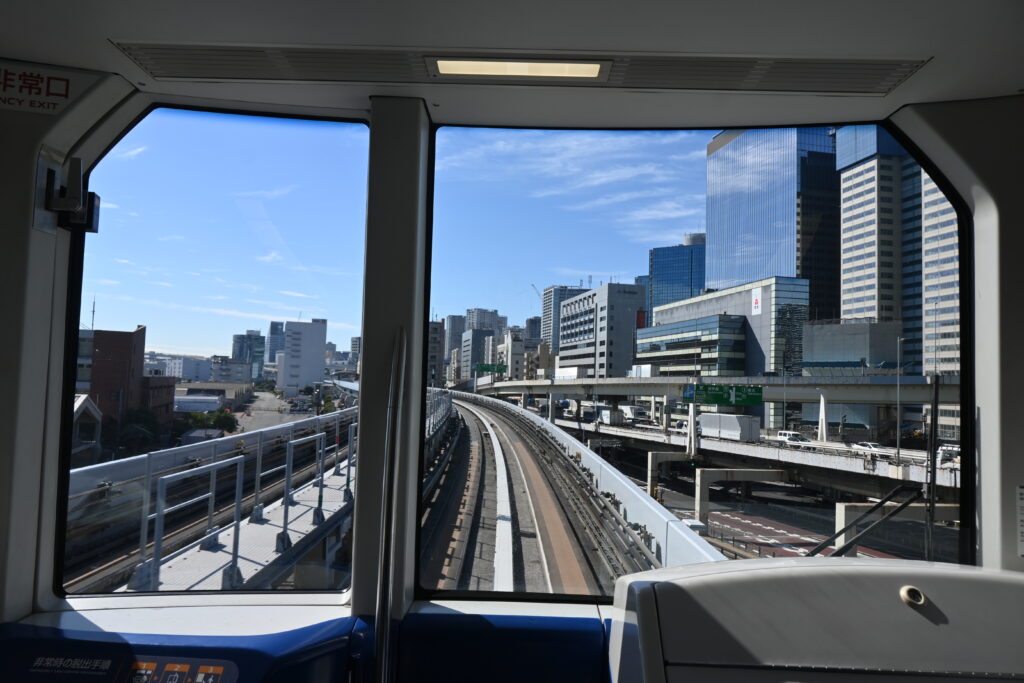
    After Shibaura-futo, the line curves north toward Shimbashi, and this is where the “roller coaster” feeling kicks in. The track dips, rises and bends between office towers, sometimes so close that you can almost look into the windows.
    Tip: front for the thrill, back for the photos

    Because there is no driver, the last car has the same big window as the first. I took most of the photos in this article from the very back, and I think the back is actually better for photos. But both ends have great views, and the front is more exciting, especially for kids.

    Arriving at Shimbashi

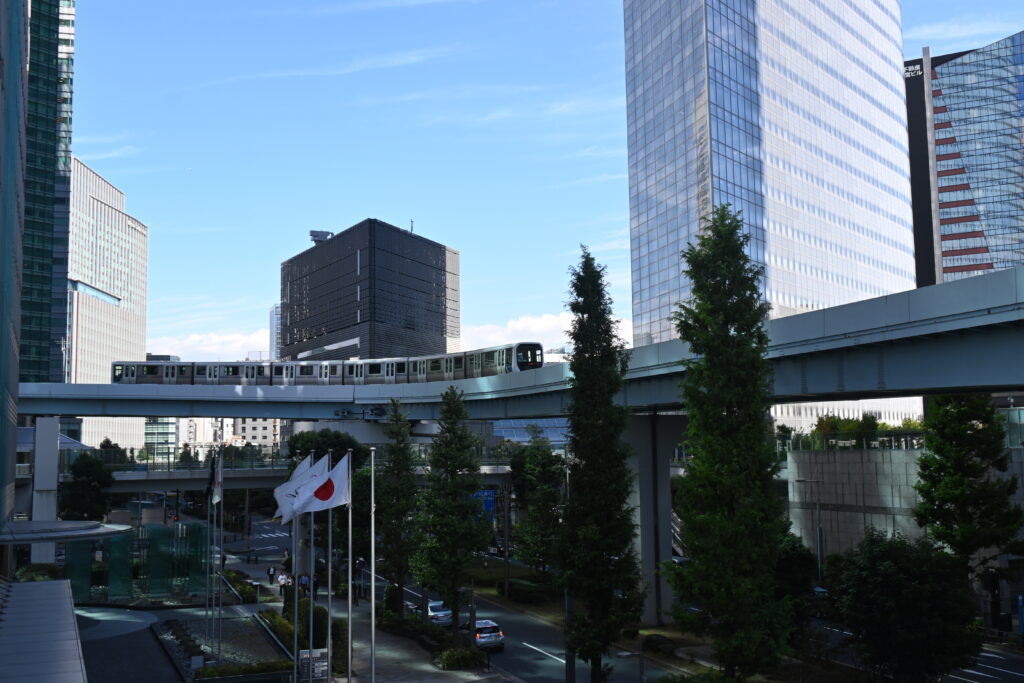
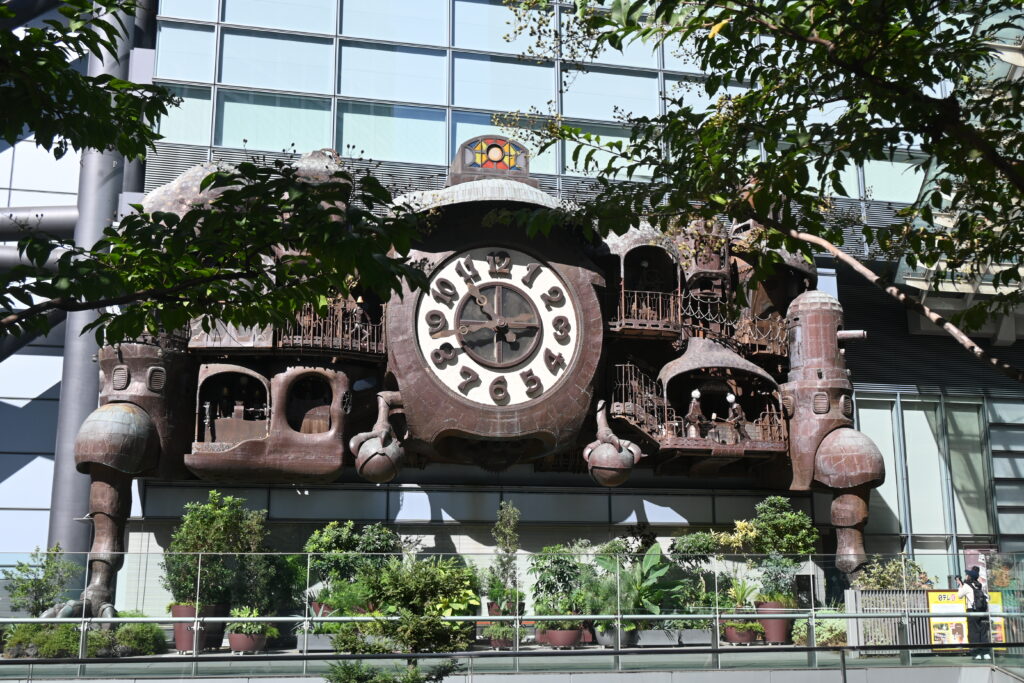
    The line ends at Shimbashi, one of Tokyo’s busiest business districts. Just before you arrive, look for the Shiodome skyscrapers. Outside the Nippon TV building at Shiodome stands a giant clock designed by Hayao Miyazaki, the director of Spirited Away and My Neighbor Totoro. It “performs” several times a day.
    From Shimbashi, you can change to the JR lines, the Toei Asakusa Line, or the Ginza Line. The Ginza Line takes you straight back to Asakusa, or to Nihonbashi for our next walk.

    Best time to go

    • Weekday daytime is the easiest time to get a front seat.
    • Weekends, school holidays (especially spring and summer), and big event days at Tokyo Big Sight are very crowded.
    • Go in clear weather if you can: the views of the bay and the white towers of Rainbow Bridge are at their best.

    Good to know before you go

    • Check for events. When Tokyo Big Sight or other Odaiba venues hold a big event, the Yurikamome can be packed. Check the Tokyo Big Sight event calendar before you go.
    • Want the front seat? Wait for two trains. Shimbashi and Toyosu, the two ends of the line, have only two tracks each. Let the train waiting at your platform leave, then the one from the other track, and you will be at the head of the line for the front seats on the next train. It works every time, even when it is busy.
    • Check the direction. At the end stations, trains reverse and leave in the direction they came from. Make sure you are on the right platform.
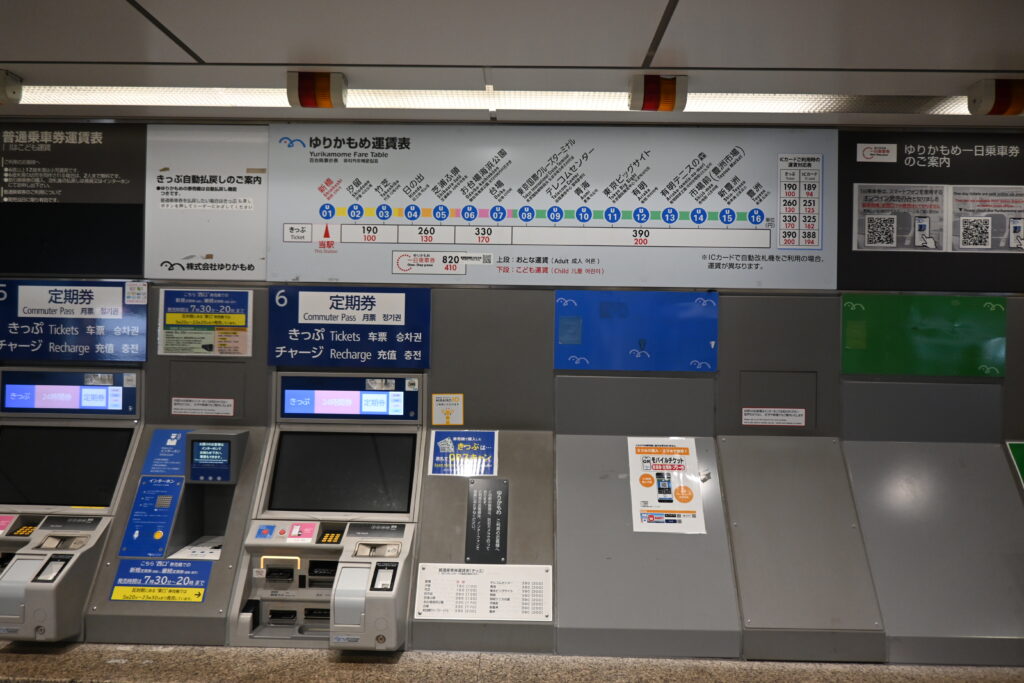
    • Paying the fare. You can tap an IC card such as Suica, or a contactless credit card or phone at the gate. With contactless cards, the total fare for one day is capped at ¥820 (same card and same device). The old magnetic one-day pass is no longer sold. Check the official Yurikamome website for the latest details.
    Tip: you will need mobile data for route searches, and some contactless payments use your phone. An eSIM is the easiest option for visitors.

    Getting there

    • From Odaiba: Yurikamome Odaiba-kaihinkoen Station, about 13 minutes to Shimbashi.
    • From the water bus: walk from Odaiba Seaside Park pier to Odaiba-kaihinkoen Station.
    • From Shimbashi: JR, Tokyo Metro Ginza Line and Toei Asakusa Line all connect.

    Make a day of it

    teamLab Planets

    If you have more time, stay on the Yurikamome the other way, toward Toyosu. Near Shin-Toyosu Station is teamLab Planets, an immersive digital art museum where you walk barefoot through rooms of light, mirrors and water.

    This ticket on GetYourGuide is the official entry ticket, with timed entry. Same-day booking is not possible, tickets are non-refundable, and you must enter within 30 minutes of your time slot. Prices may change and may differ from the official site, so compare before you book.

    Where to stay

    Hilton Tokyo Odaiba

    Why choose: A bayside hotel next to Daiba Station on the Yurikamome, close to Rainbow Bridge and the Odaiba waterfront.

    Grand Nikko Tokyo Daiba

    Why choose: A large hotel by Daiba Station, convenient for exploring Odaiba and riding the Yurikamome in the quiet morning hours.

    Park Hotel Tokyo

    Why choose: In the Shiodome skyscrapers at the Shimbashi end of the line, with easy access to Ginza and the Ginza Line.

    Next time

    From Shimbashi, we take the Ginza Line to Nihonbashi, the bridge where all of Japan’s old highways began. Stone bridges, a department store with a giant goddess, and an expressway that will soon disappear: Tokyo’s past and future, side by side.

    Photos: Aozora Walks unless otherwise noted. The No. 3 Daiba fort in 1927: “Shinagawa Daiba” (Tokyo City Parks Division, 1927), National Diet Library Digital Collections (public domain).
  • From Asakusa to Odaiba by Water Bus: Reading Tokyo’s History Under the Sumida River Bridges

    From Asakusa to Odaiba by Water Bus: Reading Tokyo’s History Under the Sumida River Bridges

    This post contains affiliate links. If you book through them, I may earn a small commission at no extra cost to you.

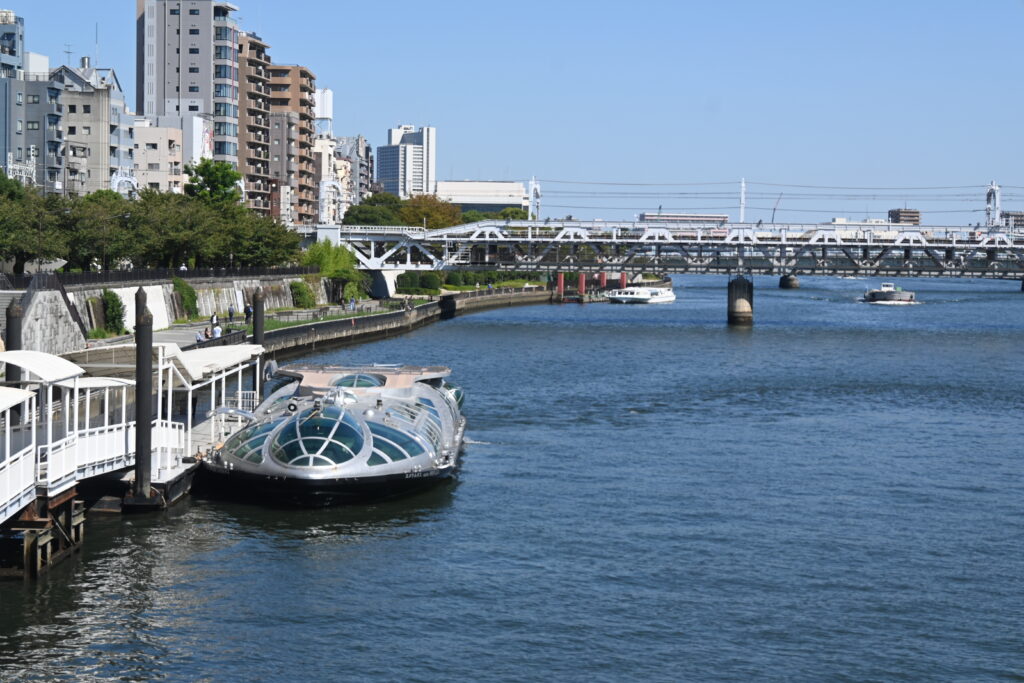
    Imagine stepping aboard a silver spaceship in Asakusa and sailing back into the Edo period.

    That is what a water bus ride down the Sumida River feels like. The boat looks as if it came straight out of a science-fiction comic, yet the river beneath it was the great highway of old Edo. For centuries, boats carried rice, timber and travelers along this river, and its bridges were where the city gathered, celebrated and, at times, fled from disaster.

    In Part 1 and Part 2, we explored the streets of old Asakusa through the eyes of Demon Slayer. This time, as promised, we take to the water. As a geography teacher, I think this one-hour trip from Asakusa to Odaiba is one of the best ways to see how Tokyo grew, from a city of wooden bridges to a waterfront of steel and glass.

    Quick facts

    SceneSumida River and Tokyo Bay by water bus
    RouteAsakusa Pier → down the Sumida River → under Rainbow Bridge → Odaiba Seaside Park
    Fare¥2,000 adults / ¥1,000 children (Emeraldas, direct)
    TimeAbout 55 minutes by timetable (my boat arrived in about 40)
    Nearest stationAsakusa Station (Ginza Line / Asakusa Line Exit 4, 1 min walk)

    Finding the pier

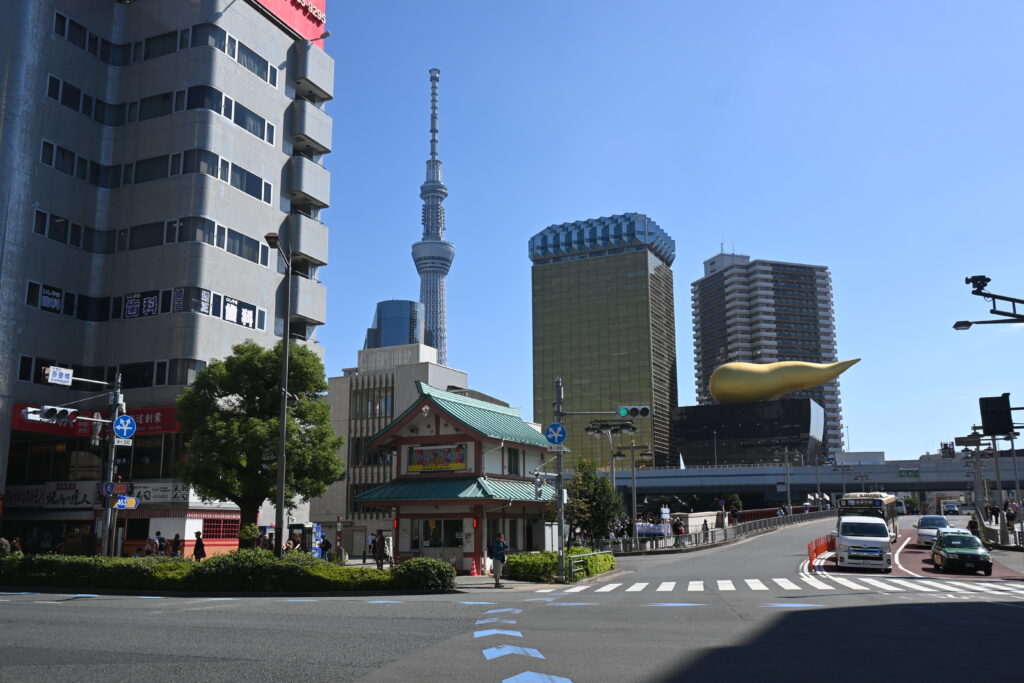
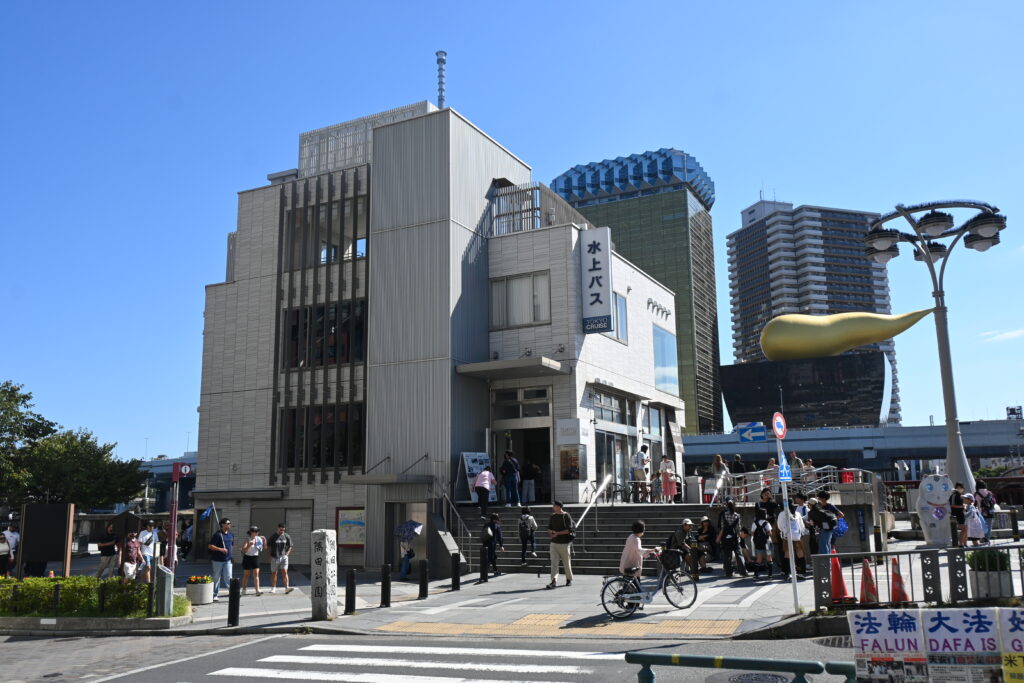
    From Kaminarimon Gate, walk a few minutes toward the Sumida River, the side where you can see Tokyo Skytree. Next to Azumabashi Bridge, just behind the small Japanese-style police box, you will find the ticket building with “TOKYO CRUISE” written on it.

    Buy your ticket first, then explore

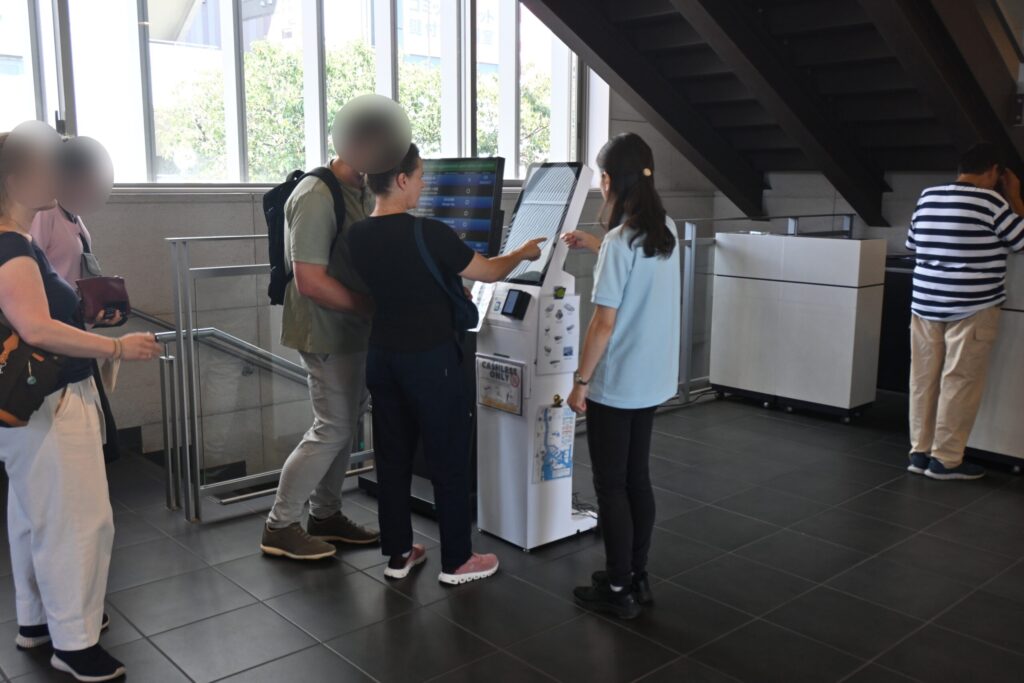
    There are ticket machines inside, but there is almost always a queue, and departures leaving soon often sell out. There seem to be many boats, but they go to several destinations. Only about six a day sail directly to Odaiba, so if you miss the one you want, you may wait two hours or more.

    My advice: buy your ticket first, then walk back to Senso-ji until departure time. Even better, book online in advance.

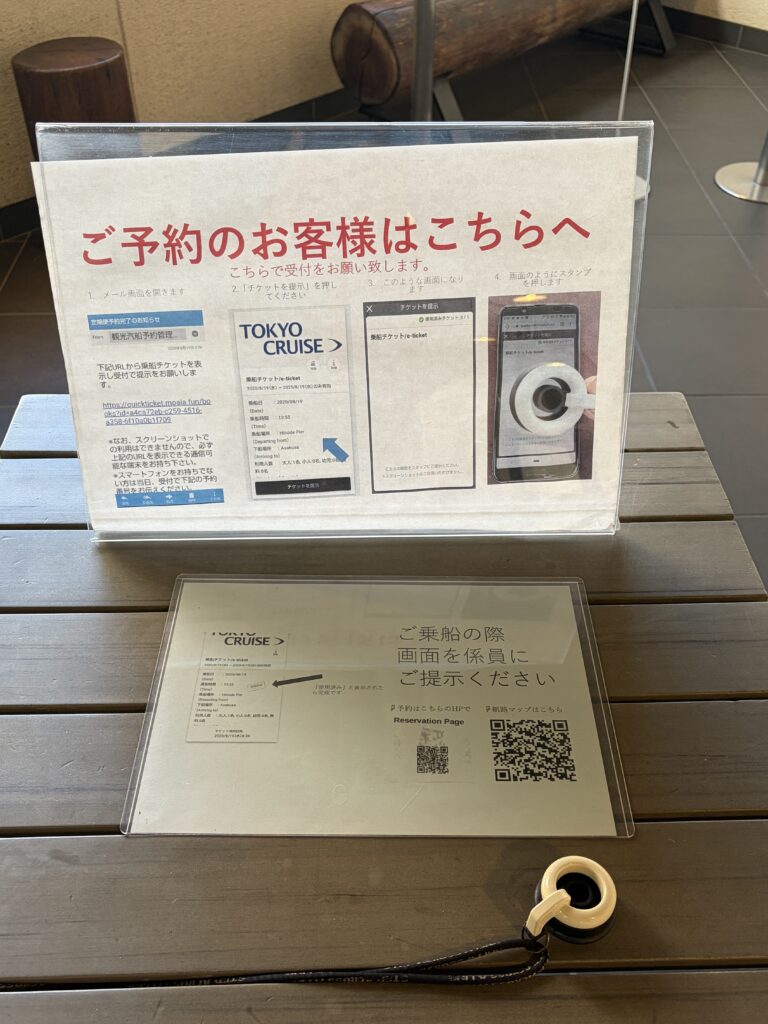
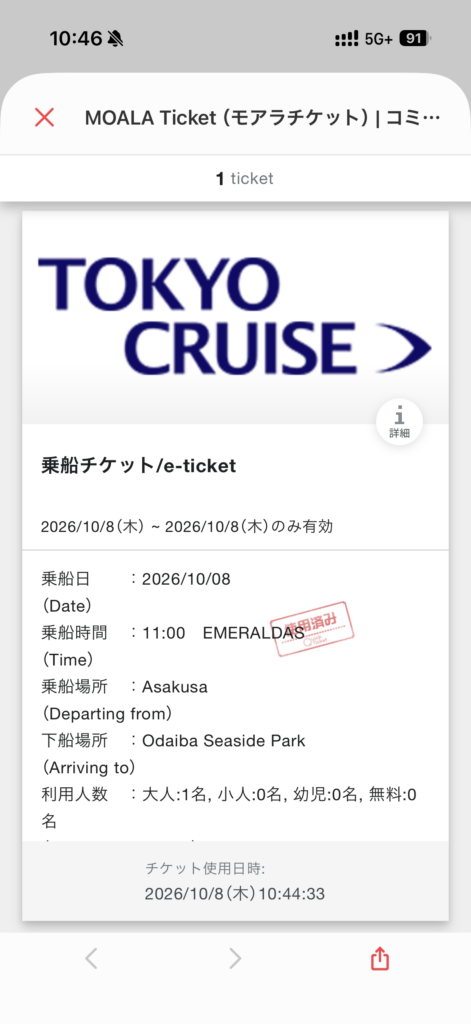
    If you book online, your e-ticket arrives by email and opens on your phone. On the way to the boarding gate, you will find a small check-in device shaped a bit like a rubber stamp. You simply press it onto your phone screen, and the ticket is marked as used. I had never seen a system like this before.

    Tip: you will need mobile data to open your e-ticket at the pier. An eSIM such as Airalo is the easiest option for visitors.

    On board the Emeraldas

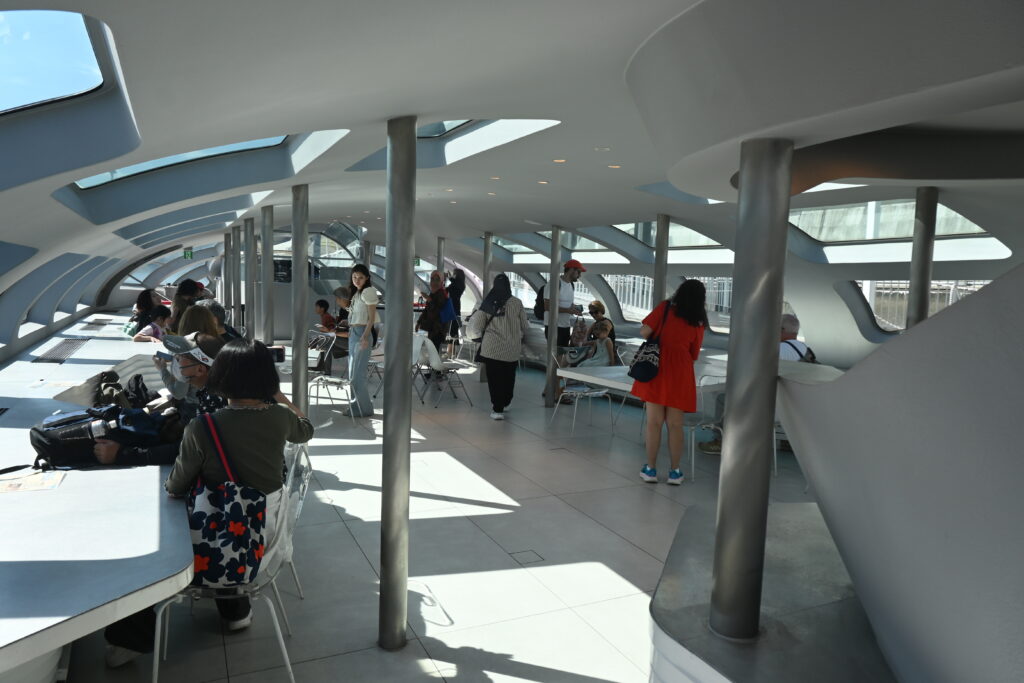
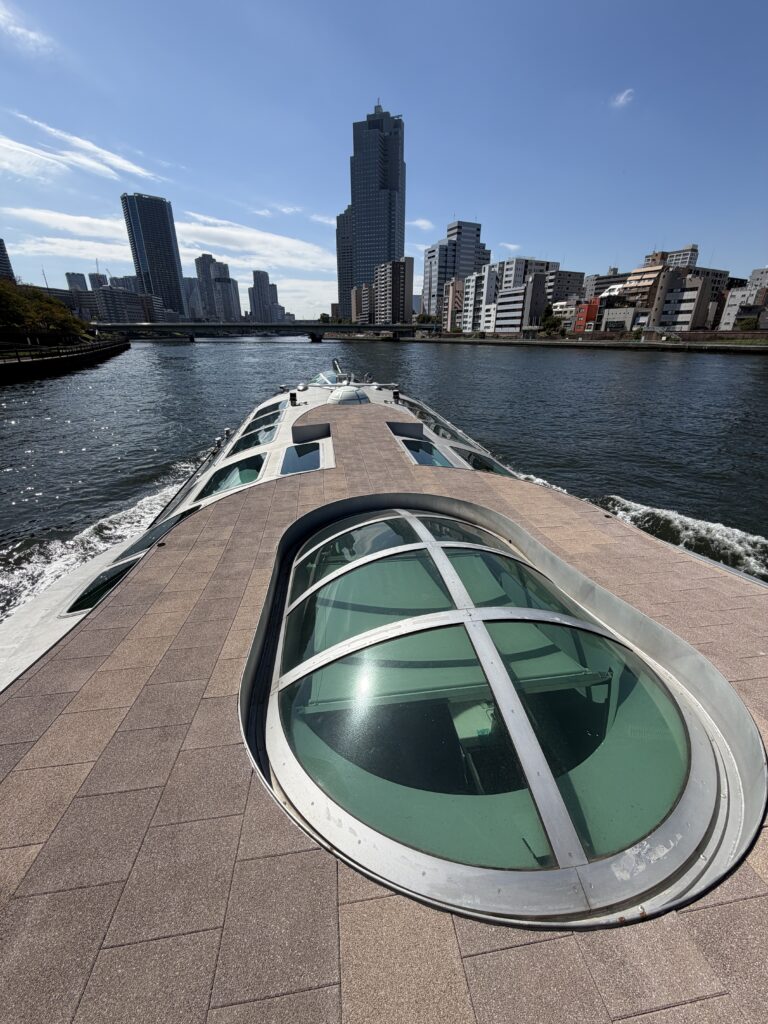
    I rode the Emeraldas. Its silver, spaceship-like exterior was designed by Leiji Matsumoto, the manga artist famous for Galaxy Express 999. The interior is by the architect Takato Tamagami, who made the front cabin feel like a riverbank, with curving benches and counters instead of rows of seats.

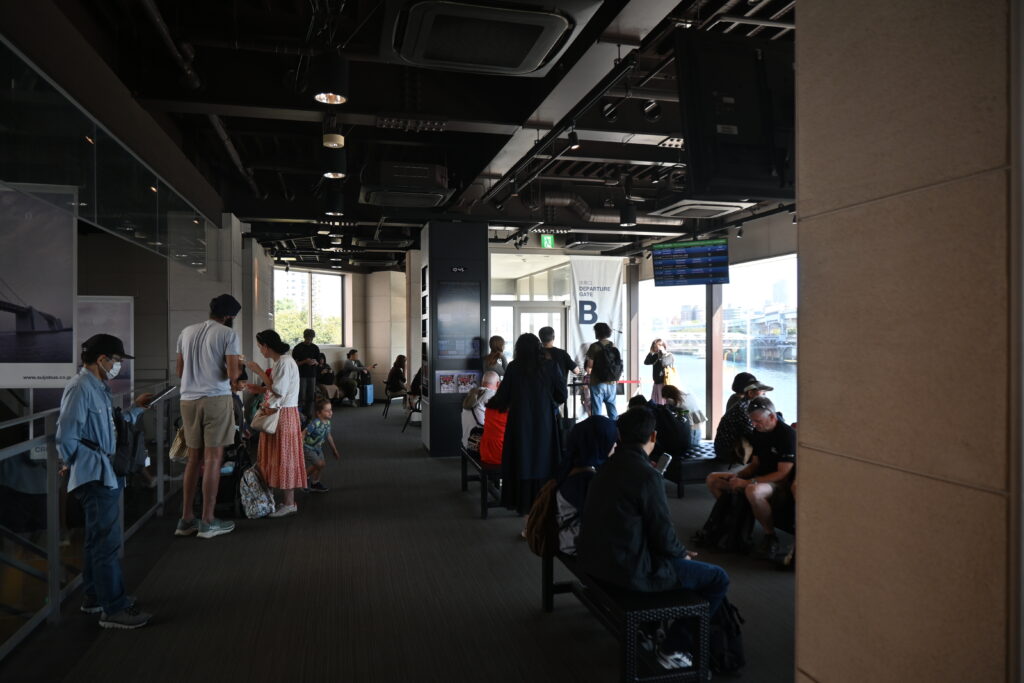
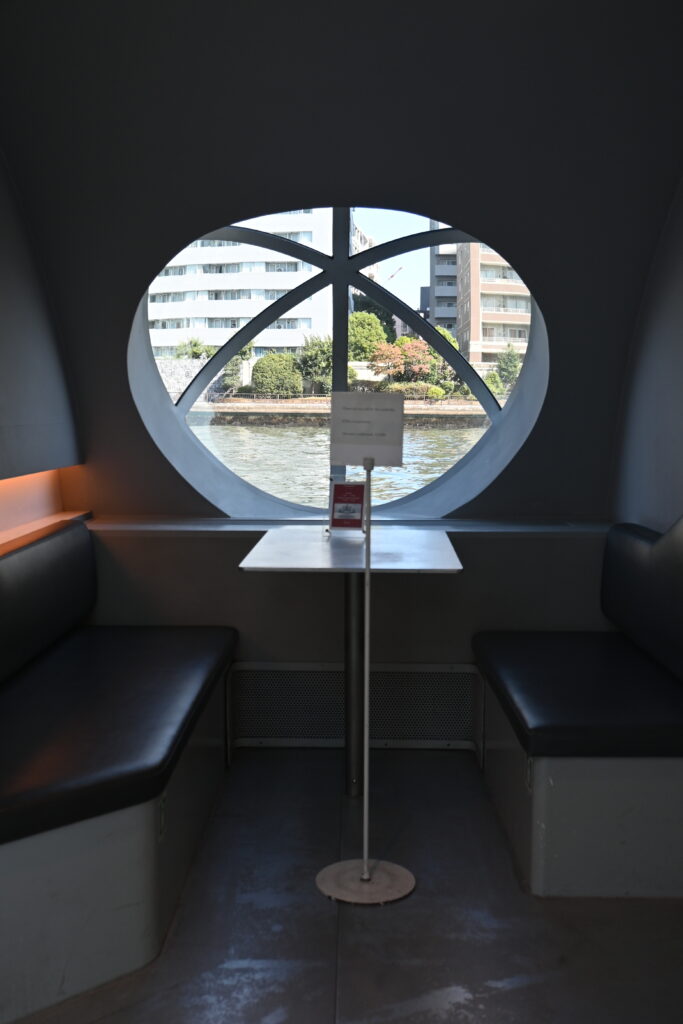
    There is plenty of seating, so you will not have to stand. If you want a table or a window seat, though, join the line at the gate about 15 minutes before departure. The Emeraldas also has three private compartments, available for an extra charge of roughly ¥3,000–4,000. Check availability when you book.

    You are welcome to bring food and drinks on board. Pick something up at a convenience store or fast-food shop near the pier and enjoy a picnic on the river. The cabin is air-conditioned and mostly enclosed, so the trip is comfortable in both summer and winter.

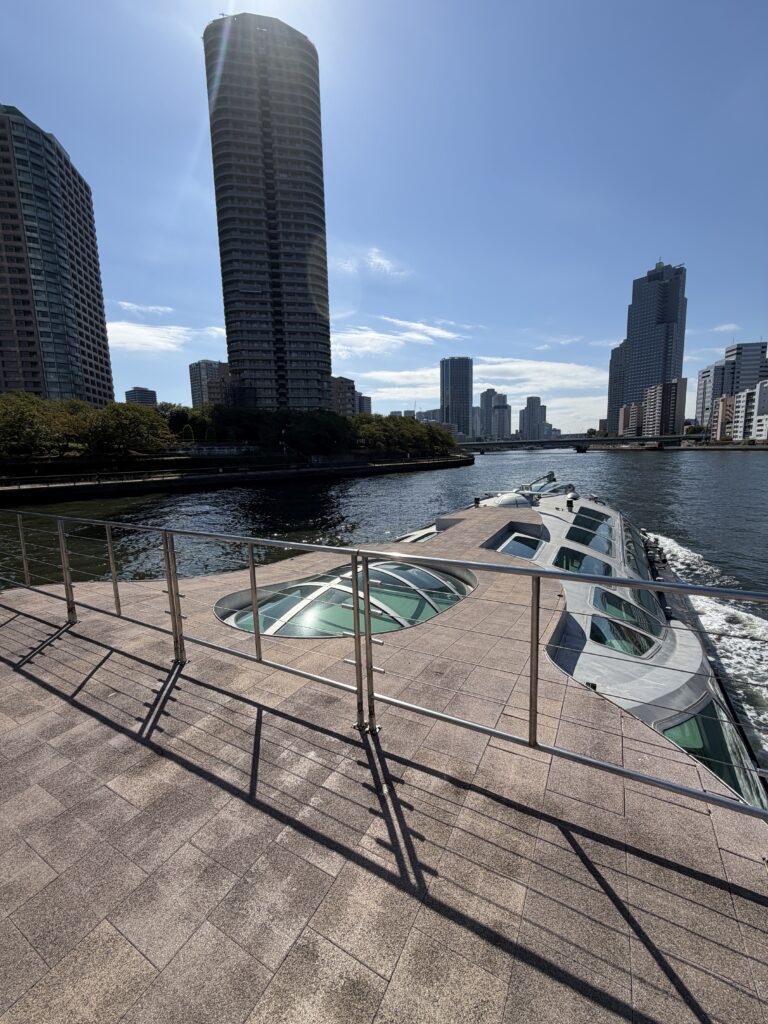
    The rooftop deck opens once the crew have it ready, usually some time after departure. Up there you are much closer to the bridges and the view is wider. In spring and autumn it is wonderful.

    Under the bridges

    Between Asakusa and Tokyo Bay, the boat passes under more than ten bridges, and you get to see their undersides, which you would never notice from the street. Each one has a different shape and structure, and many carry a story about how Tokyo grew. Three stood out for me.

    Ryogoku Bridge: born from a great fire

    In the early Edo period, the shogunate allowed only one bridge across this river, for defense. In 1657, the Great Meireki Fire swept through Edo. With no way across the river, huge numbers of people were trapped, and the death toll is said to have reached around 100,000.

    Ryogoku Bridge was built soon afterward, in 1659 (some sources say 1661), as an escape route. Its name, “Bridge of Two Provinces,” comes from the river once marking the border between Musashi and Shimousa provinces. Open spaces were cleared at both ends to stop fires from spreading. These firebreaks soon filled with food stalls and street shows, and became one of Edo’s liveliest entertainment districts.

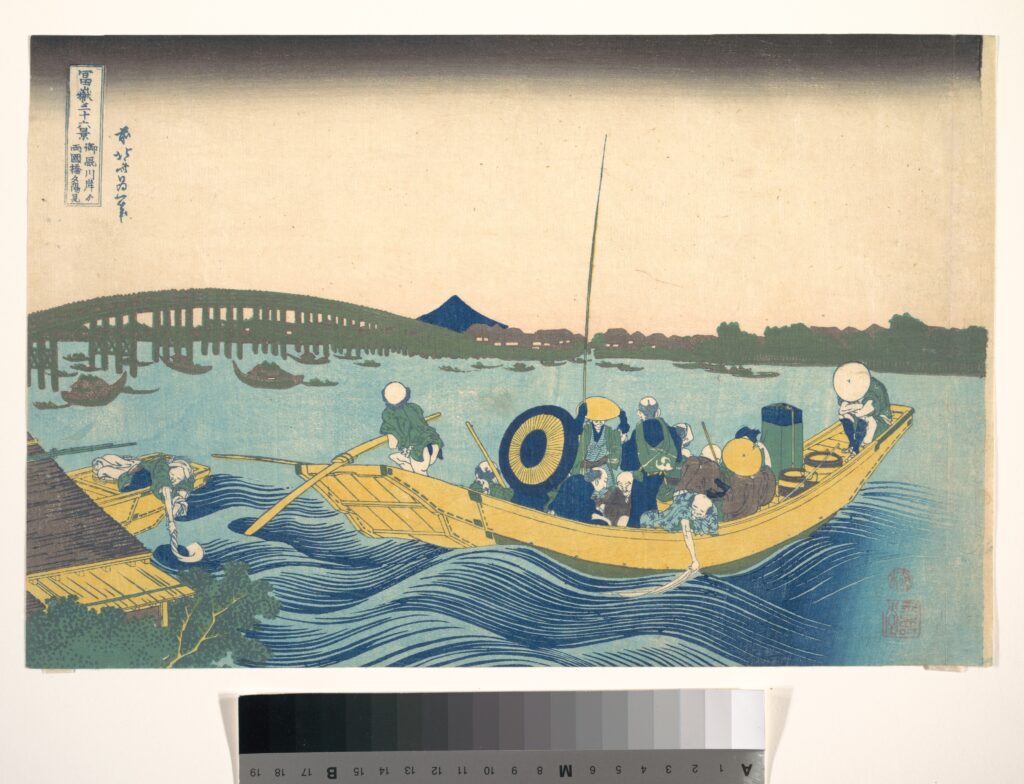
    Katsushika Hokusai, the artist of The Great Wave, also painted this spot. In his series Thirty-six Views of Mount Fuji, a crowded ferry crosses the river at sunset, with Ryogoku Bridge stretching behind it and Mount Fuji on the horizon. The ferry is long gone, but you are floating on the same river.

    Shin-Ohashi Bridge: the bridge Van Gogh painted

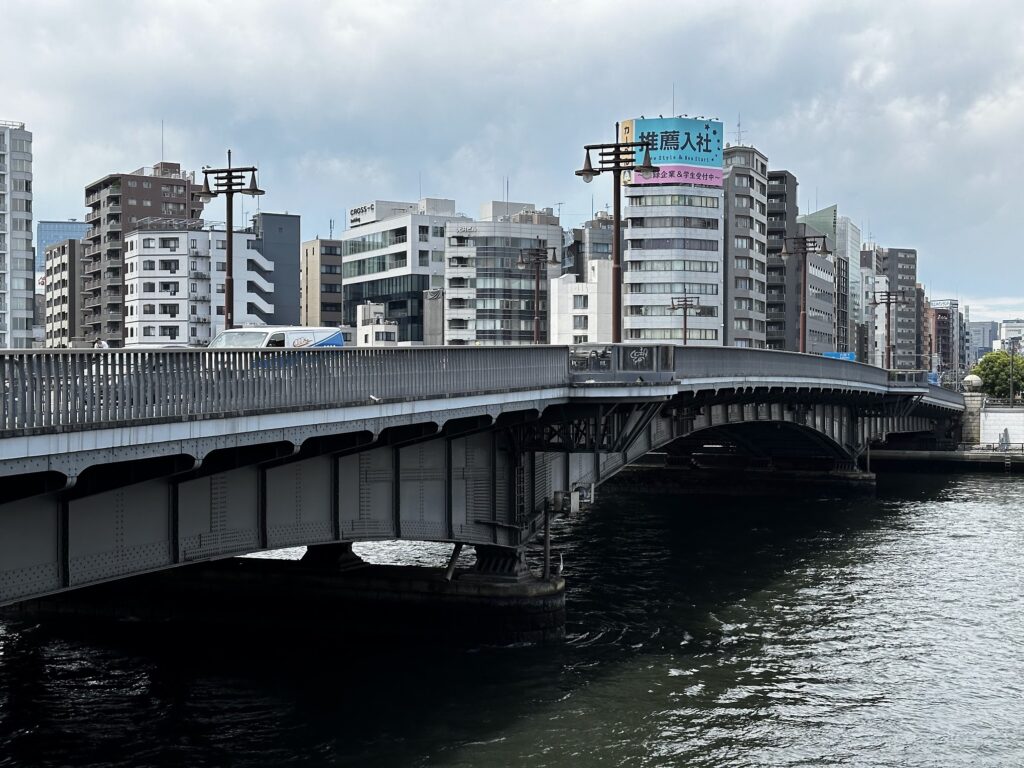
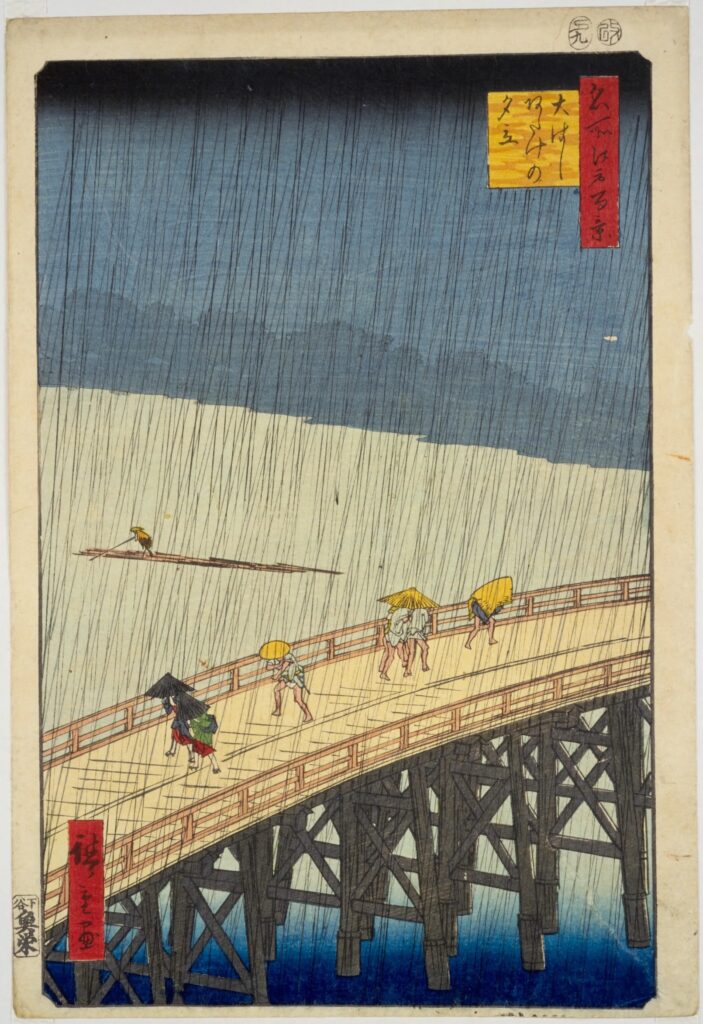
    Soon after Ryogoku comes Shin-Ohashi Bridge. In 1857, Utagawa Hiroshige depicted the bridge in a sudden summer shower in his series One Hundred Famous Views of Edo. Thirty years later in Paris, Vincent van Gogh was so taken with the print that he made his own painted copy, Bridge in the Rain (after Hiroshige). The bridge you pass under today is a modern one, but the river view is the one that crossed the world.

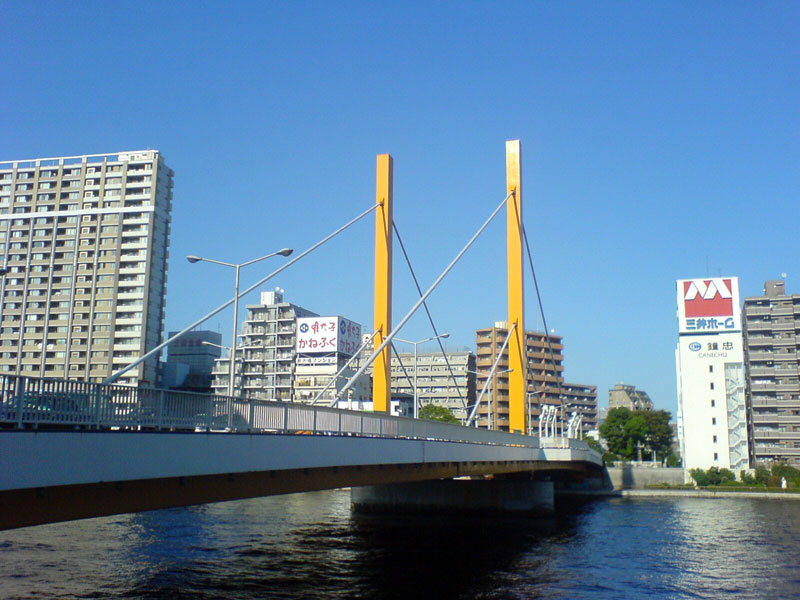
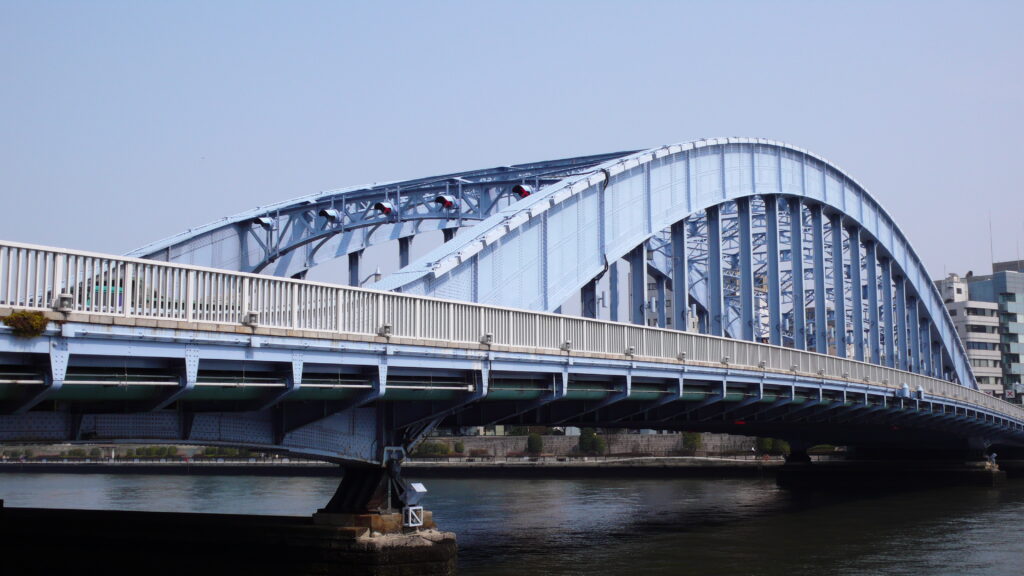
    Further downstream, look out for Kiyosu and Eitai Bridges. Both were built after the Great Kanto Earthquake of 1923 destroyed much of the city, and both were modeled on bridges over the Rhine in Germany. First a great fire, then a great earthquake: Tokyo has rebuilt itself again and again, and you can read that history in its bridges.

    Kachidoki Bridge: a gate to the sea

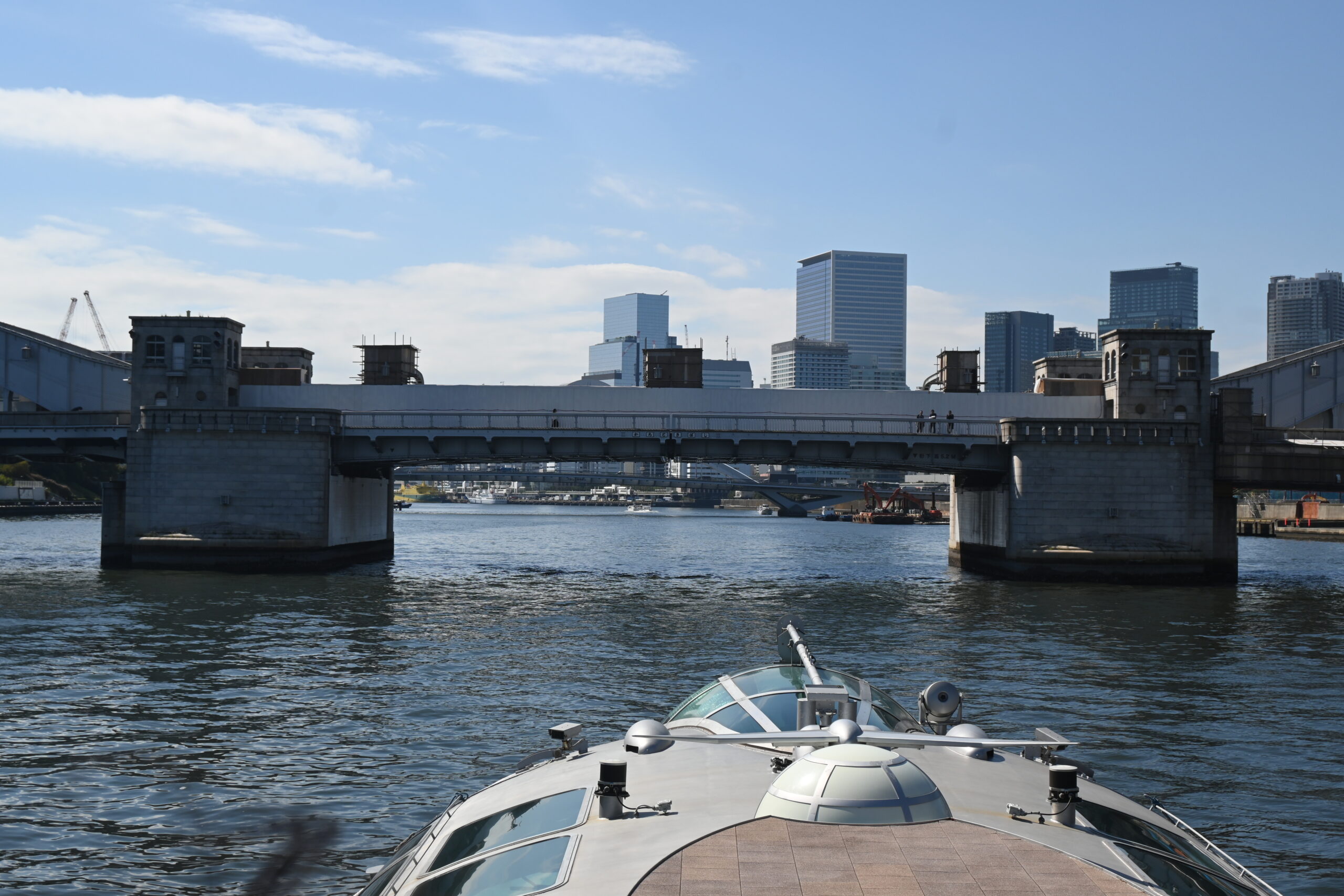
    Kachidoki Bridge felt different from the moment it came into view. Two massive steel arches stand on either side of the river, with heavy stone piers between them, like a great gate guarding the way to the sea. Its name, meaning “a shout of victory,” comes from a ferry that once crossed here, named in 1905 after a victory in the Russo-Japanese War. And the gate-like look is no accident: the bridge was planned as a grand entrance for an international exposition scheduled for 1940, which was never held.

    Kachidoki is also a bascule bridge. Its center once split in two and rose like a pair of wings to let large ships pass, about five times a day at its peak. As river traffic fell and car traffic grew, it opened for the last time in 1970. When you pass beneath it, look closely at the middle of the deck. You can still see the seam where the two halves were meant to part. It was one of my favorite moments of the trip. In 2007, the bridge was designated an Important Cultural Property of Japan.

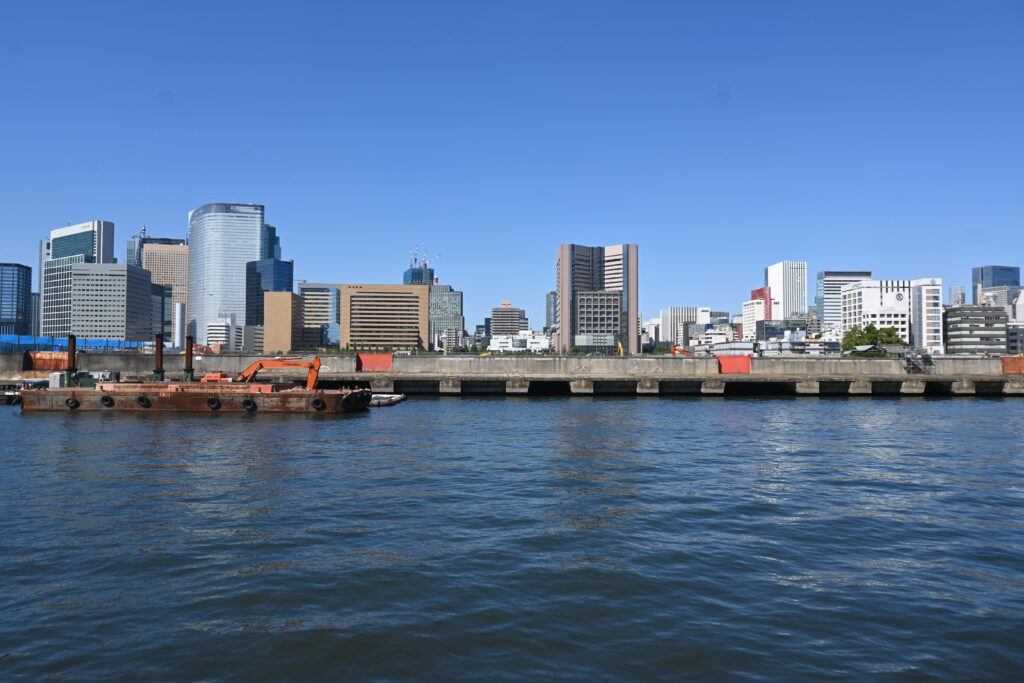
    Just past Kachidoki, work is beginning on the former site of the Tsukiji fish market, which moved to Toyosu in 2018. A large stadium and a new waterfront district are planned there for the 2030s. Then the river opens into Tokyo Bay, and the boat slips under Rainbow Bridge on its final approach to Odaiba.

    Arriving in Odaiba: an architect’s skyline

    As you approach Odaiba Seaside Park, look for the building with a giant silver sphere. This is the Fuji TV headquarters, completed in 1996 and designed by Kenzo Tange. He was one of Japan’s greatest architects and won the Pritzker Prize. His other works include the Tokyo Metropolitan Government Building and St. Mary’s Cathedral in Tokyo.

    And here is a nice coincidence. Right across from Kaminarimon, where this trip began, stands the Asakusa Culture Tourist Information Center, designed by Kengo Kuma, the architect of Japan’s National Stadium. Two generations of Japanese architecture bookend a single boat ride.

    Another option: the Tokyo Mizube Line

    TOKYO CRUISE is not the only way to sail from Asakusa to Odaiba. The Tokyo Mizube Line, run by the Tokyo Metropolitan Park Association, also connects the two. Its old boats were retired in January 2026, and service resumes on 17 October 2026 with a new boat, the Raiden.

    Here is the interesting part. The Raiden is a disaster-response vessel built by the Tokyo Metropolitan Government. In an emergency, it carries supplies and people along the rivers. On ordinary days, it carries sightseers like you. After a trip past bridges born from fires and earthquakes, that feels like a fitting end to the story.

    • Pier: Nitenmon Pier, about a 5-minute walk upstream (north) from the TOKYO CRUISE pier
    • Route: Nitenmon → Ryogoku (short stop) → Odaiba Seaside Park, about 65 minutes
    • Departures: 10:40, 13:20 and 16:00 from Nitenmon, mainly Wednesday to Sunday
    • Fare: ¥2,000 adults / ¥1,000 children

    It is far less known among visitors, so it is usually much less crowded. The trade-off is fewer departures, so check the official timetable before you go.

    Good to know before you go

    • Book ahead. Direct boats to Odaiba are limited, and same-day tickets often sell out.
    • Arrive early for good seats. Join the line about 15 minutes before departure.
    • Bring snacks. Food and drinks are allowed on board.
    • Check the weather. Boats can be cancelled in bad weather, and the rooftop deck opens only when conditions allow.
    • Maintenance days. Each boat has regular days off for maintenance, so check the timetable for your date.
    • Two operators, two piers. TOKYO CRUISE and the Tokyo Mizube Line leave from different piers. Make sure you go to the right one.

    Getting there

    • TOKYO CRUISE Asakusa Pier: 1 minute on foot from Exit 4 of Asakusa Station (Tokyo Metro Ginza Line and Toei Asakusa Line) and from the Tobu Line station
    • From Odaiba Seaside Park, the Yurikamome line takes you back to central Tokyo across Rainbow Bridge. Here is how to ride it, and how to get the front seat.

    Book your trip

    Book directly with TOKYO CRUISE

    The simplest option is to book your seat on the official TOKYO CRUISE website, which has an English page. You pay only the regular fare, and your e-ticket arrives by email.

    Water bus tickets are also sold on GetYourGuide. Note that this ticket is sold by a travel agency, not by TOKYO CRUISE itself. You cannot choose your boat, so you may not ride the Emeraldas, and you board with a special link sent the day before rather than your booking number. Prices and conditions may change, so compare with the official site before you book. For most visitors, booking directly is simpler.

    Explore Asakusa before you sail

    The pier is only a few minutes from Senso-ji, so if you have time before your boat, see the temple district with a guide first. This two-hour walking tour with an English-speaking guide starts beside Kaminarimon and takes you along Nakamise Street to Senso-ji and into the back streets, with some street food along the way. Prices may change, so check the details before you book.

    Prefer a guide?

    If you would like someone to explain the sights as you go, this private tour with a government-licensed, English-speaking guide combines a water bus ride with three or four stops of your choice, such as Senso-ji, Ryogoku Kokugikan, Hamarikyu Gardens and Odaiba. It takes about six hours, and only your own group joins.

    Where to stay

    Hotel Gracery Asakusa

    Why choose: About 200 meters from Kaminarimon and a 3-minute walk from Asakusa Station. You can walk to the pier in minutes, and Senso-ji is right on your doorstep for an early-morning visit before the crowds arrive.

    THE GATE HOTEL Ryogoku by HULIC

    Why choose: A riverside hotel in Ryogoku, a little away from Asakusa but right on the theme of this trip. It stands on the Sumida River near Ryogoku Bridge, about a minute’s walk from the Ryogoku pier used by the Tokyo Mizube Line. Some rooms look out over the river or the Ryogoku Kokugikan sumo arena, and the guest-only terrace on the 9th floor has views of the river and Tokyo Skytree.

    KOKO HOTEL Residence Asakusa Tawaramachi

    Why choose: A 2-minute walk from Tawaramachi Station on the Ginza Line, one stop from Asakusa and a direct ride to Ueno and Ginza. Rooms come with a kitchen and a washer-dryer and sleep up to six, which makes it a good base for families and longer stays.

    Next time

    Heading back? Ride the Yurikamome over Rainbow Bridge from Odaiba to Shimbashi. Before you board, look out for the old stone fort that gave Odaiba its name.

    This trip ended with two great architects, Kenzo Tange and Kengo Kuma. In the next series, we will look at their buildings more closely and explore how modern Japanese architecture shaped the Tokyo skyline.

    Photos: Aozora Walks unless otherwise noted. Ryogoku Bridge: Ryu ohsako / Wikimedia Commons, CC BY-SA 4.0. Shin-Ohashi Bridge: Jmho / Wikimedia Commons (public domain). Eitai Bridge: jmho / Wikimedia Commons (public domain). Katsushika Hokusai print: The Metropolitan Museum of Art (CC0). Utagawa Hiroshige print: National Diet Library Digital Collections (public domain).